


Brochure
Download our brochure for detailed technical data, product capabilities, and filtration system expertise.
WHY INDUSTRIES TRUST PRAIMO Praimo Industrial Filters & Spares Manufacturing Company
is a trusted manufacturer and exporter of industrial filtration systems serving critical process applications worldwide.
- Serving 30+ industrial sectors
- Custom & standard filtration solutions
- Designed, fabricated & tested in-house
- Proven field performance

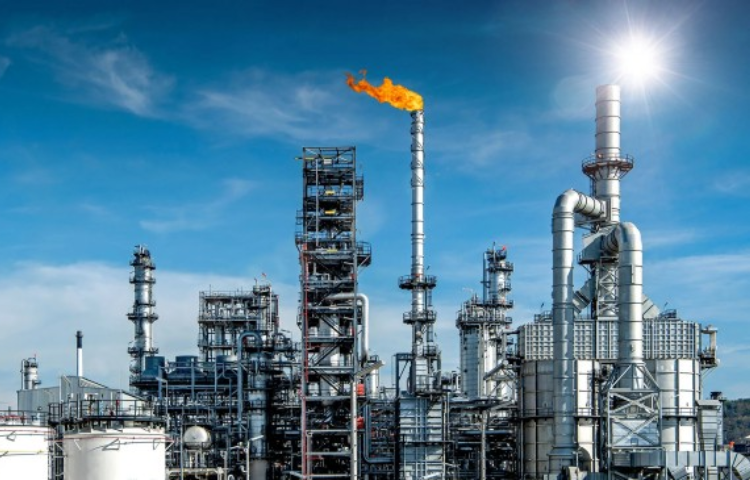
Refinery Filtration Solutions — Applications, Systems & Manufacturer Support (Praimo Industrial Filters & Spares Manufacturing Company)
Refineries don’t forgive weak filtration. From crude and vacuum units to hydrotreaters, hydrocrackers, amine systems, utilities, and truck/rail loading, every loop can shed particulates or entrain liquids that steal heat, scar pump internals, and knock product off-spec. This humanized, publication-ready page reframes the same technical guidance with a smoother rhythm and clearer decisions—showing how Praimo Industrial Filters & Spares Manufacturing Company engineers refinery-grade basket strainers, duplex filters, cartridge and bag filter housings, automatic self-cleaning/backwash filters, coalescer–separator skids, demister pads, wedge-wire internals, and oil purification systems to stabilize ΔP, protect exchangers, and extend run length.
Refinery Filtration Overview (Crude to Loading) — Risks, Design Codes & Performance
Typical refinery contaminants & reliability risks
Refinery fluids typically carry rust, sand, scale, coke fines, catalyst fines, polymeric sludge/asphaltenes, water, and salts. If not intercepted early, they clog heat-exchanger bundles, cut pump efficiency, erode valves, and force off-spec recycles or expensive reblends. A staged strategy—coarse basket or Y-type strainer, followed by bag or cartridge filtration, with coalescer–separator where water/hydrocarbon control is needed—keeps pressure drop predictable and change-out intervals sensible.
Design codes, materials of construction & operating windows
Praimo Industrial Filters & Spares Manufacturing Company aligns with refinery expectations: ASME fabrication, hydrostatic test (typically 1.5× design pressure), and full documentation packs. Materials include SS304, SS316L, Duplex 2205, coated carbon steel for some utilities, and PP, PVDF, FRP where chemistry allows. Key selection parameters: micron rating, beta ratio/efficiency, allowable ΔP, m³/hr throughput, viscosity, temperature, and pressure.
staging saves money. Use a coarse basket strainer to absorb dirt load; let bag/cartridge filtration do the polishing. The fine stage lasts longer, and operators stop “chasing” premature blinding.
Crude & Vacuum Distillation — Preheat Train & Desalter Protection
Duplex basket strainers for crude feed reliability
Charge lines and desalter inlets see unpredictable solids, especially when crude slates change. Duplex basket strainers provide uninterrupted service—switch to the clean side, lift the basket, clean, reseat, and keep moving. Add magnetic inserts for ferrous fines. Mesh windows commonly start 100–500 μm, tightened after start-up.
High-flow cartridge & multi-bag filter housings for fines control
Downstream of coarse capture, high-flow cartridge filter housings or multi-bag housings (often 10–50 μm, occasionally 1–5 μm for product-critical circuits) stabilize exchanger performance and reduce fouling on the preheat train. Horizontal, quick-open closures cut change-out time and improve maintenance ergonomics.
Process Observation:
after turnarounds, dirt spikes are normal. Start with a slightly coarser micron to prevent early blinding; tighten to the normal spec once ΔP trends settle.
pair a [Duplex Filter / Duplex Basket Strainer] up front with a [High-Flow Cartridge Filter Housing] or [Bag Filter Housing] for fines polishing. For tower/cooling loops, evaluate [Automatic Self-Cleaning / Backwash Filters] to reduce manual interventions.
FCC, Hydrotreater & Hydrocracker — Managing Catalyst and Coke Fines
Inline protection on recycle/quenches
FCC, hydrotreating, and hydrocracking lines punish control valves and seal faces if fines slip through. A Y-type or basket strainer in the 50–200 μm range is a proven first barrier for erosive solids on recycle and quench streams.
Stainless-steel pleated & sintered cartridges for hot polishing
Where polishing is mandatory, pleated SS and sintered metal cartridges hold their efficiency at temperature and viscosity extremes. They tolerate higher ΔP, suit CIP/backwash routines in some designs, and capture stubborn coke/catalyst fines that bypass coarse strainers.
specify [Basket Strainers / Y-Type / T-Type] as primary capture, then upgrade to [Stainless Steel Filter Cartridges] or [Sintered Metal Filter Cartridge Elements] for duty-grade polishing.
Amine Treating & Sour Water Stripper (SWS) — Foaming & Corrosion Control
Cartridge/bag housings for amine loop cleanliness
- MEA/DEA/MDEA solutions accumulate corrosion products and degradation residues that trigger foaming and capacity loss. Cartridge or bag filter housings in SS316L with PES/PTFE media stabilize ΔP and improve contactor runtime. Typical placements: rich and lean loops, slipstreams, and regenerator feeds.
Coalescer–separator stages for hydrocarbon ingress
- If hydrocarbon carryover into the amine loop is suspected, coalescer elements upstream of the regenerator or in slipstreams remove dispersed droplets efficiently—cutting foaming incidents and amine losses.
Engineering Insight:
media compatibility drives life. PES suits many aqueous amine services; PTFE adds chemical margin; stainless media tolerates heat and mechanical stress. Confirm temperature and amine concentration before finalizing.
combine [Cartridge Filter Housing] or [Bag Filter Housing] with [Coalescer & Separator Skids] where water/hydrocarbon control is essential. For longer element life, evaluate [Stainless Steel Filter Cartridges].
Utilities & Offsites — Cooling Water, Boiler Feed & Fire Water
Automatic self-cleaning/backwash for cooling water reliability
- Cooling loops are dirt factories—biofouling, silt, seasonal debris. Automatic self-cleaning/backwash filters purge solids without shutdown, protect exchangers, and stabilize pump performance. Plants typically tune cleaning intervals to ΔP trends and seasonal shifts.
Y-type & basket strainers for fire water & pump protection
- Fire-water systems and utility pumps benefit from Y-type or basket strainers to stop macro debris at the suction. On critical pumps, duplex ensures availability during cleaning—no risky blind spots during a fire drill.
Process Observation:
set auto-clean ΔP start conservatively (around 0.5–0.7 bar) and refine with live data. Too sensitive wastes water; too high risks element damage or unplanned bypass.
see [Automatic Self-Cleaning / Automatic Backwash Filters] for towers and [Basket Strainers / Y-Type] for pump inlets.
Tank Farm, Blending & Loading — Product Quality & Last-Mile Assurance
High-flow cartridge housings at the rack
- At truck/rail racks, high-flow cartridge housings in the 1–10 μm range stop the fines that trip spec alarms. Horizontal vessels with quick-open closures compress change-out time and reduce loading delays.
Coalescer–separator skids for water removal
- Coalescer–separator systems polish gasoline, diesel, kerosene, and jet for free/emulsified water removal with low ΔP. Faster dehydration means fewer reworks and smoother custody transfer.
Best Practice: terminals with frequent grade changes should prioritize access and clearance—swing bolts/davit arms, clear headroom, and clean drains. Those minutes saved add up to a real throughput gain each quarter.
align [High-Flow Cartridge Filter Housing] for solids polishing and [Coalescer & Separator Skids] for water control before custody transfer.
Lube Oil, Hydraulic & Seal Oil Systems — Cleanliness, MTBR & Energy
Portable carts & vacuum oil purifiers
- For turbines, compressors, and gearboxes, portable oil filter carts maintain ISO codes during routine operation, while vacuum oil purifiers remove dissolved water and varnish precursors. Cleaner oil extends bearing life and stabilizes efficiency.
Pressure/return/suction elements that match ISO targets
- Hydraulic reliability improves when pressure, return, and suction elements are sized to the duty, not just the pipe. Match element beta ratings to ISO cleanliness targets and OEM limits.
explore [Hydraulic & Lube Oil Filtration], [Portable Oil Filter Carts], and [Vacuum/Transformer Oil Purifiers] designed by Praimo Industrial Filters & Spares Manufacturing Company.
Gas & Vent Filtration — Demister Pads & Wedge-Wire Internals
Wire-mesh & vane-type demister pads for entrainment control
- Contactors, KO drums, and vents often require wire-mesh or vane-type demister pads to cut liquid carryover. Proper pad density and thickness reduce re-entrainment at design gas loads.
Wedge-wire screens & internals
- For separators and special vessels, wedge-wire supports offer rigid, non-plugging surfaces with excellent open area—ideal for drainage and media support.
Application Tip: keep superficial velocity within pad limits. Exceeding the design leads to flooding and performance collapses even when the pad looks “clean.”
specify [Demister Pads] (wire mesh or vane) and [Wedge Wire Screens & Internals] for gas/vent and separator services.
Materials, Sizing & Specification Guide — Micron, Media, and ΔP
Choosing material of construction (MOC)
- Baseline hot hydrocarbon services run well on SS316L; Duplex 2205 adds chloride SCC resistance; coated carbon steel can serve in some utilities; PP/PVDF/FRP apply in compatible aqueous duties. Praimo Industrial Filters & Spares Manufacturing Company supplies MTCs, passivation records, and surface finish documents as part of the QA pack.
Micron & media selection—from coarse to polishing
- Coarse capture: basket strainers (perforated/mesh 100–1000+ μm) keep exchanger fouling in check.
- Bulk solids: bag filter housings (commonly 5–100 μm; felt/mesh/oil-adsorbing) deliver low ΔP with generous dirt capacity.
- Polishing: pleated cartridges (1–20 μm), sintered metal for high-temp/ΔP, PTFE/PES for aggressive or aqueous service.
- Water/hydrocarbon control: coalescer–separator stages for quick dehydration and spec compliance.
Sizing checklist—what your RFQ should include
- Provide the fluid, flow (m³/hr), viscosity, operating temperature/pressure, target micron, allowable ΔP, solids type & load, piping/nozzle sizes, design code preferences, and space/access limits. That data shortens the cycle from proposal to approved for fabrication.
map your spec to [Cartridge Filter Housing], [Bag Filter Housing], [Duplex Filter], [Automatic Self-Cleaning Filter], [Stainless Steel Filter Cartridges], and [Demister Pads] based on duty.
QA, Testing & Documentation — Refinery-Grade Evidence
Hydrostatic testing, NDT & finishing
- Each strainer and housing from Praimo Industrial Filters & Spares Manufacturing Company ships with hydrotest records. By scope, we include NDT, pickling/passivation, electropolish or Ra finish where specified, PMI, and weld maps. The objective is simple: no surprises at site commissioning.
MTCs, ITPs, datasheets & spares alignment
- Expect MTCs, ITPs, GA drawings, nameplates, and recommended spares lists that mirror refinery QA checklists. Integrators appreciate the completeness; maintenance teams appreciate the clarity.
request sample packs tied to [Cartridge Filter Housing], [Bag Filter Housing], [Duplex Filter / Duplex Basket Strainer], and [Automatic Backwash Filters].
Case Snapshots & ROI — From ΔP Stability to Energy Savings
Crude preheat fouling reduction
- A refinery experiencing rapid exchanger fouling added duplex basket strainers ahead of the preheat train and a multi-bag filter housing at 25 μm. ΔT stabilized, mechanical cleanings dropped, and fuel use improved. Staging beat the “fine-only” approach on total cost because polishing elements lasted significantly longer.
Amine loop hydrocarbon control
- An amine unit challenged by hydrocarbon ingress installed a coalescer upstream and PES cartridges downstream. Foaming events decreased, solvent losses fell, and absorber capacity steadied. Operators extended wash intervals without risking quality.
Performance Insight: track ΔP trends and element change-out frequency. Most units discover a “best-economics micron” that balances energy, element life, and uptime—often coarser than initially assumed.
explore similar configurations via [Coalescer & Separator Skids], [Bag Filter Housing], and [High-Flow Cartridge Housings].
RFQ & Technical Consultation — Work Directly with the Manufacturer
What to send with your RFQ (fastest path to the right vessel)
Please include: fluid name, flow (m³/hr), viscosity, operating temperature/pressure, target micron, allowable ΔP, solids type and loading (ppm/mg·L⁻¹), piping sizes, relevant site standards (coatings, welding, doc set), and any layout constraints/photos. We’ll return a right-sized proposal—vessel, elements, and spare strategy—optimized for lifecycle cost and easy maintenance.
Contact Praimo Industrial Filters & Spares Manufacturing Company
You’re working with a manufacturer in India supplying globally across brownfield upgrades, turnaround spares, and greenfield projects.
- Email: [email protected]
- Web: www.praimo.com
- Phone: +91-8866882222
Helpful anchors to product pages:
[Cartridge Filter Housing], [High-Flow Cartridge Filter Housing], [Bag Filter Housing], [Duplex Filter / Duplex Basket Strainer], [Basket Strainers / Y-Type / T-Type], [Automatic Self-Cleaning / Automatic Backwash Filters], [Coalescer & Separator Skids], [Stainless Steel Filter Cartridges], [Sintered Metal Filter Cartridge Elements], [Filter Bags (felt/mesh/oil-adsorbing)], [Demister Pads (wire mesh/vane)], [Wedge Wire Screens & Internals], [Hydraulic & Lube Oil Filtration], [Vacuum/Transformer Oil Purifiers].