


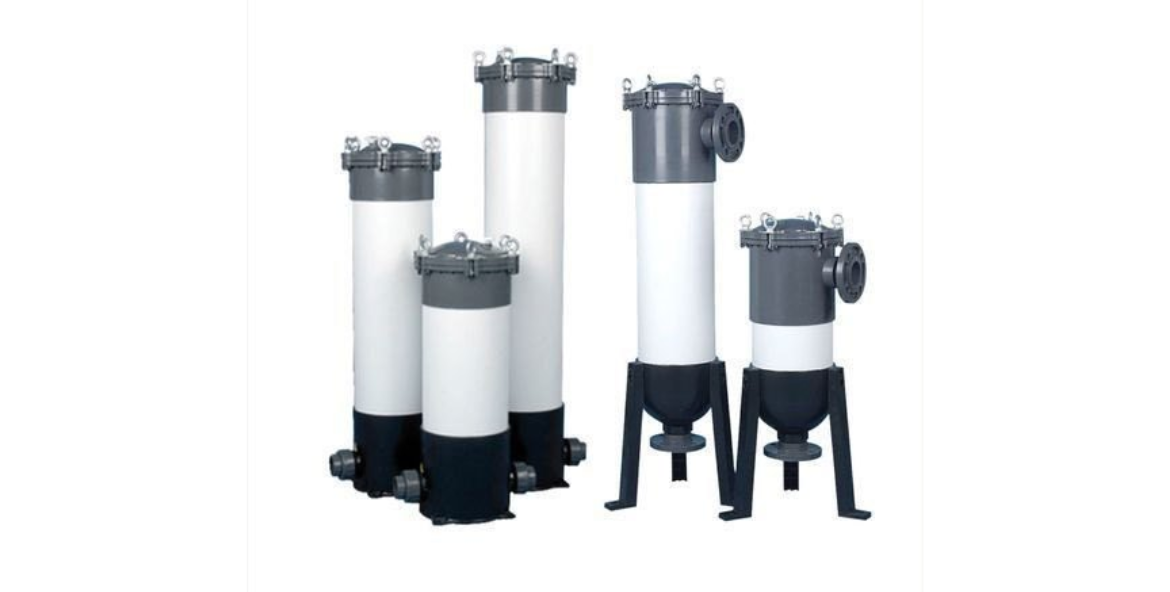
Introduction — UPVC Bag Filter Housing (Overview & Value Proposition)
A UPVC bag filter housing is a compact, corrosion-resistant water filter housing built to hold a replaceable filter bag—#1 or #2 size—for removing suspended solids from process liquids. In standard 2″ port configurations, the operating envelope sits around 4 bar for clamp covers and 7 bar for swing-bolt closures at room temperature, with a practical ceiling of ~45–60 °C (pressure de-rates as temperature rises). In actual operation with water-like viscosity (≈1 cP), clean-bag throughput is typically ~10–15 m³/h (#1) and ~20–25 m³/h (#2) at modest initial ΔP—exactly the range most plants need upstream of RO, cooling-water sidestreams, and ambient chemical rinses. In short: an UPVC filter housing that does the heavy lifting before polishing stages.
Now, here’s the part engineers care about most—predictability. The polymer body shrugs off chloride-rich service at ambient conditions, the pressure/temperature limits are clear, and the bag formats are standardized, which keeps maintenance routines simple. Operators often notice that, when sized to the middle of its flow band, ΔP rises steadily (not suddenly), which makes changeout planning far less painful.
Why Praimo Industrial Filters & Spares Manufacturing Company
As a filter housing manufacturer in India, Praimo Industrial Filters & Spares Manufacturing Company builds UPVC systems for dependable duty and clean documentation trails—suited to EPC and export projects alike.
- Corrosion endurance in chloride/aqueous environments and lower CAPEX than SS316L for the same flow envelope.
- Application-matched seal options (EPDM / NBR / FKM / PTFE-encap) and well-fitted baskets to minimize bypass and stabilize ΔP over the bag’s life.
- Project-friendly paperwork: NSF/ANSI 61 suitability (model-specific), CE/PED (SEP) DoC, EN 10204 statements, and ISPM-15 export packing on request.
Where it fits in your filtration train
- Acts as the primary solids-reduction stage (1–200 µm) to protect downstream cartridge/polishing elements and RO membranes.
- When incoming solids vary, add an upstream basket strainer—it typically extends bag life and keeps ΔP behavior predictable.
(One overlooked detail: giving the cover adequate headroom pays for itself—clearance above the closure speeds bag changes and prevents seal nicks during reassembly.)
What is a UPVC Bag Filter Housing? (Definition & Use Cases)
A UPVC bag filter housing is, in practical terms, the coarse-to-medium filtration stage of a liquid system—catching suspended solids in the ≈1–200 µm range before the flow reaches finer polishing or membrane units. It’s essentially a corrosion-resistant pressure vessel molded from unplasticized PVC (UPVC) that accepts either #1 or #2 filter bags, seals with an O-ring (EPDM, NBR, FKM, or PTFE-encapsulated), and connects through standard 2″ nozzles.
In typical designs, operating envelopes sit at around 4 bar for clamp covers and 7 bar for swing-bolt covers at room temperature, with the pressure rating decreasing gradually as temperature climbs toward ~45–60 °C. This makes it well suited for ambient water, utility loops, and chemical rinse duties—exactly the range where stainless steel might overperform but overspend.
Where It Fits in the Train
In a standard filtration line, the UPVC housing usually sits in the middle of the train, smoothing out the solids load before the expensive downstream elements do their work:
- Intake/Raw Water → Strainer (3–6 mm / 500–1000 µm) to stop debris and large particles
- UPVC Bag Filter Housing (1–200 µm) to stabilize dirt load and maintain predictable ΔP
- Cartridge Filter (0.2–10 µm) to polish before RO, UV, or process equipment
This staged setup is what allows RO membranes and fine cartridges to last longer, maintain stable differential pressure curves, and avoid unplanned maintenance cycles.
Why Choose UPVC for This Duty
- Chemical and corrosion performance: In chloride-rich or chemically aggressive ambient streams, metals can pit or require coatings; UPVC simply resists.
- Lower CAPEX & easier handling than SS316L for the same ~10–25 m³/h flow envelope, depending on bag size and micron.
- Project-ready documentation is common: NSF/ANSI 61 suitability (model-specific), CE/PED SEP DoC, and related QA files are typically available.
Typical Use Cases
In practice, UPVC housings often appear in these roles:
- RO pre-filtration: #2 bag with 10–25 µm nominal to protect downstream cartridges and membranes.
- Cooling water sidestreams: 25–50 µm mesh to limit fouling and stabilize heat-exchange performance.
- Ambient chemical rinses or plating lines: Bag micron is tuned to the particle profile, with seals chosen for chemical compatibility to avoid swelling or leaks.
One small but important detail engineers often overlook: pairing the housing with an upstream strainer keeps ΔP rise steady and extends bag life—a practical, low-cost optimization step.
UPVC Bag Filter Housing Specifications (Pressure, Temperature, Flow, Micron)
The core specifications of a UPVC bag filter housing determine how well it performs in ambient liquid filtration across industrial water, utility, and chemical rinse applications. In most installations, the numbers below are what engineers rely on to decide whether UPVC fits into the filtration train. Standard models from Praimo Industrial Filters & Spares Manufacturing Company are built for #1 and #2 bag sizes with 2″ ports, offering a solid balance between flow capacity, footprint, and CAPEX efficiency. And in practice, these housings deliver steady, predictable performance—provided they’re operated within their designed pressure and temperature envelope.
Pressure & Temperature Ratings
- Clamp cover designs: rated to 4 bar at approximately 20–25 °C
- Swing-bolt designs: rated to 7 bar at approximately 20–25 °C
- Temperature envelope: practical ceiling of ~45–60 °C, with pressure de-rating required above ~23 °C. This is standard UPVC behavior under combined pressure–temperature loading.
In real plant environments, engineers often see the de-rating curve become relevant earlier than expected if line temperatures fluctuate. It’s good practice to check your worst-case scenario rather than your nominal condition.
Flow Capacities
In clean-water service (~1 cP),
- #1 bag housings deliver approximately 10–15 m³/h,
- #2 bag housings handle 20–25 m³/h,
The actual figure depends on micron rating, allowable ΔP, and bag media (felt vs. mesh). When flows exceed these ranges, multiple housings are typically manifolded in parallel using UPVC or CPVC headers, maintaining low differential pressure without upsizing the individual vessels.
A common field mistake is oversizing the micron rating but undersizing the housing count. Parallel manifolding is usually more economical than pushing a single housing to its ΔP limits.
Micron Ratings
Both nominal and absolute bags are available in 1–200 µm ranges, supporting staged trains like coarse strainer → UPVC bag filter housing → fine cartridge. Typical engineering changeout ΔP is 0.7–1.0 bar, which keeps bag life predictable without risking bypass.
Specification Table
| Parameter | #1 Bag Housing | #2 Bag Housing |
|---|---|---|
| Port Size | 2″ NPT/BSPT or Flanged | 2″ NPT/BSPT or Flanged |
| Max Pressure | 4 bar (clamp) / 7 bar (swing) | 4 bar (clamp) / 7 bar (swing) |
| Max Temperature | 45–60 °C (de-rated) | 45–60 °C (de-rated) |
| Typical Flow (Water) | 10–15 m³/h | 20–25 m³/h |
| Micron Range | 1–200 µm (nominal/absolute) | 1–200 µm (nominal/absolute) |
| Closure Options | Clamp / Swing-bolt | Clamp / Swing-bolt |
| Seal Options | EPDM / NBR / FKM / PTFE-encap | EPDM / NBR / FKM / PTFE-encap |
These figures reflect standard UPVC housing behavior under clean-water conditions. When working with hot or viscous liquids, engineers should apply viscosity corrections and temperature de-rating to preserve mechanical integrity and avoid unexpected ΔP spikes. In practice, this means being conservative with sizing if viscosity creeps above 1 cP or if the line temperature is anywhere near 50 °C.
Sizes & Dimensions — #1 and #2 Bag Filter Housing Sizes (DN/Port Options)
Getting the bag filter housing size right is not just about flow—it directly affects piping integration, layout, and maintenance access. In real plant environments, cramped piping galleries and skid-mounted RO systems often make housing dimensions a limiting factor. That’s why Praimo Industrial Filters & Spares Manufacturing Company supplies UPVC bag filter housings in standardized #1 and #2 formats, both equipped with 2″ ports (threaded NPT/BSPT or flanged). These sizes are proven across cooling water loops, RO pretreatment skids, and utility filtration trains where footprint matters just as much as hydraulic performance.
#1 Bag Filter Housing
- Bag Size: Ø178 mm × 432 mm (7″ × 17″)
- Housing Height: ~805–820 mm
- Recommended Flow: ~10–15 m³/h
- Typical Applications: Compact polishing loops, low-flow RO pre-filtration, mobile skids, or containerized plants.
In practice, #1 housings are chosen when space is tight, flow rates are moderate, or polishing filtration is the main goal rather than bulk solids removal. Their shorter body height makes them easier to fit beneath mezzanines or within compact modular skids.
#2 Bag Filter Housing
- Bag Size: Ø178 mm × 813 mm (7″ × 32″)
- Housing Height: ~1,180–1,200 mm
- Recommended Flow: ~20–25 m³/h
- Typical Applications: Centralized filtration banks, RO pretreatment stages, cooling water sidestream filtration.
#2 housings are the workhorses in most permanent installations. The larger bag area means longer changeout intervals and better dirt-holding capacity at the same ΔP—critical for continuous-duty systems.
Port & Nozzle Options
- Inlet/Outlet: 2″ (DN50) NPT/BSPT threaded or ANSI/DIN flanged.
- Orientation: Inline (inlet opposite outlet) is standard to simplify piping and minimize pressure drop.
- Accessories: Top vent and bottom drain are included for air release, CIP flushing, and safe draining during maintenance.
One overlooked installation mistake is skipping vent valves—air entrapment during startup can cause bag collapse or unpredictable ΔP spikes.
Maintenance Clearances
- Provide ≥300 mm of clear headroom above #1 housings and ≥400 mm above #2 housings to allow safe bag removal.
- Leave lateral space for swing-bolt operation if using 7 bar designs.
- Install isolation valves and DP gauges to make changeouts controlled and measurable rather than guesswork.
Dimensional Reference Table
| Parameter | #1 Housing | #2 Housing |
|---|---|---|
| Bag Diameter × Length | 178 × 432 mm (#1) | 178 × 813 mm (#2) |
| Overall Height | 805–820 mm | 1,180–1,200 mm |
| Port Size | 2″ (DN50) | 2″ (DN50) |
| Flow (Water, 1 cP) | 10–15 m³/h | 20–25 m³/h |
| Headroom for Service | ≥300 mm | ≥400 mm |
| Orientation | Inline | Inline |
These compact vertical footprints make UPVC bag filter housings particularly effective for skid-mounted and containerized plants, where space constraints rule out bulky horizontal vessels. In many RO systems, #2 housings are lined up in parallel to scale flow without losing the ability to service units individually. It’s a modular, predictable approach that EPC teams appreciate during both design and commissioning.
Flow Rates & Pressure Ratings — UPVC Bag Filter Housing Flow Curves
When specifying a UPVC bag filter housing, understanding how flow rate interacts with pressure ratings is critical for ensuring stable filtration performance and avoiding premature media changeouts. In real installations, engineers often underestimate the importance of initial ΔP and temperature de-rating, which can lead to reduced flow envelopes or unexpected maintenance issues.
Praimo Industrial Filters & Spares Manufacturing Company designs its standard UPVC housings for clean-water service (~1 cP) at ambient conditions, with well-defined pressure and flow curves for both #1 and #2 bag sizes. These parameters form the basis for correct sizing, especially in RO pre-filtration, sidestream cooling loops, and ambient chemical filtration duties.
Pressure Ratings
- Clamp-cover housings: Rated up to 4 bar (58 psi) at ~20–25 °C.
- Swing-bolt housings: Rated up to 7 bar (101 psi) at ~20–25 °C.
- Temperature de-rating: Required above ~23 °C, with a practical ceiling of ~45–60 °C, depending on the specific UPVC resin and closure design.
Unlike ASME-stamped steel vessels, UPVC housings follow PED SEP guidelines for low-pressure polymer equipment. This is standard practice for non-metallic vessels—structural behavior is predictable but must be respected through proper design and operating envelopes.
One overlooked detail: at elevated temperatures, even modest pressure surges can push a UPVC vessel close to its design limits. Conservative de-rating is a smart engineering habit.
Clean-Water Flow Envelopes (1 cP)
| Bag Size | Micron Rating | Recommended Flow Range (m³/h) | Typical Initial ΔP |
|---|---|---|---|
| #1 | 10–50 µm | 10–15 | 0.10–0.15 bar |
| #2 | 10–50 µm | 20–25 | 0.12–0.20 bar |
These values reflect nominal felt bag media under ambient water service. As micron ratings tighten or fluid viscosity increases, flow capacity will drop and initial ΔP will rise—sometimes significantly. For example, moving from 25 µm to 5 µm on viscous chemical rinse water can cut flow capacity in half.
Engineering Notes
- Sizing approach: Target 0.1–0.2 bar initial ΔP at design flow. Plan changeouts around 0.7–1.0 bar to avoid bag deformation or bypass.
- Parallel manifolding: For higher flow, multiple #2 housings can be arranged in parallel using UPVC or CPVC headers to keep system headloss low while increasing capacity.
- Upstream strainers: Installing a 3–6 mm basket strainer ahead of the bag housing stabilizes solids loading, maintains predictable ΔP across the media’s service life, and prevents premature fouling.
In practice, flow/pressure matching has a direct impact on pump sizing, energy use, and bag life. Oversizing flow through a single housing often leads to turbulence-induced media stress and unexpected bypass.
By aligning flow rates with pressure ratings and process conditions, engineers can ensure stable operation, predictable maintenance intervals, and optimized lifecycle costs for UPVC bag filter systems. This section forms the backbone of any proper sizing calculation—get it right, and the downstream cartridge or membrane stage will thank you.
Temperature & Chemical Compatibility — UPVC Filter Housing Chemical Resistance
When specifying UPVC filter housings, it’s easy to focus on pressure and flow—but in practice, temperature and chemical compatibility are often the real design gatekeepers. UPVC (Unplasticized Polyvinyl Chloride) is widely used because of its excellent corrosion resistance in aqueous environments, especially where chlorides or mild chemicals would attack stainless steel or require protective coatings. That said, UPVC’s mechanical properties are temperature-sensitive, and its chemical envelope, while broad, is not unlimited. Understanding these boundaries is essential for reliable, long-term operation.
Temperature Limits & De-Rating
- Design envelope: Full pressure ratings apply at 20–25 °C, which is where UPVC performs best mechanically.
- Practical ceiling: Around 45–60 °C, depending on housing model and closure type.
- Pressure de-rating: Starts above ~23 °C due to thermal softening. This behavior is typical for polymer pressure vessels and is codified in PED SEP guidance for non-metallic systems.
| Temperature (°C) | Allowable Pressure (% of Rated) |
|---|---|
| 20–25 | 100 % |
| 30 | ~85 % |
| 40 | ~70 % |
| 50 | ~55 % |
| 60 | ~40 % |
Above these ranges, deformation and long-term creep become real concerns. It’s not uncommon for housings pushed beyond 50 °C to exhibit subtle dimensional changes over time—especially around closure points—which can compromise gasket sealing.
One overlooked detail: short temperature excursions (e.g., CIP flushing) may not cause immediate failure but can accelerate seal degradation and bolt creep, leading to performance drift over months.
Chemical Compatibility
UPVC resists:
- Alkalies, salts, weak acids, and chlorinated water, which explains its dominance in RO pre-filtration, cooling-water sidestream, and plating rinse services.
- Most neutral aqueous solutions at ambient temperature, making it a dependable choice for utility and light process duties.
UPVC is not suitable for:
- Strong solvents (e.g., ketones, aromatics)
- Hot oxidizing acids (e.g., concentrated nitric, chromic)
- High-temperature chemical streams where polymer softening becomes an issue.
Seal Material Selection (Critical for Compatibility)
The seals often fail before the housing does. Selecting the right O-ring material is just as important as selecting the housing body:
- EPDM: Excellent for water, alkalies, and dilute acids (0–60 °C).
- NBR: Suitable for oils and hydrocarbons at ambient temperature, though it may swell in aromatic environments.
- FKM (Viton®): Handles aggressive chemicals, some solvents, and hydrocarbons; widely used in plating lines and chemical rinses.
- PTFE-encapsulated O-rings: The most universal option for aggressive chemicals, oxidizers, or where broad compatibility is required.
Engineers sometimes default to EPDM, but in mixed chemical environments, PTFE-encap often provides the longest service life and minimizes unscheduled maintenance.
Engineering Recommendation
For long-term reliability:
- Always consult a chemical compatibility chart for both housing and seal materials—don’t assume water compatibility extends to process fluids.
- Avoid thermal cycling near the upper temperature limit; polymers are less tolerant to expansion/contraction cycles than metals.
- For fluids above 60 °C, solvent-laden streams, or strong oxidizers, switch to FRP or stainless steel housings. It’s usually more economical than dealing with premature UPVC failure.
By respecting UPVC’s thermal and chemical envelope, engineers can exploit its corrosion resistance and cost advantages without sacrificing system integrity. Misjudging this aspect, however, is one of the most common reasons installations underperform or require early retrofit.
Materials & Construction — UPVC Body, Basket, Seals, Closure
The materials and construction of a UPVC bag filter housing fundamentally dictate how it behaves under pressure, how well it resists corrosion, and how long it lasts in service. Unlike metallic vessels, these housings rely on the inherent properties of non-corroding polymers, carefully selected seals, and closure systems designed to maintain mechanical integrity at modest pressures. Praimo Industrial Filters & Spares Manufacturing Company uses standardized, field-proven configurations to ensure consistent performance across industrial water, chemical rinse, and utility filtration duties.
Housing Body & Head
- Material: Unplasticized PVC (UPVC), chosen for its excellent resistance to chlorides, saline water, alkalies, and many weak acids.
- Finish: Supplied as-molded, requiring no internal coatings—an advantage over carbon steel vessels that need periodic recoating.
- Nozzles: Available with 2″ NPT/BSPT threaded or ANSI/DIN flanged ends, allowing flexible integration into industrial piping networks.
- Vent & Drain: A top vent and bottom drain are provided as standard for air purging and flushing. These small details make commissioning and maintenance much cleaner.
In practice, operators often underestimate the value of proper venting. Trapped air can distort bag seating or create unpredictable ΔP readings.
Internal Basket
- Material: UPVC or polypropylene (PP), depending on the model and chemical service.
- Function: Acts as the primary mechanical support for the filter bag, ensuring it doesn’t collapse or bypass under differential pressure.
- Configuration: A perforated cylindrical support basket designed specifically for #1 or #2 bag sizes.
- Maintenance: Regular inspection is key—replace baskets if you notice warping, cracking, or clogging, especially after thermal or chemical exposure.
This basket is often overlooked during maintenance, but in reality, it’s the unsung structural element that keeps the filtration stage functioning correctly.
Sealing & Closure
Seal Materials
- EPDM: Best for water, alkalies, and dilute acids (the default for most ambient water applications).
- NBR: Suitable for oils and hydrocarbons at ambient temperature but may swell in aromatic environments.
- FKM (Viton®): Excellent for aggressive chemicals and mixed chemical duties.
- PTFE-encapsulated O-rings: The go-to for oxidizing or chemically complex streams where broad compatibility is required.
Choosing the wrong seal material is a common root cause of leaks or unexpected swelling. Always align the seal with both fluid chemistry and temperature.
Closure Types
- Clamp Cover: Standard option, rated up to 4 bar at ambient temperature. Quick to open, suitable for low-pressure utility service.
- Swing-Bolt Cover: Heavy-duty design rated up to 7 bar, offering greater security against pressure fluctuations and more consistent gasket compression over time.
Materials Table
| Component | Material Options | Key Characteristics |
|---|---|---|
| Housing Body/Head | UPVC | Corrosion-resistant, lightweight, non-conductive |
| Basket | UPVC / PP | Supports bag, resists collapse, compatible with a wide range of media |
| O-Rings / Seals | EPDM / NBR / FKM / PTFE-encap | Chemically compatible options per fluid type |
| Closure | Clamp / Swing-bolt | 4 bar vs 7 bar rating; swing-bolt for higher security |
Engineering Insight
UPVC baskets perform very well in water and neutral chemical services, but periodic visual checks are non-negotiable. Extended exposure to temperatures above 45–60 °C or aggressive solvents can cause embrittlement or stress cracking over time. Matching seal and basket material to the fluid’s chemistry and temperature is often what separates trouble-free installations from those with chronic leaks or bypass issues.
In short, the body, basket, seals, and closure together form the mechanical heart of the housing. Get these right, and the system will run for years with minimal intervention. Ignore them, and the weakest material quickly defines the system’s reliability.
Variants & Configurations — Single, Duplex, Manifolded UPVC Bag Housings
Not every filtration line runs the same way. Some are standalone polishing loops that can tolerate short shutdowns, while others—like large RO trains—run continuously and need redundancy or modular scaling. Recognizing this, Praimo Industrial Filters & Spares Manufacturing Company offers a range of UPVC bag filter housing configurations: single, duplex, and parallel manifolded systems, each tailored to different flow demands, maintenance philosophies, and process criticalities.
1. Single-Bag UPVC Housing (Standard)
The single-bag housing is the backbone of most UPVC filtration systems.
- Description: One housing with #1 or #2 bag, inline 2″ threaded or flanged ports, top vent, bottom drain, and either clamp or swing-bolt closure.
- Pressure Rating: 4 bar (clamp) or 7 bar (swing-bolt) at 20–25 °C.
- Applications: Standalone filtration units, RO pre-filtration, polishing loops, and cooling-water sidestream filtration.
Advantages:
- Compact, economical, and simple to integrate.
- Ideal for 10–25 m³/h flow depending on bag size and micron.
- Well-suited for skids, containerized plants, or small utility loops where space and budget are limited.
In practice, most OEM skid packages start with this configuration. It’s straightforward and cost-effective.
2. Duplex UPVC Housing (Changeover System)
When downtime isn’t an option, duplex configurations come into play.
- Description: Two housings plumbed with a changeover valve, allowing one vessel to operate while the other is serviced.
- Applications: Continuous-duty RO pretreatment lines, utility filtration on production systems, or any application requiring uninterrupted flow during bag changeout.
Advantages:
- Enables bag replacement under flow without halting the process.
- Reduces OPEX by extending media service intervals through alternating duty.
- Particularly useful for EPC/OEM projects where uptime is contractual.
Notes: While duplex systems are more common in metallic builds, UPVC duplex setups perform well at ambient temperature and moderate pressures, especially in water treatment and light chemical duties.
Operators appreciate duplex housings for one simple reason: no shutdown headaches during changeouts.
3. Parallel / Multi-Bag Manifolded Systems
For high-flow duties, the solution isn’t to build one massive vessel—it’s to manifold several standard housings in parallel.
- Description: Multiple single housings piped through UPVC or CPVC headers, balanced for even flow distribution.
- Applications: Centralized filtration systems, large RO trains, cooling tower make-up lines, and other utility streams where flow exceeds a single housing’s capacity.
Advantages:
- Scalable flow handling without the cost and lead time of custom FRP or SS vessels.
- Modular maintenance — isolate one housing while others remain online.
- Properly designed manifolds maintain low headloss and stable ΔP across the train.
Example: Two #2 housings in parallel can comfortably handle 40–50 m³/h of clean water at nominal 10–25 µm while maintaining low ΔP—an elegant, budget-friendly alternative to a large single unit.
Configuration Comparison Table
| Configuration | Flow Capacity | Duty Type | Maintenance Mode | Ideal Use Case |
|---|---|---|---|---|
| Single | 10–25 m³/h (#1/#2) | Intermittent / Batch | Shutdown required | Standalone, polishing, small RO |
| Duplex (Changeover) | 10–25 m³/h | Continuous | No shutdown (alternate) | RO pre-filtration, critical utilities |
| Manifolded (Parallel) | 20–100+ m³/h | Continuous / High Flow | Partial isolation possible | Centralized plants, high-flow utility systems |
Engineering Insight
In real-world installations, single and duplex housings cover most UPVC use cases. Manifolded systems are ideal when plants need high flow and modular servicing without the jump to stainless steel or FRP pressure vessels. This configuration is especially popular with water treatment OEMs building scalable RO skids, where future capacity expansion can be achieved simply by adding another housing to the header—no redesign required.
Regulatory & Compliance Standards — NSF/ANSI 61, CE (PED SEP), Documentation
For many industrial and municipal projects, regulatory compliance is not just a box to tick—it’s a mandatory requirement tied to health, safety, and export regulations. A technically sound housing that lacks proper documentation can easily become a bottleneck during EPC submittals or project commissioning. This is why Praimo Industrial Filters & Spares Manufacturing Company, one of the trusted UPVC bag filter housing manufacturers in India, ensures its housings align with internationally recognized standards such as NSF/ANSI 61, CE/PED SEP, and EN 10204 material traceability.
NSF/ANSI 61 — Potable Water Suitability
The NSF/ANSI 61 standard governs the health effects of components that come into contact with drinking water.
- Many UPVC housings are produced using NSF 61–compliant materials, making them suitable for potable water treatment, RO pre-filtration, municipal polishing, and cold process distribution lines.
- Compliance is model-specific; engineers should verify certification against the exact housing model proposed.
- For projects involving drinking water infrastructure or municipal utilities, this certification is typically required at the procurement stage to avoid delays during regulatory reviews.
A common oversight is assuming all UPVC housings are automatically potable-approved. In reality, NSF/ANSI 61 compliance must be confirmed for each model and documented accordingly.
CE Marking & PED SEP Compliance
Because UPVC housings are low-pressure, non-metallic vessels, they typically fall under the Pressure Equipment Directive (PED) SEP category—Sound Engineering Practice—rather than PED Category I or higher.
- Praimo supplies Declaration of Conformity (DoC) for CE/PED SEP, detailing rated pressure, temperature, and design references.
- This compliance enables seamless integration into EU-bound projects, including OEM skids and EPC contracts, without the need for more costly PED Category approvals (which do not apply to this pressure class).
- The supplied DoC is fully aligned with EU regulatory frameworks, simplifying engineering documentation packages during submittals.
In European projects, having a clean CE/PED SEP DoC can often be the difference between fast-track approval and lengthy clarification cycles.
Documentation & Traceability
For both domestic and export projects, Praimo provides comprehensive supporting documentation to ensure regulatory and logistical readiness:
- EN 10204 2.1 / 2.2 certificates for material traceability and conformance.
- NSF/ANSI 61 component-level certificates (where applicable) for potable water systems.
- CE/PED SEP Declaration of Conformity to meet EU pressure equipment requirements.
- ISPM-15 certified export packaging, ensuring hassle-free customs clearance during international shipments.
| Standard / Document | Relevance | Provided By Praimo |
|---|---|---|
| NSF/ANSI 61 | Potable water compliance | ✓ Model-specific |
| CE / PED SEP | EU pressure equipment compliance | ✓ DoC supplied |
| EN 10204 (2.1 / 2.2) | Material traceability | ✓ |
| ISPM-15 | Export wood packaging certification | ✓ |
Engineering Note
Because UPVC housings operate at ambient temperature and low pressures, they do not require ASME Section VIII or PED Category certification. Instead, compliance is demonstrated through a combination of:
- Material certifications (EN 10204)
- PED SEP documentation
- NSF/ANSI 61 potable-water compliance
This approach satisfies both domestic buyers and international EPC/OEM project requirements, making UPVC housings a reliable choice for export-ready filtration systems without the overhead of high-pressure vessel certification.
Performance & Efficiency — Filtration Ratings, Dirt-Holding, Differential Pressure
The performance and efficiency of a UPVC bag filter housing depend on a few critical engineering variables: the micron rating and media type of the bag, its dirt-holding capacity, and how differential pressure (ΔP) evolves over the filtration cycle. These parameters collectively determine how well the housing protects downstream equipment, how frequently bags must be changed, and ultimately, the operating cost of the filtration stage. A well-sized bag filter stage can significantly stabilize RO membrane fouling rates, pump energy usage, and maintenance cycles.
Filtration Ratings — Nominal vs Absolute
Not all filter bags behave the same way. The filtration rating defines the particle removal efficiency, and understanding the difference between nominal and absolute is key:
- Nominal-rated bags (typically felt media) remove 60–95% of particles at the stated micron size. They are best for bulk solids removal and are cost-effective for upstream protection.
- Absolute-rated bags (often multilayer or melt-blown constructions) remove ≥99% of particles and are suited for polishing or critical pre-filtration stages.
- Micron range availability: 1 µm to 200 µm, enabling staged filtration trains tailored to the application.
Typical use bands:
- Coarse filtration (50–200 µm): Upstream protection, cooling water, general utilities.
- Intermediate (10–50 µm): RO pre-filtration, plating rinse water, general process fluids.
- Fine (1–10 µm): Final polishing before membranes or sensitive processes.
One overlooked detail: selecting a micron that’s too fine for the upstream solids profile often shortens bag life drastically without improving downstream protection.
Dirt-Holding Capacity (Indicative)
| Bag Size | Media Type | Micron | Dirt-Holding Capacity | Typical Flow Range |
|---|---|---|---|---|
| #1 | Felt (nominal) | 10–50 µm | 1–4 kg solids | 10–15 m³/h |
| #2 | Felt (nominal) | 10–50 µm | 2–7 kg solids | 20–25 m³/h |
| #2 | Mesh (washable) | 25–100 µm | Lower (cleanable) | 20–25 m³/h |
These figures assume clean-water service at 1 cP and typical solids loading. Actual holding capacity will vary based on particle size distribution, fluid viscosity, and upstream hydraulic stability.
Mesh bags are reusable and excellent for large particulate filtration, but their dirt-holding capacity is lower. They shine in applications like cooling tower sidestream filtration, where frequent rinsing is acceptable.
Differential Pressure Behavior
Monitoring and controlling differential pressure (ΔP) across the bag housing is central to maintaining stable performance:
- Initial ΔP: Typically 0.1–0.2 bar at clean-bag flow conditions.
- Changeout ΔP: Recommended between 0.7–1.0 bar, balancing media utilization with pump energy efficiency.
- ΔP rise rate: Influenced by micron rating, solids concentration, upstream straining, and fluid properties.
Regular monitoring using differential pressure gauges upstream and downstream allows operators to schedule bag replacements predictably, avoiding both premature changes and bag rupture due to overloading.
In most installations, a simple 3–6 mm basket strainer upstream can extend bag life by 1.5–3×, often paying for itself within a few months through reduced media costs.
Engineering Insight
- Nominal bags are ideal for bulk solids removal and are the most cost-efficient for primary filtration.
- Absolute bags should be used downstream, where high removal efficiency is critical.
- Mesh bags offer a washable, low-cost option for coarse filtration with stable ΔP over time, though with lower solids retention.
- Pairing appropriate upstream strainers with the correct micron rating dramatically improves lifecycle performance.
In short, the efficiency of a UPVC bag filter housing is not determined by the vessel itself but by how well the filtration stage is engineered: the right bag type, micron selection, monitoring strategy, and upstream solids control. When these elements are aligned, operators get longer bag life, stable ΔP, and cleaner downstream systems—all without overspending on consumables.
Benefits — UPVC Bag Filter Housing Advantages vs Metal/Other Plastics
When selecting a bag filter housing, the material choice directly affects cost, corrosion resistance, maintenance requirements, and ease of integration. For ambient-temperature liquid filtration—particularly in RO pre-filtration, cooling water loops, and chemical rinsing applications—UPVC bag filter housings offer a compelling balance of technical performance and commercial efficiency. Compared to stainless steel and FRP/other plastics, UPVC provides targeted advantages that make it especially suited for utility and municipal duties.
Key Advantages
Corrosion Resistance
UPVC performs exceptionally well against chlorides, saline water, alkalies, and weak acids, without needing any protective coatings or liners.
- In RO pretreatment and utility water environments, where stainless steel can pit or require expensive surface treatments, UPVC provides long-term resistance with minimal intervention.
- This inherent durability is one of the biggest reasons UPVC dominates potable water and chemical rinse applications in ambient conditions.
In field installations, UPVC often outlasts coated carbon steel systems simply because there’s no liner to degrade.
Lower CAPEX & OPEX
- Compared to SS316L housings, UPVC can lower initial capital costs by 25–60%, depending on configuration.
- Over time, OPEX savings come from reduced corrosion-related maintenance—no passivation, no recoating, no dealing with pitting failures.
- For EPC/OEM projects, this translates to faster ROI, better bid competitiveness, and lower lifecycle cost curves.
Many EPC contractors choose UPVC specifically to hit cost targets on municipal water packages without sacrificing compliance.
Lightweight & Easy to Install
UPVC housings are significantly lighter than metal equivalents, which has multiple knock-on benefits:
- Easier manual handling during installation and servicing.
- Simpler wall mounting or skid integration, especially in containerized systems.
- No need for lifting beams or heavy rigging during maintenance.
This characteristic makes UPVC ideal for retrofits, where existing structures may not support heavy metallic vessels.
Low Maintenance Requirements
Because UPVC housings don’t require internal coatings, welding repairs, or complex surface treatments, ongoing maintenance is minimal:
- Routine servicing involves seal replacement and basket inspection, often without removing the vessel from the line.
- Both clamp and swing-bolt closures allow fast access without specialized tools.
In practice, this simplicity reduces downtime during changeouts—something maintenance crews appreciate on utility lines.
Compliance & Export Readiness
UPVC housings from Praimo Industrial Filters & Spares Manufacturing Company are supported with:
- NSF/ANSI 61 suitability (component-level)
- CE/PED SEP documentation for EU projects
- EN 10204 material traceability
- ISPM-15 export packaging for international shipments
This documentation suite makes UPVC housings plug-and-play for EPC and OEM exports, with no regulatory surprises at customs or commissioning.
Application Envelope vs Alternatives
| Feature | UPVC Housing | SS316L Housing | FRP / Other Plastics |
|---|---|---|---|
| Corrosion Resistance | Excellent (ambient aqueous) | Excellent (general), may pit in chlorides | Good, varies by resin |
| Temperature Capability | ~45–60 °C (de-rated) | 93–150 °C (CIP, steam) | 60–90 °C typical |
| Pressure Rating | 4–7 bar | 10–16+ bar | 4–10 bar |
| Cost | Low (25–60% less than SS) | High | Medium–High |
| Installation/Maintenance | Lightweight, simple | Heavy, requires lifting gear | Moderate |
| Certification Availability | NSF 61, CE/PED SEP | ASME, PED | Variable |
Engineering Note
While UPVC is not suitable for high-temperature (>60 °C) or high-pressure (>7 bar) duties, it excels in ambient aqueous and light chemical environments. For RO pretreatment, cooling water loops, plating rinses, and utility polishing stages, it offers corrosion resistance, budget efficiency, and ease of installation that make it a practical alternative to both metallic and FRP systems.
In many EPC bids, switching from SS316L to UPVC on non-critical filtration stages can free up budget for more complex process equipment—without compromising reliability where it matters.
Applications & Industries — Water, RO, Cooling Water, Chemicals, F&B
UPVC bag filter housings have carved out a strong niche in industrial and utility liquid filtration, particularly where ambient temperatures, moderate pressures, and chemical resistance define the operating environment. Their blend of corrosion performance, cost-efficiency, and ease of integration makes them a go-to solution in sectors like water treatment, RO pre-filtration, HVAC/cooling loops, chemical rinsing, and non-heated food & beverage processes.
Unlike metal housings, which may pit or require expensive surface treatments in chloride-rich water, or FRP units that can involve longer lead times, UPVC offers a practical, ready-to-deploy option for these service conditions.
1. Water Treatment & Utility Filtration
- Service: Ambient raw water, process water, and general utility loops.
- Role: Coarse-to-medium particulate removal (10–100 µm) upstream of polishing stages or cartridge filters.
- Typical Flow & Micron:
- #1 bag: 10–15 m³/h @ 25–50 µm
- #2 bag: 20–25 m³/h @ 10–25 µm
- Why UPVC: Excellent chloride resistance, low capital cost, and minimal maintenance in neutral pH water environments.
In many municipal or industrial water systems, UPVC housings provide a stable pretreatment stage before finer polishing, effectively reducing downstream cartridge change frequency.
2. RO Pre-Filtration
- Service: Pretreatment for membrane systems in power plants, commercial RO skids, and industrial utilities.
- Role: Stabilizes solids loading to extend cartridge and membrane life, typically using 10–25 µm nominal felt bags.
- Why UPVC:
- Resistant to chlorinated and neutral water streams
- NSF/ANSI 61 suitability for potable applications
- Cost-effective alternative to stainless steel housings in large RO installations
On large skids, replacing multiple stainless housings with UPVC can significantly lower both initial cost and installation labor.
3. Cooling Water Sidestream Filtration
- Service: HVAC and industrial process cooling loops.
- Role: Removes suspended solids (25–50 µm) to reduce fouling, stabilize ΔT across heat exchangers, and reduce cleaning frequency.
- Why UPVC:
- Tolerates saline or treated cooling water cost-effectively
- Lightweight construction suits confined mechanical rooms or retrofits
- Easy maintenance without specialized lifting gear
A properly sized #2 housing on a sidestream loop can deliver measurable energy savings by keeping exchanger surfaces clean.
4. Chemical Rinsing & Plating Applications
- Service: Ambient chemical rinse tanks, plating baths, neutralization loops.
- Role: Capture precipitates and fines using appropriate seal selections (EPDM, FKM, or PTFE-encapsulated).
- Why UPVC:
- Excellent compatibility with alkalies and many weak acids
- Avoids metallic contamination, which is critical in plating processes
Using PTFE-encapsulated O-rings in plating lines can dramatically extend service intervals in mildly aggressive chemistries.
5. Food & Beverage (Ambient Utilities)
- Service: Non-heated water, utility rinses, pre-RO water in bottling or food process plants.
- Role: Removes sediment and particulates prior to UV disinfection or final polishing.
- Why UPVC:
- Uses compliant materials suitable for non-heated service
- Cost-effective option where steam sterilization or CIP is not required
Many bottling plants use UPVC bag housings upstream of RO trains as a low-cost guard stage.
Industry Examples
| Industry | Typical Application | Bag Size | Micron Range | Flow Range |
|---|---|---|---|---|
| Water Treatment | Raw water filtration | #1/#2 | 25–100 µm | 10–25 m³/h |
| Power / Utilities | RO pre-filtration | #2 | 10–25 µm | 20–25 m³/h |
| HVAC / Industrial | Cooling water sidestream | #2 | 25–50 µm | 20–25 m³/h |
| Plating / Chemicals | Rinse filtration | #1/#2 | 5–50 µm | 10–25 m³/h |
| Food & Beverage | Utility water, pre-RO | #1/#2 | 10–50 µm | 10–25 m³/h |
Engineering Insight
UPVC bag filter housings are best suited for ambient service, moderate pressure, and chloride-rich or neutral pH fluids. They excel as cost-effective pre-filtration steps, extending the life of downstream polishing stages, membranes, and process equipment.
For hot, viscous, or aggressive fluid services that exceed UPVC’s operational limits, the appropriate upgrade path is FRP or SS316L, depending on pressure and chemical profile.
In the right applications, UPVC systems deliver long service life, low maintenance, and significant project cost advantages—which is why they’re increasingly common in EPC-standardized water and utility packages.
RO Pre-Filtration — UPVC Bag Filter Housing for RO Systems
In reverse osmosis (RO) systems, suspended solids are one of the biggest operational headaches. If not properly controlled upstream, they cause premature cartridge plugging, membrane fouling, and unstable operating pressures, leading to increased cleaning cycles and escalating OPEX. A #2 UPVC bag filter housing equipped with a 10 µm nominal felt bag is one of the most cost-effective and reliable pre-filtration stages for both industrial and commercial RO plants.
Unlike more expensive stainless-steel systems, UPVC housings deliver the same filtration performance for ambient water feeds, with lower capital cost and simplified installation.
Typical Configuration for RO Pre-Filtration
- Housing: #2 UPVC, swing-bolt closure, 2″ inline connections
- Flow Rate: ~20 m³/h per housing (1 cP water, 10 µm nominal)
- Placement: Downstream of a coarse strainer (typically 3–6 mm basket) and upstream of cartridge filters and high-pressure pumps
- Purpose: Reduce suspended solids from several hundred mg/L down to <20–50 mg/L, thereby slowing ΔP rise across downstream filtration and extending membrane service life
This placement acts as a hydraulic buffer, absorbing solids load between raw water intake and the finer downstream polishing stages.
Many EPC RO packages now include UPVC bag filters as a standard intermediate step—they’re inexpensive, easy to maintain, and deliver measurable improvements in system stability.
OPEX & Cartridge Life Impact
Adding a properly sized bag filtration stage before cartridges can dramatically improve lifecycle economics:
| Parameter | Without Bag Filter | With UPVC Bag Filter |
|---|---|---|
| Cartridge Change Frequency | Weekly | Monthly or longer |
| Cartridge Consumption | High (4–8×) | Reduced by 60–80% |
| Membrane Fouling Rate | Frequent CIP / ΔP rise | Slower ΔP increase |
| Annual Filtration OPEX | Baseline | 30–50% lower |
By inserting a 10 µm nominal bag upstream of cartridges, plants gain a large surface area, low-cost solids capture stage, which smooths pressure profiles and stabilizes flow through membranes. The payback on this simple modification is often realized within months through reduced consumables and cleaning frequency.
Engineering Notes
- Install differential pressure gauges across the bag housing to monitor solids loading and schedule bag changeouts at 0.7–1.0 bar ΔP.
- For higher flow RO trains, run multiple #2 housings in parallel manifolds to handle large volumes without losing filtration efficiency.
- Seal compatibility matters—select EPDM, FKM, or PTFE-encapsulated O-rings based on the feed water’s chemistry to ensure long-term leak-free operation.
In practice, a well-engineered bag filter stage often extends cartridge life by 3–4× and reduces membrane CIP frequency significantly—making it a strategic rather than optional component in RO trains.
Cooling Tower Sidestream — UPVC Filter Housing in HVAC/Power
Cooling tower sidestream filtration is one of the most practical, low-cost methods to stabilize heat-exchanger performance, minimize fouling, and maintain predictable ΔP across chilled-water circuits. In HVAC plants, power generation, and industrial utility loops, suspended solids accumulate continuously through makeup water, drift, and environmental contamination. A #2 UPVC bag filter housing fitted with a 50 µm mesh bag provides a simple, robust way to keep these systems clean—without the expense or complexity of metallic vessels.
Unlike full-flow filtration, sidestream loops don’t require massive filtration capacity. Instead, they focus on a controlled bleed-off portion of the circulating water, which is continuously cleaned and returned to the system.
Typical Sidestream Filtration Setup
- Flow Rate: ~5–10% of total circulating volume (typical sidestream design basis)
- Bag Specification: #2 housing with 50 µm washable mesh bag
- Operating Envelope: 20–25 m³/h at ambient temperature, 4–7 bar pressure rating
- Maintenance Interval: Weekly rinsing of mesh bags — no consumables required
This configuration allows facilities to integrate filtration into existing cooling loops with minimal modifications. Because the mesh bags are washable, ongoing consumable costs are essentially zero.
Many facilities retrofit sidestream filtration without interrupting operations, making it a preferred upgrade for energy optimization projects.
Performance Benefits
The impact of adding UPVC bag filter housings to cooling loops is measurable across key operational KPIs:
| Parameter | Before Filtration | After Sidestream Filtration |
|---|---|---|
| Suspended Solids (mg/L) | 50–100+ | 10–30 |
| Heat Exchanger ΔT | Dropping over time | Stabilized / recovered |
| Pump ΔP Fluctuations | Noticeable / unstable | Steady and predictable |
| Maintenance (cleaning cycles) | Frequent | Reduced by 30–50% |
By continuously removing suspended solids, sidestream filtration prevents deposition on heat-exchange surfaces, helping maintain efficient thermal transfer and reducing the energy penalty caused by fouling. Over time, this leads to lower chemical usage, longer equipment life, and more stable plant operation.
Engineering Notes
- Mesh bags are reusable, making this a very low-OPEX filtration stage. Periodic rinsing is typically all that’s needed to keep performance stable.
- Upstream protection using basket strainers or magnetic strainers extends mesh bag life by intercepting larger debris such as scale flakes or rust.
- Sidestream trains are usually sized for 10–25 m³/h, implemented using single or duplex UPVC housings to provide modularity and allow maintenance without shutdown.
In many HVAC retrofits, sidestream filtration is one of the few interventions that pays for itself in less than a year—thanks to lower cleaning frequency and stabilized chiller performance.
By pairing UPVC housings with washable mesh bags, cooling water systems gain a durable, easy-to-service filtration step that improves ΔT stability, reduces fouling, and cuts maintenance costs, all while keeping capital investment low. This makes UPVC sidestream filtration a smart fit for both new installations and retrofit efficiency upgrades.
Chemical Rinses & Plating Lines (Ambient) — Compatibility & Seal Guide
UPVC bag filter housings are a practical and reliable choice for ambient chemical rinse tanks, plating baths, and neutralization loops, where their non-metallic construction and chemical resistance outperform stainless steel in many chloride- and alkali-rich environments. These systems often run continuously and involve complex chemistries, so selecting the right seal material is just as critical as choosing the housing itself.
Unlike stainless steel, which can pit or require special coatings in chloride-heavy or alkaline streams, UPVC offers a stable, inert barrier that resists corrosion without additional treatments. This makes it particularly valuable in surface finishing and electroplating lines, where process consistency and contamination control are paramount.
Typical Application Profile
- Service: Ambient chemical rinses, plating baths, pickling rinse water
- Operating Envelope: 4–7 bar at 20–25 °C, with pressure de-rating above ~23 °C
- Media: 5–50 µm nominal felt or mesh bags, selected based on particulate load
- Flow Rates:
- #1 housing: 10–15 m³/h
- #2 housing: 20–25 m³/h
This setup is commonly installed after neutralization or rinse tanks, capturing fines, precipitates, and scale particles before fluid recirculation or discharge. In plating lines, bag filters are often placed between multiple rinse stages to keep bath contamination under control.
Seal Selection — Critical for Chemical Compatibility
| Seal Material | Suitable Fluids | Temperature Range | Notes |
|---|---|---|---|
| EPDM | Alkalies, dilute acids, water | 0–60 °C | Excellent for alkaline cleaners and rinse waters. |
| NBR | Oils, hydrocarbons (ambient only) | 0–60 °C | May swell in strong solvents; use cautiously in mixed-chemistry baths. |
| FKM (Viton®) | Aggressive chemicals, some solvents, hydrocarbons | 0–120 °C | Broad compatibility; ideal for plating baths with complex chemistries and multiple additives. |
| PTFE-encapsulated | Strong oxidizers, aggressive acids and alkalies | 0–120 °C | Maximum chemical resistance; ideal for critical plating, etching lines, and harsh solutions. |
Seal choice must be matched to actual chemical composition, temperature, and cleaning regime. In practice, PTFE-encapsulated or FKM seals are preferred in plating lines due to their resistance to mixed oxidizers, additives, and temperature fluctuations during cleaning cycles.
Engineering Notes
- Avoid thermal cycling near UPVC’s upper temperature limit (~45–60 °C). Repeated expansion and contraction can lead to creep or seal distortion, especially in clamp-closure models.
- Check vent and drain fittings for compatibility — using the wrong metal insert or valve body can introduce localized corrosion, even when the housing is chemically resistant.
- Regular inspection of baskets and seals is important. In rinse tanks with high solids or precipitates, seals can degrade faster than expected if chemical compatibility is only partially matched.
- In plating lines with fine precipitates or metal fines, consider absolute-rated bags or tighter mesh to prevent redeposition downstream.
One overlooked issue in plating shops is seal swelling from solvent cleaners used during CIP cycles. Even if the process fluid is compatible, cleaning fluids can attack seals—so check both.
By combining UPVC housings with carefully selected seals, chemical rinse and plating operations can achieve long service life, maintain fluid quality, and avoid premature failures that stem from incompatible elastomers or thermal overstressing. This approach provides a low-maintenance, non-corrosive filtration stage well-suited to ambient chemical processes.
UPVC vs SS316 vs FRP Bag Filter Housing — Comparison Matrix
When specifying a bag filter housing, the choice of material—UPVC, SS316 stainless steel, or FRP (Fiberglass Reinforced Plastic)—defines the operating envelope, maintenance profile, and long-term economics of the installation. Each material brings a distinct balance of temperature capability, pressure rating, corrosion resistance, and regulatory compliance, so making the right selection is both a technical and commercial decision.
In practice, engineers rarely pick these materials interchangeably. Instead, they match the housing to the process environment: temperature, pressure, chemistry, hygiene standards, and budget all weigh into the final call.
Material Comparison at a Glance
- UPVC housings excel in ambient, chloride-rich, or utility water environments, offering major CAPEX savings where their temperature and pressure limits (≈45–60 °C, 4–7 bar) are acceptable. They’re a favorite for RO pre-filtration, sidestream cooling water, and chemical rinse tanks, especially in modular skids or containerized plants.
- SS316 housings remain the default choice for high-temperature, CIP/SIP, or sanitary applications. Their high pressure capability (10–16+ bar), thermal tolerance, and global certification (ASME, PED, 3-A, FDA) make them indispensable in pharma, F&B, and critical process lines.
- FRP housings occupy the middle ground—chemically resistant and suitable for moderate temperatures, but less standardized in terms of documentation. They work well in chemical plants and non-CIP duties, especially where metallic corrosion is a concern but UPVC’s limits are exceeded.
Selection Guidelines
- Choose UPVC for:
- RO pre-filtration in water treatment plants
- Cooling water loops in HVAC or industrial utilities
- Plating rinses and ambient chemical baths
- Non-heated utility filtration where corrosion resistance and budget are top priorities
- Choose SS316 for:
- Applications with frequent thermal cycling, steam sterilization, or CIP/SIP
- High-pressure (>7 bar) or high-temperature (>60 °C) processes
- Sanitary or regulatory-critical environments like pharma and F&B
- Choose FRP for:
- Corrosive chemical services at moderate temperature
- Situations where metals are unsuitable but UPVC limits are exceeded
- Non-CIP installations where regulatory documentation can be handled on a case-by-case basis
Practical Tip:
Many EPC engineers use UPVC housings in pre-filtration stages to reduce solids loading and reserve SS316 for downstream critical polishing or process filtration, creating a hybrid train that balances performance and cost. FRP is often slotted in between when the chemistry is too aggressive for metals but the duty isn’t sanitary. This layered approach is common in large RO skids, cooling tower retrofits, and chemical plants.
Lifecycle Cost & ROI — CAPEX/OPEX Model for UPVC Bag Filter Housing
When specifying filtration systems, focusing solely on the purchase price can be misleading. The real economics emerge over years of operation — through consumables, maintenance, and energy costs. This is where UPVC bag filter housings stand out. Their low initial CAPEX, combined with negligible corrosion maintenance and lower bag consumption, often leads to shorter payback periods compared to stainless steel alternatives.
In procurement evaluations, engineers and financial teams typically model both CAPEX (initial spend) and OPEX (ongoing costs), allowing ROI calculations to support tenders, budget approvals, and plant upgrades with hard data.
Cost Components Considered
| Cost Element | Description | Typical Value / Impact |
|---|---|---|
| CAPEX | Cost of housing, seals, installation. UPVC typically costs 25–60% less than SS316. | One-time |
| Bag Media | Nominal or absolute felt/mesh bags. Nominal bags are cheaper with higher dirt-holding capacity. | Recurring |
| Changeout Frequency | Determined by ΔP (0.7–1.0 bar). Bag life can extend 1.5–3× with proper upstream strainers. | Monthly / weekly |
| Labor Costs | Time for bag change, basket cleaning, resealing. UPVC is lightweight and quick to service. | Lower OPEX |
| Energy Costs (ΔP) | Pressure drop across clean/dirty bags. Lower ΔP = lower pump energy. Typical clean ΔP 0.1–0.2 bar. | Continuous OPEX |
| Corrosion Maintenance | UPVC requires no coating or passivation, unlike metals. Eliminates annual surface treatment costs. | Minimal |
ROI Snapshot — #2 UPVC Bag Filter Housing (10 µm Nominal, RO Pre-Filtration)
| Metric | Stainless Steel Housing | UPVC Housing |
|---|---|---|
| CAPEX | Baseline (100%) | 40–75% of SS cost |
| Annual Bag Consumption | High (weekly change) | 60–80% lower |
| Labor & Downtime | Moderate | Low (fast bag changeouts) |
| Corrosion Maintenance | Regular passivation | None |
| Payback Period | 18–24 months | 6–12 months typical |
Engineering Insight
- Bag life extension through upstream basket strainers and staged filtration is a major OPEX lever often underestimated during procurement.
- UPVC housings remove corrosion-related maintenance entirely — no passivation, no coatings, no weld inspections — simplifying O&M budgets.
- Over a 5-year operating period, total cost of ownership typically undercuts SS316 by 30–50%, depending on fluid quality, micron rating, and changeout practices.
Example ROI Calculation
For a system operating continuously at 20 m³/h in an RO pre-filtration stage:
- Switching from SS316 to UPVC can save ₹2–3 lakhs (~$2,500–3,500) over three years, factoring in lower CAPEX, reduced bag usage, minimal maintenance, and faster service times.
- Energy savings from maintaining low differential pressure across the bag stage add further efficiency gains, particularly in large RO skids and cooling tower loops, where even small ΔP improvements accumulate over time.
Practical Tip:
When presenting budget justifications, couple the CAPEX/OPEX table with actual plant data (changeout intervals, labor hours, pressure logs). Procurement heads respond well to quantified payback periods, and UPVC housings often show a 6–12 month ROI, which is compelling for both brownfield retrofits and EPC tenders.
Selection Guide — How to Choose a UPVC Bag Filter Housing (Sizing & Micron)
Selecting the right UPVC bag filter housing isn’t just a matter of choosing between a #1 or #2 bag. In real-world operation, correct sizing and micron selection determine whether the system runs smoothly for months — or becomes a maintenance bottleneck. Stable differential pressure, predictable media life, and proper solids handling all hinge on a few key engineering decisions made early in the design.
Below is a step-by-step selection framework that mirrors how process engineers typically approach housing selection for RO pre-filtration, cooling water loops, and chemical rinse applications.
Step 1: Define Flow Rate & Fluid Properties
- Establish the design flow rate in m³/h. • #1 housing: 10–15 m³/h typical • #2 housing: 20–25 m³/h typical
- Determine fluid viscosity. Water is around 1 cP; for higher viscosities, de-rate flow proportionally or increase housing count to keep ∆P manageable.
- Confirm temperature range. UPVC is suited to ambient service up to 45–60 °C, with pressure de-rating required above ~23 °C.
Step 2: Assess Solids Load & Upstream Conditioning
- Measure or estimate TSS (Total Suspended Solids) in mg/L.
- If solids fluctuate significantly, use a basket strainer upstream to protect bags and stabilize ΔP.
- For sidestream or continuous duties, size the housing train for 10–25 % of total flow to control solids accumulation without oversizing equipment.
Step 3: Choose Micron Rating Based on Application
| Application | Typical Micron Rating | Purpose |
|---|---|---|
| RO Pre-Filtration | 10–25 µm | Extend cartridge & membrane life |
| Cooling Water Sidestream | 25–50 µm | Control fouling & stabilize ΔT |
| Chemical Rinses | 5–50 µm | Capture precipitates & fines |
| General Utility Filtration | 25–100 µm | Bulk solids removal, polishing step |
- Nominal felt bags are cost-effective for bulk solids removal.
- Use absolute-rated or multilayer bags when downstream polishing or high-efficiency filtration is required.
Step 4: Select Housing Size (#1 vs #2)
- #1 Housing • 10–15 m³/h • Compact footprint — ideal for polishing or lower-flow duties.
- #2 Housing • 20–25 m³/h • Larger surface area and dirt-holding — preferred for RO pre-filtration, cooling loops, and centralized utilities.
For higher flow rates, manifold multiple housings in parallel to maintain low initial ΔP without upsizing to custom pressure vessels.
Step 5: Set ΔP Targets & Bag Area
- Initial ΔP: 0.1–0.2 bar for clean bags.
- Changeout ΔP: 0.7–1.0 bar for nominal felt media.
Select bag media construction and surface area to handle expected solids loading while maintaining these ΔP targets. Oversizing bag area typically leads to longer service intervals and lower energy costs.
Step 6: Check Seal Compatibility & Documentation
- Match seal materials to the chemical profile: • EPDM for water, alkalies, dilute acids • FKM (Viton®) or PTFE-encap for aggressive or mixed chemistries
- Confirm availability of NSF/ANSI 61, CE/PED SEP, and EN 10204 documentation if required for EPC or export projects.
Engineering Insight
A well-sized UPVC bag filter housing can extend downstream cartridge life by 3–4×, reduce unplanned maintenance, and stabilize system hydraulics — all without increasing CAPEX. Undersized or mismatched housings, by contrast, often cause premature bag changeouts, bypass, or uncontrolled pressure rise, which directly impacts OPEX and uptime.
When in doubt, start from ∆P and flow envelopes, then back-calculate bag area and micron rating — not the other way around. This mirrors how experienced engineers design staged filtration trains in practice.
Sizing Inputs & Quick Calculator (H3: #1 vs #2, 10/25/50 µm)
Sizing a UPVC bag filter housing is really an exercise in balancing flow, viscosity, solids load, and allowable ΔP—get those four in harmony and the stage will run predictably for months. In practice, engineers aim to place the design point near the middle of the housing’s flow band, keep clean-bag ΔP low, and plan changeouts before ΔP spikes begin to distort media or drive pump energy up. The quick rules below are what we actually use on shop drawings and skid P&IDs.
Rule-of-Thumb Inputs
- Design flow (Q): water-like fluids (≈1 cP)
- #1: 10–15 m³/h target
- #2: 20–25 m³/h target
- Initial ΔP target: 0.10–0.20 bar (clean bag)
- Changeout ΔP: 0.70–1.00 bar
- Micron choice (typical): RO pre-filtration 10–25 µm; Cooling water 25–50 µm
- Viscosity correction: If μ > 1 cP, reduce rated flow proportionally (e.g., 2 cP ≈ 0.6–0.7× water capacity)
Quick Calculator (indicative, water 1 cP, nominal felt)
| Input / Output | #1 Housing (10/25/50 µm) | #2 Housing (10/25/50 µm) |
|---|---|---|
| Design flow band | 10 / 12 / 15 m³/h | 20 / 22 / 25 m³/h |
| Typical clean ΔP | 0.12 / 0.10 / 0.08 bar | 0.15 / 0.12 / 0.10 bar |
| Suggested manifold trigger | >15 m³/h or μ>1.5 cP | >25 m³/h or μ>1.5 cP |
| Indicative bag life factor | 1.0 / 1.2 / 1.4 | 1.0 / 1.2 / 1.4 |
How to use it
- Pick micron for your duty (e.g., 25 µm for RO pre-filters when cartridges follow).
- Choose #1 or #2 so your design flow lands near mid-band.
- If viscosity > 1 cP, down-rate the flow or add a parallel housing.
- Plan changeout at ΔP 0.7–1.0 bar; if ΔP rises too fast, increase micron, add upstream straining, or manifold.
Parallel Manifolding Triggers
- Required flow exceeds 15 m³/h (#1) or 25 m³/h (#2) at the chosen micron.
- Viscosity > 1.5 cP or variable solids cause rapid ΔP rise.
- You want to maintain low pump head while increasing throughput.
Human insight: If you’re stuck between #1 and #2 at the same micron, choose #2 and run it conservatively—lower face velocity typically extends bag life and keeps ΔP calm, which operators notice immediately.
Installation & Piping — Nozzle Orientation, Vents/Drains, Bypass & DP Ports
Getting the installation and piping right at the start is what determines whether a UPVC bag filter housing will run smoothly for years or become a maintenance headache. The core idea is simple: give the unit proper isolation, venting, draining, and ΔP monitoring from day one. The details below reflect good field practice for both single and multiple housing setups.
Nozzle Orientation & Piping Layout
- Inlet/Outlet: Standard 2″ nozzles (NPT/BSPT threaded or flanged) are arranged in inline orientation to simplify piping and minimize pressure drop.
- Install the housing on a level, rigid base, ensuring ≥300 mm clearance above the cover for #1 housings and ≥400 mm for #2.
- Fit isolation valves on both inlet and outlet to enable safe maintenance without draining the entire line.
- For high-flow or critical applications, parallel multiple housings using UPVC or CPVC headers to maintain flow while isolating individual units.
In retrofits, aligning the nozzles with existing piping often saves significant time and avoids introducing unnecessary elbows that create headloss.
Vent & Drain Connections
- Top vent: Always bleed trapped air through the vent during startup and after bag changes. A small manual valve is usually sufficient.
- Bottom drain: Used for flushing and cleaning the housing between changeouts. Route this to a safe drain point, particularly if chemical fluids are involved.
- Equip both vent and drain with manual or automated valves depending on operational requirements.
Bypass Line & Differential Pressure Ports
- Bypass Line: Recommended for systems that cannot be shut down during maintenance. A simple bypass valve allows the housing to be isolated without stopping the main flow.
- Differential Pressure (DP) Gauges/Ports:
- Install upstream and downstream tapping points to track initial ΔP (0.1–0.2 bar) and changeout ΔP (0.7–1.0 bar).
- Regular DP monitoring supports predictive maintenance, prevents bag blowout or bypass, and helps operators time changeouts consistently.
A common mistake is to skip DP gauges entirely and rely on visual inspection—by the time pressure problems are noticed, the media is often compromised.
Maintenance Access & Safety
- Ensure safe, unobstructed headroom for opening the clamp or swing-bolt closure and removing bags.
- For swing-bolt covers, maintain lateral clearance to allow free movement of bolts.
- Use non-metallic support piping or flexible couplings to absorb minor thermal expansion and reduce stress on UPVC nozzles.
- Clearly label vent, drain, bypass, and DP ports so that commissioning teams and operators can follow standard procedures without ambiguity.
In practice, these small layout considerations reduce service time significantly and lower the risk of damage to housings during maintenance.
Maintenance & Troubleshooting — Changeout ΔP, Seal Care, Common Issues
Keeping a UPVC bag filter housing in good condition is less about complicated procedures and more about consistent monitoring and timely action. A well-structured maintenance routine based on differential pressure (ΔP), seal inspection, and basket condition can easily double bag life and prevent unplanned shutdowns.
Bag Changeout Intervals (ΔP Monitoring)
- Initial ΔP: 0.10–0.20 bar for clean bags at design flow is typical. This baseline gives operators a reliable reference for trending performance over time.
- Changeout ΔP: Replace bags when differential pressure reaches 0.7–1.0 bar, depending on micron rating and solids load.
- Always install DP gauges or tapping ports upstream and downstream to track pressure rise accurately; relying on guesswork often leads to premature failures.
- Operating beyond 1.0 bar can cause bag collapse, bypass, or basket damage—a surprisingly common oversight in utility water systems.
One field lesson: pushing a bag beyond its ΔP limit rarely saves cost. It usually leads to media blowouts and contamination downstream.
Seal & Basket Inspection
- Seals (O-rings): Regularly check for flattening, swelling, chemical attack, or wear. Replace at the first sign of degradation.
- Select EPDM, NBR, FKM, or PTFE-encapsulated seals based on fluid chemistry to prevent leakage and premature failure.
- Baskets: Inspect for cracks, warping, or clogging. Any structural compromise can allow media bypass. Replace damaged baskets immediately.
- Periodically clean vent and drain ports, especially in plating lines or high-TSS service, to prevent blockages that make bag changes messy and time-consuming.
Common Issues & Troubleshooting
| Issue | Possible Cause | Corrective Action |
|---|---|---|
| High initial ΔP | Incorrect sizing, too fine micron, high viscosity | Recheck sizing; increase micron or manifold in parallel |
| Rapid ΔP rise | High solids load, no upstream strainer | Install/clean basket strainer; increase bag size or micron |
| Bypass / media blowout | Bag not seated, damaged basket, over ΔP limit | Check fit, basket integrity; respect ΔP changeout range |
| Leakage at closure | Damaged or incompatible seals | Replace with correct seal material; check sealing surfaces |
| Housing deformation | Overpressure, high temperature, poor supports | Verify pressure/temp envelope; improve installation support |
Engineering Tips
- Change bags at 0.7–1.0 bar ΔP to balance efficiency and bag life.
- Avoid exposing UPVC housings to temperatures above 45–60 °C or strong solvents.
- Keep a maintenance kit—including seals, baskets, and clamps—on site to avoid extended downtime.
- During shutdowns, flush or drain the housings to prevent sediment hardening at the bottom.
- Where solids loading is unpredictable, pair the unit with a basket strainer upstream to stabilize ΔP rise and extend media life.
In practice, plants that follow these simple checks see more predictable maintenance intervals, fewer leaks, and smoother pressure profiles across their filtration trains.
Spare Parts & Accessories — Baskets, O-Rings, DP Gauges, Skids
Keeping a dedicated inventory of spare parts and accessories is a practical way to prevent downtime and keep UPVC bag filter housings running reliably. Plants that plan their spares program carefully avoid last-minute scrambles for basic components like seals or clamps—issues that often halt entire filtration trains unexpectedly.
Praimo Industrial Filters & Spares Manufacturing Company supplies OEM-quality replacement parts engineered for fit, chemical compatibility, and traceability, ensuring your systems stay compliant and operational over the long term.
Recommended Spare Parts
| Component | Material / Type | Purpose & Notes |
|---|---|---|
| O-Rings / Seals | EPDM, NBR, FKM (Viton®), PTFE-encap | Maintain leak-tight sealing; choose based on fluid chemistry. Keep multiple sets for quick changeouts. |
| Support Baskets | UPVC or PP | Prevent bag collapse under ΔP; inspect regularly for warpage, cracking, or clogging. |
| Closure Hardware | Clamp rings / Swing-bolts | Critical for maintaining pressure integrity at 4 bar (clamp) or 7 bar (swing-bolt). Replace if damaged or corroded (especially in mixed-metal environments). |
| Differential Pressure (ΔP) Gauges & Ports | SS or plastic gauge kits | Track ΔP rise to schedule bag changeouts at 0.7–1.0 bar. Enables predictive maintenance rather than reactive bag swaps. |
| Vent & Drain Valves | Plastic or compatible alloys | Essential for venting and flushing; inspect periodically in chemical services for leakage or blockage. |
Accessory Options
- DP Gauge Kits – Pre-mounted upstream/downstream assemblies for instant pressure drop monitoring.
- Mounting Skids – Pre-fabricated bases for duplex or parallel manifold systems, simplifying field installation.
- Parallel Manifold Headers – UPVC/CPVC headers, pre-drilled for connecting multiple housings to handle higher flows.
- Custom Labeling & Tagging – Ideal for EPC/OEM projects needing asset traceability and QA documentation.
Spare Parts Planning Best Practices
- Keep at least one full seal kit and one spare basket per housing in critical service lines.
- Replace seals every time the housing is opened—cheap insurance against post-maintenance leaks.
- Stock DP gauges, clamps, and swing-bolts in your MRO inventory for quick field replacement.
- Align spare parts stocking levels with maintenance intervals, especially for continuous-duty RO pre-filtration or cooling loops where any downtime can ripple through the process.
In practice, the plants that never miss bag change intervals are the ones with their seal kits and baskets ready at hand, not sitting in a procurement queue.
Documentation & QA — EN 10204, DoC, ISPM-15 Export Packaging
For EPC contractors, OEMs, and international buyers, the quality of documentation is just as important as the mechanical integrity of the filter housing itself. Without proper QA traceability, even the best-engineered filtration system can stall at customs or fail project audits.
Praimo Industrial Filters & Spares Manufacturing Company delivers export-ready documentation packs with every UPVC bag filter housing, ensuring smooth integration into global projects and compliance with regulatory frameworks.
Documentation Package
| Document Type | Standard / Purpose | Provided By Praimo |
|---|---|---|
| EN 10204 Certificates (2.1 / 2.2) | Material traceability and manufacturing conformance | ✓ Yes |
| Declaration of Conformity (DoC) | CE / PED SEP compliance for EU integration | ✓ Yes |
| NSF/ANSI 61 Certificates | Potable-water suitability (model-specific) | ✓ Yes |
| Inspection & Test Plans (ITP) | Project QA documentation for EPC/OEM contracts | ✓ On request |
| ISPM-15 Export Packaging | International shipping compliance for wood crates | ✓ Yes |
Quality Assurance & Traceability
- Every UPVC housing is tagged with a unique serial number, enabling full traceability through manufacturing and QA stages.
- Documentation covers material identity, design basis, and regulatory compliance, making audits and project reviews seamless.
- For EU-bound projects, the housings fall under PED SEP classification, and Declarations of Conformity are issued to support CE marking compliance.
- For potable-water service, NSF/ANSI 61 component-level certificates are supplied for applicable models, aligning with municipal and industrial water standards.
Export Readiness
- All housings are crated in ISPM-15 certified wooden packaging, suitable for both air and sea freight.
- Documentation sets are provided in digital and printed formats, ensuring customs clearance and project handovers proceed without delays.
- For EPC and OEM projects, having these QA documents upfront often shortens procurement cycles and avoids last-minute compliance disputes.
In international EPC work, missing or incomplete QA documentation is a classic bottleneck. With Praimo’s export-ready packs, you avoid those pitfalls entirely—everything from EN 10204 material certs to CE DoC is ready for handover.
Case Studies — RO Pre-Filter & Cooling Water Sidestream (KPIs & Savings)
Real-world deployments are often the best way to understand what UPVC bag filter housings actually deliver in operation—not just on paper. The following case studies show how correct sizing, micron selection, and filtration staging translate directly into measurable operational gains and ROI across different industries.
Case 1: RO Pre-Filtration — 10 µm Nominal, #2 UPVC Housing
Application: Pre-filtration upstream of 5 µm cartridge filters in a 20 m³/h RO plant (ambient process water, 1 cP).
Setup: Single #2 UPVC housing, 10 µm nominal felt bag, 2″ inline ports.
| Parameter | Before (No Bag Stage) | After (UPVC Bag Stage) |
|---|---|---|
| Cartridge Life | 2–3 weeks | 8–10 weeks |
| Initial ΔP | 0.20 bar | 0.12 bar |
| Average ΔP at Changeout | 0.90 bar | 0.75 bar |
| Bag Changeout Interval | N/A | 4–6 weeks |
| OPEX (media/labor) | Baseline | ↓ 35–45% |
Outcome: Cartridge consumption was reduced by roughly 60%, while labor costs fell by about 30%, bringing overall filtration OPEX down 35–45%. The system achieved payback in under 12 months. More importantly, ΔP behavior stabilized, avoiding unplanned membrane shutdowns and CIP cycles.
Case 2: Cooling Tower Sidestream — 50 µm Mesh, #2 UPVC Housing
Application: HVAC cooling-water sidestream filtration for a 40 m³/h loop.
Setup: One #2 UPVC housing fitted with a 50 µm reusable mesh bag, rinsed weekly.
| Parameter | Before (No Filtration) | After (UPVC Bag Stage) |
|---|---|---|
| Heat Exchanger ΔT Loss | 4.5 °C over 3 months | Stable within 1.2 °C |
| Fouling Incidents | 3 per quarter | 0 per quarter |
| Bag Life | N/A | 3–4 months (washable) |
| Maintenance Frequency | High | Low (weekly rinse) |
Outcome: Fouling incidents were completely eliminated, ΔT performance stabilized, and manual heat exchanger cleaning dropped by ~70%. Payback occurred in less than 9 months, driven by reduced maintenance labor and energy efficiency gains.
Case 3: Chemical Rinse Line — Seal Material Upgrade
Application: Plating line rinse water containing alkaline cleaner and chlorides.
Setup: #1 UPVC housing with a 25 µm nominal bag; seals were upgraded from EPDM to PTFE-encapsulated after repeated swelling and leakage failures.
| Parameter | Before (EPDM) | After (PTFE-encap) |
|---|---|---|
| Seal Life | 3 months | 12+ months |
| Leakage Incidents | Frequent | Eliminated |
| Maintenance Cost | High | ↓ 50% |
Outcome: Upgrading seal materials eliminated leaks and extended service life 4×, allowing plating operations to run continuously with fewer line interruptions.
Key Takeaways
- RO Pre-Filtration: #2 housings with 10–25 µm nominal felt bags can extend cartridge life 3–4×, lowering consumable and labor costs.
- Cooling Sidestream: 25–50 µm mesh bags reduce fouling and stabilize heat exchanger performance, improving energy efficiency.
- Seal Material Optimization: Selecting chemically compatible seals (e.g., PTFE-encapsulated in plating lines) drastically improves uptime and reduces maintenance interventions.
These results underscore a simple engineering principle: correct micron staging and material selection upfront can unlock long-term savings that far exceed the modest initial investment in UPVC housings.
Alternatives & Upgrade Path — When to Use SS316 or FRP Instead of UPVC
While UPVC bag filter housings are excellent for ambient-temperature, moderate-pressure applications, there are clear thresholds beyond which upgrading to SS316 stainless steel or FRP (Fiberglass Reinforced Plastic) becomes the more appropriate engineering decision. Material selection ultimately comes down to temperature, pressure, chemical exposure, and regulatory or sanitary demands.
Decision Matrix — UPVC vs SS316 vs FRP
| Parameter / Condition | UPVC Housing | SS316 Housing | FRP Housing |
|---|---|---|---|
| Temperature Limit | 45–60 °C max (de-rate above 23 °C) | Up to 150 °C depending on design | 60–120 °C depending on resin |
| Pressure Rating | 4 bar (clamp), 7 bar (swing-bolt) | Up to 10–16 bar typical industrial | 4–10 bar typical |
| Chemical Resistance | Excellent for chlorides, ambient aqueous | Broad spectrum, including solvents | Excellent for many chemicals (resin-specific) |
| Solvent Exposure | Not suitable | Suitable with correct gasket choice | Suitable for many solvents |
| Sanitary / CIP / SIP | Not suitable | Fully sanitary, CIP/SIP capable | Limited sanitary applications |
| Regulatory / Compliance | NSF/ANSI 61 (component-level), CE/PED SEP | ASME, PED, CE, FDA, 3-A, EHEDG possible | PED, CE (varies), resin approvals |
| Maintenance | Low, no corrosion maintenance | Periodic passivation, gasket replacement | Periodic resin inspection |
| Cost (CAPEX) | Low | High | Moderate to High |
| Typical Applications | RO pre-filtration, cooling sidestream, ambient rinses | High-temp, sanitary, solvent, pressure-critical duties | Corrosive water, seawater, chemicals (moderate temp) |
When to Upgrade to SS316
SS316 housings are the natural choice once UPVC reaches its mechanical or chemical limits:
- Temperature >60 °C or pressure >7 bar—especially in high-flow or continuous-duty systems.
- Applications demanding sanitary design, CIP/SIP capability, or compliance with FDA, 3-A, EHEDG, or other strict frameworks.
- Solvent or hydrocarbon filtration, where UPVC is chemically incompatible.
- Thermal cycling environments, where UPVC may deform or creep over time.
These scenarios are common in pharmaceutical, food & beverage, specialty chemicals, and high-pressure process lines where precise regulatory compliance and durability are non-negotiable.
When to Choose FRP
FRP is often the middle path between UPVC and SS316:
- Moderate temperature (60–120 °C) chemical services where UPVC is unsuitable but full stainless steel construction is cost-prohibitive.
- Seawater, brackish water, or aggressive chemical streams that demand strong corrosion resistance without metallic exposure.
- Large-diameter or high-flow filtration systems, where FRP’s lighter weight and corrosion performance bring installation and maintenance benefits.
Engineering Insight
UPVC excels in ambient utility filtration, RO pre-filtration, and sidestream duties where low CAPEX, chemical resistance, and quick installation matter most.
But once the process envelope pushes into higher temperatures, solvent service, or regulated sanitary duties, SS316 or FRP housings provide the necessary structural integrity, compliance pathways, and service life.
Many high-performance plants use hybrid filtration trains: UPVC housings for upstream bulk solids removal and SS316 housings downstream for polishing, CIP, or membrane protection. This staged strategy balances cost with performance without over-specifying every stage.
Pricing & Availability — UPVC Bag Filter Housing Price (Models & Options)
The pricing of UPVC bag filter housings depends on multiple engineering and procurement parameters, including housing size, closure design, seal and basket materials, and documentation/export requirements. Praimo Industrial Filters & Spares Manufacturing Company offers competitive pricing for both domestic and export markets, with reliable lead times to meet OEM and EPC project schedules.
Key Price Drivers
| Parameter | Options & Variants | Impact on Price |
|---|---|---|
| Housing Size | #1 (10–15 m³/h) vs #2 (20–25 m³/h) | #2 housings typically cost 20–40% more due to larger body and basket size. |
| Closure Type | Clamp (4 bar) vs Swing-bolt (7 bar) | Swing-bolt adds cost for higher pressure rating and hardware complexity. |
| Seal Material | EPDM (standard), NBR, FKM, PTFE-encap | FKM/PTFE upgrades increase chemical resistance and price. |
| Basket Material | UPVC vs PP | PP baskets provide added rigidity at a slight premium. |
| Documentation | EN 10204, CE/PED SEP, NSF/ANSI 61, ISPM-15 | Inspection, traceability, and export documentation can add cost to the unit. |
Typical Price Range (Indicative)
| Model / Option | Typical Price (INR) | Typical Price (USD)* |
|---|---|---|
| #1, Clamp Closure, EPDM Seal | ₹8,000 – ₹12,000 | $100 – $145 |
| #2, Clamp Closure, EPDM Seal | ₹12,000 – ₹18,000 | $145 – $220 |
| #2, Swing-Bolt, FKM/PTFE Seals | ₹18,000 – ₹25,000+ | $220 – $300+ |
| Multi-Housing Manifold (per housing) | ₹16,000 – ₹22,000 | $195 – $265 |
*Export prices vary by order volume, documentation level, packing, and logistics arrangements.
Lead Times & Availability
- Standard #1/#2 Clamp Models: 1–2 weeks typical.
- Swing-Bolt & Manifolded Systems: 2–4 weeks depending on configuration.
- Export Orders: Add time for ISPM-15 packing and document verification.
- OEM/EPC Bulk Orders: Scheduled in production blocks to align with project timelines.
Procurement Notes
- Bag media is priced separately, based on micron rating and media type.
- Seal kits, DP gauges, and spare baskets can be bundled to streamline MRO procurement.
- For large-volume or export contracts, Praimo offers custom branding, serialized tagging, and digital QA documentation to support global traceability.
FAQs — UPVC Bag Filter Housing FAQs & PAA
A UPVC bag filter housing is a pressure-rated vessel designed to hold a felt or mesh filter bag (#1 or #2 size) for removing suspended solids from liquids at ambient temperature. Constructed from unplasticized PVC, it offers high corrosion resistance, low CAPEX, and is commonly used in RO pre-filtration and industrial utility water systems.
Typical prices range from ₹8,000–₹25,000, depending on housing size (#1 or #2), closure type (clamp or swing-bolt), and seal material. Export-ready housings with CE/PED SEP and EN 10204 documentation may be priced higher.
Praimo Industrial Filters & Spares Manufacturing Company supplies UPVC bag filter housings across India and to MENA/EU export markets, with standard lead times of 1–2 weeks for most configurations.
Praimo Industrial Filters & Spares Manufacturing Company is one of the leading Indian manufacturers, offering:
- Clamp and swing-bolt models
- NSF/ANSI 61 suitability (model-specific)
- CE/PED SEP declarations for EU integration
ISPM-15 certified export packaging
Praimo Industrial Filters & Spares Manufacturing Company manufactures a full range of UPVC, FRP, and SS housings for industrial, utility, and municipal filtration duties, supported by regulatory documentation and export readiness.
UPVC bag filter housings are widely used for:
- RO pre-filtration
- Cooling tower sidestream filtration
- Utility water loops
Their corrosion resistance, ease of installation, and low lifecycle cost make them ideal for ambient-temperature filtration duties.
Two standard sizes are offered:
- #1 Bag Housing: 10–15 m³/h flow, compact size — ideal for polishing applications.
- #2 Bag Housing: 20–25 m³/h flow, higher capacity — preferred for RO and central utility filtration.
All housings come with 2″ inline nozzles and either clamp or swing-bolt closures.
A UPVC filter housing can be configured for either bag or cartridge filtration. Bag housings handle bulk solids, while cartridge housings are used for fine polishing downstream in RO or process water systems.
While PVC and UPVC are sometimes used interchangeably, UPVC is preferred for industrial filtration due to its higher mechanical strength, better temperature tolerance, and enhanced chemical resistance.
What is a bag house filter used for?
A bag house filter removes suspended solids from liquids to protect downstream equipment such as cartridges, membranes, heat exchangers, and spray nozzles. Typical applications include:
- RO pre-filtration
- Cooling water sidestream filtration
- Chemical rinse tanks
- Utility polishing loops
Call-to-Action — Request a Technical Consultation / Download Datasheet / Get a Quote
Partner with a trusted UPVC bag filter housing manufacturer in India for your next filtration project. Praimo Industrial Filters & Spares Manufacturing Company combines technical expertise, export-ready documentation, and short lead times to deliver fully compliant, cost-effective filtration solutions for both domestic and international projects.
Whether you’re designing a new RO skid, upgrading cooling-water systems, or standardizing housings across multiple plants, our team provides:
- Technical consultation for accurate sizing, micron selection, and seal compatibility
- Datasheets and engineering drawings customized for your application
- Quick quotations with clear options for #1/#2 housings, closure types, and documentation packages
- Export readiness, including EN 10204, PED SEP/CE DoC, NSF/ANSI 61 (model-specific), and ISPM-15 packaging for international shipping
- Standard lead times of 1–2 weeks for most models, with expedited options for EPC timelines
Take the next step toward cleaner, more efficient systems with expert-backed support from Praimo Industrial Filters & Spares Manufacturing Company.
Brochure
Download our brochure for detailed technical data, product capabilities, and filtration system expertise.
Let’s Start Work
Together
Please feel free to contact us. We will get back to you with 1-2 business days. Or just call us now.