


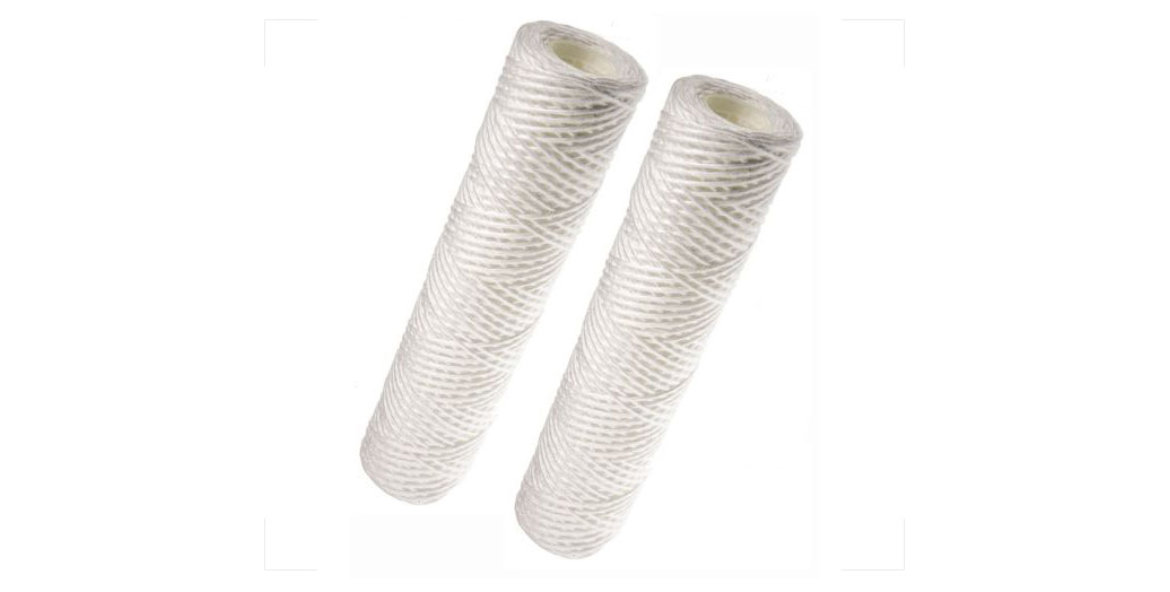
Wound Filter Cartridges Manufacturer in India — String Wound Filters for Industrial Liquid Filtration
Among the many filtration options available, wound filter cartridges stand out for their reliability, cost efficiency, and proven performance across industrial liquid and utility applications. Instead of relying on a single barrier layer, these elements use a precision-wound yarn structure—polypropylene, cotton, rayon, or glass fiber—wrapped tightly around a rigid core. The result is a graded-density depth filter that traps coarse particles on the outside and finer contaminants as flow moves inward.
In actual operation, this layered matrix delivers higher dirt-holding capacity (DHC) and lower pressure drop (ΔP) than uniform density media. Operators often notice that ΔP builds more gradually, allowing longer service intervals without compromising downstream protection. It’s one reason these cartridges remain a standard choice in both domestic installations and export-grade systems where predictable performance matters.
As a leading wound filter cartridge manufacturer in India, Praimo Industrial Filters & Spares Manufacturing Company engineers its cartridges for demanding service conditions. You’ll find them upstream of RO membranes, in cooling water loops, paint booths, syrup polishing lines, and chemical processing skids. Standard lengths—10″, 20″, 30″, and 40″—and diameters of 2.5″ and 4.5″ (Big Blue) cover a wide range of flow capacities, while micron ratings from 0.5 µm to 200 µm provide flexibility for both coarse pre-filtration and fine polishing. Nominal efficiency typically ranges between 80–95 %, depending on winding density and media choice.
When combined with Praimo’s single- or multi-cartridge housings, simplex/duplex filter systems, or even bag filters in staged configurations, wound cartridges act as the first line of defense. They reliably shield pumps, heat exchangers, membranes, and other sensitive equipment from fouling and premature wear.
From a compliance standpoint, these cartridges are manufactured with FDA/NSF-approved materials, come with EN 10204 3.1 metallic traceability, and are packed in ISPM-15 export-certified crates, making them fully suited for international EPC and OEM projects.
Introduction — Industrial String Wound Filter Cartridges for High-Dirt Holding Filtration
In most industrial fluid handling systems, wound filter cartridges serve as a critical first-stage or polishing filtration step. Their function is simple yet remarkably effective: a graded-density structure traps large particles on the outer layers and progressively finer contaminants closer to the core. This depth-based mechanism allows string wound filters to achieve high dirt-holding capacity (DHC) while maintaining a stable differential pressure (ΔP) over extended operating cycles — a combination that makes them both cost-effective and operationally reliable.
In practice, wound cartridges are typically installed downstream of basket strainers and upstream of cartridge filter housings or RO membranes. Positioned this way, they intercept suspended solids, silt, rust, and colloids early in the line, safeguarding downstream components such as pumps, membranes, heat exchangers, and spray nozzles. Operators often find that properly sized wound filters significantly extend membrane cleaning intervals and reduce fouling rates, especially in surface water and utility water applications.
Their versatility is one reason they remain relevant in modern systems. You’ll find them in chemical processing, paints and coatings, and across food & beverage sectors, where reliability and cleanability are critical. And because they’re available in media like polypropylene, cotton, rayon, and glass fiber, these cartridges adapt well to varying fluid chemistries, temperatures, and regulatory environments.
Compliance is another key factor for global projects. Wound cartridges can be configured to meet FDA 21 CFR, NSF/ANSI 61, and EN 10204 standards, making them suitable for OEM skid builders, EPC contractors, and industrial buyers who require long service life, easy integration, and dependable performance under demanding operating conditions.
In practice, actual flow capacity depends heavily on fluid viscosity, solids loading, and pleat density. For example, in process streams with viscosities between 5–10 cP, a 50–65 % flow derating is usually applied as a rule of thumb. Many operators rely on ΔP monitoring rather than fixed time intervals to determine change-out, as this approach yields more consistent lifecycle performance.
These cartridges are typically installed in single or multi-cartridge housings, enabling scalable flow rates from small utility skids to large RO pretreatment trains. It’s common in design reviews to oversize housings slightly to reduce face velocity, which helps maintain lower ΔP and extends run length—an often-overlooked detail that pays dividends in real-world operations.
Product Overview — What is a Wound Filter Cartridge?
A wound filter cartridge is essentially a depth filtration element, designed to trap contaminants progressively through its layered structure. It’s made by tightly winding yarn or fibers—commonly polypropylene, cotton, rayon, or glass fiber—around a rigid core constructed from PP, tinned steel, or stainless steel (SS304 / SS316). The winding pattern isn’t random; it’s deliberately engineered to form a progressively tighter matrix, with larger particles caught on the outside and finer particles captured closer to the core.
This graded-density structure is what gives wound filters their performance edge. In actual operation, they offer high dirt-holding capacity (DHC) and maintain a low initial pressure drop, making them suitable for both pre-filtration (upstream protection) and polishing (downstream fine filtration) stages. Operators often appreciate how the ΔP builds slowly and predictably, unlike some single-layer filters that blind rapidly.
Unlike surface filters, which rely on a single barrier layer, string wound cartridges deliver true depth filtration—contaminants are retained throughout the entire media thickness. This leads to longer service life and fewer changeouts, especially in systems facing variable or high solids loading.
Commonly available sizes include:
- Lengths: 10", 20", 30", and 40"
- Diameters: 2.5" (standard) and 4.5" (Big Blue)
- Micron ratings: 0.5 µm to 200 µm
Now, when comparing wound vs pleated cartridges, the trade-offs become clear. Pleated filters excel at absolute ratings and high surface area for fine polishing, whereas wound cartridges shine in cost-effectiveness, handling high suspended solids, and tolerating fluctuating inlet conditions. Their robust construction also enables compatibility with a wide range of chemical types, operating temperatures, and flow conditions, making them a highly versatile choice across industries.
Technical Specifications — Wound Filter Cartridge Sizes, Flow Rates & Pressure Ratings
When selecting wound filter cartridges, understanding their dimensional standards and hydraulic performance is critical. These elements come in a variety of lengths, diameters, and micron ratings, making them adaptable to a wide range of industrial flow capacities and housing configurations.
The most common lengths are 10″, 20″, 30″, and 40″, paired with outer diameters of 2.5″ (standard) and 4.5″ Big Blue for higher flow service. Inner diameters typically fall between 1.0″–1.1″ (25–28 mm). Across the product range, micron ratings span from 0.5 µm up to 200 µm, with nominal filtration efficiency between 80–95 %, which covers both coarse solids interception and fine pre-filtration.
In practice, flow capacity and pressure drop (ΔP) vary depending on length, micron rating, media type, and winding density. The table below provides typical clean water performance at 20 °C, 1 cP viscosity, under standard test conditions:
| Cartridge Length | Micron Rating | Recommended Flow (m³/hr) | Initial ΔP (bar) | Terminal ΔP (bar) |
|---|---|---|---|---|
| 10" × 2.5" | 5 µm | 0.3 – 0.5 | 0.07 – 0.12 | 1.0 – 1.5 |
| 20" × 2.5" | 5 µm | 0.6 – 1.0 | 0.07 – 0.12 | 1.0 – 1.5 |
| 30" × 2.5" | 5 µm | 0.9 – 1.5 | 0.07 – 0.12 | 1.0 – 1.5 |
| 40" × 2.5" | 5 µm | 1.2 – 2.0 | 0.07 – 0.12 | 1.0 – 1.5 |
| 40" × 2.5" | 20 µm | 2.4 – 3.6 | 0.03 – 0.07 | 1.0 – 1.5 |
| 40" × 4.5" (Big Blue) | 10 µm | 3.5 – 4.5 | 0.07 – 0.10 | 1.0 – 1.5 |
Note: Actual flow rates depend on fluid viscosity, solids loading, micron rating, and winding pattern. For viscous or critical applications, it’s best to verify ΔP curves and check housing pressure limits rather than relying on nominal values.
The maximum operating pressure typically ranges between 6–10 bar (87–145 psi), depending on the core material and the housing. As a rule of thumb, cartridges should be changed out at 1.0–1.5 bar ΔP, while the maximum allowable differential is usually between 2.5–4.0 bar. For high-pressure or elevated temperature service, cartridges built with SS304 or SS316 cores are preferred—they maintain structural integrity where polypropylene cores may deform.
In real-world applications, engineers often oversize the cartridge bank slightly to lower initial ΔP and lengthen service intervals. This small design choice can significantly improve lifecycle economics, especially in multi-element housings or high-flow skid assemblies.
Technical Performance — ΔP Curves, Filtration Efficiency & Dirt-Holding Capacity
The real-world performance of wound filter cartridges ultimately hinges on three intertwined parameters: differential pressure (ΔP), filtration efficiency, and dirt-holding capacity (DHC). Together, they dictate not just filtration effectiveness, but also service life, energy consumption, and how well downstream equipment is shielded from fouling.
1. Differential Pressure (ΔP) Behavior
In actual operation, wound cartridges are known for their low initial pressure drop. This is thanks to the open outer layers and graded-density media structure, which allow fluid to enter easily while progressively filtering finer particles toward the core. As solids accumulate, ΔP rises steadily through the media depth — a predictable curve that’s highly valued in process design.
| Cartridge Length | Micron Rating | Initial ΔP (bar) @ Nominal Flow | Terminal ΔP (bar) |
|---|---|---|---|
| 10" × 2.5" | 5 µm | 0.07 – 0.12 | 1.0 – 1.5 |
| 20" × 2.5" | 5 µm | 0.07 – 0.12 | 1.0 – 1.5 |
| 40" × 2.5" | 10 µm | 0.05 – 0.09 | 1.0 – 1.5 |
| 40" × 2.5" | 20 µm | 0.03 – 0.07 | 1.0 – 1.5 |
| 40" × 4.5" Big Blue | 10 µm | 0.07 – 0.10 | 1.0 – 1.5 |
👉 Best practice: Replace wound cartridges at a terminal ΔP of 1.0 – 1.5 bar. Exceeding this can lead to media deformation, increased energy costs, or even bypass through the core—a common field mistake.
2. Filtration Efficiency
Wound cartridges are nominal-rated filters, typically achieving 80–95 % efficiency depending on the micron rating, winding density, and fluid properties. Because of their graded-density design, they handle a wide range of particle sizes effectively, making them ideal as pre-filters ahead of pleated or membrane elements.
In most plants, they’re placed upstream of more sensitive polishing stages. This two-stage approach significantly extends the life of downstream filters while maintaining required effluent clarity. And honestly, when dealing with variable feedwater conditions, nominal-rated wound cartridges often outperform more rigid media in terms of cost per cubic meter filtered.
3. Dirt-Holding Capacity (DHC)
Where wound cartridges really shine is in solids loading. Their multi-layer structure provides large void volume throughout the depth of the media, allowing them to store significant amounts of particulate before reaching terminal ΔP. Typical DHC values are:
- 10" × 2.5": 50 – 120 g
- 40" × 2.5": 200 – 500 g
- 40" × 4.5" Big Blue: 600 – 1500 g
Using a graded-density winding pattern can boost DHC by 20–40 % compared to uniform media — a meaningful improvement in systems with high turbidity or fluctuating loads. When comparing wound vs melt-blown filters, the advantage is clear: wound cartridges often retain more solids at similar pressure drops, reducing changeout frequency and lowering operational costs.
In practice, these performance characteristics make wound cartridges particularly well-suited for surface water pretreatment, variable inlet streams, and process lines where particulate loads fluctuate. Engineers appreciate the predictable ΔP curves and long service intervals, which make system operation more stable and maintenance planning more straightforward.
Materials & Construction — PP, Cotton, Rayon & Glass Fiber Wound Filter Cartridges
The materials and construction of a wound filter cartridge play a decisive role in its chemical compatibility, temperature resistance, and mechanical integrity under differential pressure. By selecting the right yarn media, core, and seal configuration, engineers can precisely match filtration performance to the process fluid, operating conditions, and regulatory requirements. In practice, these material choices often dictate not just filter performance—but also changeout frequency, lifecycle cost, and system reliability.
1. Filter Media (Yarn) Options
Different yarns bring different strengths. Here’s a quick reference matrix:
| Media Type | Typical Applications | Temperature Range (°C) | Chemical Compatibility | Key Features |
|---|---|---|---|---|
| Polypropylene (PP) | RO pre-filtration, potable water, chemicals | Up to 80–90 °C | Excellent for acids, alkalis, salts | Non-shedding, inert, broad compatibility |
| Cotton | Hydrocarbons, solvents, paints | Up to 120–130 °C (with SS core) | Good for organic solvents; limited for acids | Natural fiber, taste/odor neutral |
| Rayon (Viscose) | Surface water, fine colloids, syrup polishing | Up to 70–80 °C | Moderate | High dirt loading, economical |
| Glass Fiber | High-temp gases, oils, aggressive fluids | Up to 200–260 °C | Excellent at high temperature | Thermal stability, fine aerosol capture |
- Polypropylene string wound filter cartridges are the workhorse of general industrial and water filtration. They’re chemically inert, low in extractables, and cover a broad pH spectrum.
- Cotton wound filter cartridges, often paired with SS cores, excel in hydrocarbon service—paints, solvents, and process fluids where natural fiber interaction improves taste/odor neutrality.
- Rayon wound filters are typically chosen for cost-effective polishing of low-viscosity liquids, particularly in syrup or surface water treatment lines.
- Glass fiber wound filters are the specialist option for high-temperature or aggressive chemical duties, such as thermal oil circuits, power plant lines, or gas filtration where polymer media would fail.
2. Core Materials
The core is what gives a wound cartridge its collapse resistance and temperature capability. It’s easy to overlook—but it matters.
- PP Core: Economical and corrosion-resistant. Best suited for ambient temperature water service and standard duty applications.
- Tinned Steel Core: Offers a bump in rigidity with moderate corrosion resistance. Often used in intermediate service where budget matters.
- SS304 / SS316 Core: The top tier. With collapse strength up to 4–6 bar ΔP, these cores are mechanically robust and chemically resistant. SS316 is typically specified for critical export projects and aggressive fluid streams, where long-term dimensional stability under pressure is essential.
In practice, engineers often select SS cores for high ΔP, high temperature, or long cycle time applications to avoid deformation—a failure mode sometimes seen with PP cores under prolonged stress.
3. Sealing & End Configurations
End connections determine housing compatibility and leak-tightness. Wound cartridges are available in:
- DOE (Double Open End)
- SOE (222 / 226) — with flat or fin ends, to fit sanitary and industrial housings.
Gasket & O-ring materials are selected based on fluid and temperature:
- NBR/Buna-N: Economical, good for water and mild service.
- EPDM: Excellent for hot water and mild chemicals.
- Viton® (FKM): Strong solvent and hydrocarbon resistance.
- Silicone / PTFE-encapsulated: High temperature and chemically aggressive environments.
A surprisingly common field error is mismatching gasket material with chemical service—leading to seal swelling, bypass, or premature failure. Correct pairing here ensures trouble-free installation and operation.
This material flexibility enables Praimo Industrial Filters & Spares Manufacturing Company to configure PP, cotton, rayon, and glass fiber wound cartridges with SS316 cores and FDA/NSF-compliant elastomers, making them suitable for both domestic installations and international EPC projects. The result: operational reliability, regulatory compliance, and long service life, even in demanding environments.
End Connections & Configurations — DOE, SOE 222/226, Big-Blue, Horizontal & Vertical
The end connections and installation configurations of wound filter cartridges play a far bigger role in system performance than many give them credit for. Choosing the right end type ensures proper sealing, quick changeouts, and full compatibility with a wide variety of industrial filter housings. Equally, selecting the correct orientation—vertical or horizontal—can influence maintenance convenience, venting efficiency, and overall reliability in the field.
1. End Connection Types
Wound cartridges are offered in multiple end connection styles, each designed for a specific type of housing and sealing method:
| End Type | Description | Typical Applications | Key Advantages |
|---|---|---|---|
| DOE (Double Open End) | Open at both ends; relies on housing compression plate and spring for sealing | Standard industrial housings | Economical, simple replacement |
| SOE 222 / Flat | Single Open End with 222 O-rings and flat end | Sanitary / critical process | Positive sealing, reduced bypass |
| SOE 226 / Flat or Fin | Single Open End with 226 O-rings and flat or fin end | High-pressure, high-purity systems | Secure fit, easy handling, high integrity |
| Big-Blue 4.5" | Oversized DOE design for higher flow | High-volume water treatment, RO skids | Increased surface area, fewer elements |
- DOE wound filter cartridges are the workhorse choice for standard industry, utility water, and general process filtration. Their simple, cost-effective design fits most conventional housings without the need for special adaptors.
- SOE 222 and SOE 226 string wound cartridges come into play where sanitary standards, high purity, or high pressure are involved. These use O-rings for positive sealing, which minimizes bypass — critical in pharma, F&B, or high-integrity chemical systems.
- The 4.5″ Big-Blue wound cartridges are specifically designed for higher flow rates and extended service life, making them a preferred choice for RO pretreatment skids and industrial water filtration systems, where reducing the number of elements simplifies operation.
In practice, bypass issues almost always trace back to either a mismatched end configuration or worn sealing components, not the cartridge media itself.
2. System Configurations: Horizontal vs Vertical
Wound cartridges can be mounted vertically or horizontally, depending on plant layout and housing design:
- Vertical configuration is the industry standard. It allows natural drainage, easy venting, and straightforward element replacement. Maintenance crews prefer this for accessibility and predictable loading.
- Horizontal configuration is typically used in height-restricted installations, modular skids, or mobile filtration units. It requires careful supporting structures and venting design to avoid air entrapment or uneven element loading — a common oversight during skid fabrication.
Realistically, orientation decisions are often dictated by skid envelope constraints, but when in doubt, vertical alignment wins for simplicity.
3. Engineering Fit & Export Readiness
Praimo Industrial Filters & Spares Manufacturing Company manufactures wound filter cartridges to precise dimensional tolerances, ensuring they fit seamlessly into global housing standards without modification.
Available end configurations comply with ASME / PED norms, and EN 10204 3.1 material traceability is provided on request—especially for export and EPC projects where documentation and interchangeability are non-negotiable.
Regulatory & Compliance Standards — FDA, NSF/ANSI 61, EN 10204, PED/CE
For industrial buyers, EPC contractors, and export clients, regulatory and compliance standards are not just checkboxes—they’re essential for audit readiness, risk mitigation, and smooth integration into international projects. That’s why wound filter cartridges manufactured by Praimo Industrial Filters & Spares Manufacturing Company are engineered and documented to align with globally recognized norms, ensuring full acceptance in domestic installations and export markets alike.
1. Material & Product Compliance
Praimo’s wound filter cartridges conform to multiple international certifications and standards, covering materials, manufacturing processes, and compatibility with pressure equipment:
| Standard / Certification | Scope | Relevance to Wound Filter Cartridges | Typical Application |
|---|---|---|---|
| FDA 21 CFR | US Food & Drug Administration | Compliance of PP, cotton, rayon yarns and elastomers for food contact | Food & Beverage, pharma utilities |
| NSF/ANSI 61 | Potable Water Systems | Ensures materials are safe for drinking water applications | Water treatment plants, RO skids |
| EN 10204 3.1 | Material Test Certificates | Traceability for metallic cores (SS304 / SS316) | EPC projects, export documentation |
| PED / CE Marking | EU Pressure Equipment Directive | Applies to housings & systems; cartridges supplied with compatibility DoCs | European export projects |
| ISO 9001 | Quality Management Systems | Ensures manufacturing consistency & QA traceability | All production & QA workflows |
- FDA 21 CFR compliance covers all yarns and elastomers used in cartridges intended for food, beverage, and pharma utility service.
- NSF/ANSI 61 certification guarantees potable water safety, a critical requirement for municipal, RO, and bottled water applications.
- EN 10204 3.1 certificates provide full material traceability for SS304/SS316 cores—an EPC and OEM export documentation essential, often demanded during pre-shipment inspections.
- PED / CE compliance applies primarily to filter housings and assembled systems, but wound cartridges are always supplied with compatibility declarations, ensuring they fit within European regulatory frameworks without additional validation.
- All products are produced under a certified ISO 9001 quality management system, ensuring consistent QA, controlled processes, and traceable documentation at every step.
In practice, this alignment means that cartridges can be dropped into regulated process lines or international EPC skids without requalification—saving procurement teams both time and cost.
2. Global Project Documentation
For export and EPC projects, documentation can make or break delivery timelines. Praimo Industrial Filters & Spares Manufacturing Company provides comprehensive QA and regulatory document packages, including:
- CoC (Certificate of Conformity)
- EN 10204 3.1 MTCs for metallic cores
- DoCs for CE/PED compliance
- Batch traceability and inspection records
Applications & Industries — Where Wound Filter Cartridges Are Used
The widespread adoption of wound filter cartridges across industries comes down to three things: their ability to handle variable solids loads, their stable pressure drop (ΔP) behavior, and their cost-effectiveness as a pre-filtration stage. From process water and chemical streams to hydrocarbons, food-grade liquids, and wastewater, wound cartridges have proven themselves as a dependable line of defense—protecting downstream equipment and extending the operational life of entire systems.
1. RO Pre-Filtration & Water Treatment
In surface water and groundwater treatment, wound cartridges (typically 5–10 µm, 40″ length) are installed upstream of RO membranes or UF systems as pre-filters.
- Typical flow: 2–3 m³/hr per 40″ element
- Changeout ΔP: 1.0–1.5 bar
- SDI improvement: Up to 40 % reduction in fouling index
This stage significantly extends membrane life and reduces CIP frequency, especially in municipal and industrial RO installations where variable feed quality can otherwise lead to accelerated fouling. Engineers often treat wound cartridges as the “sacrificial layer” that shields far more expensive membranes downstream.
2. Cooling Water & Utility Systems
For cooling tower recirculation and heat exchanger protection, wound cartridges in the 20–50 µm range effectively remove silt, rust, and scale—the usual culprits behind fouling and tube-side pressure loss.
- Typical flow: 2–3.5 m³/hr per element
- Maintenance interval extension: From 6 to 12 months in many plants
They’re typically placed after basket strainers, stabilizing pressure fluctuations and cutting back on manual exchanger cleaning. Many utility teams credit these inexpensive filters for lowering OPEX in cooling water circuits.
3. Paints & Coatings Filtration
In automotive and industrial paint shops, cotton or polypropylene wound filters rated at 10–20 µm help remove coagulated solids, overspray, and other particulates that can compromise finish quality.
- Defect rate reduction: Up to 50 %
- Predictable ΔP growth enables scheduled changeouts every 2–4 weeks
These filters are frequently installed in duplex housings, allowing continuous operation during element changeouts—a must for paint booths running multiple shifts.
4. Food & Beverage Syrup Polishing
Cotton wound cartridges with SS316 cores and FDA-grade gaskets are widely used for polishing syrups, juices, and liquid sweeteners, where taste and odor neutrality is critical.
- Micron rating: 5–10 µm nominal
- ΔP limit: 1.0 bar
Their natural fiber structure and compliance with FDA 21 CFR make them ideal for ensuring clarity and product integrity in food processing lines, without leaching unwanted compounds.
5. Wastewater & Chemical Processing
Finally, in effluent polishing or chemical recirculation loops, wound cartridges handle variable particle loads that would quickly blind bag or pleated filters if left untreated. Applications include:
- Dyes and pigment baths
- Electroplating solutions
- Acids, alkalis, and neutralization circuits
Here, wound filters act as a robust, low-cost buffer—protecting more expensive downstream filtration stages, equalizing system ΔP, and preventing sudden fouling events.
Across these sectors, wound filter cartridges stand out for their predictable performance, ease of integration, and broad chemical/temperature compatibility. It’s precisely this versatility that keeps them embedded in both legacy installations and modern skid-mounted systems.
Comparative Performance — Wound Filter vs Melt Blown vs Pleated
When it comes to industrial liquid filtration, engineers and procurement teams often face a critical choice between wound, melt blown, and pleated filter cartridges. The right decision depends on solids loading, micron control requirements, service environment, and ultimately, lifecycle cost. Each of these filtration media has distinct performance characteristics, and understanding their differences helps in designing efficient and cost-effective filtration trains.
Performance Comparison Table
| Parameter | Wound Filter Cartridges | Melt Blown Filter Cartridges | Pleated Filter Cartridges |
|---|---|---|---|
| Filtration Type | Depth (graded density) | Depth (uniform density) | Surface (high area) |
| Micron Rating | 0.5 – 200 µm (nominal) | 1 – 100 µm (nominal) | 0.2 – 100 µm (absolute/nominal) |
| Efficiency | 80–95 % (nominal) | 85–95 % (nominal) | Up to 99.98 % (absolute) |
| Dirt-Holding Capacity | High — graded density retains large loads | Moderate | Moderate to high, depending on pleat area |
| Initial ΔP | Low (open outer layers) | Low to moderate | Very low due to large surface area |
| ΔP Rise | Gradual and predictable | Gradual | Slow, often extended service life |
| Best Suited For | High solids, variable loads, pre-filtration | General utility, low solids | Fine polishing, critical applications |
| Cost | Low | Low to moderate | High (premium) |
| Temperature/Chemical Range | Wide (material-dependent) | Moderate | Moderate to wide (membrane-specific) |
| Maintenance | Easy replacement, low cost | Easy replacement | Less frequent but higher cost elements |
1. Wound vs Melt Blown Filters
In high-solids or variable feed quality scenarios, wound filter cartridges typically outperform melt blown cartridges. Their graded-density structure allows for progressive solids retention, meaning they load more particulate without rapid ΔP spikes. This makes them especially effective in surface water, cooling tower, or RO pre-filtration duties where inlet quality can fluctuate.
- Melt blown cartridges, with their uniform porosity, are a solid choice for standard water treatment or stable inlet conditions.
- However, in challenging feeds, melt blown elements can reach terminal ΔP faster, leading to more frequent changeouts.
- For RO pre-filtration, wound cartridges often deliver better DHC and slower ΔP rise, which translates to longer membrane protection cycles and lower OPEX over time.
In short: melt blown filters are reliable for cleaner feeds, but wound filters handle tougher loads more economically.
2. Wound vs Pleated Filters
Pleated cartridges offer absolute filtration, high surface area, and long service life in polishing or critical process applications—but they come at a higher element cost. These are typically deployed downstream in the filtration train, where their precision and low ΔP can shine without being overloaded by bulk solids.
By contrast, wound filters are preferred as upstream pre-filters. They efficiently remove bulk contaminants at low cost, shielding pleated cartridges from rapid fouling. This staged approach extends pleated filter life and significantly reduces changeout frequency and media spend.
Many plants combine both:
- Wound cartridges for bulk solids and variable feeds
- Pleated cartridges for final polishing and critical clarity
This hybrid strategy strikes a balance between performance and cost, particularly in RO, paint, and pharma utility systems, where process reliability is non-negotiable.
Benefits & Key Advantages — Why Choose Wound Filter Cartridges
The enduring popularity of wound filter cartridges across industries isn’t accidental—it’s the result of their balanced technical performance, cost-effectiveness, and broad compatibility with industrial filtration systems. Thanks to their graded-density depth structure, robust mechanical design, and flexible end configurations, these cartridges offer advantages that other nominal filtration media rarely match.
1. High Dirt-Holding Capacity (DHC)
The multi-layer winding pattern of wound cartridges is their biggest strength. By capturing different particle sizes at different depths, each element can handle between 50–500 g of solids, depending on length and micron rating.
- Graded-density windings provide 20–40 % more DHC than uniform depth filters.
- Ideal for surface water, cooling water, and variable-quality process streams, where particulate loads fluctuate over time.
- This translates into longer operating intervals, fewer changeouts, and reduced unplanned maintenance—especially important for systems with tight maintenance windows.
In real plant conditions, this high DHC often means the difference between weekly changeouts and quarterly intervals, particularly on RO pretreatment lines.
2. Low Pressure Drop & Stable Performance
Wound cartridges have open outer layers and tighter inner zones, resulting in a low initial ΔP—typically 0.05–0.12 bar—followed by a gradual and predictable rise as the media loads.
This stable ΔP profile ensures:
- Consistent flow rates
- Lower pump energy consumption
- Predictable maintenance planning
For operators, this means fewer surprises during shifts and more stable flow behavior, even when feed conditions fluctuate.
3. Cost-Effective Filtration
Compared to pleated or specialty cartridges, wound elements offer significantly lower initial cost while still delivering robust pre-filtration. Their role in protecting downstream filters and reducing membrane fouling can yield substantial OPEX savings over time.
Plants often use wound cartridges strategically as a first line of defense, absorbing bulk solids economically while preserving high-cost polishing stages for what they do best—fine filtration.
4. Easy Replacement & Versatile Compatibility
With configurations including DOE, SOE 222/226, and Big Blue 4.5″, wound cartridges are fully compatible with standard cartridge housings used globally. Their simple mechanical design allows quick, tool-free replacement, minimizing downtime in both fixed installations and mobile filtration skids.
It’s common for maintenance teams to standardize on wound cartridges across multiple skid types, simplifying inventory and training while maintaining performance.
5. Regulatory & Material Flexibility
All Praimo wound filter cartridges are produced using:
- FDA-compliant yarns and elastomers
- NSF/ANSI 61-approved materials for potable water
- EN 10204 3.1-traceable cores for export documentation
Available in PP, cotton, rayon, and glass fiber, with cores in PP, tinned steel, SS304, or SS316, these cartridges can be deployed safely in food & beverage, pharma utilities, water treatment, and chemical process lines worldwide.
In essence, wound cartridges deliver long service life, predictable performance, and regulatory peace of mind—all at a cost that makes sense for bulk pre-filtration. This combination explains why they remain a cornerstone technology in industrial filtration trains, even as newer media types emerge.
Lifecycle Cost & ROI — Media Cost vs Performance Over Time
When evaluating industrial filtration systems, smart buyers and EPC teams know it’s not just the initial cartridge price that matters — it’s the total lifecycle cost. This includes how often elements are replaced, the downtime during changeouts, and the energy penalty from rising pressure drop (ΔP).
Wound filter cartridges consistently deliver a favorable ROI because of their low unit cost, high dirt-holding capacity (DHC), and predictable ΔP behavior. These factors make them particularly effective for bulk contaminant removal in multi-stage filtration trains, where every stage has a cost and performance role to play.
1. Media Cost vs Service Life
| Cartridge Type | Typical Unit Cost (INR) | DHC (g solids) | Avg. Service Life (weeks) | Changeout Frequency / 6 months |
|---|---|---|---|---|
| Wound (40") | ₹300–₹600 | 200–500 | 4–8 | 3–6 |
| Melt Blown (40") | ₹350–₹700 | 120–300 | 3–6 | 5–8 |
| Pleated (40") | ₹1,500–₹2,800 | 250–400 | 6–12 | 1–3 |
Values are indicative and depend on fluid quality, micron rating, and operating conditions.
Because wound cartridges combine low purchase cost with high solids capacity, they often require fewer changeouts for the same filtration duty, significantly reducing media spend over time. This is especially impactful in high-flow RO pretreatment, cooling water circuits, or process streams with variable solids, where the number of cartridges can run into the dozens.
In actual plant practice, teams often find that wound cartridges deliver better cost-per-m³-filtered than both melt blown and pleated elements—even if their nominal rating is similar.
2. ROI Model — Example Calculation
| Parameter | Wound Cartridge | Melt Blown Cartridge |
|---|---|---|
| Flow per element | 3 m³/hr | 3 m³/hr |
| Operating hours/month | 600 | 600 |
| Cartridge price | ₹500 | ₹600 |
| Changeouts / 6 months | 4 | 7 |
| Media cost / 6 months | ₹2,000 | ₹4,200 |
| Estimated downtime cost | ₹4,000 | ₹7,000 |
| Total Cost / 6 months | ₹6,000 | ₹11,200 |
In this representative example, wound cartridges deliver approximately 45% cost savings over six months, primarily through fewer media replacements and lower changeout labor.
When scaled across multi-round housings—for example, a 30-round RO pretreatment skid—the savings multiply quickly. Over a year, this difference can translate into lakhs of rupees in OPEX reductions, along with more stable plant operation.
3. Strategic Positioning in Filtration Trains
The most cost-efficient plants don’t rely on a single cartridge type—they strategically position wound cartridges upstream of melt blown or pleated elements.
This allows bulk particulates to be trapped economically, keeping downstream high-cost polishing filters clean for longer. The result is:
- Extended pleated cartridge service life
- Lower membrane fouling rates
- Optimized media consumption across the filtration train
- Faster payback periods for skid investments
In short: wound cartridges deliver front-end economics that make the entire system more cost-efficient.
Buying & Procurement Guide — Selecting the Right Wound Filter Cartridge
Choosing the correct wound filter cartridge isn’t just about picking a micron number off a datasheet — it’s about aligning filtration performance, lifecycle economics, and system compatibility with the actual process environment. Procurement engineers, OEMs, and EPC teams can follow the structured guide below to ensure each cartridge performs as intended, without unexpected pressure drops, premature fouling, or regulatory gaps.
1. Define Micron Rating Based on Application
The micron rating is the first and most critical parameter in cartridge selection. Wound filter cartridges are available in nominal ratings from 0.5 µm up to >200 µm, covering polishing to coarse bulk removal:
- 0.5 – 1 µm: Final polishing or sensitive downstream protection — typically in pharma utilities, fine colloid removal, or as pre-membrane polishing.
- 5 – 10 µm: Standard RO pre-filtration, food & beverage syrup polishing, and general process water treatment.
- 20 – 50 µm: Bulk contaminant removal in cooling water, paint circulation loops, and surface water treatment.
- >50 µm: Rough filtration in high-solids or wastewater streams, often upstream of strainers or bag filters.
Tip: Match nominal ratings to upstream solids loading and downstream SDI / clarity targets. Undersizing often leads to rapid ΔP rise, while oversizing may compromise downstream protection.
2. Choose Cartridge Length & Diameter
Cartridge dimensions influence flow per element, service intervals, and housing configuration:
- 10″ / 20″: Ideal for low-flow polishing, pilot skids, and smaller process lines.
- 30″ / 40″: Standard for industrial RO skids, utility loops, and central filtration systems.
- 2.5″ OD: Fits standard industrial housings.
- 4.5″ Big Blue: Provides higher flow per element, reducing changeouts in large installations.
Always check housing headroom (vertical vs horizontal) during procurement — a detail often overlooked in retrofit projects.
3. Select Media Type & Core
Material selection determines chemical compatibility, temperature tolerance, and mechanical strength. Praimo offers multiple yarn and core combinations:
Media Types
- Polypropylene — Broad chemical compatibility, inert; ideal for most water and chemical services.
- Cotton + SS316 Core — Best for solvents, hydrocarbons, and high-temperature duties.
- Rayon — Economical option for low-viscosity fluids at moderate temperatures.
- Glass Fiber — For high-temperature or aggressive chemical environments.
Core Options
- PP Core — Standard for ambient water service.
- SS304 / SS316 Core — Handles high ΔP, temperature, and aggressive fluids; preferred for export / EPC projects where EN 10204 traceability is required.
4. Verify Flow Rate vs ΔP
Before finalizing specifications, verify the manufacturer’s flow vs ΔP curves for the selected micron and length.
As a rule of thumb:
- Terminal ΔP: 1.0–1.5 bar
- Oversizing cartridges often increases service life and reduces OPEX by avoiding premature plugging.
Many procurement teams skip this step, only to encounter higher energy consumption and frequent changeouts later.
5. Check End Connection & Housing Compatibility
End connections are critical for leak-free sealing:
- DOE (Double Open End) — Standard for industrial housings; simple and economical.
- SOE 222 / 226 — Required for sanitary, high-pressure, or high-purity housings; use O-rings for precise sealing.
- Big Blue 4.5″ — Ensure proper gasket or O-ring seating to avoid bypass.
Also, match gasket materials to process chemistry and temperature: EPDM, Viton® (FKM), NBR, or Silicone/PTFE-encapsulated depending on service fluid.
6. Evaluate Regulatory & Supplier Credentials
Finally, align procurement with regulatory and quality standards. Partner with wound filter cartridge manufacturers in India who provide:
- FDA / NSF / EN 10204 / PED compliance for domestic and international projects
- Full dimensional interchangeability with global standard housings
- Competitive pricing backed by consistent QA
- Datasheets, drawings, and RFQ support for smooth project submittals
Praimo Industrial Filters & Spares Manufacturing Company meets these requirements, supplying engineered wound filter cartridges for both domestic installations and global EPC/OEM supply chains.
Export Readiness — Praimo’s Global Documentation & Packing Standards
For EPC contractors, OEMs, and international procurement teams, reliable export support goes far beyond simply shipping cartridges. It involves regulatory alignment, traceable documentation, and logistics-ready packaging that meets the compliance frameworks of multiple jurisdictions. As a trusted wound filter cartridge exporter, Praimo Industrial Filters & Spares Manufacturing Company has developed a robust export readiness framework that ensures every shipment is engineered not just for filtration performance, but also for seamless global integration.
1. Regulatory & Documentation Packages
Praimo provides comprehensive QA and regulatory documentation, tailored to meet the stringent requirements of EPC projects in Europe, the Middle East, Africa, and Asia-Pacific. Documentation is formatted to match EPC submittal standards, minimizing delays during technical bid evaluation and vendor qualification.
| Document Type | Standard / Format | Purpose |
|---|---|---|
| Material Test Certificates | EN 10204 3.1 | Full traceability for SS304 / SS316 cores |
| Declaration of Conformity | PED SEP / CE | Compliance with EU Pressure Equipment Directive |
| FDA / NSF Certificates | FDA 21 CFR, NSF/ANSI 61 | Food-grade and potable water compliance |
| Certificate of Conformity (CoC) | Project-specific | QA & specification assurance |
| Packing List + Commercial Invoices | Export-compliant | Customs & logistics clearance |
| Inspection Reports | ISO 9001 protocols | Pre-dispatch verification |
Each document set is assembled and verified pre-dispatch, ensuring rapid approval during FAT (Factory Acceptance Test) or vendor audits. For international projects, this level of documentation often accelerates procurement cycles by weeks.
2. ISPM-15 Export Packaging
Filtration elements are delicate—yarn winding, cores, and sealing interfaces must remain intact through sea or air freight. To prevent transit damage, Praimo uses ISPM-15 heat-treated wooden crates or pallets, supplemented by moisture barriers, serialized packing slips, and clear export labeling.
This method provides:
- Phytosanitary compliance with international regulations
- Protection against moisture, mechanical shock, and contamination
- Stackable, container-ready configurations for efficient logistics
In practice, this packaging approach has proven especially critical for shipments bound for desalination plants in coastal regions, where humidity and long transit times can compromise lesser packaging.
3. Global Supply Integration
Praimo’s wound filter cartridges are built to integrate directly into international filtration systems without modification:
- Compatible with DOE, SOE 222/226, and Big Blue housings.
- Supplied with EN 10204 3.1 core certificates, PED SEP / CE declarations, and FDA / NSF material compliance.
- Ready for immediate use in OEM skids, pharma utilities, desalination projects, and industrial water treatment plants worldwide.
This means EPC teams don’t need to requalify cartridges locally—a major advantage during commissioning.
With this structured export readiness program, Praimo Industrial Filters & Spares Manufacturing Company stands out as a global partner for wound filter cartridge supply in complex international projects. Whether it’s a large desalination facility in the Middle East or a pharma utility skid for the EU market, every unit is backed by engineering documentation, regulatory compliance, and packaging integrity worthy of critical infrastructure.
Maintenance & Troubleshooting — Ensuring Reliable Filtration Performance
In real-world industrial environments, proper maintenance determines whether wound filter cartridges deliver their expected service life or fail prematurely. While these cartridges are engineered for durability and high dirt-loading, they still depend on consistent monitoring, timely changeouts, and attention to a few critical operational details. A structured maintenance approach not only preserves filtration efficiency but also minimizes unplanned downtime and reduces lifecycle costs.
1. Recommended Replacement & Changeout Intervals
Maintenance teams often make the mistake of replacing cartridges on arbitrary time schedules. A better approach is to monitor ΔP (differential pressure) and change elements when they reach their terminal ΔP — typically 1.0–1.5 bar — rather than waiting for flow to collapse or bypass to develop.
| Parameter | Recommended Value | Notes |
|---|---|---|
| Initial ΔP | 0.05 – 0.12 bar | Measured with clean element at nominal flow |
| Terminal ΔP | 1.0 – 1.5 bar | Changeout point to prevent media deformation & bypass |
| Max ΔP across element | 2.5 – 4.0 bar (material-dependent) | SS core recommended for higher ΔP |
| Typical service life | 4–8 weeks (industrial water), 2–4 weeks (paint/syrup) | Varies by solids load, fluid chemistry, and operating hours |
Best Practice: Establish a baseline ΔP during system commissioning and track readings daily or weekly depending on criticality. This helps catch gradual fouling trends early and schedule changeouts before unexpected shutdowns.
2. Common Maintenance Issues & Engineering Solutions
Even with proper sizing, a few operational issues can creep in. Most are straightforward to diagnose once you know what to look for:
| Issue | Description | Likely Cause | Recommended Solution |
|---|---|---|---|
| Premature pressure rise | Rapid ΔP increase shortly after installation | Undersized cartridge, high solids load, incorrect micron | Reassess sizing; use longer elements or a coarser pre-stage |
| Channeling | Bypass paths form inside media | Excess ΔP or poor winding density | Replace cartridge; consider SS core for higher pressure applications |
| Fiber shedding | Loose fibers downstream | Low-quality yarn or overpressure | Use FDA/NSF-grade media; ensure ΔP limits are respected |
| Bypass leakage | Fluid bypassing cartridge | Improper sealing or end cap mismatch | Verify DOE/SOE seating, O-rings, and housing tolerances |
| Inconsistent flow | Uneven pressure distribution | Horizontal installation without proper venting | Install vent ports or reorient housings vertically |
Engineering Insight: In horizontal manifolds, uneven loading between cartridges often goes unnoticed until one element clogs prematurely. A simple vent port upstream can equalize flow distribution and extend service intervals dramatically.
3. Cleaning & Reuse Considerations
Although wound cartridges are typically single-use, there are limited scenarios—such as non-critical utility water—where light backflushing or rinsing can temporarily extend service life. That said, excessive cleaning can loosen fibers, degrade filtration efficiency, or damage the winding structure.
- When reuse is acceptable: Low-viscosity fluids, low contaminant adhesion, non-critical applications.
- When to avoid reuse: Food & beverage, pharma utilities, high SDI water, aggressive chemicals, or absolute filtration stages.
For critical systems, single-use replacement at terminal ΔP remains the gold standard, ensuring no compromise in filtration performance or regulatory compliance.
By embedding these maintenance practices into SOPs, facilities can significantly reduce unplanned shutdowns, stabilize system ΔP behavior, and maximize ROI from every wound filter cartridge—especially in multi-round housings where unscheduled changeouts can be costly.
Maintenance & Troubleshooting — Ensuring Reliable Filtration Performance
In industrial filtration systems, maintenance isn’t just about replacing elements on schedule — it’s about reading the pressure differential (ΔP) like a gauge on process health. With wound filter cartridges, a disciplined approach to changeout intervals, inspection routines, and troubleshooting common issues directly impacts system uptime, media utilization, and lifecycle cost.
Recommended Replacement Intervals & ΔP Criteria
Relying on fixed calendar intervals often wastes usable media life or, worse, leads to channeling and bypass. Instead, the terminal differential pressure should be your trigger. By monitoring ΔP regularly, maintenance teams can extend service life without compromising filtration integrity.
| Parameter | Recommended Value | Notes |
|---|---|---|
| Initial ΔP | 0.05 – 0.12 bar | Measured on clean element at design flow |
| Terminal ΔP | 1.0 – 1.5 bar | Changeout point to prevent media deformation & bypass |
| Maximum ΔP | 2.5 – 4.0 bar (material dependent) | SS core preferred for high ΔP duties |
| Typical service life | 4–8 weeks (industrial water), 2–4 weeks (paint/syrup) | Depends on solids load, viscosity & operating hours |
Tip: Monitor ΔP daily in critical services (e.g., RO pre-filtration, cooling loops) and weekly in utility streams. Change elements promptly at 1.0–1.5 bar terminal ΔP to avoid irreversible structural collapse.
Common Issues & Engineering Solutions
Even well-sized filtration systems can experience predictable maintenance issues. Recognizing these early and applying engineering solutions prevents recurring failures.
| Issue | Symptom | Likely Cause | Engineering Solution |
|---|---|---|---|
| Rapid ΔP rise | Pressure differential spikes early | Undersized cartridge, high solids load, incorrect micron | Use graded-density wound cartridges or install upstream bag filter to reduce solids load |
| Fiber shedding | Loose fibers downstream | Poor-quality yarn, overpressure, insufficient bonding | Specify bonded or FDA/NSF-grade yarn; pre-flush cartridges before use |
| Collapse / deformation | Cartridge structure failure | Exceeding ΔP limits, weak core | Use SS304/SS316 cores and ensure proper housing support cages |
| Bypass leakage | Unfiltered fluid downstream | Misalignment, poor DOE/SOE seating | Inspect end caps, O-rings, and housing tolerances |
| Inconsistent flow | Uneven pressure distribution | Horizontal mounting without venting | Add vent ports or switch to vertical housings for balanced flow |
Field Insight: In horizontal manifolds, one or two cartridges often foul first because trapped air skews flow distribution. A small vent port at the upstream header can solve what looks like a chronic media issue.
Cleaning & Reuse Practices
While wound filter cartridges are designed as disposable elements, some operators in non-critical applications (e.g., low solids utility water) rinse or lightly backwash them to dislodge loose surface particles. This can temporarily extend service life — but it’s not without risk.
- Appropriate for: Non-critical loops, low solids loading, coarse micron ratings.
- Avoid in: Food & beverage, pharmaceutical utilities, fine micron filtration, aggressive chemistries.
Repeated cleaning can loosen fibers, alter winding tension, or degrade filtration efficiency. For critical process lines, single-use replacement at the recommended terminal ΔP remains best practice.
Case Studies — Proven Performance in Real-World Applications
Numbers on spec sheets tell only part of the story. Where wound filter cartridges really prove their value is in the field — in actual plants, under unpredictable operating conditions. The following anonymized case studies highlight how switching to wound cartridges improved filtration efficiency, system uptime, and OPEX across three very different industrial environments. Each example demonstrates why graded-density depth media continues to hold its ground against alternatives like melt blown or pleated filters.
1. Beverage RO Plant — Extended Membrane Life Through Improved Pre-Filtration
One of India’s largest beverage producers was struggling with frequent RO membrane fouling. Their melt blown pre-filters couldn’t handle the variable solids load in raw water, resulting in rapid SDI increase and costly cleaning cycles. After replacing the pre-filters with 5 µm, 40″ polypropylene wound filter cartridges, the difference was dramatic.
| Parameter | Before (Melt Blown) | After (Wound Cartridge) |
|---|---|---|
| SDI (Silt Density Index) | 6.5 avg | 3.8 avg |
| Membrane CIP frequency | Every 10 days | Every 21 days |
| Cartridge changeouts / 6 mo | 8 | 4 |
| Operating cost / 6 mo | ₹11.2 lakh | ₹6.4 lakh |
Result: A 43 % reduction in OPEX and more than 2× membrane run time, achieved by leveraging the wound cartridge’s graded-density structure and higher DHC. The RO system’s SDI stabilized, and operators reported less fouling even under seasonal raw water fluctuations.
2. Automotive Paint Booth — Defect Rate Reduction & Maintenance Stabilization
An automotive OEM faced recurring paint booth contamination issues. Overspray particles were bypassing generic filters, leading to visible surface defects on finished panels and frequent line stoppages. The plant switched to 20 µm cotton wound cartridges with SS316 cores, chosen for their chemical compatibility and mechanical strength.
| Metric | Before | After |
|---|---|---|
| Surface defect rate | 2.4 % | 1.1 % |
| Filter changeouts / month | 6 | 2 |
| ΔP profile | Unstable | Linear / predictable |
| Paint line downtime | High | Reduced by 55 % |
Result: A 55 % reduction in unplanned downtime, more predictable ΔP behavior, and a significant improvement in coating quality. Operators noted that the linear pressure rise made scheduling changeouts easier, reducing production disruptions.
3. Food & Beverage Syrup Polishing — Improved Clarity & Taste Stability
A confectionery processor needed finer syrup polishing to prevent nozzle clogging and maintain flavor consistency. Their pleated filters were delivering clarity but at a high replacement cost and with variable performance. The plant shifted to 5 µm cotton wound cartridges with FDA gaskets in a duplex housing setup.
| Parameter | Before | After |
|---|---|---|
| Syrup clarity (NTU) | 4.2 | 1.8 |
| Filter life | 2 weeks | 5 weeks |
| Taste stability | Variable | Consistent |
| CIP frequency | Weekly | Biweekly |
Result: Noticeably clearer syrup, stable taste characteristics, and longer filter life — all while maintaining sanitary compliance. The duplex system allowed changeouts without halting production, further optimizing plant operations.
These real-world deployments show why wound filter cartridges remain a smart engineering choice for applications involving variable solids, high flow rates, or cost-sensitive pre-filtration. Whether it’s RO pre-filtration, paint booth recirculation, or food processing, the combination of high dirt-holding capacity, stable ΔP performance, and lower lifecycle costs consistently delivers measurable results for OEMs, EPCs, and plant operators alike.
Why Choose Praimo Industrial Filters & Spares Manufacturing Company
Selecting the right filtration partner goes far beyond unit pricing. It’s about technical reliability, global compliance, and the ability to support complex projects end-to-end. As one of the leading wound filter cartridge manufacturers in India, Praimo Industrial Filters & Spares Manufacturing Company blends deep manufacturing expertise, internationally recognized quality systems, and export-ready infrastructure to support OEMs, EPC contractors, and industrial buyers around the world.
Unlike traders or re-branders, Praimo controls every stage of production—from yarn winding and core fabrication to final QA testing—ensuring each cartridge performs consistently under real operating conditions.
1. Manufacturing Expertise & Infrastructure
Praimo’s manufacturing capability is built for precision and scale, enabling rapid turnaround for both standard and project-specific orders.
- Modern production facilities equipped for precision yarn winding, core machining, and controlled assembly.
- Ability to produce both standard wound cartridges and custom-engineered variants tailored to specific micron ratings, flow capacities, or chemical compatibility.
- In-house QA laboratories perform ΔP testing, burst pressure verification, and micron accuracy checks, ensuring each batch meets strict performance standards before dispatch.
Engineering Insight: In practice, a slight variation in winding tension can shift micron retention dramatically. Praimo’s controlled winding lines mitigate these variations, delivering stable ΔP curves and predictable dirt-holding performance.
2. Compliance & Quality Assurance
Every cartridge is manufactured under ISO 9001-certified systems, ensuring repeatable quality, full traceability, and global regulatory acceptance. Key compliance frameworks include:
- EN 10204 3.1 — Metallic core traceability for SS304 / SS316 components
- FDA 21 CFR — Food-contact approval for yarns and elastomers
- NSF/ANSI 61 — Potable water certification for domestic and export markets
- PED / CE compatibility — Required for European EPC and OEM projects
Praimo’s QA documentation package typically includes Certificates of Conformity (CoC), Declarations of Conformity (DoC), and Material Test Certificates (MTCs)—formats aligned with EPC bid submittals and international audits.
3. Export Readiness & Global Reach
Praimo is structured to support international supply chains with speed and compliance:
- ISPM-15 certified packaging for sea and air freight — ensuring moisture protection and regulatory acceptance at customs
- Full compatibility with DOE, SOE 222/226, and Big Blue housings used globally
- Proven track record supplying OEM skid builders, pharma utilities, desalination plants, and process industries across the Middle East, Europe, and Asia-Pacific regions
Every export consignment is accompanied by serialized documentation and packing lists, streamlining approvals for EPC contractors and OEMs integrating Praimo cartridges into turnkey systems.
4. Trusted Partner for Industrial Filtration
What differentiates Praimo isn’t just competitive pricing—it’s the fusion of engineering quality, regulatory alignment, and project-readiness. Procurement teams gain a filtration partner capable of:
- Meeting tight EPC timelines with standard and custom SKUs
- Supporting audit-ready documentation for international compliance
- Delivering consistent technical performance across varied applications
For OEMs and EPCs working on complex process lines, desalination plants, or high-volume utility systems, this level of integration makes Praimo Industrial Filters & Spares Manufacturing Company a trusted, long-term partner rather than just a vendor.
FAQs — Wound Filter Cartridge Frequently Asked Questions
Below are schema-ready, PAA-style FAQs designed to address common technical and commercial queries from buyers, engineers, and procurement teams, while supporting rich result display in Google SERPs.
A wound filter cartridge is a depth filtration element made by winding yarn (e.g., PP, cotton, rayon, glass fiber) around a rigid core to create a graded-density structure. This design captures contaminants throughout the media depth, offering high dirt-holding capacity and stable differential pressure performance.
Wound filters use a graded-density winding pattern, providing higher dirt-holding capacity and better performance in variable solids applications. Melt blown filters have uniform porosity, making them ideal for consistent water quality but often requiring more frequent changeouts in challenging feed conditions.
Typical service life ranges from 4 to 8 weeks in industrial water applications, and 2 to 4 weeks in high-solids streams like paint or syrup. Actual lifespan depends on micron rating, solids load, flow rate, and ΔP monitoring. Cartridges should be replaced at 1.0–1.5 bar terminal ΔP for optimal performance.
Yes. Polypropylene wound cartridges are suitable up to 80–90 °C, while cotton with SS cores can handle 120–130 °C. Glass fiber wound filters tolerate 200–260 °C, making them suitable for high-temperature or aggressive service fluids.
- EPDM: Excellent for water, mild chemicals, steam.
- Viton® (FKM): Resistant to solvents, hydrocarbons, acids.
- Silicone / PTFE-encapsulated: High-temperature and aggressive chemical compatibility.
Material selection should match fluid chemistry, temperature, and system pressure.
For RO pre-filtration, wound cartridges are generally preferred due to their graded-density, higher DHC, and slower ΔP rise—especially with variable raw water quality. Melt blown filters suit stable feed water, while pleated filters are best for final polishing downstream.
- 0.5–1 µm: Fine polishing or critical downstream protection
- 5–10 µm: RO pre-filtration, food & beverage syrup polishing
- 20–50 µm: Bulk solids removal in utility and surface water
Selection depends on contaminant size distribution and desired downstream clarity or SDI.
Yes. Praimo wound filter cartridges are manufactured using FDA 21 CFR-compliant yarns and elastomers and are available with NSF/ANSI 61 certification for potable water applications. EN 10204 3.1 certificates are provided for SS cores when required.
While designed as disposable elements, wound cartridges may be lightly rinsed or backflushed in non-critical applications to remove surface debris. However, for critical filtration or fine micron ratings, single-use replacement at terminal ΔP is recommended to maintain performance.
Yes. Wound cartridges are available in DOE, SOE 222/226, and 4.5″ Big Blue configurations, making them compatible with most global housing designs. Always match end connection and gasket material to the specific housing and process conditions.
Brochure
Download our brochure for detailed technical data, product capabilities, and filtration system expertise.
Let’s Start Work
Together
Please feel free to contact us. We will get back to you with 1-2 business days. Or just call us now.