


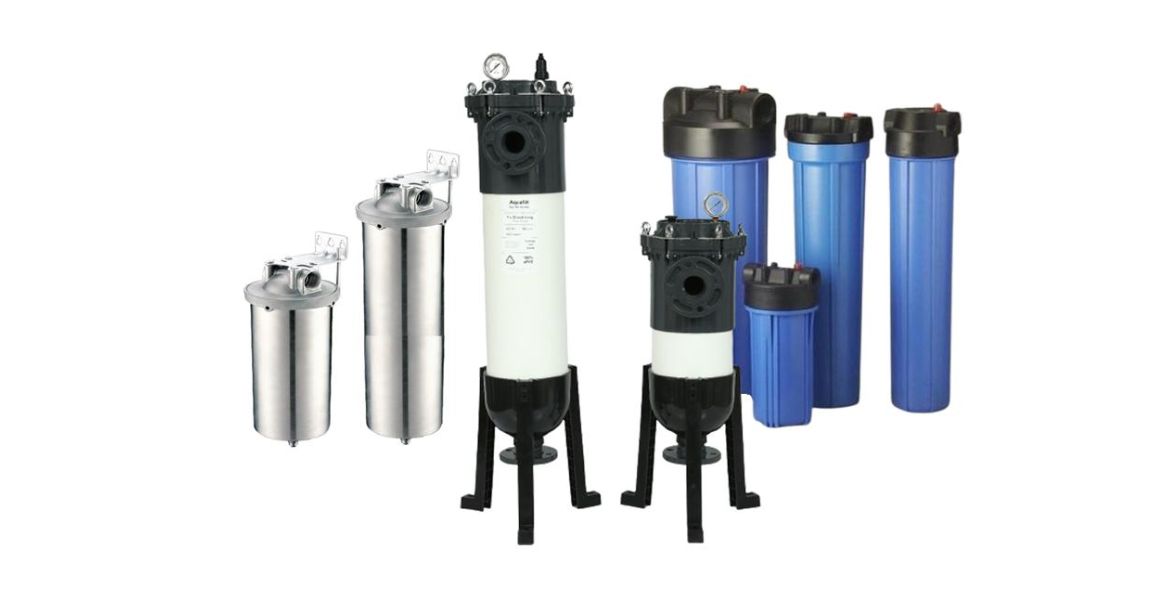
UPVC Cartridge Filter Housing — Price, Technical Specifications, Applications & Manufacturer in India
Introduction to UPVC Cartridge Filter Housing
In industrial liquid filtration, UPVC cartridge filter housing occupies a very practical space. It’s not the most glamorous component, but in most installations, it quietly determines how well the entire filtration train performs. By combining corrosion resistance, cost-effectiveness, and structural reliability, these housings offer engineers a dependable alternative to stainless steel or FRP in a wide range of service conditions.
Manufactured from unplasticized polyvinyl chloride (UPVC), the housing body withstands working pressures of 6–10 bar while maintaining chemical stability against saline water, alkalis, and mild acids. This is one reason it’s widely specified for RO pre-filtration, cooling tower make-up, and chemical line polishing—especially where stainless steel housings may be over-specified or economically unviable.
These housings are built to accommodate both nominal and absolute rated cartridges in 10″, 20″, 30″, and 40″ lengths, available in 2.5″ standard and 4.5″ big-diameter formats. Depending on cartridge configuration, flow rates typically range from 0.8 m³/hr for a single 10″ unit up to 15 m³/hr or more for multi-cartridge systems. In actual operation, the sizing flexibility allows plant engineers to fine-tune pre-filtration stages to reduce SDI, stabilize ΔP, and extend downstream element life.
Another aspect worth noting is compliance. Praimo Industrial Filters & Spares Manufacturing Company, a trusted filter housing manufacturer in India, builds UPVC cartridge filter housings under ISO 9001, with PED/CE SEP, FDA 21 CFR, and optional NSF/ANSI 61 documentation. This combination of regulatory alignment and in-house fabrication makes their housings well suited for municipal, industrial, and OEM installations — both within India and in export markets.
The point is: when properly sized and installed, UPVC cartridge filter housings offer precise contaminant removal, extended media life, and lower lifecycle cost, all while meeting international engineering and compliance standards.
Engineering-Grade Technical Specifications for UPVC Cartridge Filter Housing
When selecting or integrating a UPVC cartridge filter housing into an industrial system, precision matters. Engineers typically base their sizing decisions on a few critical factors: flow rate, pressure rating, micron rating, and how the housing behaves under temperature derating. Getting these parameters right isn’t just about hitting design numbers — it directly influences system reliability, maintenance frequency, and cartridge service life.
In most practical installations, these housings sit at the very start of the process line, quietly setting the stage for everything downstream. Let’s look at the numbers that actually matter.
Standard Dimensions, Flow Rates & Pressure Ratings
UPVC housings are available in 10″, 20″, 30″, and 40″ cartridge lengths, in both 2.5″ standard and 4.5″ big-diameter formats. This standardized sizing allows engineers to match housing configurations to required flow rates with predictable pressure drops.
Here’s a reference table covering typical clean water performance at 20 °C:
| Cartridge Size | Diameter | Typical Flow (m³/hr)* | Clean ΔP (bar) | Typical Applications |
|---|---|---|---|---|
| 10" × 2.5" | Standard | 0.8 – 1.0 | 0.10 – 0.15 | Utility polishing, point-of-use |
| 20" × 2.5" | Standard | 1.6 – 2.0 | 0.10 – 0.15 | RO pre-filtration, rinse water |
| 10" × 4.5" | Big Dia | 2.0 – 2.8 | 0.10 – 0.20 | High-flow utility lines |
| 20" × 4.5" | Big Dia | 4.5 – 5.0 | 0.12 – 0.20 | Borewell, cooling tower make-up |
| 30" × 2.5" | Standard | 2.4 – 3.0 | 0.15 – 0.20 | Industrial process water |
| 40" × 2.5" | Standard | 3.2 – 4.0 | 0.15 – 0.20 | Higher-flow polishing lines |
*Values based on nominal polypropylene media and 20 °C clean water. Real performance varies with fluid viscosity, micron rating, and terminal ΔP.
- Working Pressure (PS): 6 – 10 bar (model dependent)
- Hydrotest Pressure: 1.3 × PS for 10 minutes
- Connections: BSP/NPT threaded ¾"–2", or PN10 flanged DN25–DN65
In practice, most engineers slightly oversize the housing to keep initial ΔP below 0.2 bar, ensuring longer run lengths before cartridge replacement.
Filtration Ratings & Efficiency
A major strength of UPVC housings is their ability to support both nominal and absolute rated filter cartridges, enabling precise contaminant control across industries. Below is a quick technical reference for micron ratings, β-ratios, and removal efficiencies:
| Media Type | Micron Range (µm) | Nominal / Absolute | β-Ratio @ Rated Size | Removal Efficiency (%) |
|---|---|---|---|---|
| Spun / Wound PP | 1 – 200 | Nominal | β10 ≈ 100 | 90 – 95 % |
| Pleated Polypropylene | 0.5 – 50 | Absolute | β10 ≥ 1000 | 99.0 – 99.98 % |
| Membrane (PES/PTFE) | 0.1 – 5 | Absolute | β5 ≥ 5000 | ≥ 99.99 % |
- Nominal cartridges are generally used for bulk solids removal and pre-filtration where high efficiency isn’t required.
- Absolute cartridges are essential for RO membrane protection, electronics rinse, and chemical polishing, where bypass must be minimized.
For ≤ 5 µm filtration, use 222/226 positive sealing to avoid bypass. One overlooked detail in many installations is poor seating — it’s a common cause of reduced efficiency in otherwise well-designed systems.
Temperature, Pressure & Derating Curves
UPVC behaves predictably under temperature: as temperature increases, its pressure-retaining capacity drops. Engineers must account for this derating effect during sizing to avoid stress cracking or long-term creep.
| Temperature (°C) | Pressure Retention (%) | Max Working Pressure (bar) (for 10 bar Rated) |
|---|---|---|
| 20 | 100 % | 10 |
| 30 | 90 % | 9 |
| 40 | 75 % | 7.5 |
| 50 | 60 % | 6 |
| 60 | 50 – 55 % | 5 – 5.5 |
Engineering Guidelines
- Above 40 °C, apply at least 25 % pressure derating.
- Avoid thermal shocks or rapid cycling between hot and cold flows.
- For continuous service above 60 °C, switch to CPVC, FRP, or stainless steel housings.
A typical ΔP vs Flow curve for 10″ × 2.5″ vs 20″ × 4.5″ cartridges at 5 µm nominal shows clean ΔP in the range of 0.10–0.20 bar, with pressure drop increasing 3–4× when flow is doubled. This illustrates why larger diameters are often selected for high-flow utility and process applications — not for luxury, but for operational stability.
Materials & Construction of UPVC Filter Housings
The material selection and structural design of a UPVC filter housing are not cosmetic choices—they define the unit’s chemical compatibility, mechanical strength, and long-term service reliability. In real-world industrial environments, housings often encounter aggressive chemicals, saline water, and varying pressure cycles. That’s where UPVC’s fully non-metallic construction offers a practical, lightweight, and corrosion-free alternative to conventional metal housings, particularly in ambient temperature service.
Unlike stainless steel or carbon steel, UPVC doesn’t require passivation or coating layers, and it won’t suffer from pitting in chlorinated water. In most utility and pre-filtration duties, these characteristics significantly reduce maintenance and installation complexity.
UPVC Body & Component Breakdown
A typical UPVC cartridge filter housing consists of precision-molded or fabricated components, each designed to handle 6–10 bar working pressures while maintaining sealing integrity and dimensional stability:
- Shell & Cap – Rigid UPVC with machined sealing grooves and pressure-rated wall thickness.
- Cartridge Adapter / Seat – UPVC or PVDF, suitable for DOE, 222, or 226 end connections, ensuring positive sealing and stable cartridge seating.
- Vent Port – UPVC body with threaded PP or optional SS316 vent plug for proper air release during startup.
- Drain Port – UPVC or PP drain outlet for easy flushing and system maintenance.
- Fastenings / Closure – Depending on model size: UPVC threaded rings, GRP clamps, or polymer-encapsulated bolts for flanged versions, allowing tool-free or semi-rigid closures.
Because the entire BOM is non-metallic, these housings resist corrosion in saline, chlorinated, and acidic environments. And practically speaking, their light weight makes installation far easier, especially on skids or wall mounts where minimizing dead weight is advantageous.
One overlooked detail in many installations is closure torque. Over-tightening polymer fastenings can cause deformation over time; following manufacturer torque guidance preserves sealing geometry.
Seal & Gasket Materials (EPDM / NBR / FKM / PTFE)
Elastomer selection often determines whether a system runs leak-free for years or needs frequent intervention. Different gasket materials are used based on fluid chemistry, temperature, and regulatory requirements:
| Fluid / Media | EPDM | NBR | FKM (Viton) | PTFE |
|---|---|---|---|---|
| Water / RO Permeate | ✔ | ✔ | ✔ | ✔ |
| NaOH ≤ 40 % (≤ 35 °C) | ✔ | ⚠ | ✔ | ✔ |
| HCl ≤ 20 % (≤ 30 °C) | ✔ | ⚠ | ✔ | ✔ |
| Aromatic Hydrocarbons | ✖ | ⚠ | ✔ | ✔ |
| Chlorinated Solvents | ✖ | ✖ | ⚠ | ✔ |
✅ = Compatible ⚠️ = Conditional / Case-by-case ❌ = Not recommended
- EPDM is the standard for water and mild chemical services.
- NBR works well in utility filtration, but its acid resistance is limited.
- FKM (Viton) handles oils, solvents, and strong acids effectively.
- PTFE offers the broadest chemical resistance, ideal for aggressive or mixed chemical streams.
In actual operation, choosing the wrong gasket is a common mistake. For example, EPDM in a hot NaOH line can swell prematurely, causing bypass. Proper elastomer selection upfront saves both unplanned shutdowns and gasket replacement costs later.
Mechanical & Chemical Resistance Properties
Material choice also affects temperature tolerance, mechanical strength, and cost structure. The table below compares UPVC with PVC, CPVC, and stainless steel (SS304 / SS316L) commonly used for filter housings:
| Property / Material | UPVC | PVC | CPVC | SS304 / SS316L |
|---|---|---|---|---|
| Max Service Temp (°C) | 50–60 | 45–50 | 80–90 | 150+ |
| Corrosion Resistance | Excellent | Good | Excellent | Excellent (but chloride attack possible) |
| Chemical Resistance | Very Good | Moderate | Excellent | Varies by chemical |
| Pressure Rating | 6–10 bar | 4–6 bar | 8–12 bar | 10–16+ bar |
| Weight | Light | Light | Light-Medium | Heavy |
| Cost Efficiency | Very High | High | Medium | Low (highest CAPEX) |
- UPVC vs PVC → UPVC is stronger and more dimensionally stable because it contains no plasticizers.
- UPVC vs CPVC → CPVC handles hotter service but at higher cost—often justified in hot chemical loops.
- UPVC vs Stainless Steel → UPVC wins on cost for ambient service, while SS remains the go-to for high temperature and pressure.
This combination of chemical resistance, low weight, and cost efficiency explains why UPVC housings are standard in water treatment, RO pre-filtration, chemical dosing, and general industrial utility filtration. In many facilities, they’re installed not as temporary solutions but as permanent components in low-temperature lines.
Technical Performance & Operational Curves of UPVC Cartridge Filter Housing
When it comes to actual performance, the 20″ × 2.5″, 30″ × 2.5″, and 40″ × 2.5″ UPVC cartridge filter housings are the real workhorses. These are the standard-diameter formats most often found in industrial utility, RO pre-filtration, and process polishing applications. Their popularity stems from their balance of moderate flow capacity, compact installation footprint, and cost efficiency, while still retaining UPVC’s excellent chemical resistance.
From an engineering standpoint, understanding their pressure drop behavior, dirt-holding capacity, and lifecycle performance isn’t optional — it’s the foundation for accurate sizing, predictable maintenance, and optimized OPEX.
ΔP vs Flow Characteristics for 20", 30" & 40" × 2.5" Cartridges
For nominal 5 µm polypropylene cartridges at 20 °C, pressure drop (ΔP) depends on both flow rate and cartridge length. Longer cartridges provide greater filtration surface area, which allows higher flows at the same pressure drop. This is why, in practice, engineers often select 40″ cartridges when dealing with higher flow lines without changing housing diameter.
| Cartridge Size | Recommended Flow (m³/hr) | Clean ΔP (bar) | Max Practical Flow (m³/hr) | ΔP at Max Flow (bar) |
|---|---|---|---|---|
| 20" × 2.5" | 1.6 – 2.0 | 0.10 – 0.15 | 2.5 | 0.20 – 0.25 |
| 30" × 2.5" | 2.4 – 3.0 | 0.15 – 0.20 | 3.5 | 0.25 – 0.30 |
| 40" × 2.5" | 3.2 – 4.0 | 0.15 – 0.20 | 4.5 | 0.30 – 0.35 |
- 20" cartridges are common for polishing and RO guard filtration in flows up to 2 m³/hr.
- 30" cartridges offer a middle ground for moderate process flows where keeping ΔP low is essential.
- 40" cartridges provide the best hydraulic performance within the standard 2.5" diameter family.
Engineering Tip: Keep clean ΔP below 0.2 bar to prolong cartridge life and reduce pumping energy. Doubling the flow typically increases ΔP by 3–4×, so oversizing housings is always better than pushing cartridges to their limit.
Dirt Holding Capacity & Run Length
Dirt-holding capacity (DHC) scales with cartridge length. Longer elements simply have more media to distribute particulate load, resulting in longer service intervals and more stable operation, especially in continuous-duty systems.
| Cartridge Size | Typical DHC (g)* | Typical Run Length** |
|---|---|---|
| 20" × 2.5" | 100 – 250 | 2 – 4 weeks |
| 30" × 2.5" | 150 – 350 | 3 – 5 weeks |
| 40" × 2.5" | 200 – 500 | 4 – 6 weeks |
* Nominal 5 µm PP media in ambient water.
** Based on terminal ΔP of 0.8–1.0 bar under typical operating conditions.
In practice, using pleated or absolute-rated media can further boost DHC, especially in high solids or critical process streams. Pairing UPVC cartridge housings with upstream basket strainers also helps by removing coarse debris early, thereby extending cartridge run lengths and minimizing replacement frequency.
Lifecycle Performance Curve
The ΔP vs time curve for these cartridge sizes follows a predictable three-phase pattern:
- Initial Phase (Start ΔP) – Low resistance (around 0.10–0.20 bar) immediately after installation.
- Stable Filtration Phase – Slow, steady ΔP increase as solids accumulate. Longer cartridges stay in this phase for a greater portion of their service life.
- Terminal Phase – Rapid ΔP rise as the media nears saturation (typically 0.8–1.0 bar), signaling the need for cartridge replacement.
| Cartridge Size | Start ΔP (bar) | Terminal ΔP (bar) | Typical Cycle Duration |
|---|---|---|---|
| 20" × 2.5" | 0.10 – 0.15 | 0.8 – 1.0 | 2 – 4 weeks |
| 30" × 2.5" | 0.15 – 0.20 | 0.8 – 1.0 | 3 – 5 weeks |
| 40" × 2.5" | 0.15 – 0.20 | 0.8 – 1.0 | 4 – 6 weeks |
Best Practices for Lifecycle Management:
- Install ΔP gauges across housings for accurate monitoring.
- Size systems so operation remains in the stable phase as long as possible.
- Replace cartridges at terminal ΔP, not by arbitrary calendar intervals.
In actual field conditions, the biggest mistake is waiting too long to change cartridges — once ΔP accelerates, fouling tends to worsen exponentially, increasing energy costs and risking downstream contamination.
Regulatory & Compliance Standards for UPVC Cartridge Filter Housing
For industrial filtration projects, compliance isn’t just a paperwork exercise—it’s what determines whether equipment will pass EPC approvals, satisfy QA inspections, and clear customs without delays. Whether these UPVC cartridge filter housings are destined for a domestic plant or a global EPC export package, adherence to international standards like ISO 9001, PED/CE, FDA, and NSF/ANSI 61 is essential. These certifications and declarations provide traceability, safety assurance, and regulatory alignment, while ISPM-15 export packaging protects the equipment during international transport.
Quality & Manufacturing Standards
ISO 9001: Quality Management Systems
All UPVC cartridge filter housings manufactured by Praimo Industrial Filters & Spares Manufacturing Company are produced under a certified ISO 9001 QMS. This system governs everything from raw material inspection to final dimensional checks and documentation control.
For OEMs and EPC buyers, this means:
- Consistent product quality across multiple batches
- Full traceability through inspection records
- Standardized QA dossiers for technical submittals and project documentation
In practice, this level of quality control saves significant time during project FATs (Factory Acceptance Tests) and technical bid evaluations, where QA evidence is often required before procurement release.
Pressure Equipment Directive (PED) & CE Compliance
PED (2014/68/EU) SEP Classification
Most UPVC housings fall under Sound Engineering Practice (SEP) classification of the EU Pressure Equipment Directive, depending on pressure rating and fluid group. This allows their use in non-hazardous fluid systems without formal CE stamping, while ensuring they are designed and built in line with PED safety principles.
CE Marking
For projects located in the EU or other CE-recognizing regions, Praimo can supply CE documentation upon request, confirming compliance with PED SEP and harmonized design standards.
This facilitates:
- Smooth technical acceptance in regulated markets
- Reduced time during engineering reviews
- Compatibility with EPC procurement specifications that mandate CE documentation
Many EPC contractors overlook PED SEP declarations for polymer housings. However, including them upfront often avoids hold-ups during documentation audits.
FDA 21 CFR Compliance
- FDA 21 CFR 177.1520 (Polypropylene)
- FDA 21 CFR 177.2600 (Elastomers)
UPVC housings can be supplied with FDA-compliant elastomers (EPDM, FKM, PTFE) and cartridge interfaces, enabling use in potable water, food & beverage, and pharma utility systems.
This compliance ensures:
- Safe indirect food contact
- No leaching of harmful substances
- Alignment with US regulatory frameworks for material hygiene
In practice, this is particularly valuable for multinational OEMs building skids for global use, where a single FDA-compliant housing can meet both Indian and US/EU regulatory expectations.
NSF/ANSI 61 Certification
NSF/ANSI 61 governs the safety of materials and products in drinking water systems, ensuring that no harmful contaminants leach into the water.
On request, Praimo Industrial Filters & Spares Manufacturing Company can supply
- NSF-certified components
- Or fully NSF-compliant UPVC housing assemblies
This is frequently a mandatory requirement for municipal and export water infrastructure projects, particularly in North America and the MENA region.
Export Packaging – ISPM-15 Compliant
For international logistics, all UPVC cartridge filter housings are shipped in ISPM-15 heat-treated wooden crates, in compliance with FAO International Standards for Phytosanitary Measures.
This ensures:
- Customs clearance without fumigation delays in regulated markets
- Physical protection against impact, stacking, and moisture during sea or air transport
- Full export readiness for EPC shipments, OEM container loads, and third-country re-export scenarios
EPC buyers often underestimate the delays caused by non-compliant packaging. ISPM-15 certification ensures your filtration equipment clears international borders smoothly.
Compliance Matrix
| Standard / Regulation | Applicability | Scope / Relevance | Documentation Supplied |
|---|---|---|---|
| ISO 9001 | Manufacturing QA | Quality management, inspection, traceability | Certificate & QA docs |
| PED (2014/68/EU) SEP | EU Projects | Pressure equipment design & safety | PED SEP declaration |
| CE Marking | EU / CE Markets | Conformity to EU directives | CE statement / SEP |
| FDA 21 CFR | Food / Pharma / Potable | Material safety (PP, elastomers) | FDA conformity letter |
| NSF/ANSI 61 | Drinking Water | Potable water safety | NSF component certs |
| ISPM-15 Packaging | Export Shipments | International shipping compliance | Heat treatment marking |
Key Advantages of UPVC Cartridge Filter Housings
In many industrial installations, UPVC cartridge filter housings have quietly become the preferred choice for ambient temperature liquid filtration. Their unique combination of corrosion resistance, cost efficiency, and ease of handling gives OEMs and EPC contractors a practical alternative to stainless steel or FRP housings—particularly in water treatment, utility, and chemical service lines where operational environments are aggressive but temperatures are moderate.
For buyers focused on performance, regulatory compliance, and value, UPVC strikes a careful balance between engineering reliability and commercial feasibility.
Corrosion Resistance & Chemical Compatibility
One of the clearest advantages of UPVC vs stainless steel filter housing lies in how each behaves in corrosive environments. UPVC is inherently resistant to saline water, chlorinated media, and many acids and alkalis, which makes it exceptionally well-suited for:
- Water treatment plants handling high-chloride content
- Chemical process lines with low-to-medium concentration acids and bases
- RO pre-filtration systems, where stainless steel often experiences pitting or crevice corrosion
Unlike metals, UPVC doesn’t need passivation, coatings, or cathodic protection. It’s also immune to electrochemical reactions, so there’s no hidden degradation happening beneath the surface. In practical terms, this translates to longer housing service life with very little maintenance, even in coastal installations or chemical-handling facilities where traditional metal housings typically require frequent inspection and surface treatment.
In actual field use, many operators report that UPVC housings run for years without any corrosion-related failures—something that can’t always be said for 316L in chloride-rich environments.
Cost Efficiency vs SS / FRP Alternatives
UPVC housings deliver measurable CAPEX and OPEX savings, often without sacrificing performance for standard water or chemical service. The comparison below summarizes how UPVC stacks up against SS304/316 and FRP housings:
| Parameter | UPVC Housing | SS304/316 Housing | FRP Housing |
|---|---|---|---|
| Initial Cost | Low | High | Medium |
| Corrosion Resistance | Excellent | Very Good (limited in chlorides) | Very Good |
| Temperature Resistance | Moderate (≤ 60 °C) | High (≥ 150 °C) | High (≥ 80 °C) |
| Maintenance Requirements | Very Low | Moderate (passivation, inspection) | Moderate |
| Export Readiness | High (lightweight, ISPM-15) | High (but heavy shipping cost) | Moderate |
- Stainless steel housings are ideal for high pressure or high temperature service but are often over-specified for ambient water and mild chemical filtration.
- FRP housings handle higher temperatures well but are heavier, more expensive, and typically more complex to repair.
- UPVC offers the best cost–performance balance for utility filtration, RO pre-filtration, and general process water duties.
For EPC projects, where container loads and logistics costs add up quickly, UPVC’s lightweight construction also reduces shipping overheads and simplifies installation handling.
Ease of Installation & Maintenance
Ease of handling is often overlooked during the design phase—but it matters immensely during commissioning and maintenance. UPVC cartridge filter housings are lightweight and modular, making them especially attractive for OEM skids, containerized systems, and retrofits in tight spaces.
- Can be lifted and positioned by one or two technicians, unlike heavy steel housings.
- Threaded or flanged connections allow rapid tie-ins with existing pipework.
- No welding, hot work, or special tools required—installation is clean, fast, and low-risk.
- Maintenance is minimal: periodic gasket inspection and cartridge replacement. There’s no need for repainting, passivation, or corrosion treatment.
- The compact structure fits easily into low-headroom installations, a common challenge in retrofit and skid-mounted projects.
For large EPC rollouts, this simplicity translates directly into reduced site labor, fewer safety permits, and faster commissioning schedules—all without compromising performance.
Applications & Industries Using UPVC Cartridge Filter Housings
UPVC cartridge filter housings are used across a broad range of industrial, municipal, and utility applications due to their excellent chemical resistance, cost-effectiveness, and ease of integration into standard filtration systems. Their versatility makes them a preferred choice for RO pre-treatment, utility filtration, cooling tower make-up, and process water polishing across multiple industries. By selecting the appropriate micron ratings, elastomers, and configuration, engineers can achieve optimal performance in both new installations and retrofit projects.
Water & Wastewater / RO Pre-Treatment
In water and wastewater treatment plants, UPVC housings are widely used in pre-filtration stages before Reverse Osmosis (RO) systems. Their role is to reduce silt density index (SDI), suspended solids, and turbidity, thereby extending RO membrane life and minimizing fouling.
| Parameter | Typical Range / Value |
|---|---|
| Micron Rating | 1 – 20 µm (nominal or absolute) |
| SDI Reduction | From >5 to <3 in a single pass |
| Flow Range (per element) | 1.6 – 4.0 m³/hr (20" – 40" × 2.5") |
| Cartridge Type | Spun or pleated PP, absolute if critical |
| Elastomers | EPDM (standard), FKM/PTFE for aggressive water |
Applications include
- RO membrane protection (SDI control)
- Pre-filtration for UF/RO skids
- Desalination plant feed polishing
- Potable water treatment for municipal and industrial use
Engineering Insight: Sizing housings to maintain <0.2 bar clean ΔP at design flow ensures stable performance and longer run lengths, especially when combined with upstream strainers.
Cooling Water / HVAC / Utilities
For cooling tower make-up, HVAC circuits, and plant utility water systems, UPVC housings provide reliable turbidity control and equipment protection at low cost. Unlike stainless steel, they resist chloride-induced pitting, making them particularly suitable for coastal installations and recirculating water loops.
| Parameter | Typical Range / Value |
|---|---|
| Micron Rating | 1 – 20 µm (nominal or absolute) |
| SDI Reduction | From >5 to <3 in a single pass |
| Flow Range (per element) | 1.6 – 4.0 m³/hr (20" – 40" × 2.5") |
| Cartridge Type | Spun or pleated PP, absolute if critical |
| Elastomers | EPDM (standard), FKM/PTFE for aggressive water |
Applications include:
- Cooling tower make-up filtration
- HVAC chilled water polishing
- Heat exchanger protection
- Utility line filtration for industrial plants
Maintenance Advantage: With 20″, 30″, and 40″ × 2.5″ cartridges, typical replacement cycles range from 3 to 6 weeks, depending on solids load. The lightweight housing design simplifies change-outs in mechanical rooms or on elevated platforms.
Food & Beverage, Pharma, Chemicals, Electronics
In regulated industries such as food & beverage, pharmaceutical, chemical processing, and electronics manufacturing, UPVC housings can be configured with FDA-compliant elastomers and absolute rated cartridges to meet strict purity and regulatory requirements.
| Industry | Typical Micron Ratings | Elastomer Selection | Key Compliance |
|---|---|---|---|
| Food & Beverage | 1 – 10 µm | EPDM / PTFE | FDA 21 CFR, NSF |
| Pharma (Utilities) | 0.2 – 5 µm | EPDM / FKM / PTFE | FDA 21 CFR, ISO |
| Chemicals | 1 – 50 µm | FKM / PTFE | Chemical compatibility |
| Electronics | 0.1 – 1 µm | PTFE | High purity, low extractables |
Applications include:
- Syrup, ingredient, and process water polishing in food & beverage plants
- Utility water filtration in pharma facilities
- Chemical filtration lines for aggressive media at ambient temperatures
- Rinse water filtration in semiconductor and electronics manufacturing
Why UPVC Works Here:
- Corrosion-resistant for aggressive media
- Lightweight for skid-based or cleanroom applications
- Compatible with absolute-rated pleated or membrane cartridges for critical filtration stages
Case Studies & Real-World Benchmarks for UPVC Cartridge Filter Housings
While technical datasheets provide design parameters, it’s real-world installations that reveal how UPVC cartridge filter housings perform under variable conditions — high turbidity, aggressive water chemistries, tight maintenance schedules, and export compliance requirements. Across India, the MENA region, and Europe, these case studies highlight measurable improvements in SDI reduction, fouling control, maintenance intervals, and overall system reliability.
For EPC contractors and OEMs, these benchmarks demonstrate that properly engineered UPVC systems can meet or exceed performance expectations in diverse applications — often at significantly lower cost than stainless steel or FRP alternatives.
RO Pre-Treatment – Industrial Plant, India
Application: RO pre-filtration in a process water treatment plant
Configuration: UPVC housings with 20″ × 2.5″, 5 µm nominal spun cartridges
Challenge: High SDI (>5) caused frequent RO membrane cleanings and unstable performance.
| Parameter | Before UPVC Installation | After UPVC Installation |
|---|---|---|
| Silt Density Index (SDI) | 5.6 | 2.8 |
| RO Cleaning Frequency | Every 3–4 weeks | Every 8–10 weeks |
| Cartridge Replacement | 3 weeks | 5 weeks |
| Energy Trend | Unstable | Stabilized |
Result Highlights:
- 67% reduction in RO membrane cleaning frequency
- SDI consistently maintained below 3, protecting membranes and reducing cleaning chemical use
- Housing pressure drop remained stable below 0.2 bar at design flow
In practice, this single change extended membrane cleaning intervals from monthly to quarterly, with zero modifications to the downstream RO system. For Indian process waters with high turbidity, this is a notable operational gain.
Cooling Tower Make-Up Filtration – MENA Region
Application: Cooling tower make-up filtration for large HVAC/cooling utility loop
Configuration: UPVC 30″ × 2.5″ housings with 20 µm nominal cartridges
Challenge: High suspended solids and turbidity causing heat exchanger fouling, increased blowdown, and maintenance downtime.
| KPI | Before | After |
|---|---|---|
| Turbidity (NTU) | 14 | 4 |
| Fouling Rate | High | ↓ 40% |
| Blowdown Frequency | Weekly | Monthly |
| Cartridge Life | 3 weeks | 5–6 weeks |
Result Highlights:
- 40% reduction in fouling across key heat exchangers
- Reduced blowdown frequency led to savings in make-up water and chemicals
- UPVC housings outperformed stainless steel in chloride-rich cooling water, with lower maintenance needs and no corrosion-related issues.
Here, the decision to use UPVC was driven as much by chloride resistance as by ease of maintenance. Stainless steel housings previously installed had shown signs of pitting after only two years.
Alkali Filtration – Chemical Processing, EU
Application: Filtration of low-concentration NaOH solution (ambient) in a chemical blending facility
Configuration: UPVC 40″ × 2.5″ housings with PTFE gaskets and pleated PP cartridges
Challenge: Frequent gasket failures and media degradation in existing PVC systems.
| Parameter | Previous PVC System | UPVC Housing System |
|---|---|---|
| Media Change Interval | 4 weeks | 12 weeks |
| Gasket Life | 1–2 cycles | 3+ cycles |
| Pressure Stability | Variable | Consistent |
| Maintenance Downtime | Frequent | ↓ 70% |
Result Highlights:
- 3× longer service intervals with upgraded gasket selection
- Stable pressure profiles, eliminating unplanned downtime
- PTFE gaskets proved fully compatible with alkali service, avoiding premature seal failures
This EU installation illustrates UPVC’s superior chemical resistance and mechanical integrity over PVC in regulated chemical environments, where both material compliance and operational reliability are non-negotiable.
Lifecycle Cost Model & ROI Analysis of UPVC Cartridge Filter Housings
When evaluating filtration systems for industrial and utility applications, buyers often focus on the upfront purchase price of the housing. But in practice, the real cost lies in the long-term balance between CAPEX (capital expenditure) and OPEX (operational expenditure). This is where UPVC cartridge filter housings consistently outperform stainless steel for ambient temperature and moderate pressure duties. By reducing the initial investment and lowering ongoing maintenance costs, UPVC systems deliver a faster ROI while maintaining technical performance and compliance.
Housing Life vs Media Cost Breakdown
In most installations, the housing represents only 15–25% of total filtration lifecycle cost. The major cost drivers are cartridge replacement, labor, and pumping energy. UPVC housings help reduce all three, particularly for 20″, 30″, and 40″ × 2.5″ cartridge configurations commonly used in RO pre-filtration and utility polishing.
| Cost Component | Stainless Steel System | UPVC System |
|---|---|---|
| Housing CAPEX | ₹100,000 | ₹35,000 – ₹45,000 |
| Cartridge Replacement (3 yrs) | ₹180,000 | ₹150,000 |
| Labor & Maintenance (3 yrs) | ₹60,000 | ₹30,000 |
| Energy (Pumping ΔP impact) | ₹25,000 | ₹18,000 |
| Total (3-Year) | ₹365,000 | ₹233,000 |
- Housing Cost: UPVC housings are roughly 50–65% less expensive than stainless steel equivalents. This frees up capital for other process investments.
- Cartridge Cost: Lower clean ΔP extends media service life, reducing replacement frequency.
- Labor: Lightweight structure and threaded closures cut service time by up to 50%.
- Energy: Lower ΔP means lower pumping energy — a small but significant saving in continuous-duty systems.
3-Year Cost Distribution
The cost breakdown shifts when using UPVC, moving emphasis from heavy upfront investment toward predictable cartridge replacement costs.
| Cost Element | Stainless Steel | UPVC Housing |
|---|---|---|
| Housing CAPEX | 27% | 15% |
| Cartridges | 49% | 64% |
| Labor | 16% | 13% |
| Energy | 8% | 8% |
Key Insight: While cartridge media remains the main expense, UPVC housings lower both CAPEX and OPEX, resulting in a more balanced, predictable cost structure. This allows engineering and procurement teams to plan operational budgets more accurately, without the burden of high initial outlays.
ROI vs Stainless Steel Housing
UPVC systems shine when assessed through the ROI lens. The lightweight construction, lower procurement cost, and reduced maintenance requirements combine to shorten the payback period dramatically.
| Metric | Stainless Steel Housing | UPVC Housing |
|---|---|---|
| Initial Investment | High | Low |
| Payback Period | > 3 years | < 18 months |
| Total 3-Year Cost | 100% | 64% |
| Maintenance Labor | Baseline | -50% |
| Energy Usage / m³/hr | Higher ΔP | Lower ΔP |
| Export Shipping | High (heavy) | Low (ISPM-15 crate) |
Result:
UPVC systems typically achieve ROI in 12–18 months, depending on flow rates and operating schedules. For EPC projects involving multiple housings, the aggregate savings are often substantial — not only in procurement but also in shipping, installation, and ongoing operation.
In real EPC tenders, this ROI profile often determines whether a project remains within budget, especially for RO pre-filtration, cooling water filtration, and chemical utility loops where stainless steel can be over-specified for the actual duty.
UPVC vs Alternative Filter Housing Materials
Selecting the right filter housing material is not just a technical choice — it’s a strategic one. It influences everything from CAPEX and OPEX to chemical resistance, maintenance cycles, and long-term system reliability. While SS316L, CPVC, and FRP each bring their own strengths to specific operating environments, UPVC cartridge filter housings deliver a balanced, cost-efficient, and chemically robust solution for ambient temperature and moderate-pressure applications. This makes UPVC a strong candidate for RO pre-filtration, utility water systems, and chemical polishing duties, especially where corrosion is a persistent challenge.
UPVC vs SS316L
| Parameter | UPVC Housing | SS316L Housing |
|---|---|---|
| Corrosion Resistance | Excellent (chlorinated / saline media) | Very good, but susceptible to chloride pitting |
| Temperature Resistance | Up to 60 °C | Up to 150 °C+ |
| Pressure Rating | 4–7 bar typical | 10–16 bar+ typical |
| Initial Cost | Low (~35–45 % of SS) | High CAPEX |
| Weight / Installation | Lightweight, easy to install | Heavy, requires lifting & skilled labor |
| Maintenance | Minimal, no passivation | Periodic passivation & inspection |
| Export Shipping | Lightweight (low cost) | Heavy (higher logistics cost) |
Engineering Insight:
UPVC excels in RO pre-filtration, utility water, and ambient chemical service where corrosion and cost are key factors. SS316L remains unmatched for high-pressure, high-temperature, or sanitary applications, but in many EPC projects it’s over-specified for non-critical polishing stages. A common strategy is to use UPVC upstream (pre-filtration) and reserve SS316L for final filtration loops.
UPVC vs CPVC
| Parameter | UPVC Housing | CPVC Housing |
|---|---|---|
| Temperature Resistance | Up to 60 °C | Up to 90 °C |
| Chemical Compatibility | Excellent for most chemicals | Excellent, slightly better for hot alkalis |
| Cost | Lower CAPEX | 20–30 % higher |
| Availability | Widely available globally | More limited, longer lead times |
| Fabrication | Easier to machine & install | More brittle, requires careful handling |
Engineering Insight:
CPVC is the go-to material for elevated temperature chemical service (e.g., hot alkali filtration), whereas UPVC dominates ambient service due to its lower cost, easier installation, and global availability. For RO, cooling water, and utility filtration, UPVC provides comparable chemical performance without the procurement delays and higher costs often associated with CPVC.
UPVC vs FRP
| Parameter | UPVC Housing | FRP Housing |
|---|---|---|
| Corrosion Resistance | Excellent for most media | Excellent, especially for brine and aggressive fluids |
| Temperature Resistance | Up to 60 °C | Up to 80–100 °C (typical) |
| Pressure Rating | 4–7 bar (typical) | 7–10 bar (typical) |
| Cost | Low CAPEX | Medium to High CAPEX |
| Weight / Handling | Lightweight, compact | Heavier, requires rigging |
| Repairability | Easy to replace | Specialized FRP repair needed |
| Surface Finish | Smooth internal bore | May require coating maintenance |
Engineering Insight:
FRP shines in high-flow, aggressive chemical, or marine applications, but comes with higher costs and more complex handling. UPVC offers simpler installation, lower maintenance, and better cost control for most RO pre-treatment, cooling water, and chemical polishing operations. In many systems, FRP housings are installed at main feed points, while UPVC is used downstream for secondary polishing or distribution loops.
Alternatives Matrix Summary
| Parameter | UPVC | SS316L | CPVC | FRP |
|---|---|---|---|---|
| Corrosion Resistance | Excellent | Very Good | Excellent | Excellent |
| Temperature Limit (°C) | 60 | 150+ | 90 | 80–100 |
| Pressure Capability (bar) | 4–7 | 10–16+ | 6–8 | 7–10 |
| Cost | Low | High | Medium–High | Medium–High |
| Handling & Installation | Easy | Heavy | Moderate | Moderate–Heavy |
| Maintenance | Very Low | Moderate | Low | Moderate |
| Best Fit Applications | RO, utility, ambient chemicals | High-pressure, sanitary | Elevated temperature chemicals | High-flow brine, aggressive service |
Strategic Takeaway:
UPVC housings excel where cost control, chemical resistance, and ease of installation are key — especially in RO and utility systems. CPVC and FRP fill niche roles in elevated temperature and aggressive fluid applications, while SS316L remains indispensable for sanitary and high-pressure service. Most high-performing filtration systems combine materials intelligently, using UPVC where practical and reserving premium materials for critical duties.
Buying Guide & Selection Criteria for UPVC Cartridge Filter Housings
Selecting the right UPVC cartridge filter housing is a critical engineering and procurement task that directly influences system reliability, operational efficiency, and total lifecycle cost. A structured approach — considering flow rate, micron rating, chemical compatibility, and operating temperature/pressure — helps engineers and EPC teams avoid under-sizing, gasket failures, or premature media change-outs. The objective is simple: match the housing to the process, not the other way around.
Sizing by Flow & Micron
Accurate sizing begins with cartridge length and count, relative to the process flow rate and required filtration fineness. Longer cartridges offer higher surface area, resulting in lower face velocities, reduced pressure drop (ΔP), and extended media life.
| Cartridge Size | Typical Flow Range (m³/hr) | Recommended Micron Range | Common Applications |
|---|---|---|---|
| 10" × 2.5" | 0.8 – 1.2 | 5 – 50 µm | Utility polishing, low-flow RO guard |
| 20" × 2.5" | 1.6 – 2.0 | 1 – 50 µm | RO pre-filtration, process water |
| 30" × 2.5" | 2.4 – 3.0 | 1 – 20 µm | Moderate process & cooling circuits |
| 40" × 2.5" | 3.2 – 4.0 | 1 – 20 µm | High-flow RO pre-treatment, chemical polishing |
Sizing Guidelines:
- Maintain face velocity between 4–6 m³/hr per 10" × 2.5" equivalent to keep initial ΔP low and prolong run length.
- Use 1–5 µm cartridges for RO membrane protection and pharma utilities; 10–50 µm for cooling tower or upstream straining duties.
- Oversize housings instead of overloading cartridges. This prevents excessive ΔP, extends cycle duration, and cuts energy costs.
Engineering Insight: In real plant conditions, oversizing by even one cartridge length often doubles run length. Procurement teams sometimes overlook this simple sizing buffer and pay the price in higher maintenance later.
Seal Selection by Chemistry
Gasket and O-ring selection is often underestimated — yet the wrong elastomer can lead to swelling, leakage, or premature failure, especially in chemical or high-purity water service.
| Elastomer | Typical Applications | Chemical Compatibility |
|---|---|---|
| EPDM | Potable water, RO, utilities | Excellent water resistance; not suitable for oils/acids |
| NBR | Oils, hydrocarbons, lubricants | Good with oils; limited chemical resistance |
| FKM (Viton) | Chemicals, solvents, aggressive media | Excellent broad chemical compatibility |
| PTFE | High-purity, strong acids/alkalis | Inert; excellent chemical and temperature resistance |
Selection Guidelines:
- EPDM is the standard for RO pre-filtration and water treatment due to its cost-effectiveness and durability.
- FKM or PTFE are ideal for chemical processes, alkali filtration, and electronics-grade water.
- NBR fits hydrocarbon service where other elastomers degrade rapidly.
- Always cross-check media SDS against elastomer compatibility charts before final selection.
Human Insight: One of the most common field mistakes is specifying EPDM gaskets for mild acid lines “because they worked for water.” Six months later, swollen seals lead to bypass leakage and unexpected downtime. Elastomer selection deserves the same attention as flow sizing.
Temperature & Pressure Derating Considerations
UPVC’s mechanical strength is temperature dependent — a fact often overlooked during summer peaks or CIP operations. Applying derating factors ensures safe, predictable operation under variable conditions.
| Parameter | 20 °C | 40 °C | 60 °C |
|---|---|---|---|
| Max. Working Pressure | 7 bar | 5 bar | 4 bar |
Derating Guidelines:
- Above 40 °C, apply a 20–30 % pressure derating to prevent creep and cracking.
- For hotter streams, use shorter cartridges or parallel housings to keep system ΔP within limits.
- Avoid UPVC in steam lines, CIP circuits, or any service above 60 °C — switch to CPVC or SS316L in those cases.
- Include derating tables in procurement datasheets to protect against over-pressurization during seasonal temperature fluctuations.
Engineering Insight: In practice, housings installed outdoors often see 10–15 °C temperature swings daily. A properly applied derating margin prevents stress failures that only show up months after commissioning.
Maintenance & Troubleshooting for UPVC Cartridge Filter Housings
Proper maintenance and troubleshooting practices are essential to ensure consistent filtration performance, maximize cartridge life, and minimize unplanned downtime. UPVC cartridge filter housings are inherently low-maintenance due to their corrosion resistance and simple construction, but following structured inspection and preventive routines significantly enhances their operational reliability—especially in RO pre-filtration, utility, and chemical service environments.
Routine Inspection & Cartridge Replacement Intervals
Establishing a regular inspection schedule helps detect wear, fouling, or pressure anomalies before they escalate into system failures.
| Inspection Task | Frequency | Parameters to Check |
|---|---|---|
| Differential pressure gauge reading | Daily / Weekly | Clean ΔP (0.1–0.2 bar), Terminal ΔP (0.8–1.0 bar) |
| Housing exterior and fittings | Monthly | Cracks, leaks, joint tightness, corrosion on fittings |
| Cartridge integrity check | At replacement | End caps, media tears, gasket condition |
| Vent & drain valve operation | Monthly | Free movement, no blockages |
| Seal / O-ring inspection | Quarterly | Cracking, flattening, chemical degradation |
Common Issues & Engineering Solutions
| Issue | Possible Cause | Engineering Solution |
|---|---|---|
| High Initial ΔP | Incorrect cartridge micron rating or media collapse | Verify cartridge specs; use lower micron only if required; check correct installation alignment |
| Short Cartridge Life | High solids load, undersized housing | Add upstream basket strainer, increase cartridge length, or add parallel housings |
| Bypass / Leaking | Damaged O-ring, improper seating, housing misalignment | Replace seals, clean sealing surfaces, re-align housing cap |
| Cracking / Leakage on Shell | Over-pressurization, temperature excursion | Apply pressure/temperature derating; replace housing; verify relief valve settings |
| Chemical Attack on Seals | Elastomer incompatibility | Switch to FKM or PTFE; cross-check chemical compatibility chart |
| Air Entrapment / Venting Issues | Incomplete priming or blocked vent | Use vent valve during startup; clean vents periodically |
Best Practice: Many of these issues can be prevented through correct sizing, proper elastomer selection, and routine preventive maintenance.
Spares & Preventive Maintenance Checklist
Maintaining a ready stock of critical spare parts ensures rapid turnaround during planned or unplanned maintenance activities, especially in continuous-duty applications.
| Spare Part | Recommended Stock Level | Replacement Interval |
|---|---|---|
| Cartridges | 2–3 cycles per housing | Based on ΔP monitoring |
| O-rings / Gaskets | 1 full set per housing | 6–12 months (depending on media) |
| Vent / Drain Valves | 1 spare per 10 units | 12–18 months |
| Housing Cap Fasteners | 1 set per 10 units | As needed |
| Differential Pressure Gauges | 1 spare per site | 12–24 months |
Preventive Maintenance Recommendations:
- Schedule quarterly PM checks aligned with cartridge change-outs.
- Maintain a spare parts register for EPC sites or remote facilities.
- Apply torque checks to housing bolts and fasteners periodically.
- Replace seals proactively every 6–12 months in chemical or high-frequency operation lines.
Export Readiness & Documentation for UPVC Cartridge Filter Housings
For EPC contractors, OEMs, and global procurement teams, product performance alone isn’t enough. What truly determines smooth project execution is the manufacturer’s ability to deliver internationally compliant equipment — complete with regulatory declarations, QA dossiers, and export-ready packaging.
Praimo Industrial Filters & Spares Manufacturing Company has built a robust export framework to support global tenders and regulated markets across the EU, MENA, Asia-Pacific, and North America. Every UPVC cartridge filter housing leaving our facility is backed by the necessary documentation and packaging to meet PED/CE, FDA, NSF, and ISPM-15 requirements — ensuring straightforward acceptance during submittals, inspections, and customs clearances.
Regulatory Declarations & Certifications
All UPVC cartridge filter housings are shipped with structured documentation packs to simplify technical submittals and regulatory compliance for international projects.
| Document Type | Description & Applicability | Region / Standard |
|---|---|---|
| PED/CE Statement (SEP) | Declares conformity with EU Pressure Equipment Directive under SEP category | EU / CE markets |
| CE Marking Statement | Confirms design and manufacture to EU directives (PED SEP) | EU, MENA, Asia-Pacific |
| FDA 21 CFR Declaration | Material compliance for elastomers and polymers (EPDM, PTFE, PP) per 21 CFR 177 series | Food, pharma, potable water |
| NSF/ANSI 61 Certification | Optional supply with NSF-certified components for potable water systems | USA, MENA, municipal |
| ISO 9001 QA Certificates | Confirms QMS-based manufacturing and traceability | Global |
Why this matters:
EPC procurement teams often face tight submittal timelines. Having ready-to-use PED SEP, CE, FDA, and NSF documentation pre-compiled eliminates back-and-forth with QA departments and accelerates project approvals — a significant advantage during international tendering.
Engineering Insight: Many tenders in the EU and Gulf regions now explicitly require NSF or PED SEP declarations at the bid stage. Suppliers who provide these upfront often bypass weeks of administrative delays.
ISPM-15 Export Packaging
For global logistics, export packaging is not an afterthought — it’s a compliance requirement. Every shipment is packed in ISPM-15 heat-treated wooden crates, in accordance with FAO International Standards for Phytosanitary Measures.
This ensures
- Customs clearance without fumigation delays in importing countries.
- Protection against moisture, mechanical shocks, and stacking loads during transit.
- Suitability for containerized shipping, air freight, and multimodal logistics.
Each crate carries clear ISPM-15 stamps, product identifiers, gross weight, and handling instructions — giving logistics teams the information they need for smooth movement through global ports and bonded warehouses.
Field Tip: EPC logistics coordinators appreciate standardized crate labeling. It makes bundling, inspection, and site inventory checks faster, especially for bulk shipments with multiple housing sizes.
QA Dossiers & Project Documentation
To meet international EPC and OEM requirements, Praimo Industrial Filters & Spares Manufacturing Company provides comprehensive QA dossiers with each export consignment. These typically include:
- Dimensional inspection records
- Hydrotest / pressure test reports (as applicable)
- Material compliance certificates for UPVC and elastomers
- PED SEP and CE statements
- FDA / NSF declarations
- ISO 9001 manufacturing certificates
- Packing list and shipping documentation
Both digital and hard copies are provided, allowing direct integration into project data books, technical submittals, and handover documentation.
Procurement Insight: EPC buyers often report reduced engineering review cycles and faster site acceptance when suppliers provide complete QA dossiers upfront. This is particularly valuable for multi-site or fast-track infrastructure projects.
Why Choose Praimo Industrial Filters & Spares Manufacturing Company
When selecting a UPVC cartridge filter housing manufacturer in India, industrial buyers today look far beyond price tags. Engineering integrity, regulatory compliance, export readiness, and long-term reliability have become decisive factors for OEMs, EPC contractors, and plant operators.
Praimo Industrial Filters & Spares Manufacturing Company has emerged as a trusted manufacturing partner in this space — combining engineering expertise, compliance frameworks, and global logistics capabilities to deliver technically robust filtration systems that meet both domestic and international project demands.
Engineering Capabilities You Can Rely On
Praimo’s strength lies in its in-house design, fabrication, and QA infrastructure, developed through years of experience serving diverse industries. Every UPVC cartridge filter housing is designed not merely as a component, but as an engineered system element.
- Engineered for predictable hydraulic performance, including accurate ΔP vs flow behavior, flow sizing calculations, and structural integrity under rated conditions.
- Manufactured under ISO 9001-certified quality systems, ensuring tight dimensional control, uniform molding/joint quality, and full traceability from raw material to final dispatch.
- Equipped with practical installation features — BSP/NPT threaded or PN10 flanged ends, vent and drain ports, and secure closure mechanisms — to enable rapid commissioning in OEM skids and EPC field sites.
- Supported by Praimo’s engineering team for custom sizing, special elastomer configurations, and multi-housing manifolds, ensuring compatibility with both standardized utility trains and bespoke process systems.
Engineering Insight: Many EPC contractors choose Praimo housings for skid packages where space and pressure control are critical. The housings’ consistent ΔP behavior simplifies pump selection and piping design, reducing rework downstream.
Compliance & Export Readiness
Regulatory documentation is often the bottleneck in international tenders — but not with Praimo. All UPVC cartridge filter housings are backed by PED/CE SEP declarations, FDA 21 CFR compliance, and optional NSF/ANSI 61 certification, alongside ISPM-15 compliant packaging for export.
This comprehensive package ensures:
- Smooth acceptance in EU, MENA, Asia-Pacific, and North American projects.
- Faster technical submittal approvals, reducing EPC documentation cycles.
- Seamless alignment with procurement requirements for potable water, pharma utilities, chemical processing, and RO pre-treatment applications.
Whether you’re shipping to a municipal water plant in Europe or a chemical facility in the Gulf, Praimo’s dossiers meet international compliance expectations from day one.
Domestic Strength, Global Reach
As a leading UPVC cartridge filter housing manufacturer in India, Praimo caters to a wide spectrum of sectors:
- Water & Wastewater Treatment — municipal and industrial RO trains, polishing units, and utility loops.
- Power & Energy — cooling water circuits, condensate polishing, and auxiliary filtration.
- Food & Beverage / Pharma — FDA and NSF-compliant housings for potable and process streams.
- Chemical & Electronics — specialized elastomers (e.g., FKM, PTFE) for aggressive chemical compatibility.
With export-ready QA dossiers, ISPM-15 packaging, and multi-container EPC delivery experience, Praimo ensures a smooth transition from domestic manufacturing to global site integration.
Custom Filtration Solutions
Unlike catalog-only suppliers, Praimo offers application-specific engineering to tackle complex filtration challenges:
- Multi-stage UPVC filter housings with manifold assemblies for modular scalability.
- Horizontal housing configurations for skid systems with restricted headroom.
- Hybrid filtration trains combining UPVC pre-filtration with downstream SS316L polishing units.
- Non-standard elastomer options (FKM, PTFE) for handling alkalis, solvents, and other aggressive media.
This flexibility allows OEMs and EPC contractors to optimize CAPEX, standardize componentry, and maintain consistent process performance across multiple project scopes.
Procurement Insight: For large infrastructure tenders, Praimo’s ability to customize elastomers and housing layouts within standard lead times often proves decisive in meeting specification without costly design deviations.
Frequently Asked Questions (FAQ) — UPVC Cartridge Filter Housings
The following FAQs are sourced from People Also Ask (PAA) data and real buyer queries. They’re structured for FAQ schema, enabling strong SERP rich snippet targeting while delivering concise, engineering-focused answers for OEMs, procurement teams, and maintenance engineers.
A UPVC cartridge filter housing is a pressure-rated vessel made from Unplasticized Polyvinyl Chloride, designed to hold one or more filter cartridges for solid–liquid separation in industrial systems. These housings are widely used in RO pre-filtration, cooling water, chemical utility, and potable water streams. UPVC provides excellent corrosion resistance, low capital cost, and is ideally suited for ambient temperature liquid filtration applications.
Selection depends on flow rate, micron rating, and number of cartridges required:
- 10" housings: up to ~1 m³/hr
- 20" housings: up to ~2 m³/hr
- 30" housings: up to ~3 m³/hr
- 40" housings: up to ~4 m³/hr (per 2.5" cartridge)
Consider the cartridge media type (spun, pleated, absolute) and ΔP at design flow. As a rule of thumb, keep initial ΔP below 0.2 bar for longer run lengths — oversizing housings is preferable to overloading cartridges.
UPVC housings are suitable for temperatures up to 60 °C, with pressure derating required above 40 °C. They are not recommended for steam, hot CIP, or high-temperature lines. For duty above 60 °C, CPVC or SS316L should be used.
Temperature | Max. Pressure |
20 °C | 7 bar |
40 °C | 5 bar |
60 °C | 4 bar |
- EPDM – Best for potable water and RO pre-filtration.
- FKM (Viton) – Excellent for most chemicals and solvents.
- PTFE – Ideal for aggressive acids, alkalis, and high-purity service.
- NBR – Suitable for hydrocarbons and oils.
For chemical filtration, FKM or PTFE is typically recommended to ensure long-term seal integrity and chemical compatibility.
Cartridge replacement is based on terminal differential pressure, not fixed time. Replace when ΔP reaches 0.8–1.0 bar. Typical replacement intervals:
Cartridge Size | Typical Interval |
20" × 2.5" | 4–5 weeks |
30" × 2.5" | 5–6 weeks |
40" × 2.5" | 6–8 weeks |
Service life depends on micron rating, feed water quality, and media type (nominal vs absolute).
Yes. UPVC housings are commonly used in RO pre-filtration because of their corrosion resistance, low cost, and compatibility with polypropylene filter cartridges. They help reduce SDI below 3, extend membrane cleaning intervals, and improve overall RO system uptime.
Yes. UPVC is highly resistant to saline and chlorinated water, making it excellent for seawater filtration, cooling tower make-up, and desalination pre-treatment. Unlike stainless steel, UPVC doesn’t suffer from pitting corrosion in chloride-rich environments.
Parameter | UPVC | SS316L |
Corrosion Resistance | Excellent in saline/chemicals | Very good, but chloride-sensitive |
Temperature Range | Up to 60 °C | Up to 150 °C+ |
Pressure Rating | 4–7 bar typical | 10–16+ bar typical |
Cost | Low | High |
Maintenance | Very low | Requires passivation & periodic inspection |
UPVC is ideal for ambient, corrosive, or cost-sensitive applications, while SS316L is chosen for high-pressure, high-temperature, or sanitary duties.
Yes. Praimo Industrial Filters & Spares Manufacturing Company supplies UPVC housings with complete export documentation, including:
- PED/CE SEP declarations
- FDA 21 CFR & optional NSF/ANSI 61 compliance
- ISPM-15 heat-treated packaging
- ISO 9001 QA dossiers
This ensures smooth EPC acceptance for shipments to EU, MENA, Asia-Pacific, and North America.
Conclusion & Call-to-Action — Partner with a Trusted UPVC Cartridge Filter Housing Manufacturer
UPVC cartridge filter housings have earned their place as a go-to solution for a wide range of industrial filtration applications — from RO pre-filtration and cooling tower make-up water to chemical processing and potable water systems. Their unique balance of corrosion resistance, cost efficiency, and ease of installation makes them a practical alternative to stainless steel or FRP housings for ambient-temperature operations.
Beyond the performance layer, these housings comply with international regulatory frameworks and logistical standards required for global projects. With PED/CE SEP declarations, FDA 21 CFR compliance, optional NSF/ANSI 61 certification, and ISPM-15 export packaging, they’re built for smooth acceptance in domestic and export-oriented EPC contracts alike.
As a leading UPVC cartridge filter housing manufacturer in India, Praimo Industrial Filters & Spares Manufacturing Company stands apart through its engineering depth, QA systems, and custom fabrication capabilities. Whether you’re an OEM integrating filtration into skid systems or an EPC contractor executing large infrastructure projects, Praimo delivers technically robust, compliance-ready, and project-specific solutions.
Our manufacturing program covers both standard single-cartridge units and custom multi-housing manifolds, supporting projects end-to-end — from technical selection and sizing to QA documentation and global export logistics.
Take the Next Step
- Request Technical Consultation — Speak with our engineers for sizing assistance, process compatibility, and application guidance.
- Download Datasheet — Access detailed drawings, dimensional charts, pressure ratings, and compliance certificates.
- Get a Quote — Receive accurate pricing and delivery timelines tailored to your project scope.
Start your filtration project with a manufacturer who understands performance, compliance, and global supply.
Choose Praimo Industrial Filters & Spares Manufacturing Company — your trusted partner for UPVC cartridge filter housings in India and worldwide.
Brochure
Download our brochure for detailed technical data, product capabilities, and filtration system expertise.
Let’s Start Work
Together
Please feel free to contact us. We will get back to you with 1-2 business days. Or just call us now.