


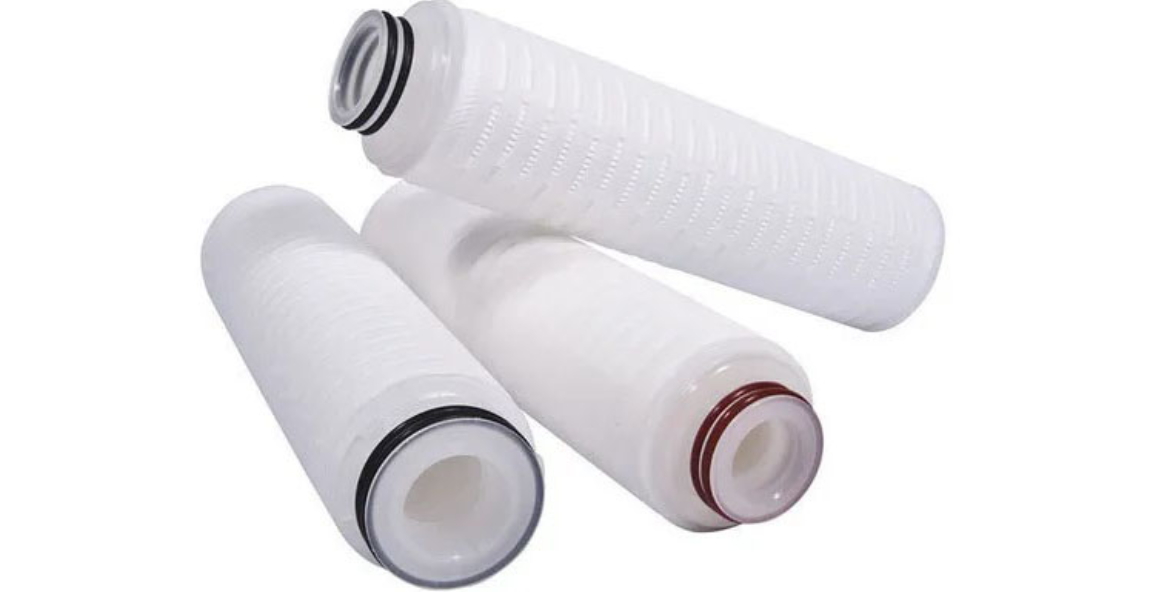
PP Spun Filter Cartridge — What It Is and Where It Fits
Engineers use a PP Spun Filter Cartridge when they need predictable prefiltration without drama. It’s a melt-blown, depth-type polypropylene water filter cartridge: fibers are thermally bonded into a gradient structure so coarse particles lodge near the surface while finer material is caught deeper in the matrix. In actual operation, that depth loading translates to a steadier differential-pressure (ΔP) rise and longer run length compared with typical surface media. You’ll usually see the spun filter cartridge after a basket/Y-strainer and before pleated guards or RO; it buffers load swings, which downstream elements really appreciate.
Now, here’s the catch most teams learn the hard way: sizing and geometry matter more than the nameplate micron. A correctly selected 5 µm depth element (longer body or jumbo OD) can outperform a too-tight, too-short cartridge by holding the same flow at a lower face velocity—and honestly, that’s what keeps ΔP from spiking on day two. In most installations, Praimo Industrial Filters & Spares Manufacturing Company supplies both slim 2.5″ and jumbo 4.5″ bodies in 10/20/30/40″ lengths with 1–150 µm nominal grades, plus DOE/222/226 ends to match sanitary or industrial housings. Operators often notice that switching to 222/226 in vibration-prone skids eliminates the micro-bypass haze they’d been chasing for months.
Where it fits in a filtration train
| Stage | Function | Engineering Note |
|---|---|---|
| Strainer (Basket/Y) | Removes coarse debris (mm range) | Lowest ΔP; protects valves/pumps |
| PP Spun Filter Cartridge | Depth capture of fines (1–150 µm) | Gradient density → slower ΔP rise |
| Pleated / Absolute | Tight, validated cut-off (0.2–10 µm abs.) | Lower load due to spun pre-stage |
| RO / Final Barrier | Final clarity/salt rejection | Reduced fouling, longer CIP cycles |
One overlooked detail: lock the ΔP baseline right after install and record it. That number becomes your truth when loads or viscosities drift—especially on seasonal feeds.
Spun Water Filter — Sizes, Micron Ratings, and Operating Limits
In most plants, a spun water filter (PP melt-blown depth cartridge) is the quiet workhorse. You’ll find it in slim 2.5″ and jumbo 4.5″ (Big-Blue) bodies, cut to 10/20/30/40″ lengths and offered across 1–150 µm nominal grades. For dependable operation, size the train so initial ΔP stays at or below 3–4 psid, then plan change-out around 20–30 psid—that simple discipline prevents surprises. Temperature is straightforward too: PP media typically runs ~4–60 °C in aqueous service. And as a rule of thumb, going longer (20/30/40″) lowers face velocity at the same flow, which almost always buys you more run length.
20 Inch Spun Filter and 40 Inch Spun Filter (slim & jumbo formats)
| Parameter | Slim 2.5" (10"/20"/30"/40") | Jumbo 4.5" (10"/20") | Notes |
|---|---|---|---|
| Outside Diameter | ~63–65 mm (2.5") | ~114 mm (4.5") | Larger OD lowers face velocity |
| Inside Diameter | ~28–30 mm | ~28–30 mm | Common core geometry |
| Micron Range (nominal) | 1–150 µm | 1–150 µm | Same grades; different hydraulics |
| Temperature Window | ~4–60 °C | ~4–60 °C | Typical for PP melt-blown media |
| Initial ΔP Target | ≤3–4 psid | ≤3–4 psid | Preserves service life |
| Change-out Guide | 20–30 psid | 20–30 psid | Or earlier if quality-critical |
| Indicative Flow (water, 5 µm, 10") | ~8–10 GPM at low ΔP | Higher flow at same ΔP | Jumbo extends runtime |
| Length Scaling (same flow) | 20" ≈ ΔP/2; 30" ≈ ΔP/3; 40" ≈ ΔP/4 | — | Rule-of-thumb for depth media |
Why jumbo? Lower initial ΔP at a given flow, longer service intervals, and reduced pump energy—especially compelling for 20-inch spun filter duties and above.
1 Micron Spun Filter vs 5 Micron Spun Filter (selection basics)
- 1 µm spun: polishing stage that targets fine colloids; expect higher initial ΔP; best deployed after a coarser lead stage.
- 5 µm spun: general utility/RO pretreatment; a practical balance between cut-off and ΔP; often the lead depth stage.
- Good practice: Stage 25 µm → 5 µm → 1 µm to flatten ΔP rise, stabilize clarity, and extend the life of downstream pleated or RO elements.
Spun Water Filter — Sizes, Micron Ratings, and Operating Limits
In most plants, a spun water filter (PP melt-blown depth cartridge) is the quiet workhorse. You’ll find it in slim 2.5″ and jumbo 4.5″ (Big-Blue) bodies, cut to 20/40″ lengths and offered across 1–150 µm nominal grades. For dependable operation, size the train so initial ΔP stays at or below 3–4 psid, then plan change-out around 20–30 psid—that simple discipline prevents surprises. Temperature is straightforward too: PP media typically runs ~4–60 °C in aqueous service. And as a rule of thumb, going longer (40″ vs 20″) lowers face velocity at the same flow, which almost always buys you more run length.
20 Inch Spun Filter and 40 Inch Spun Filter (slim & jumbo formats)
| Parameter | Slim 2.5" (20"/40") | Jumbo 4.5" (20"/40") | Notes |
|---|---|---|---|
| Outside Diameter | ~63–65 mm (2.5") | ~114 mm (4.5") | Larger OD lowers face velocity |
| Inside Diameter | ~28–30 mm | ~28–30 mm | Common core geometry |
| Micron Range (nominal) | 1–150 µm | 1–150 µm | Same grades; different hydraulics |
| Temperature Window | ~4–60 °C | ~4–60 °C | Typical for PP melt-blown media |
| Initial ΔP Target | ≤3–4 psid | ≤3–4 psid | Preserves service life |
| Change-out Guide | 20–30 psid | 20–30 psid | Or earlier if quality-critical |
| Indicative Flow (water, 5 µm, 20") | ~16–20 GPM at low ΔP | ~20–28 GPM at low ΔP | Format governs velocity |
| Length Effect (same flow) | 40" ≈ ΔP/2 of 20" | 40" ≈ ΔP/2 of 20" | Rule-of-thumb for depth media |
Why jumbo? Lower initial ΔP at a given flow, longer service intervals, and reduced pump energy—especially compelling for 20-inch spun filter duties and above. If vertical clearance allows, stepping up to 40″ halves ΔP at the same flow (roughly), which stabilizes ΔP trends and extends change-out intervals.
1 Micron Spun Filter vs 5 Micron Spun Filter (selection basics)
- 1 µm spun: polishing stage that targets fine colloids; expect higher initial ΔP; best deployed after a coarser lead stage.
- 5 µm spun: general utility/RO pretreatment; a practical balance between cut-off and ΔP; often the lead depth stage.
- Good practice: Stage 25 µm → 5 µm → 1 µm to flatten ΔP rise, stabilize clarity, and extend the life of downstream pleated or RO elements.
20 Inch Spun Filter & 40 Inch PP Spun Filter Cartridge — Slim 2.5″ vs Jumbo 4.5″
Hydraulics follow geometry—always. At the same flow, a jumbo 4.5″ body runs a lower face velocity than a slim 2.5″, which shows up as lower initial ΔP, longer run length, and a measurable reduction in pump energy. Stepping from a 20 inch spun filter to a 40 inch PP spun filter cartridge increases media depth/area again; you can usually hold the same flow at a fraction of the pressure drop (or raise flow without sacrificing life). For RO pretreatment and utility polishing, this upgrade path is often the cleanest way to stabilize SDI and keep downstream elements out of trouble.
20 Inch PP Filter flow/ΔP examples
(Water, ~20 °C; nominal 5 µm; indicative figures to compare formats at similar duty)
| Format | Typical Flow Range (per element) | Initial ΔP (approx.) | What this means |
|---|---|---|---|
| Slim 2.5" × 20" | 12–18 GPM | 2.5–4.0 psid | Adequate for moderate duty lines |
| Jumbo 4.5" × 20" | 18–28 GPM | 1.0–2.5 psid | Lower ΔP → longer runtime/less energy |
| Slim 2.5" × 40" | 24–36 GPM | 1.0–2.0 psid | Length halves ΔP at same flow (rule-of-thumb) |
| Jumbo 4.5" × 40" | 30–45 GPM | 0.5–1.2 psid | Best hydraulic stability at higher duty |
Rule-of-thumb: At the same flow, 40″ ≈ ΔP/2 of 20″. The jumbo 4.5″ format further trims ΔP thanks to the larger cross-section.
When a jumbo (Big-Blue) pays back vs slim
- Media life: Expect 25–60% longer intervals before reaching the 20–30 psid change-out band.
- Energy: 10–25% lower pump energy due to reduced average ΔP (flow-dependent).
- Cartridge count: Fewer parallel elements required to meet peak flow and ΔP budgets.
- Operations: Wider safety margin through load spikes; fewer unplanned changeouts and cleaner SDI trends.
PP Melt-Blown Filter Cartridge — Materials and Construction
Engineers pick a PP melt-blown filter cartridge when they need predictable, low-maintenance prefiltration that won’t shed fibers or surge ΔP halfway through the run. The media is built by thermally bonding polypropylene microfibers into a gradient-density matrix—coarse on the outside, finer toward the core—so solids layer in depth rather than on the surface. In actual operation, that structure gives you a steadier differential-pressure curve, higher dirt-holding, and fewer downstream surprises. Because it’s an all-polypropylene melt blown polypropylene filter cartridge, there are no binder resins or adhesives to complicate compatibility or extractables (a common concern in utility and RO pretreatment trains).
Now, a quick practical note: the media is forgiving, but not magical. Respect the chemistry (especially oxidizers), keep the start-up ramp sensible, and match the seals to temperature and fluid. Do that, and you’ll usually see a stable ΔP trend from install to change-out.
Media science & build notes
- Depth architecture: Porosity transitions from ~outer to inner layers to slow ΔP rise.
- Thermal bonding: Eliminates resin binders; enhances structural integrity.
- Surface finish: Low-shedding PP fibers reduce downstream fiber carryover.
- End connections: Thermally fused PP end-caps; DOE, 222/Flat, 226/Flat options for positive sealing.
- Elastomers: EPDM, NBR (Buna-N), Silicone, or FKM (Viton) selected by fluid and temperature.
- Operating window (typical): Aqueous service ~4–60 °C; observe chemistry/oxidizer limits.
Melt-blown polypropylene media (gradient density)
- Captures a broad particle size distribution in one element.
- Provides predictable life and clarity improvement ahead of pleated or membrane stages.
- Lower initial ΔP versus “tight-first” surface filtration at the same cut-off.
A quick shop-floor insight: operators often notice that gradient media buys them a little extra forgiveness when turbidity swings. It won’t fix a poor upstream process, but it will smooth the ΔP slope while you sort the cause—useful during seasonal transitions.
Coreless vs PP-cored for higher collapse resistance
| Feature | Coreless Construction | PP-Cored Construction |
|---|---|---|
| Collapse resistance | Standard (adequate for most utilities) | Higher (handles transient ΔP spikes better) |
| Best use case | Clean inlets, steady flows | Viscous fluids, start-up surges, high fouling |
| Cost & weight | Lower | Slightly higher |
| Recommendation | Default choice | Specify when ΔP margin is tight or upset conditions are likely |
Another aspect worth noting is change-management: if you’re seeing ovalized cartridges or channel marks at teardown, don’t immediately blame the media. First check ramp rates and actual ΔP peaks, then move to a PP-cored build and confirm the end-code fit (222/226 in sanitary or high-vibration skids). This sequence fixes most collapse complaints without over-specifying the entire train.
End Connections and Seals — DOE, 222, 226 for Polypropylene Filter Cartridges
In actual operation, end connections do more than “hold the element in place.” They set the tone for seal integrity, ΔP stability, and whether you’ll chase haze from micro-bypass next week. A polypropylene filter cartridge typically ships with DOE, 222/Flat, or 226/Flat ends; the right pick follows the housing’s posts/cups, cleanliness expectations, and service pressure. In sanitary or high-spec utilities, 222/226 are popular because the double O-ring footprint repeats the seating location every time and tolerates vibration and thermal cycling. For general utility water, DOE remains cost-effective—provided cups and springs are in good shape and tolerances are respected.
DOE vs 222 vs 226: sealing integrity and bypass control
| End code | Seal style | Typical housings | Bypass risk* | Notes |
|---|---|---|---|---|
| DOE (Double Open End) | Flat gasket compresses in cup/spring | Industrial, legacy | Higher (fit dependent) | Economical; verify cup depth & spring condition |
| 222/Flat | Double O-ring + flat end face | Sanitary & industrial | Low | Positive location; easy validation and change-outs |
| 226/Flat | Double O-ring + bayonet lock | Sanitary, high-vibration | Lowest | Twist-lock resists movement; best for upset conditions |
*Assumes correct installation and undamaged parts.
Gasket/O-ring choices: EPDM, NBR, Silicone, FKM (Viton)
| Elastomer | Temp range (typical) | Chemical profile | Common use |
|---|---|---|---|
| EPDM | −40 to ~135 °C | Water/steam, mild chemicals; avoid oils | Utility water, CIP utilities |
| NBR (Buna-N) | −30 to ~110 °C | Hydrocarbons, oils | Oil-contact or mixed utility lines |
| Silicone | −50 to ~200 °C | Broad; not for fuels/oils | Thermal cycling, food utilities |
| FKM (Viton) | −20 to ~200 °C | Strong solvents, many chemicals | Aggressive chemistries, higher temp |
Good practice
- Match end code to housing (post/cup geometry) and document the code on the BOM.
- For sanitary/critical services, use 222/226 with the correct elastomer for your chemistry and temperature.
- Replace worn cups/springs and inspect O-rings at every change-out to prevent micro-bypass and particle shedding.
Small field note: if you’re seeing “mystery haze” downstream with stable ΔP, check end-code fit and O-ring condition before changing micron grades. Nine times out of ten, it’s seating—not media.
Technical Performance — Pressure-Drop Curves for Spun Filter Micron Grades
Depth media are predictable—if you read the curves and respect the hydraulics. At a fixed flow, coarser micron grades run at lower ΔP than tighter grades, and longer elements drop ΔP simply by adding depth and area. In practice, engineers set an initial ΔP target ≤ 3–4 psid and plan a change-out band around 20–30 psid; everything else (length, parallel count, jumbo vs slim) is tuned from the manufacturer’s ΔP vs flow curves to hit those limits with a safety margin. One overlooked detail: lock the baseline right after commissioning, then trend. That graph tells you more about fouling and staging than any single datapoint.
10″ baseline; scaling to 20/30/40″ lengths
Use a 10″ cartridge curve as the reference and apply simple engineering scalars:
- Length scaling (same flow): 20″ ≈ ΔP/2, 30″ ≈ ΔP/3, 40″ ≈ ΔP/4 (rule-of-thumb for melt-blown depth media).
- Parallel elements: ΔP drops roughly with 1/N at the same total flow when adding identical cartridges in parallel (assuming the manifold is balanced and sized correctly).
Indicative baseline (water ~20 °C, single 10″ element):
| Micron grade | 5 GPM | 10 GPM | 15 GPM |
|---|---|---|---|
| 1 µm | ~0.6–0.9 psid | ~1.2–1.6 psid | ~2.0–2.8 psid |
| 5 µm | ~0.3–0.5 psid | ~0.6–0.9 psid | ~1.2–1.8 psid |
| 25 µm | ~0.1–0.2 psid | ~0.2–0.4 psid | ~0.5–0.8 psid |
To translate to 20″/30″/40″, divide the baseline ΔP by 2/3/4 respectively; then apply viscosity/temperature corrections.
Viscosity and temperature corrections for real fluids
- Viscosity multiplier: For Newtonian service, approximate ΔP_real ≈ ΔP_water × (μ_real / 1 cP) at the same flow and geometry.
- Temperature effect: As temperature rises, viscosity typically falls → lower ΔP; cold starts push ΔP up.
- Non-Newtonian/solids: If fluids shear-thicken or carry gels/fines, use conservative ΔP budgets, slower ramp-up, and consider staging (25 → 5 → 1 µm) to flatten the rise.
Practical sizing tips
- Keep the initial ΔP low to maximize life; avoid “tight-first” single-stage designs.
- For higher duty or variable loads, prefer jumbo 4.5″ or longer (30/40″) cartridges to reduce face velocity.
- Validate with on-site trials; trend ΔP vs time and correlate with quality (NTU/SDI) to set predictive change-out.
Small field note: operators often see the curve “bend” sooner on cold mornings or after rapid restarts—both are viscosity and ramp-rate stories, not necessarily a media failure. Slow the ramp, warm the line, and reassess before changing micron.
RO Spun Filter / RO Filter Spun — Pretreatment for Reverse Osmosis
Reverse osmosis works best when the feed is quiet—low particulate load, low colloidal tendency, and no sudden ΔP swings. A spun water filter cartridge used as an RO prefilter does exactly that: gradient-density depth capture removes a broad particle band, flattens the ΔP curve, and reduces the solids burden that would otherwise hit pleated guards or the membrane train. In practice, a well-sized RO spun filter stage stabilizes SDI (Silt Density Index), cuts CIP frequency, and stretches membrane life—particularly on feeds that change with the season or after upstream upsets. And remember, hydraulics matter; the RO filter spun stage should be sized for modest face velocity so the benefits show up in both clarity and energy.
Using a Spun Water Filter Cartridge to control SDI
- Depth capture: Coarser outer layers take sand/silt; inner layers trap fines that drive SDI.
- Hydraulics: Lower face velocity (jumbo 4.5″ or longer 30/40″) keeps initial ΔP low at design flow.
- Outcomes observed (typical):
- SDI stabilized from ~5–6 to ≤3–4 before RO.
- 15–30% reduction in CIP events over a quarter.
- 1.5–2.5× prefilter life versus a single tight stage.
Staging (25 → 5 → 1 µm) to extend membrane life
Two- or three-stage trains distribute load and minimize cake formation on the finest grade.
Example (20–25 °C, utility water):
- Stage 1: 25 µm (jumbo) — bulk silt/rust removal; very low ΔP.
- Stage 2: 5 µm — general polishing; protects the final cut-off.
- Stage 3: 1 µm — fines control before pleated guard or RO.
Sizing notes:
- Target initial ΔP ≤ 3–4 psid per stage; change-out 20–30 psid.
- Use parallel elements to maintain velocity; prefer jumbo 4.5″ where footprint allows.
- Trend ΔP vs time and correlate to SDI to set predictive maintenance.
Applications — Water Purifier Spun Filter, Utilities, and Industrial Duties
In practice, a water purifier spun filter (PP melt-blown depth media) is the prefilter that keeps everything else honest. On utility lines and light process services it screens out rust, silt, and fines that would otherwise load pleated guards or membranes far too quickly. For heavier industrial duties—F&B utilities, cooling water side-stream, paints/inks, plating—the pp sediment water filter configuration gives a predictable dirt profile and a smoother differential-pressure (ΔP) curve, so operators aren’t chasing sudden spikes. Where clarity or SDI targets are tight, place the spun sediment filter ahead of pleated absolute or RO; it stabilizes quality and, just as importantly, OPEX.
Another point engineers note in the field: when turbidity wanders, start a little coarser and protect the fine stage. The combination of correct micron staging and modest face velocity (jumbo OD or longer length) is what turns a good design into a stable one over weeks of operation—not just the first day after commissioning.
F&B utility, cooling water side-stream, paints/inks, plating
- F&B utility water: 5–10 µm, 20–30″ slim or 20″ jumbo; protects heat exchangers and CIP loops.
- Cooling side-stream: 25–50 µm, 20–40″; manages corrosion products and basin carryover.
- Paints/inks: 10–25 µm, PP-cored for ΔP spikes; minimizes shear and pigment agglomerate release.
- Electroplating/rinse: 5–10 µm, 20–30″; reduces particulate defects and nozzle wear.
Domestic/industrial RO: Water Purifier Spun Filter use cases
| Duty | Suggested Grade | Typical Format | Outcome |
|---|---|---|---|
| Domestic RO prefilter | 5 µm | 10" slim | Fewer cartridge swaps; stable taste/clarity |
| Commercial RO inlet | 5 → 1 µm (staged) | 20–30" slim or 20" jumbo | SDI stabilization; longer membrane life |
| Pre-pleated guard | 25 → 5 µm | 20–40" slim | Lower fouling on absolute cartridges |
| Utility polishing | 10 µm | 20–30" | Lower ΔP growth; predictable PM windows |
Selection notes: Start coarser when turbidity is variable, keep initial ΔP ≤ 3–4 psid, and consider jumbo 4.5″ where footprint allows to reduce face velocity and extend run length.
Chemical Envelope — PP Sediment Filter Compatibility and Elastomer Selection
Polypropylene earns its place as the workhorse medium for a pp sediment filter because it tolerates a wide range of common plant chemistries—non-oxidizing acids and bases, salts, and many aqueous organics. As a polypropylene filter element, the melt-blown media and PP end caps avoid binder resins, which helps keep extractables low in utility and process water. Do sanity checks first, though: confirm fluid chemistry, operating temperature, and any sanitants in use. Strong oxidizers (e.g., high free-chlorine shocks, peroxides) and some aromatics/halogenated solvents can embrittle PP or swell seals. For most aqueous duties, a polypropylene water filter cartridge runs reliably in the ~4–60 °C band; be conservative on cold starts and ramp flow gradually to avoid ΔP spikes.
Polypropylene filter element in non-oxidizing chemistries
Typical compatibility overview (indicative):
| Fluid family | PP media/caps | Notes |
|---|---|---|
| Non-oxidizing acids (dilute–moderate) | ✔ | Check temp/acid concentration; rinse-outs recommended |
| Non-oxidizing bases/alkalis | ✔ | Monitor for stress cracking at high temp/caustic |
| Salts/brines | ✔ | Watch crystallization at cold starts |
| Alcohols/glycols | ✔ / ⚠ | Verify concentration; glycol viscosity affects ΔP |
| Hydrocarbons (aliphatic) | ⚠ | Limited exposure; consider NBR/FKM seals |
| Aromatics/halogenated | ✖ / ⚠ | Generally unsuitable; evaluate alternates |
| Strong oxidizers (chlorine shock, peroxide) | ✖ | Avoid; use compatible media/seals or dechlorinate upstream |
A quick shop note: operators often blame the cartridge when ΔP jumps after a sanitizer change. Nine times out of ten, it’s chemistry—verify oxidizer residuals and seal compatibility before swapping microns or vendors.
Choosing EPDM/NBR/Silicone/FKM by fluid and temperature
Elastomer selection matrix (typical ranges):
| Elastomer | Temp range (approx.) | Strengths | Avoid |
|---|---|---|---|
| EPDM | −40 to 135 °C | Water/steam, many CIP agents | Oils/fuels |
| NBR (Buna-N) | −30 to 110 °C | Oils, aliphatic hydrocarbons | Ozone/strong oxidizers |
| Silicone | −50 to 200 °C | Thermal cycling, food utilities | Fuels/oils, some solvents |
| FKM (Viton) | −20 to 200 °C | Solvents, many chemicals | Hot aqueous amines (evaluate) |
Good practice
- Match the elastomer to the worst-case fluid and temperature, not just nominal duty.
- For variable water quality, EPDM is a sensible default; for oil contact, step up to NBR/FKM.
- Record end-code + O-ring material on the BOM; it prevents mix-ups at maintenance and cuts micro-bypass incidents later.
Jumbo 4.5″ Poly Spun Filter Cartridge vs Slim 2.5″ — Dirt-Holding and ΔP
In real plants, geometry sets the tone for how a stage behaves over time. Move to a jumbo 4.5″ poly spun filter cartridge and you immediately drop face velocity at the same flow—initial ΔP falls, cake forms more slowly, and run length stretches out. A spun polypropylene filter cartridge in jumbo format also cushions the system against brief turbidity spikes or start-up surges; there’s simply more cross-section to absorb the upset before you drift toward the 20–30 psid change-out band. In steady duty, the effect shows up as fewer touches and a quieter ΔP trend; in variable duty, it often prevents those midweek emergency swaps everyone hates.
Indicative comparison (water ~20 °C, 5 µm, per element)
| Format | Typical Flow Range | Initial ΔP (approx.) | Expected Run Length* |
|---|---|---|---|
| Slim 2.5" × 20" | 12–18 GPM | 2.5–4.0 psid | 1.0× baseline |
| Jumbo 4.5" × 20" | 18–28 GPM | 1.0–2.5 psid | 1.3–1.6× |
| Slim 2.5" × 40" | 24–36 GPM | 1.0–2.0 psid | 1.8–2.2× |
| Jumbo 4.5" × 40" | 30–45 GPM | 0.5–1.2 psid | 2.2–2.8× |
*Relative to slim 2.5″ × 20″ at equivalent water quality/load.
Lifecycle impact: run length and pump energy
- Longer service intervals: Lower average ΔP delays the 20–30 psid change-out point, reducing touches and spares.
- Energy savings: Every psid avoided cuts pump head; typical systems see 10–25% reduction in filtration-stage energy at the same flow.
- Process stability: Jumbo elements buffer upset conditions (start-ups, load spikes), yielding steadier SDI/clarity upstream of pleated or RO.
Multi-round counts for target flow
- Rule-of-thumb: At a fixed per-element flow, N elements in parallel share duty; system ΔP ≈ single-element ΔP (manifold permitting).
- Quick planner: If your target is 120 GPM at ≤2 psid initial, choose jumbo 4.5″ × 20″ at ~20 GPM/element → 6 elements; slim 2.5″ might require 8–10 elements to hold the same ΔP.
- Scale smart: Prefer 40″ length where vertical clearance allows; expect roughly ΔP/2 versus 20″ at the same flow.
Small field note: when operators switch from slim to jumbo on the same micron, they often report “the line just feels calmer.” That’s the lower face velocity working in your favor—less noise on the ΔP graph, fewer nuisance alarms, and a maintenance schedule that actually sticks.
Polypropylene Pleated Filter Cartridges vs Spun-Bonded/Depth — Choosing the Right Type
The choice isn’t theoretical; it’s about what holds clarity over time at your duty point. Polypropylene pleated filter cartridges deliver a validated, tightly controlled cut-off (often absolute) and are hard to beat when breakthrough risk must be near zero before a critical stage. Spun-bonded depth (PP spun) behaves differently: gradient depth loading smooths ΔP rise and soaks up variability without constant attention. And when the solids are truly bulky, a bag filter housing is the economical way to knock the load down first—big cavity, low CAPEX, easy to stage ahead of cartridges.
Another aspect worth noting is how plants evolve. Many lines “start spun” because it’s forgiving, then add a pleated absolute guard as quality targets tighten or a new downstream unit arrives. When cartridge spend becomes a talking point, inserting a bag stage upstream often pays for itself quickly.
Alternatives matrix (indicative guidance)
| Criterion | Polypropylene Pleated (absolute) | Spun-Bonded Depth (PP spun) | Bag Filters |
|---|---|---|---|
| Cut-off type | Absolute (validated) | Nominal (gradient depth) | Nominal (surface/depth felt) |
| Capture efficiency @ rating | High (≥99% typical) | Medium–High (grade dependent) | Medium |
| Initial ΔP (at design flow) | Low–Medium (high area) | Low–Medium (coarser), Med–High (1 µm) | Low |
| Dirt-holding behavior | Medium (surface + some depth) | High (true depth loading) | High (large cavity) |
| ΔP rise trend | Moderate, steady | Smoothest (best for variability) | Can step up with cakes |
| Cleanability / reuse | Limited (single-use common) | Single-use | Some bags are cleanable; varies |
| Validation need (FDA/critical) | Best choice | Acceptable for utilities | Prefilter/coarse only |
| Typical micron window | 0.2–40 µm (absolute) | 1–150 µm (nominal) | 1–200 µm nominal |
| Best fit | Final guard before RO/UF; QA-critical | Utility/RO pretreat; variable turbidity | Bulk load knock-down |
| Cost per m³ (typical) | Medium–High; lowest risk | Low–Medium; strong OPEX | Lowest when solids are high |
| Footprint | Compact multi-round | Compact multi-round | Larger housings common |
When to upgrade to pleated (absolute)
- You need validated removal (e.g., pre-sterile, QA-critical, fine polishing before sensitive membranes).
- Breakthrough risk must be minimized despite load swings; absolute media with high surface area maintains clarity targets.
- Tight SDI/NTU specs where fines leakage from nominal depth could impact downstream integrity tests.
When bag filters beat spun on cost/load profile
- Bulk solids are high (rust/scale, basin carryover) and you need low cartridge spend per m³.
- Space and handling are available for larger housings and bag change-outs.
- Upstream of depth or pleated, bags act as a low-CAPEX “knock-down” to extend downstream media life.
Field tip: If your ΔP climbs sooner than expected, don’t immediately tighten the micron. Add a bag or coarser depth stage first, stabilize hydraulics, then reassess. It’s the cheapest path to restoring run length without over-filtering the stream.
Micron Selection Guide — 1 Micron Polypropylene Filter vs 5 Micron PP Filter
Selecting between a 1 micron polypropylene filter and a 5 micron PP filter is rarely about preference; it’s a balance of solids loading (mg/L), target clarity (NTU/SDI), and what your pressure drop budget will tolerate. Use the finer grade for polishing or when SDI targets are tight; deploy the coarser grade as the lead stage when turbidity swings or when you need longer run length at the same flow. A 5 micron spun filter generally starts with a lower ΔP and handles variable loads better; 1 µm improves final clarity but needs careful ΔP planning and, usually, a staged approach.
Typical loads (mg/L) and clarity goals
| Inlet Load (mg/L TSS) | Target (NTU/SDI) | Recommended Micron | Notes |
|---|---|---|---|
| ≤5 mg/L | NTU ≤ 1.0, SDI ≤ 3–4 | 1 µm (polishing) | Fine particulates dominate; watch ΔP |
| 5–20 mg/L | NTU ≤ 2–3, SDI ≤ 4–5 | 5 µm (lead) → 1 µm (polish) | Two-stage smooths ΔP rise |
| 20–50 mg/L | NTU ≤ 5, SDI ≤ 5–6 | 25 µm (pre) → 5 µm | Consider jumbo 4.5" for hydraulics |
| >50 mg/L | Clarification upstream first | Bag/strainer → 25 µm → 5 µm | Avoid blinding the fine stage |
Staged filters to slow ΔP rise
- Good practice: 25 µm → 5 µm → 1 µm where final clarity or SDI is critical.
- Hydraulics: Keep initial ΔP ≤ 3–4 psid per stage; use 30/40″ or jumbo 4.5″ to reduce face velocity.
- Optimization: If the 1 µm stage blinds early, increase area (longer elements or more in parallel) or shift more load upstream with a coarser lead stage.
- Validation: Trend ΔP vs time and correlate to NTU/SDI to lock the best micron stack for your duty.
Small field note: many teams “solve” a clarity issue by tightening to 1 µm first, then watch ΔP spike. Reverse the order—add a coarse pre-stage, stabilize hydraulics, and only then move the polish grade if needed. It’s cheaper and it sticks.
Quick Reference — PP Filter 1 Micron, PP Filter 5 Micron, PP Filter 20 Inch
If you just need to spec and buy without a long meeting, this is the page most engineers keep open. Use it to select common PP filter 1 micron, PP filter 5 micron, and PP filter 20 inch variants, along with quick notes on duty, hydraulics, and ordering. In actual operation, these SKUs cover 80–90% of day-to-day cases; when loads get unusual (viscosity swings, cold starts, fluctuating turbidity), step up length/diameter or add a coarse stage up front before tightening the polish grade.
Common SKUs and service notes — PP Filter 1 Micron / PP Filter 5 Micron
| Part Code (example) | OD × Length | Micron | End Code | Elastomer | Typical Duty | Notes |
|---|---|---|---|---|---|---|
| PP-2.5×10-001-DOE-EPDM | 2.5" × 10" | 1 µm | DOE | EPDM | Final polish before pleated/RO | Keep initial ΔP ≤ 3–4 psid |
| PP-2.5×20-005-DOE-EPDM | 2.5" × 20" | 5 µm | DOE | EPDM | Utility/RO prefilter | General lead stage for low–med load |
| PP-2.5×30-005-222-EPDM | 2.5" × 30" | 5 µm | 222/Flat | EPDM | Sanitary utilities | Positive seal; lower bypass risk |
| PP-4.5×20-005-222-EPDM | 4.5" × 20" | 5 µm | 222/Flat | EPDM | Higher flow RO pretreat | Jumbo lowers face velocity/ΔP |
| PP-2.5×40-001-226-FKM | 2.5" × 40" | 1 µm | 226/Flat | FKM | Chemically aggressive utilities | Higher collapse resistance + FKM |
| PP-4.5×20-001-222-EPDM | 4.5" × 20" | 1 µm | 222/Flat | EPDM | Tight SDI targets | Stage after 25→5 µm for life gains |
Part code key: PP–[OD]×[Length]–[Micron]–[End]–[Elastomer]
(Customize codes to Praimo’s catalog if needed.)
Pairing with housings — PP Filter 20 Inch (single / multi-round)
| Target Flow (water) | Recommended Element | Elements in Parallel | Initial ΔP (approx.) | Housing Type |
|---|---|---|---|---|
| 15–20 GPM | 2.5" × 20", 5 µm | 1 | ≤3–4 psid | Single-round |
| 20–28 GPM | 4.5" × 20", 5 µm | 1 | ≤2–3 psid | Big-Blue (jumbo) |
| 60–80 GPM | 2.5" × 20", 5 µm | 4–6 | ≤2–3 psid | Multi-round (6–10) |
| 100–140 GPM | 4.5" × 20", 5 µm | 4–6 | ≤2 psid | Multi-round jumbo |
| >150 GPM | 2.5"/4.5" × 40" | As sized | Hold ≤2 psid | Multi-round + 40" length |
Notes: Scale flow/ΔP for micron grade and viscosity; for unstable loads use jumbo 4.5″ or 40″ length to buffer spikes and extend run length.
Human tip from the shop floor: if you’re frequently over the ΔP budget by mid-shift, it’s rarely a single “bad” cartridge—more often the per-element flow is too high for the micron chosen. Drop the flux, add one more element in parallel, or move to 40″/jumbo and the problem usually disappears.
Sizing & Selection — From Flow and Viscosity to Cartridge Count
Sizing isn’t guesswork; it’s curves plus a few disciplined rules. Start with total flow (Q), fluid viscosity (μ, cP), micron grade, and the initial ΔP you’re willing to accept. Read the manufacturer pressure-drop curves for a 10″ reference element at your chosen micron, then scale for length and parallel count to hold initial ΔP ≤ 3–4 psid and plan change-out around 20–30 psid. In actual operation, the lines that last are the ones sized with headroom—especially when feeds run cold or loads swing.
Set initial ΔP (≤3–4 psid) and change-out (20–30 psid)
Quick method (per train):
- Inputs: Q (GPM), μ (cP), target initial ΔP (≤3–4 psid), micron grade, available lengths (10/20/30/40″), format (2.5″ slim / 4.5″ jumbo).
- Read ΔP_curve(10″): From the 10″ curve, find ΔP at a trial per-element flow q.
- Apply corrections:
- Viscosity: ΔP_visc = ΔP_curve × (μ / 1 cP)
- Length: ΔP_len ≈ ΔP_visc × (10″ / L) (20″→½, 30″→⅓, 40″→¼)
- Viscosity: ΔP_visc = ΔP_curve × (μ / 1 cP)
- Check ΔP: If ΔP_len ≤ target, accept q; if not, reduce per-element flow or increase length/diameter (jumbo) or add elements in parallel.
- Cartridge count: N = ceil(Q / q_accepted).
- Change-out: Monitor ΔP vs time; replace at ~20–30 psid (or earlier if quality-critical).
Length scaling and multi-round calculations
Rule-of-thumb scalars (same per-element flow):
- Length: 20″ ≈ ΔP/2; 30″ ≈ ΔP/3; 40″ ≈ ΔP/4.
- Parallel elements: System ΔP ≈ single-element ΔP when manifolded correctly; N shares total flow (q = Q/N).
Worked example (indicative, water ~1 cP, 5 µm):
- Target: Q = 120 GPM, initial ΔP ≤ 2 psid.
- Option A (jumbo 4.5″ × 20″): Use ~20 GPM/element starting point → N = 120/20 = 6.
- Viscosity change (μ = 2 cP): Halve q to ~10 GPM/element to hold ΔP → N = 12, or switch to 40″ (≈½ ΔP) to return to N ≈ 6.
- Upsize alternative: Jumbo 4.5″ × 40″ at ~20 GPM/element often meets ≤2 psid with 6 elements and yields longer run time.
How-to table (inputs → sizing action)
| Input condition | Sizing action | Why it helps |
|---|---|---|
| ΔP too high at design flow | Add elements (↑N) or reduce q | Lowers face velocity per element |
| Space limited, ΔP high | Increase length (20→30→40") | More media depth → lower ΔP |
| ΔP spikes on start-up | Specify PP-cored and/or jumbo | Higher collapse resistance + lower velocity |
| μ > 1 cP (viscous) | Scale ΔP by μ; derate q | Viscosity raises frictional losses |
| Frequent early blinding | Add coarse pre-stage (25→5→1 µm) | Distributes load; slows ΔP rise |
Field note: teams often overshoot ΔP by pushing too much flow through too few 20″ slims. Add one element, or move to 40″/jumbo, and the ΔP problem quietly goes away—no need to tighten the micron and wreck run length.
PP Spun Filter Cartridge Price — Cost Drivers and Budget Ranges
Price conversations often start with micron—and then drift into geometry, seals, and paperwork. That’s normal. The truth is, pp spun filter cartridge price depends on the body format (2.5″ slim vs 4.5″ jumbo), length (10/20/30/40″), end-connection (DOE / 222 / 226), and elastomer (EPDM/NBR/Silicone/FKM). Order profile and documentation for domestic/export supply matter too. In practice (and this surprises many first-time buyers), the lowest cost-per-m³ usually comes from the right hydraulics—think jumbo or 40″ to keep initial ΔP down—and sensible staging (25 → 5 → 1 µm) so the fine grade doesn’t blind early. Unit price isn’t the whole story; run length and energy show up on the P&L.
PP Spun Filter Cartridge, 5 Micron Price (what changes it)
- Hydraulics: Lower initial ΔP (jumbo/longer length) = fewer changeouts → lower lifecycle cost even if unit price is higher.
- Micron & media build: 1 µm typically costs more than 5 µm due to tighter media; PP-cored versions add collapse resistance (and cost).
- End-codes & elastomers: 222/226 + premium O-rings (e.g., FKM) cost more than DOE/EPDM, but reduce bypass risk and service calls.
- Order profile: Bulk cartons, blanket POs, or multi-round project kits reduce unit pricing and freight per piece.
OD/length/micron/end-code/elastomer impact on price
| Driver | Options | Relative impact on unit price | Lifecycle note |
|---|---|---|---|
| Outside diameter | 2.5" slim / 4.5" jumbo | Medium | Jumbo lowers ΔP → longer run time |
| Length | 10 / 20 / 30 / 40" | Medium | 40" ≈ ½ ΔP of 20" at same flow |
| Micron grade | 5 µm vs 1 µm / 25 µm | Low–Med | Pick by load & clarity target |
| End-connection | DOE / 222 / 226 | Low–Med | Positive seal cuts micro-bypass |
| Elastomer | EPDM / NBR / Silicone / FKM | Low–Med | Match chemistry & temperature |
| Media core | Coreless / PP-cored | Low–Med | PP-cored handles ΔP spikes |
Budgeting tip: Compare cost-per-m³ treated, not unit price alone. A slightly higher unit price that halves ΔP (jumbo/40″) often wins on OPEX, changeout labor, and process stability. In other words—buy the geometry that keeps ΔP calm and the rest of the line stays calm too.
PP Spun Filter Cartridge Manufacturer in India — Why Praimo
As a PP spun filter cartridge manufacturer in India, Praimo Industrial Filters & Spares Manufacturing Company blends day-to-day plant pragmatism with disciplined QA. The result is cartridges that drop directly into industrial and sanitary trains without seating drama or spec creep. Our melt-blown polypropylene elements are built under controlled conditions with documented material traceability, end-code accuracy (DOE/222/226), and elastomer verification so the seal matches the chemistry and temperature you actually run.
In-house QA, documentation, and traceability
- Material control: PP media, end-caps, and O-rings are batch-logged with receiving inspection and resin/compound references.
- Process verification: On-line checks for fiber laydown, bond integrity, OD/ID, and length tolerance; periodic burst/collapse checks for PP-cored SKUs.
- Documentation pack: Dimensional report, material statements (on request), packing list with lot/heat numbers, and labeled cartons for warehouse accuracy.
Sizing support, compliance, and export delivery
- Engineering assist: Curve-based sizing to hold initial ΔP ≤ 3–4 psid, cartridge count for target flow, and viscosity derates for non-water service.
- Compliance clarity: Cartridge material statements where applicable; housing/system options aligned to ASME/PED/CE for project supply.
- Export-ready: ISPM-15 packaging, clear SKU/lot labeling, and consolidated multi-round/duplex kits for EPC and OEM rollouts.
What this means for buyers
- Lower lifecycle cost: Correct geometry (jumbo 4.5″ or 40″) and staged micron stacks (25→5→1 µm) reduce changeouts and pump head.
- Operational stability: Positive seals (222/226) and elastomer matching cut micro-bypass and maintenance callbacks.
- Supply confidence: Predictable lead times, batch traceability, and documentation that passes audits.
Small field note: when lines standardize end-codes and elastomers across sites, spares inventories shrink and mis-seats disappear. It’s a dull change—but it saves real money by the end of the quarter.
Replacement & Aftermarket — PP Spun Filter Cartridge Near Me
Spare planning is the difference between a calm shift and a scramble. In actual operation, a melt-blown depth train behaves predictably if you treat ΔP trending as your north star rather than a wall calendar. Log a clean baseline ΔP right after commissioning, then let the slope guide you—most plants trigger replacement somewhere around 20–30 psid, earlier if SDI or product clarity tightens. If you’re hitting the limit too fast, don’t just tighten the micron; increase area (go 40″ length, jumbo 4.5″, or add parallel elements) or stage 25 µm → 5 µm → 1 µm so the fine grade doesn’t blind first.
Change-out triggers and typical intervals
- Primary trigger: Cumulative ΔP reaching 20–30 psid per stage.
- Quality override: SDI/NTU excursion or downstream clarity alarms.
- Operational flags: Start-up ΔP spikes, collapse marks on elements (specify PP-cored), recurring bypass traces (move to 222/226 seals).
- Typical intervals (indicative):
- Utility water, 5 µm lead: 1–4 weeks (load-dependent)
- RO polish, 1 µm: 1–3 weeks (with 5 µm upstream)
- Cooling side-stream, 25–50 µm: 2–8 weeks (steady solids)
Aftermarket checklist (quick audit)
- Correct end-code (DOE/222/226) matches housing posts/cups
- Elastomer per chemistry/temperature (EPDM/NBR/Silicone/FKM)
- Right length/OD (2.5″ slim or 4.5″ jumbo; 10/20/30/40″)
- Micron per stage (25 µm → 5 µm → 1 µm where needed)
- Stock buffer: ≥1 full change-out set per train
- Record lot/serial for traceability; update ΔP log at swap
Local availability and distributor support
For urgent swaps (“pp spun filter cartridge near me” / “spun filter near me”), keep a local distributor on file with your standard SKUs, end-codes, and elastomers to avoid last-minute mismatches. Multi-site operators should standardize part codes across plants and set min/max inventory by observed ΔP trend (not guesses). If you find yourself expediting too often, consolidate into cartons or multi-round kits—unit cost drops, and so does inbound chaos.
Human tip: if replacements keep coming back scuffed or ovalized, it’s usually ramp rate or transient ΔP. Slow the start-up, consider PP-cored elements, and check seating. The next set tends to last much longer.
Sizes and Codes — PP Spun Filter Cartridge Size & HSN Code
Ordering gets easy (and accurate) when the basics are locked: consistent PP spun filter cartridge size mapping and unambiguous part numbers. Standard bodies are 2.5″ (slim) and 4.5″ (jumbo/Big-Blue), with lengths 10/20/30/40″ and nominal grades 1–150 µm. Always capture end connections (DOE / 222 / 226) and elastomers (EPDM / NBR / Silicone / FKM) in the part code—most seating or bypass issues trace back to one of those two details, not the media itself.
A practical note from the shop floor: standardize codes across sites before you scale. One clean convention plus consistent labels on bags and cartons eliminates mis-picks and keeps maintenance from “making something fit” in a pinch.
Length/micron availability and part numbering
Recommended part-number structure
PP–[OD]x[LENGTH]–[MICRON]–[ENDCODE]–[ELASTOMER]–[CORE]
- OD: 2.5 or 4.5
- Length: 10, 20, 30, 40 (inches)
- Micron: 001 / 005 / 010 / 025 / 050 / 100 / 150 (use three-digit format)
- Endcode: DOE / 222 / 226
- Elastomer: EPDM / NBR / SIL / FKM
- Core: CRL (coreless) / PPC (PP-cored)
| Example SKU | Description | Typical Use |
|---|---|---|
| PP–2.5x10–005–DOE–EPDM–CRL | 2.5"×10", 5 µm, DOE, EPDM, coreless | Domestic/utility prefilter |
| PP–2.5x20–001–222–EPDM–PPC | 2.5"×20", 1 µm, 222, EPDM, PP-cored | RO polish; positive seal |
| PP–4.5x20–005–222–EPDM–CRL | 4.5"×20", 5 µm, 222, EPDM, coreless | Jumbo flow at low ΔP |
| PP–2.5x30–010–226–SIL–PPC | 2.5"×30", 10 µm, 226, Silicone, PP-cored | Sanitary utility; thermal cycling |
| PP–2.5x40–025–DOE–NBR–CRL | 2.5"×40", 25 µm, DOE, NBR, coreless | Oil-contact utilities (check chem) |
| PP–4.5x20–001–222–FKM–PPC | 4.5"×20", 1 µm, 222, FKM, PP-cored | Aggressive chemistries; tight SDI |
Notes for buyers
- Lock micron stacks by duty (e.g., 25→5→1 µm) to standardize stocking.
- Specify endcode + elastomer on the PO; mismatch here is the #1 cause of bypass or fit issues.
- Choose PPC (PP-cored) where start-up ΔP spikes or viscosity are concerns.
HSN reference and packing labels
- HSN (India, typical cartridges): 8421.21 (parts/media for filtering/purifying water) or 8421.99 (parts of filtering machinery). Confirm with your compliance team based on final product classification and invoices.
- Labeling best practices:
- Print SKU, micron, endcode, elastomer, lot/batch, and date code on each element bag.
- Carton labels should list quantity, net/gross weight, dimensions, and handling icons.
- For export, add country of origin, ISPM-15 marks (on pallets), and any customer PO/line references.
- Traceability: Maintain a change-out log with ΔP at install, lot numbers, and service hours; it tightens lifecycle cost tracking and speeds NCR closure when something goes off-nominal.
Human insight: if your warehouse keeps two similar SKUs (e.g., 222 vs 226) on the same shelf, mistakes will happen. Separate storage locations and require scanning of endcode + elastomer at issue—tiny effort, big payoff.
Compliance Matrix — NSF/Food-Contact for Cartridges, ASME/PED/CE for Housings
Compliance in filtration isn’t one-size-fits-all; it splits cleanly between disposable cartridges and the pressure housings/systems they sit inside. A polypropylene cartridge can carry material suitability language (e.g., food-contact PP where applicable) and, for specific models, NSF/ANSI 42 potable claims on a SKU-by-SKU basis. Pressure equipment is different: housings and assembled skids fall under pressure codes and directives—think ASME Section VIII, PED (2014/68/EU), and CE marking—and those obligations live with the vessel/system, not the disposable media. Best practice: scope every claim to the correct component and close the loop with the appropriate paperwork (COC/COA, drawings, test reports) at handover.
What applies to polypropylene cartridges vs pressure housings
| Requirement / Standard | PP Cartridge (disposable) | Pressure Housing / System |
|---|---|---|
| NSF/ANSI 42 (potable water) | Available on specific SKUs (model-dependent) | N/A to the vessel itself unless system-certified |
| FDA polypropylene (food-contact suitability) | Material statements where applicable | N/A (vessel is not a food-contact material claim) |
| ISO 9001 (manufacturing QMS) | Manufacturing site-level | Fabricator/site-level |
| CE marking (EU) | N/A to the cartridge | Applies to vessel/system if within scope |
| PED 2014/68/EU | N/A to the cartridge | Applies to pressure equipment (categorization per fluid/volume/PS) |
| ASME Section VIII (U-stamp as applicable) | N/A to the cartridge | Applies to coded pressure vessels |
| Material certificates (EN 10204 3.1) | Rare for disposables; provide material conformity where relevant | Common for wetted metallics (vessel, nozzles, internals) |
| Pressure/Leak test reports | N/A | Applies to housings/skids (per code/test plan) |
Documentation set for audits and export
- For cartridges: Product datasheet, material suitability statement (where applicable), lot/batch label, quality conformance (ISO 9001 site).
- For housings/systems: GA/IFC drawings, WPS/PQR/WPQ (as applicable), hydro/leak test reports, nameplate details, ASME/PED/CE compliance pack, EN 10204 3.1 certificates for wetted metals, packing list with identification, and ISPM-15 palletization for export.
- Best practice: State compliance component-by-component in the offer and PO. Avoid implying that cartridge certifications extend to the vessel (or vice versa).
Human insight: audits go smoother when the BOM clearly separates “disposable media” from “pressure equipment,” with matching compliance lines for each. It prevents overstatement and saves a round of clarifications with QA and customs.
Operation & Monitoring — Spun Sediment Filter ΔP Trending
If you log differential pressure (ΔP) at a stable flow and temperature, a spun sediment filter tells a clear story. Establish a clean baseline ΔP right after installation; from there, trend ΔP by shift or by day. When the line steepens, you’re watching load accumulate faster than a micron spun filter can dissipate at the current velocity or grade. The practical aim is simple: keep the slope smooth and change out near 20–30 psid—well before a quality excursion forces your hand. In most plants, that one habit separates calm weeks from reactive maintenance.
Small field note: if your trend “jitters,” check ramp rates and temperature drift first. Viscosity shifts will move the line even when the solids load hasn’t changed.
Fouling signatures (colloidal vs granular)
| Signature | Field symptoms | ΔP trend | Quick diagnostics | Corrective action |
|---|---|---|---|---|
| Colloidal fines (clay, organics) | Hazy effluent; SDI drifts upward before ΔP spikes | Slow–moderate climb → sudden step | Effluent turbidity rising, but no visible grit | Add a finer polish stage (1 µm) after 5 µm; reduce per-element flow; consider jumbo/40" to cut face velocity |
| Granular/silt | Visible particulates; baskets load quicker | Linear steady rise | Basket/strainer differentials also rising | Introduce a coarse stage (25–50 µm) ahead of 5 µm; check upstream settling/clarifier |
| Biofilm/slime | Musty odor, slimy elements | Nonlinear; temperature dependent | ATP swabs/biocide residual low | Improve biocide control; shorten change-out; verify compatibility of elastomers |
| Oil/EMULSIONS | Sheen, elastomer swelling (NBR softens) | Rapid rise at cold starts | Jar test → phase separation | Switch to FKM elastomer; reduce flux; consider upstream coalescing/bag stage |
| Start-up shock | ΔP spikes after stops/starts | Transient peaks | High ramp rate | Ramp flow gradually; specify PP-cored elements |
SDI monitoring for RO lines
- Pair ΔP logs with SDI/NTU at a fixed cadence (e.g., every shift). If SDI > 4 while ΔP is low, fines are bypassing—tighten to 1 µm or improve sealing (222/226).
- Alarm bands: Set warning at ΔP +5 psid above baseline or SDI +1 above target; set action at 20–30 psid or SDI consistently above spec.
- Stabilize hydraulics: Jumbo 4.5″ or 40″ length reduces face velocity, flattening the ΔP slope for variable feeds.
- Predictive loop: Use ΔP/time slope to forecast change-out date; validate against SDI trend and adjust micron staging (25 → 5 → 1 µm) seasonally.
One overlooked detail: note cartridge lot numbers on your trend sheet. When performance shifts, that traceability closes the loop fast—no guessing about what changed.
Troubleshooting — Spun Filter Cartridge 5 Micron, Pre-Filter Spun, PP Yarn Filter
Most failures with a spun filter cartridge 5 micron come back to three buckets: hydraulics (ΔP shocks), sealing (bypass), or chemistry/elastomer mismatch. A pre-filter spun stage is supposed to buffer load swings; if that cushion isn’t there, step back and check the staging (25 → 5 → 1 µm), overall geometry (go 30/40″ length), and diameter (jumbo 4.5″ to cut face velocity). One more candid note: pp yarn filter elements often struggle on tight clarity targets—switching to melt-blown depth or an absolute pleated guard frequently resolves the “mystery haze” without chasing your tail.
Collapse, channeling, bypass — common fixes
| Symptom | Likely cause | Quick checks | Remedy |
|---|---|---|---|
| Early collapse/ovalizing | High transient ΔP, fast ramp-up | ΔP spike at start; deformed cores | Specify PP-cored; ramp flow gradually; use 40" or 4.5" to cut face velocity |
| Channeling / uneven loading | Excess flux, single tight stage | Dark streaks; uneven cake | Add coarse lead stage (25 µm) before 5 µm; reduce per-element flow |
| Bypass / fines downstream | Poor end fit or worn cups | End-code mismatch; nicked O-rings | Move to 222/226 ends; replace cups/springs; use correct elastomer |
| Frequent blinding at 1 µm | No coarse stage; variable turbidity | ΔP rises rapidly after install | Stage 25 → 5 → 1 µm; add elements in parallel; consider jumbo |
| O-ring swelling / leaks | Incompatible elastomer | Soft NBR, odor, sticky seat | Switch to FKM (solvents/oils) or suitable elastomer; verify chem |
| Fiber shedding | Poor media quality or abrasion | Fines downstream shortly after start | Verify supplier QC; reduce ramp rate; consider pleated guard |
| High ΔP in cold starts | High viscosity at low temp | ΔP normalizes as temp rises | Warm-up cycle; derate flow; longer/jumbo elements |
When to move to pleated or bag filters
- Pleated (absolute) when clarity/validation is critical, NTU/SDI stays high despite proper staging, or fines leakage is unacceptable.
- Bag filters as the economical knock-down when bulk solids dominate, protecting downstream spun or pleated stages from premature blinding.
Field insight: if the first shift keeps reporting bypass but you’re convinced the micron is right, check end-code compatibility and cup/spring condition before anything else. Seating faults masquerade as media problems more often than we admit.
Lifecycle Cost & ROI — Slim vs Jumbo, Simplex vs Duplex
Cost isn’t just the unit price of a cartridge; it’s the pressure you push through it and how often you touch the system. Lowering face velocity (e.g., jumbo vs slim) drops the initial ΔP and slows cake formation, which cuts pump energy and stretches run length. Meanwhile, duplex vs simplex determines whether change-outs stop production or happen on the fly—an operations call with real dollars attached. Model on cost per m³ treated, not sticker price; small hydraulic gains routinely produce outsized OPEX savings over a quarter.
Cartridge count and pump energy vs ΔP
| Scenario (water, 5 µm) | Geometry | Initial ΔP | Run Length* | Energy Use (filtration stage) | Notes |
|---|---|---|---|---|---|
| Baseline | Slim 2.5" × 20" | 2.5–4.0 psid | 1.0× | 1.0× | Reference |
| Jumbo vs slim | Jumbo 4.5" × 20" | 1.0–2.5 psid | 1.3–1.6× | 0.8–0.9× | Fewer change-outs; lower pump head |
| Length upsize | Slim 2.5" × 40" | ~½ of 20" | 1.8–2.2× | 0.85–0.9× | Lower velocity, smoother ΔP slope |
| Area + length | Jumbo 4.5" × 40" | 0.5–1.2 psid | 2.2–2.8× | 0.75–0.85× | Best stability at higher duty |
*Relative to slim 2.5″ × 20″ under similar load. Actuals depend on solids profile and viscosity.
Payback scenarios with staging and duplex changeovers
- Staging (25 → 5 → 1 µm): By shifting bulk load to coarser media, the 1 µm stage lasts longer. Plants commonly see 1.5–3× extension of fine-stage life and 10–25% fewer CIPs upstream of RO.
- Jumbo vs slim payback: Even with a higher unit price, jumbo typically recovers cost via fewer cartridges/year and lower pump energy, yielding 20–40% lower cost per m³ in variable-duty lines.
- Duplex vs simplex: Duplex housings remove outage penalties and overtime at change-out. For processes where stoppage costs are high, duplex often pays back within 6–12 months through avoided downtime alone.
- Parallel optimization: Right-sizing cartridge count to hold initial ΔP ≤ 3–4 psid prevents early blinding and trims energy over the full run.
Human insight: when finance asks why the “expensive” jumbo option saves money, show the ΔP trend and the change-out log. Fewer touches, flatter curves, and no midnight shutdowns—that’s the ROI story people remember.
Export Readiness — India & Global Supply (Docs, ISPM-15, Traceability)
International buyers expect two things above all: paperwork that matches the shipment, and packaging that survives the journey. As a manufacturer in India, Praimo Industrial Filters & Spares Manufacturing Company ships export filters with a standardized documentation pack and a logistics flow designed to clear audits and glide through customs. Every dispatch is cartonized and palletized for mechanical protection and humidity control, with lot IDs easy to spot at goods-in—warehouses appreciate that.
COA/COC, batch labels, EN 10204 (where relevant)
What we include by default
- COC/COA: Product conformance statement; batch/lot numbers tied to production records.
- Datasheet + spec revision: Locked against the delivered SKU/end-code/elastomer.
- Packing list & invoice: HS/HSN references, quantities, net/gross weight, and dimensions.
- Carton & unit labels: SKU, micron, end-code (DOE/222/226), elastomer (EPDM/NBR/Silicone/FKM), lot/date code.
When required by project
- EN 10204 3.1 (for housings/metallic wetted parts in system supply).
- Country of origin and buyer PO/line mapping on labels and documents.
- QA attachments: Incoming inspection records, periodic burst/collapse checks (cartridge), hydro/leak tests (housings).
Export packaging and logistics
- ISPM-15: Heat-treated pallets and stamped dunnage for international moves.
- Environmental protection: Poly bag on each element; desiccant/liner bags per carton for high-humidity lanes.
- Traceability: Pallet label aggregates all contained lots; carton count and sequence for fast reconciliation.
- Logistics: Routed INCOTERMS, carrier instructions, and shock/tilt indicators for sensitive lanes.
- Compliance handover: Digital document set (PDF) delivered pre-dispatch to speed pre-alert and customs entry.
Why it matters
Clean labels prevent warehouse mis-picks, lot traceability shortens NCR cycles, and ISPM-15 compliance eliminates repacking delays—reducing landed cost and shortening time-to-commission for export projects. And honestly, the first impression at goods-in counts; a pallet that’s easy to check in is usually the one that gets installed on time.
Alternatives and Upgrade Paths — Polypropylene Pleated, Bag Housings, Self-Cleaning
No single filter wins every application. The practical approach is to match technology to solids behavior and operational constraints. Use polypropylene pleated filter cartridges when you need validated cut-off and low risk of fines breakthrough before critical stages. Choose a bag filter housing when bulk solids dominate and you want the lowest cost per m³ for the first knock-down. Consider a self-cleaning filter where the stream runs continuously with high load and you want to avoid frequent consumable swaps. The right path depends on the solids profile (colloidal vs granular), target clarity (NTU/SDI), allowable ΔP, and tolerance for change-outs.
A quick reality check from the field: many plants begin with spun depth for forgiveness and then layer in pleated absolute as quality specs tighten, or insert a bag stage upstream when cartridge spend starts to hurt. That evolution is normal—and healthy—so long as each change is sized against ΔP curves and real fouling behavior, not guesswork.
When absolute pleated is required
- Validated clarity: QA-critical steps, pre-sterile utilities, or polishing before sensitive membranes.
- Fines breakthrough risk: Persistent colloids or sub-micron particulates that bypass nominal depth.
- Stable hydraulics: High-area pleats maintain low ΔP at target flux; pair with 222/226 seals for repeatable seating.
- Typical pick: Absolute 0.2–10 µm pleated PP; lead with 25→5 µm spun to extend life.
When bag filters or self-cleaning screens make sense
- High bulk solids / variable load: Bags (1–200 µm) provide large dirt capacity with low CAPEX; ideal as a prefilter to spun/pleated.
- Continuous duty with minimal downtime: A self-cleaning filter (automatic screen/scraper) purges solids without opening a housing—best for 24/7 lines.
- OPEX focus: Where cartridge spend and change-out labor dominate, bags or self-cleaners can cut cost per m³ substantially.
- Hybrid trains: Basket → Bag (50–100 µm) → Spun (25→5 µm) → Pleated absolute (final) balances ΔP, life, and compliance.
Decision criteria (quick matrix)
| Need | Best fit | Why |
|---|---|---|
| Validated, tight cut-off | Pleated absolute PP | High efficiency at rating; consistent clarity |
| Bulk solids removal first | Bag filter housing | Large cavity; low cost per m³; protects downstream |
| Minimal downtime, high load | Self-cleaning filter | Automatic purge; fewer interventions |
| Variable turbidity, smooth ΔP | Spun depth (PP) | Gradient capture; stable ΔP slope |
| Lowest energy at same duty | Jumbo 4.5" / 40" | Reduced face velocity, longer run length |
Field insight: If ΔP keeps spiking after change-outs, it’s rarely a media “quality” issue—more often you’re under-area’d for the micron selected. Add a bag stage or move to 40″/jumbo on the same grade first; only then consider tightening the cut-off.
Resources & Downloads — Datasheet, Chemical Compatibility, Sizing Worksheet
Selection goes faster—and audits go smoother—when everyone pulls from the same, locked set of files. Praimo Industrial Filters & Spares Manufacturing Company maintains version-controlled downloads so engineering, QA, and procurement aren’t debating “which spec is the latest” on a deadline. One hub, consistent revisions, less rework.
Product datasheet (specs + curves)
- What’s inside: Dimensions (OD/ID/length), micron range (1–150 µm), ΔP vs flow curves (10″ baseline + 20/30/40″ scaling), temperature window, recommended change-out (20–30 psid), end-code options (DOE/222/226), elastomers (EPDM/NBR/Silicone/FKM), storage/handling.
- Use cases: Formal RFQs, MTOs, FAT/SAT binders, vendor qualification packages.
- Tip: Put the datasheet revision number on the PO—freezes scope and prevents spec drift mid-project.
Chemical compatibility PDF and elastomer guide
- What’s inside: PP media/end-cap compatibility table (non-oxidizing acids/bases, salts, glycols, hydrocarbons), cautions (strong oxidizers), and an elastomer selector with temperature ranges and fluid families (EPDM, NBR, Silicone, FKM).
- Use cases: MOC approvals, CIP reviews, seasonal chemistry changes, troubleshooting O-ring swelling or leaks.
- Tip: Select elastomers for the worst-case fluid and temperature, not just nominal duty—saves a lot of mystery leaks.
Download quick table
| File | Purpose | Typical users |
|---|---|---|
| PP Spun Cartridge Datasheet (PDF) | Specs, curves, limits, ordering codes | Engineers, OEMs, EPC |
| Chemical Compatibility + Elastomer Guide (PDF) | Media/seal selection, cautions | QA/Process/Utilities |
| Sizing Worksheet (XLS/CSV) | Flow, viscosity, ΔP, cartridge count | Design, Maintenance |
| Dimension Drawing (PDF/DWG) | Envelope/clearance, housing fit | Designers, Fabricators |
Human insight: before sending an RFQ, fill the sizing worksheet with real operating points (min/nominal/peak) and viscosity—then attach the exact datasheet revision you want quoted. Vendors respond faster, quotes align on first pass, and you avoid the dreaded “assumed conditions” line that derails approvals later.
FAQs — PP Spun Filter Cartridge, Price, Near Me, Size
A PP spun filter cartridge is a melt-blown polypropylene depth filter with a gradient-density matrix. Coarse particles lodge in the outer layers while finer particulates are captured deeper inside. In actual operation, that depth loading delivers a smooth differential-pressure (ΔP) rise and solid dirt-holding—ideal as prefiltration ahead of pleated guards or membranes.
Use 25 µm as a coarse lead stage for bulk silt/rust, 5 µm for general utility/RO pretreatment, and 1 µm for final polishing or tighter SDI/NTU targets. Staging 25 → 5 → 1 µm typically extends fine-stage life and stabilizes clarity.
Typical PP melt-blown service is ~4–60 °C in aqueous duty. Be conservative on cold starts (viscosity spikes ΔP) and avoid strong oxidizers that can attack polypropylene and elastomers.
Plan predictive change-out at ~20–30 psid per stage (earlier if product quality demands). Keep initial ΔP ≤ 3–4 psid for long, stable runs.
Standard bodies are 2.5″ (slim) and 4.5″ (jumbo/Big-Blue) in 10/20/30/40″ lengths. Jumbo and longer elements reduce face velocity and ΔP, often doubling run length at the same flow.
Industrial HVAC filters fall under
HSN 8421.39.20 – “Filtering or purifying machinery and apparatus for gases.”
Use this classification on GST invoices and export documentation for customs and logistics compliance.
DOE is economical for general utilities when cups/springs are in good condition. 222 (double O-ring) gives positive, repeatable seating; 226 adds a twist-lock for the lowest bypass risk in sanitary or high-vibration services.
Material suitability (food-contact PP) and NSF/ANSI 42 potable claims are SKU-specific. Confirm the exact model’s documentation—don’t assume blanket certification across all cartridges.
Unit price varies with OD (2.5″ vs 4.5″), length (10–40″), micron (1 vs 5 vs 25 µm), end-code (DOE/222/226), elastomer (EPDM/NBR/Silicone/FKM), and order profile. Evaluate cost per m³ treated—jumbo/40″ often reduce ΔP and change-outs, lowering lifecycle cost even if unit price is higher.
Keep standard SKUs (micron, length, end-code, elastomer) on file with a local distributor. Maintain a buffer of ≥1 full change-out set per train to avoid rush shipments.
Specify OD × length × micron × end-code × elastomer × core (e.g., 4.5″×20″, 5 µm, 222, EPDM, PP-cored). Typical Indian HSN references for water filtration media/parts are 8421.21 or 8421.99—confirm with your compliance team and invoices.
Human insight: if ΔP trends look “noisy,” check ramp rates and seating first. A nicked O-ring or mismatched end-code can mimic fouling and send you down the wrong troubleshooting path.
CTA — Get a Quote for PP Spun Filter Cartridge (Manufacturer in India)
Need sizing validated, pricing tied to your actual duty, and lead times you can plan against? As a PP spun filter cartridge manufacturer in India, Praimo Industrial Filters & Spares Manufacturing Company supports engineers and buyers with curve-based selection, clean documentation, and export-ready packing. Send real operating points; we’ll return a practical proposal—not guesswork.
Request a Technical Consultation / RFQ
What you’ll get (fast):
- Cartridge recommendation (micron stack, slim 2.5″ vs jumbo 4.5″, 20/30/40″ length)
- Cartridge count to hold initial ΔP ≤ 3–4 psid at your flow/viscosity
- Quote with unit price + cost-per-m³ view, MOQ, and lead time
- Compliance notes (material statements; housing options to ASME/PED/CE)
What you’ll get (fast):
Download the Datasheet
- What’s inside: Dimensions, micron range (1–150 µm), ΔP vs flow curves (10″ baseline + 20/30/40″ scaling), temperature window, change-out 20–30 psid guidance, end-codes, elastomers, and ordering codes.
- Why it helps: Lock specs on the PO, align QA/Procurement, and shorten vendor qualification.
Why Praimo
- Engineering first: Curve-based selection, staged filtration design (25 → 5 → 1 µm)
- Made for operations: Positive-seal ends (222/226), PP-cored options for ΔP spikes
- Export-ready: ISPM-15 pallets, labeled cartons with lot traceability, document packs for customs
Get started: Send your operating data for a tailored price quote, or request a replacement match by sharing current SKU/lot labels and housing details.
Brochure
Download our brochure for detailed technical data, product capabilities, and filtration system expertise.
Let’s Start Work
Together
Please feel free to contact us. We will get back to you with 1-2 business days. Or just call us now.