


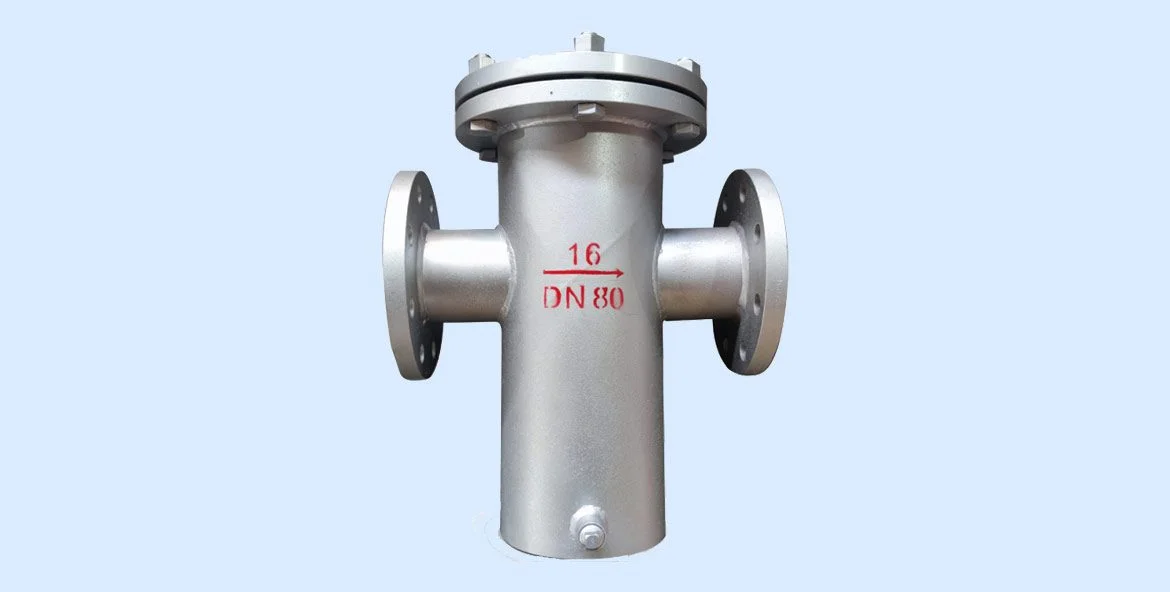
Introduction to Industrial Strainer — Critical First-Line Filtration for Industrial Fluid Systems
Every well-designed industrial fluid system begins with one fundamental safeguard: the industrial strainer. Positioned upstream of critical equipment—pumps, valves, heat exchangers, or finer filtration stages—it serves as the system’s first barrier against contaminants. By capturing rust flakes, welding slag, fibers, silt, and other debris before they circulate, strainers stabilize differential pressure, protect downstream components, and prolong the service life of more sensitive (and costly) filtration units.
An industrial strainer differs from disposable filtration elements in both function and economics. Instead of being thrown away after each use, it employs perforated or wire mesh baskets/screens that are periodically removed, cleaned, and reinstalled. This makes them technically efficient and cost-effective, particularly in high-volume applications where consumables can quickly become a major operating expense. Industries such as oil & gas, power generation, water treatment, pharmaceuticals, marine operations, and chemical processing rely on this reusable design to maintain continuous operation with minimal pressure loss.
As one of the established industrial strainer manufacturers, Praimo Industrial Filters & Spares Manufacturing Company combines decades of fabrication expertise with strict adherence to international standards including ASME, PED/CE, and NACE. Their strainers are designed for both new EPC pipeline installations and retrofit projects, offering robust construction, straightforward maintenance, and consistent contamination control across a broad spectrum of industrial environments.
Industrial Strainer Specifications — Sizes, Capacities & Performance Data
Accurate, engineering-grade industrial strainer specifications form the backbone of proper system design and reliable equipment selection. Choosing the correct unit requires a clear understanding of the intended flow capacity, pressure and temperature envelope, mesh rating, connection type, and applicable design standards such as ASME B16.5, ASME B31.3, and PED/CE. A well-sized strainer not only minimizes pressure loss but also stabilizes maintenance intervals and protects critical downstream equipment from premature wear or failure.
The table below summarizes typical specification ranges used across basket, duplex, Y-type, and T-type strainers in industrial service. These figures provide a practical starting point for engineers developing line sizing and procurement specifications.
Y Strainer Filter Size and Flow Performance
The sizing of Y-type units is particularly sensitive to mesh rating and resulting open area, as these factors directly influence flow versus differential pressure (ΔP). The following data shows typical values for a DN100 Y-type strainer handling clean water at ambient temperature:
| Mesh (µm) | Open Area (%) | Flow @ 0.1 bar ΔP (m³/hr) | Flow @ 0.3 bar ΔP (m³/hr) |
|---|---|---|---|
| 1000 | 50–60 | 160 | 280 |
| 500 | 40–50 | 120 | 210 |
| 200 | 30–40 | 85 | 150 |
These figures are used during preliminary hydraulic calculations to determine the correct y strainer filter size that balances flow rate with filtration fineness while keeping pressure losses within design limits. Undersizing is a common error—it increases energy consumption and shortens cleaning intervals—whereas a properly sized unit keeps ΔP predictable over the full operating cycle.
All strainers supplied by Praimo Industrial Filters & Spares Manufacturing Company conform to these engineering standards. Extended sizing charts, performance curves, and selection tools are available in their technical documentation and can be integrated directly into project design packages.
Materials and Construction of Industrial Strainers
When it comes to industrial strainers, performance, corrosion resistance, and overall service life are determined as much by material selection as by hydraulic design. The choice of body, basket or screen, gasket, and coating must align with both the fluid characteristics and the environmental conditions. Selecting the correct combination ensures chemical compatibility, maintains pressure integrity, and meets compliance requirements for domestic and international projects.
Typical body materials range from carbon steel and austenitic stainless steels (SS304 / SS316 / SS316L) to duplex and super duplex alloys, bronze, and engineered thermoplastics like PVC, PP, FRP, and PVDF. Each offers a distinct balance of mechanical strength, corrosion performance, and temperature tolerance, making material choice a fundamental design decision rather than an afterthought.
Body Materials and Applications
| Material | Pressure & Temp Rating | Chemical Resistance | Typical Applications |
|---|---|---|---|
| Carbon Steel (WCB) | Up to PN16 / Class 150, 180 °C | Moderate, requires coating | Utility water, non-corrosive fluids |
| SS304 / SS316 / 316L | PN16 / Class 150–300, up to 250 °C | Excellent general corrosion resistance | Water, seawater, chemicals, food & beverage |
| Duplex 2205 / 2507 | PN16–Class 300, up to 300 °C | High chloride resistance | Seawater intakes, offshore, marine |
| Bronze | Moderate | Good seawater resistance | Marine cooling systems |
| PVC / PP / FRP / PVDF | Low-pressure, < 60 °C | Excellent chemical resistance | Chemical processing, low-temperature water treatment, aggressive chemicals |
In practice, stainless steel Y strainers and stainless steel basket strainers are the workhorses for most industrial and sanitary duties. Their combination of structural integrity, corrosion resistance, and hygienic finish allows them to function in both utility and critical process service.
Carbon steel Y strainers offer a cost-effective alternative for non-corrosive or general utility duties. To extend their service life, they’re often internally coated with fusion-bonded epoxy or phenolic linings to counter moisture-induced corrosion.
For aggressive chemical environments—particularly those involving strong acids or alkalis at low pressures—PVDF Y strainers or FRP housings are the preferred options. These materials provide excellent resistance to chemical attack but are typically limited to low-pressure, moderate-temperature service.
Baskets, Screens, Gaskets, and Coatings
Generally fabricated from perforated stainless steel plate (2–5 mm), with optional wire mesh inserts in the 25–200 µm range for finer filtration. Duplex alloys or magnetic inserts may be used in specialized services such as offshore oil & gas or ferrous particle removal.
NBR, EPDM, Viton/FKM, PTFE, or PTFE-encapsulated seals are selected based on temperature limits and chemical compatibility. Selecting the wrong gasket compound is a frequent installation oversight that can lead to leaks or swelling under heat.
Fusion-bonded epoxy, phenolic linings, or internal polishing (Ra ≤ 0.8 µm for sanitary service) enhance corrosion protection and improve cleanability. In food, pharma, and high-purity water service, internal surface finish is often just as critical as material grade.
All materials supplied by Praimo Industrial Filters & Spares Manufacturing Company are certified to NACE MR0175, PED/CE, and, where required, FDA/3-A sanitary standards. This documentation package ensures full traceability and acceptance across EPC, OEM, and regulated industry projects worldwide.
Types of Industrial Strainers — Complete Engineering Breakdown
Selecting the correct industrial strainer type is one of the most consequential design decisions engineers make when specifying filtration for process lines. Each configuration behaves differently under real operating conditions: pressure drop, flow handling, maintenance method, filtration fineness, and duty cycle all vary. Understanding how basket, duplex, Y-type, T-type, temporary (cone), magnetic, self-cleaning, and sanitary strainers differ allows for a balanced selection—one that aligns technical performance with operational reliability and lifecycle economics.
Engineering Comparison of Major Industrial Strainer Types
| Strainer Type | ΔP (Clean) | Flow Capacity | Maintenance Mode | Cleaning Frequency | Typical Applications |
|---|---|---|---|---|---|
| Basket (Simplex) | Low | High | Manual (offline) | Moderate | Cooling water, lube oil, process fluids |
| Duplex Basket | Low | High | Continuous operation | Low | Seawater intake, RO pre-filtration, continuous-duty pipelines |
| Y-Type | Low–Medium | Moderate | Line break required | Moderate–High | Steam, utility water, compact layouts, compressed air |
| T-Type | Low | High (high P) | Manual (offline) | Moderate | High temp/pressure services, power plants, condensate return |
| Temporary (Cone) | High | Limited | Remove after use | One-time | Commissioning filtration, system startup |
| Magnetic | Low | Moderate | Manual / inline | Low–Moderate | Ferrous particle capture in hydraulic, lube, or chemical circuits |
| Self-Cleaning | Very Low | High | Automatic (PLC) | Minimal | Seawater intake, high-solids industrial water, power & irrigation systems |
| Sanitary | Low | Moderate | Quick clamp removal | Frequent | Food, beverage, dairy, pharmaceutical hygienic filtration |
Basket Strainer (Simplex)
Basket strainers remain the workhorse of industrial filtration, particularly where high flow and low pressure loss are required. Installed horizontally or vertically, they use a perforated or mesh-lined basket to trap debris while maintaining steady flow. Operators often prefer them because of their large dirt-holding capacity and simple maintenance routine.
- Flow Range: Up to ~2,000 m³/hr (depending on size and mesh)
- Mesh Options: 25 µm – 3,000 µm with stainless perforated backing
- Connections: Flanged (ASME B16.5), threaded, or welded
- Materials: CS, SS304, SS316, Duplex
- Applications: Cooling towers, lube oil, process fluids, condensate polishing
In many power, chemical, and water treatment plants, basket strainers are positioned just upstream of finer filters or heat exchangers to intercept larger solids before they accumulate downstream.
Duplex Basket Strainer (Continuous Duty)
Duplex basket strainers are engineered for uninterrupted operation. Two baskets are linked through a valve manifold, enabling one chamber to stay online while the other is cleaned—a critical feature for continuous-duty pipelines.
- Pressure Rating: PN10 / PN16 / Class 150 and higher
- Flow Range: Up to 5,000 m³/hr and beyond with fabricated housings
- Changeover: Ball or butterfly valve assemblies
- Mesh Options: 25 µm – 1,000 µm
Their payback is usually fast. By avoiding shutdowns, they reduce OPEX and extend downstream filter life. Praimo Industrial Filters & Spares Manufacturing Company fabricates duplex units in carbon steel, SS316L, and duplex grades, fully certified to ASME and PED/CE for both domestic and export EPC projects.
Y-Type Strainer
Compact and versatile, Y-type strainers provide basic filtration in steam, utility water, or compressed air lines. They fit where space is tight or where vertical installation is needed. Cleaning typically involves isolating the line, opening a blowdown plug, or removing the cap.
- Size Range: DN15–DN300
- Pressure Rating: Up to Class 300
- Mesh: 100–1,000 µm wire mesh or perforated plate
- Applications: Steam traps, heat exchangers, condensate lines, pneumatic systems
These are widely produced by y strainer manufacturers because of their simplicity, low cost, and straightforward maintenance. They are not ideal for high solids loads but excel at removing small debris and protecting sensitive components in utility circuits.
T-Type Strainer
T-type strainers are purpose-built for high-pressure, high-temperature duties where Y-types may be inadequate. Their larger filtration area leads to lower pressure drops at equivalent flow rates.
- Pressure Rating: Up to 40 bar (design-dependent)
- Materials: CS, SS316, Duplex
- Applications: Power plants, petrochemical circuits, condensate return lines
Design details often appear in t type strainer catalogues and project specifications. These units are usually custom-fabricated to match piping layouts and performance requirements.
Temporary / Cone Strainer
Temporary or conical strainers are used during commissioning to catch welding slag, rust, and scale. Installed between flanges, they provide fine filtration but generate higher ΔP, making them unsuitable for continuous service.
- Mesh Range: 100–500 µm typical
- Material: SS perforated plate or mesh cone
- Applications: Startup filtration in refineries, chemical, and power projects
Once the system is flushed and clean, these strainers are removed to restore normal flow conditions.
Magnetic Strainer
Magnetic strainers incorporate permanent magnets within baskets or screens to capture fine ferrous particles that conventional mesh might miss. This is particularly valuable in hydraulic circuits, lubrication oil systems, and chemical injection lines.
- Applications: Gearboxes, hydraulic skids, chemical dosing
- Advantages: Captures metallic fines, reduces wear, extends equipment life
- Mesh + Magnet: Often combined for dual-stage protection
This hybrid approach is especially common in steel mills, power stations, and heavy machinery environments.
Self-Cleaning / Auto Backwash Strainer
For large flow systems where manual cleaning is impractical, self-cleaning strainers use motorized scrapers or differential pressure–activated backwash mechanisms. PLCs control cleaning cycles automatically, maintaining flow with minimal operator intervention.
- Flow Range: Up to 5,000 m³/hr+
- Mesh Range: 50–1,000 µm
- Applications: Power plant cooling, seawater intakes, industrial water reuse
By automating maintenance, they reduce downtime and labor while keeping ΔP low even under high solids loading.
Sanitary Strainer
Sanitary strainers are built for food, beverage, dairy, and pharmaceutical pipelines. Constructed from polished SS316L with tri-clamp fittings and Ra ≤ 0.8 µm finishes, they comply with FDA, 3-A, and EHEDG standards.
- Applications: Syrups, CIP return, sterile water, process liquids
- Connection: Clamp-type for quick turnaround
- Mesh: Fine wire mesh for hygienic service
- Compliance: FDA 21 CFR, 3-A, EN hygienic directives
Quick disassembly allows rapid cleaning between production runs, ensuring product purity and regulatory compliance.
Technical Performance and Flow Characteristics of Industrial Strainers
The hydraulic performance of an industrial strainer is governed by a few fundamental relationships—primarily between flow rate, differential pressure (ΔP), mesh size, and the open area of the straining element. Getting this balance right is essential. Undersizing can lead to excessive pressure loss and frequent cleaning, while oversizing unnecessarily drives up capital costs. Proper specification ensures stable operation, predictable maintenance intervals, and extended equipment life in continuous-duty systems.
Flow vs ΔP Characteristics
The pressure drop across a strainer depends on a combination of factors: line diameter, basket or screen geometry, mesh rating, and fluid viscosity. For clean water at 20 °C, the table below illustrates typical performance for DN100 industrial strainers across different mesh sizes:
| Mesh Rating (µm) | Open Area (%) | Flow @ 0.1 bar ΔP (m³/hr) | Flow @ 0.3 bar ΔP (m³/hr) |
|---|---|---|---|
| 1000 | 55–60 | 160 | 280 |
| 500 | 40–50 | 120 | 210 |
| 200 | 30–40 | 85 | 150 |
As mesh size becomes finer, open area decreases, resulting in a higher pressure drop at the same flow. This relationship is critical when specifying Y strainer baskets or fine filtration baskets in large-diameter or high-flow circuits. Engineers typically use these values as a starting point for preliminary sizing before performing detailed hydraulic calculations.
For more rigorous sizing, the following formula is commonly applied:
Q=K×A×2×ΔPρQ = K \times A \times \sqrt{\frac{2 \times ΔP}{\rho}}Q=K×A×ρ2×ΔP
Where:
- Q = flow rate (m³/s)
- A = effective straining area (m²)
- ΔP = allowable pressure drop (Pa)
- ρ = fluid density (kg/m³)
- K = empirical coefficient (basket geometry-dependent)
This calculation links geometry, fluid properties, and pressure tolerance directly, enabling more accurate selection during the design phase.
Mesh Size, Solids Loading, and Cleaning Intervals
Coarser meshes (e.g., 1000 µm) allow higher flows with minimal pressure loss—making them ideal for pump suction protection and pre-filtration duties. Finer meshes (100–200 µm) capture smaller particles but require more frequent cleaning, especially in high-solids environments. Typical cleaning intervals observed in the field are:
- High-solids cooling water → every 1–2 days
- Moderate process water → weekly
- Filtered or treated water → monthly or longer
In actual operation, plotting solids loading vs cleaning frequency often reveals an exponential relationship: as upstream filtration improves, cleaning frequency drops sharply, which translates directly into reduced maintenance labor and lower lifecycle costs.
Sizing Logic for Different Strainer Types
Different strainer types have distinct ΔP design envelopes, which engineers must account for during specification:
- Basket and Duplex Strainers → Sized for 0.1–0.2 bar clean ΔP at maximum flow
- Y-Type Strainers → Typically designed for 0.2–0.3 bar ΔP, reflecting their smaller screen area
- Self-Cleaning Strainers → Maintain low ΔP continuously using automated backwash, reducing manual intervention to near zero
This sizing logic is one of the most important aspects of engineering design. Undersized strainers tend to foul prematurely, causing frequent shutdowns, whereas oversized units inflate capital costs without proportional benefits. By integrating ΔP calculations, solids characteristics, and mesh selection early in the design process, engineers can specify industrial strainer types that achieve both operational stability and economic efficiency.
Applications and Industries Served by Industrial Strainers
Industrial strainers play a crucial role as the first line of defense in diverse fluid handling systems. Whether installed at a seawater intake, on a pharmaceutical production line, or upstream of a refinery heat exchanger, their purpose remains consistent: remove contaminants early to protect critical equipment, stabilize differential pressure, and extend downstream filter life. Selecting the correct mesh size, flow capacity, and cleaning regime enables engineers to match the strainer’s performance to process demands—reducing unplanned downtime and optimizing OPEX.
Typical Application Parameters by Industry
| Industry / Application | Typical Mesh (µm) | Flow Range (m³/hr) | Clean ΔP (bar) | Cleaning Interval |
|---|---|---|---|---|
| Oil & Gas | 200–1000 | 100–4000 | 0.1–0.2 | Weekly to monthly |
| Power & Desalination | 200–500 | 200–5000 | 0.1–0.15 | Daily to weekly |
| Pharma & Food | 25–200 | 10–500 | 0.05–0.1 | Daily (CIP regimes) |
| Marine & HVAC | 500–1000 | 50–2000 | 0.1–0.2 | Weekly to monthly |
| Chemicals / Pulp & Paper | 100–500 | 50–3000 | 0.1–0.2 | Daily to weekly |
These ranges act as engineering baselines. In practice, parameters are fine-tuned to account for fluid viscosity, suspended solids, and the criticality of downstream components.
Oil & Gas
In upstream and downstream oil & gas operations, basket strainers are commonly installed upstream of pumps, heat exchangers, and membrane systems to intercept rust, sand, scale, and welding debris. On seawater injection or produced water lines, duplex or self-cleaning strainers are standard to keep systems online continuously.
- Applications: Cooling water, injection water, crude transfer, produced water pre-filtration
- Mesh Range: 200–1000 µm typical
- Keyword Use: basket strainer oil and gas, strainer in oil and gas
These installations often form part of EPC package specifications, where uninterrupted flow is critical to production uptime.
Power & Desalination
Power plants and desalination facilities rely on duplex and self-cleaning strainers for cooling water intakes, condensers, and boiler feed pre-filtration. High flow rates and 24/7 duty cycles make automated cleaning highly desirable.
- Applications: Seawater intake, condenser protection, boiler feed pre-filtration
- Mesh Range: 200–500 µm typical
- Flow Range: Up to 5,000 m³/hr in large lines
By maintaining low ΔP across massive flow volumes, strainers protect downstream heat exchangers and pumps, directly influencing energy efficiency and equipment longevity.
Pharma & Food
In sanitary process environments, polished SS316L sanitary basket strainers are used to protect filters, spray nozzles, and sensitive production equipment. These units are installed in CIP return lines, sterile loops, or product transfer piping.
- Applications: Syrup filtration, API pre-filtration, CIP systems
- Mesh Range: 25–200 µm
- Compliance: FDA, 3-A, EHEDG hygienic standards
Frequent cleaning—often daily—is part of routine sanitary operation, with quick clamp connections enabling fast turnaround between batches.
Marine & HVAC
Marine strainers protect seawater cooling lines for engines, ballast systems, and HVAC chillers. In large hydronic HVAC networks, strainers capture debris to prevent fouling in chillers and heat exchangers.
- Applications: Seawater cooling, HVAC chiller protection, ballast water systems
- Mesh Range: 500–1000 µm
- Keyword Use: marine strainer, hvac strainer
Marine systems often pair duplex basket strainers with corrosion-resistant materials (bronze, SS316L, or duplex alloys) to handle continuous seawater exposure.
Chemicals / Pulp & Paper
In chemical and pulp & paper plants, chemical strainers handle corrosive or solids-laden streams such as acids, caustics, slurries, and pulp wash water. PVDF, FRP, or duplex steels are often selected for chemical resistance, with frequent cleaning due to high solids content.
- Applications: Acid transfer, slurry filtration, pulp washing
- Mesh Range: 100–500 µm
- Keyword Use: chemical strainer
Here, strainers serve as rugged front-line guards for downstream filters and process equipment, often operating in harsh conditions with daily maintenance schedules.
Praimo Industrial Filters & Spares Manufacturing Company supplies engineered strainers tailored to each of these industries, combining correct sizing, material compatibility, and regulatory compliance for both domestic installations and international EPC supply chains. For more in-depth parameters, refer to the dedicated industry pages covering Oil & Gas, Power & Desalination, Marine, and Pharma & Food filtration systems.
Lifecycle Cost and ROI Analysis for Industrial Strainers
When assessing industrial strainer price and specifying equipment for large-scale installations, it’s not enough to look at the purchase order value alone. Procurement and engineering teams increasingly evaluate the full lifecycle cost—including operational expenditure (OPEX)—to make economically sound decisions. While simplex basket strainers often appear cheaper at first glance, duplex or self-cleaning strainers can deliver markedly better return on investment (ROI) over time. The key drivers are lower labor costs, reduced downtime, and minimized energy losses from pressure drop.
Three-Year Total Cost of Ownership (TCO) Model
| Cost Component | Simplex Basket Strainer | Duplex Basket Strainer | Self-Cleaning Strainer |
|---|---|---|---|
| Initial Equipment Cost | ₹ 1.0 × (base) | ₹ 1.5 × | ₹ 2.5 × |
| Installation & Commissioning | ₹ 0.5 × | ₹ 0.6 × | ₹ 0.8 × |
| Annual Maintenance Cost | High (frequent shutdowns) | Medium (switchovers) | Low (automatic) |
| Downtime / Process Losses | High | Low | Very Low |
| Energy Losses (ΔP) | Moderate–High | Moderate | Low |
| Cleaning Labor Hours / yr | 200–300 hrs | 80–120 hrs | 10–20 hrs |
| 3-Year Total Estimated Cost | 100 % | 85–90 % | 75–80 % |
This model makes the trade-offs clear. While duplex and self-cleaning strainers involve higher CAPEX, their OPEX savings typically reach 15–25% within three years, depending on flow rate, contamination load, and mesh selection. Duplex designs enable uninterrupted operation during basket cleaning, avoiding process shutdowns, while self-cleaning units use PLC-controlled backwash mechanisms to maintain performance automatically with minimal operator involvement.
ΔP, Energy Loss, and ROI
Pressure drop directly affects pumping energy—and by extension, operational cost. Even a seemingly small 0.1 bar ΔP in a 2000 m³/hr cooling water circuit can consume several kilowatts of continuous pumping power. Over years of operation, this translates to significant energy costs.
Proper sizing—such as using larger basket areas, selecting duplex configurations, or specifying stainless steel basket filters with optimized mesh geometry—can lower ΔP and drive measurable OPEX reductions. In continuous-duty installations like power plants, refineries, or seawater intake systems, these savings often outweigh the initial equipment cost multiple times over.
Strategic Lifecycle Planning
In practice, lifecycle cost considerations often influence final equipment selection more than the nominal price tag. For example:
- A simplex unit might seem cheaper initially but can incur heavy labor and downtime costs in high-solids service.
- A duplex unit might achieve payback in less than 18 months by eliminating shutdowns.
- A self-cleaning system could deliver continuous performance with minimal maintenance for over a decade.
Praimo Industrial Filters & Spares Manufacturing Company provides detailed lifecycle cost models and ROI calculators, allowing EPC and procurement teams to evaluate multiple configurations objectively. This data-driven approach supports the selection of solutions that minimize total cost of ownership while maximizing reliability over the full service life of the installation.
Comparison Matrix — Basket vs Y vs T vs Self-Cleaning vs Temporary Strainers
Selecting the most appropriate industrial strainer is rarely about price alone. Engineers and procurement teams must weigh performance, ΔP behavior, maintenance regimes, and application fit to find the right balance between technical performance and lifecycle cost. Each major type—basket, Y-type, T-type, self-cleaning, and temporary (cone)—brings unique advantages and trade-offs. A structured comparison makes these differences clear and helps guide selection decisions that stand up to engineering and economic scrutiny.
Strainer Alternatives Decision Matrix
| Parameter | Basket Strainer | Y-Type Strainer | T-Type Strainer | Self-Cleaning Strainer | Temporary (Cone) Strainer |
|---|---|---|---|---|---|
| Flow Capacity | High (up to 5,000 m³/hr) | Moderate | High, suitable for high pressure | Very High, stable under solids loading | Limited, commissioning only |
| Clean ΔP | Low (0.1–0.2 bar typical) | Low–Medium (0.2–0.3 bar typical) | Low (large filtration area) | Very Low (automatic backwash maintains) | High (not designed for continuous flow) |
| Mesh Range | 25–3,000 µm | 100–1,000 µm | 100–1,000 µm | 50–1,000 µm | 100–500 µm |
| Maintenance Frequency | Manual cleaning, periodic | Manual cleaning, requires shutdown | Manual cleaning, offline | Minimal, automated | One-time use during startup |
| Operational Duty | Continuous or batch | Utility, steam, small lines | High-pressure / temperature duty | Continuous-duty, automated | Startup and commissioning |
| Installation Cost | Moderate | Low | Moderate–High | High initial investment | Low |
| Lifecycle Cost | Moderate | Low (but higher maintenance) | Moderate | Lowest over time (OPEX savings) | N/A (temporary) |
| Typical Applications | Cooling water, oil, process lines | Steam, condensate, compact utilities | Power, refineries, high-pressure loops | Seawater intake, continuous high-flow | EPC pipeline commissioning |
Engineering Insight
This matrix highlights why basket strainers are the default choice for most general-purpose industrial systems. They deliver low ΔP at high flows, offer broad mesh flexibility (25–3,000 µm), and are relatively simple to maintain. They can also be retrofitted with finer meshes if filtration requirements evolve over time.
By contrast, Y strainers shine in steam and utility applications. Their compact form factor and lower installation cost make them ideal for small pipelines, though they typically operate at slightly higher ΔP and require a line break for cleaning. This explains why, when comparing basket strainer vs y strainer, basket units often dominate high-flow circuits while Y strainers remain indispensable for smaller lines or where space constraints dictate.
T-type strainers occupy a specialized niche—high-pressure, high-temperature services where larger filtration area is essential to keep ΔP low under demanding conditions. They’re frequently custom-fabricated for power and refinery loops, often documented in detailed piping specifications.
Self-cleaning strainers stand apart in continuous high-flow or high-solids duty. With automated backwash systems, they maintain low ΔP without manual cleaning. Over the lifecycle of a large seawater intake or cooling system, they typically achieve the lowest total OPEX of any type, despite their higher initial investment.
Finally, temporary strainers (conical or basket inserts) are not permanent filtration solutions. They serve a specific commissioning role—capturing construction debris, welding slag, or rust during plant startup—then are removed once systems are flushed.
Procurement teams often use structured comparison tables like this when evaluating quotations from multiple basket type strainer manufacturers. It ensures that lifecycle costs, operational efficiency, and maintenance impact are factored in—not just CAPEX figures.
For detailed sizing tables, technical drawings, and specification sheets, refer to the individual product pages covering Basket, Duplex, Y-type, T-type, and Self-Cleaning Strainers.
Buying Guide and Procurement Criteria for Industrial Strainers
For procurement teams and EPC buyers, selecting an industrial strainer isn’t simply about picking a mesh size off a catalog. It involves a structured evaluation of line conditions, material compatibility, compliance requirements, and supplier capability. A disciplined procurement process ensures that installed equipment delivers its full service life, minimizes operational expenditure, and meets project-specific engineering and regulatory standards. This is particularly critical in sectors like oil & gas, power generation, marine, and pharmaceuticals, where system downtime and non-compliance can have major cost implications.
Key Sizing and Material Selection Parameters
Before issuing RFQs or finalizing technical datasheets, procurement engineers should clearly define the following parameters:
- Line Size & Flow Rate: Confirm maximum and minimum flow conditions. Strainers should be sized to achieve a clean ΔP of 0.1–0.2 bar, or as required by project specifications.
- Mesh Rating & Filtration Area: Select based on upstream contamination levels and the sensitivity of downstream equipment (e.g., pumps, membranes, heat exchangers).
- Pressure & Temperature Ratings: Match ASME Class 150 / 300 / higher or PN ratings to line design conditions. High-pressure circuits may require T-type or duplex configurations with reinforced baskets.
- Material of Construction: Choose from carbon steel, SS304/SS316, duplex alloys, or PVDF, depending on fluid type, temperature, and corrosion environment.
- End Connections: Specify flanged, threaded, or welded ends to match site piping standards and minimize onsite modifications.
- Cleaning & Maintenance Approach:
- Simplex strainers suit batch or non-critical operations.
- Duplex or self-cleaning strainers are preferred for continuous-duty lines where shutdowns are costly.
A clear definition of these parameters upfront eliminates technical ambiguities during bidding and ensures that the equipment aligns with the project’s hydraulic and operational needs.
Sourcing Tips and Documentation Requirements
When sourcing from reputable suppliers—such as y strainer manufacturers in India or basket strainer manufacturers in India—buyers should insist on comprehensive engineering and quality documentation. This ensures traceability, regulatory compliance, and ease of integration into EPC project workflows. Typical documentation should include:
- GA drawings and isometrics for piping integration
- Design calculations and hydrostatic pressure test certificates
- EN 10204 3.1 material certificates for all wetted components
- PED/CE, NACE MR0175, or FDA / 3-A compliance where applicable
- Operation and maintenance manuals
- Welding Procedure Qualification Records (WPQ / WPS) for fabricated units
Selecting a proven filter strainer manufacturer also ensures robust after-sales support, availability of replacement baskets and gaskets, and compliance with both domestic and international standards.
Praimo Industrial Filters & Spares Manufacturing Company provides full technical and documentation support at the procurement stage. This includes assistance with sizing calculations, submission of detailed QA/QC packages for EPC approval, and export-ready compliance records. For structured quotation requests and downloadable datasheets, refer to the RFQ Page and Technical Datasheet Library.
Maintenance and Troubleshooting for Industrial Strainers
Even the best-engineered strainer will underperform if maintenance is neglected. Routine maintenance—including timely cleaning, gasket inspections, and magnetic element checks—is essential to keep systems running at their designed efficiency. Failing to follow structured maintenance procedures can lead to elevated differential pressures, contamination bypass, or unplanned shutdowns. By setting clear inspection intervals and monitoring ΔP trends, maintenance teams can extend service life, reduce operational disruptions, and maintain predictable performance.
Cleaning Frequency and Mesh Care
Cleaning intervals are dictated by mesh rating, solids loading, and the criticality of the process. As a general rule:
- Coarse mesh (≥1000 µm) in clean utility water → every 2–4 weeks
- Medium mesh (200–500 µm) in cooling or process water → weekly cleaning
- Fine mesh (≤200 µm) in high-solids streams → daily or use automated self-cleaning systems
In HVAC networks, regular hvac strainer cleaning prevents fouling of chillers, pumps, and control valves. Many operators use blowdown ports or quick-release covers to reduce cleaning time and avoid unnecessary line breaks.
During basket or screen cleaning, maintenance personnel should inspect for:
- Tears or deformation in the mesh
- Clogging in fine mesh layers
- Corrosion pitting on perforated backing plates
Any compromised element should be replaced immediately to prevent bypass of debris into downstream equipment—a common cause of pump damage and premature filter clogging.
Gaskets, Seals, and Magnetic Elements
- Gaskets and Seals: Inspect during each cleaning cycle for hardening, deformation, or signs of chemical attack. Replacement materials must match process conditions (e.g., NBR, EPDM, PTFE). A damaged gasket can cause leakage at covers or flanges, especially in pressurized lines.
- Magnetic Inserts: In strainers equipped with magnetic elements, rods should be removed and wiped clean at each service interval. Over time, magnets should be checked for corrosion or demagnetization to ensure they continue to trap ferrous particles effectively.
Bypass Prevention and Troubleshooting
Most common maintenance issues are predictable if inspected regularly. The table below summarizes typical problems, likely causes, and corrective actions:
| Issue | Probable Cause | Corrective Action |
|---|---|---|
| Rising ΔP between cleanings | Clogged basket, undersized mesh, high solids | Increase cleaning frequency, or select coarser mesh |
| Leakage at cover | Worn gasket, improper reassembly | Replace gasket, verify correct tightening torque |
| Debris bypass downstream | Mesh tear, improper seating | Replace basket, ensure proper seating and alignment |
| Premature corrosion | Incompatible material | Verify fluid compatibility, upgrade to SS or PVDF construction |
One frequent design oversight is selecting an undersized Y strainer filter size. This can cause excessive pressure drop, rapid fouling, and a higher cleaning burden than necessary. Proper sizing upfront saves considerable maintenance effort downstream.
Spare Parts and Long-Term Support
Maintenance programs are only as good as the availability of compatible parts. Working with a reliable suction strainer manufacturer ensures steady access to baskets, gaskets, seals, and magnetic inserts over the product’s lifespan.
Praimo Industrial Filters & Spares Manufacturing Company supplies replacement components for all standard models and offers retrofit options to extend service life. For parts listings and technical details, see the [Spare Parts] section.
Case Studies and Field Benchmarks for Industrial Strainers
Real-world data often tells a more compelling story than theoretical design curves. Industrial strainer case studies provide engineers and procurement teams with practical benchmarks for pressure drop, maintenance intervals, labor savings, and lifecycle cost reductions. The examples below highlight measurable operational improvements achieved through proper strainer selection and engineering in power, desalination, and oil & gas sectors. Each case demonstrates how the right configuration can dramatically improve performance and reliability in demanding applications.
Case Study 1 — Duplex Basket Strainer vs Y-Type Strainer in Cooling Water System
Application: Cooling water line in a power plant
Pipeline Size: DN250
Fluid: Raw cooling water (high solids loading)
Operating Flow: 400 m³/hr
| Parameter | Y-Type Strainer (Existing) | Duplex Basket Strainer (Upgraded) |
|---|---|---|
| Mesh Size | 500 µm | 500 µm |
| Clean ΔP | 0.25 bar | 0.12 bar |
| Cleaning Frequency | Every 2–3 days | Weekly |
| Cleaning Time / Event | 1 hour | 15 minutes (one chamber online) |
| Annual Maintenance Labor | ~150 hours | ~40 hours |
| Downtime | High (line shutdown) | None (continuous duty) |
Key Takeaway: Upgrading from Y-type to duplex basket strainers reduced differential pressure by over 50% and extended cleaning intervals from 3 to 7 days. The duplex configuration allowed cleaning without shutting down the line, saving more than 100 labor hours annually and eliminating scheduled downtime. Energy savings from lower ΔP further improved ROI over the first year of operation.
Case Study 2 — Self-Cleaning Strainer in Seawater Intake (Desalination Plant)
Application: Seawater intake for desalination
Pipeline Size: DN500
Flow: 2000 m³/hr
Contaminants: Silt, marine growth, suspended solids
| Parameter | Manual Basket (Existing) | Self-Cleaning Strainer (Upgraded) |
|---|---|---|
| Mesh Size | 500 µm | 500 µm |
| Clean ΔP | 0.2 bar | 0.08 bar |
| Cleaning Method | Manual, daily | Automatic backwash (PLC) |
| Labor Requirement | 1 operator × daily | None (remote monitoring) |
| Unplanned Downtime | Frequent fouling | Eliminated |
| Payback Period | — | < 12 months |
Key Takeaway: Switching from manual to self-cleaning strainers stabilized operation even during silt surges. Automatic backwash kept ΔP low and eliminated daily manual cleaning. In high-flow seawater intake systems, this reduced energy consumption and delivered a payback in under one year—critical for desalination plants where intake performance governs the entire treatment process.
Case Study 3 — Basket Strainer in Oil & Gas Transfer Lines
Application: Crude transfer and produced water pre-filtration
Location: Upstream oil facility, India
Strainer Type: Basket strainer, SS316L, 200 µm mesh
Flow: 800 m³/hr
Key Takeaway: Installing basket strainers upstream of cartridge filtration reduced cartridge changeout frequency from every 3 days to every 12–15 days. Consumable costs dropped by over 60%, and downstream system stability improved significantly. In basket strainer oil and gas applications, this kind of intervention directly improves OPEX and operational predictability, particularly in facilities where unplanned maintenance disrupts production.
Summary
These field examples demonstrate how proper strainer selection impacts more than just filtration efficiency:
- Lower ΔP translates to tangible energy savings.
- Extended cleaning intervals reduce labor requirements and maintenance overhead.
- Duplex and self-cleaning configurations eliminate planned shutdowns.
- Optimized mesh and materials extend downstream filter life, cutting consumable costs.
All three installations used strainers engineered and manufactured by Praimo Industrial Filters & Spares Manufacturing Company, reflecting their field-proven performance in both domestic and international projects. Detailed technical data, site references, and EPC project documentation are available upon request for engineering and procurement teams.
Export Readiness and Global Project Capabilities
For international EPC contractors and OEMs, supplier export readiness is just as important as technical performance. Global projects require not only well-engineered equipment but also robust documentation, inspection protocols, and logistics compliance that align with international standards. Praimo Industrial Filters & Spares Manufacturing Company has established a comprehensive export framework that addresses these requirements for projects across the Middle East, Africa, Europe, and Asia-Pacific.
Compliance and Certification Framework
All export-bound basket strainers, duplex strainers, and Y-type strainers are manufactured and certified to internationally recognized engineering codes. This ensures full compatibility with European directives, oil & gas sour service requirements, and ASME design standards:
- EN 10204 3.1 Material Certification Provides full traceability for all wetted components—plates, pipes, baskets, and flanges—essential for EPC documentation and QA/QC audits.
- PED/CE Compliance Pressure equipment is designed, documented, and certified according to EU directives, enabling smooth acceptance in European project environments.
- NACE MR0175 / MR0103 Ensures material selection and welding procedures are appropriate for sour service in oil & gas applications, particularly offshore and refinery installations.
- ASME Section VIII & B31.3 Design in accordance with ASME vessel and piping codes guarantees global acceptance and interoperability with international piping standards.
- Third-Party Inspections (TPI) Units undergo inspection and certification with agencies such as BV, DNV, Lloyd’s, SGS, or TUV, depending on project requirements. TPI dossiers typically include:
- Hydrostatic test reports
- Welding procedure qualifications
- Dimensional inspection sheets
- Coating inspection and dry film thickness (DFT) records
This structured approach allows Praimo to align with complex EPC ITPs (Inspection & Test Plans) and handover documentation packages required for international bids.
Export Packaging and Logistics
To ensure equipment integrity during transit, all strainers are packed using ISPM-15 certified wooden crates for marine shipment. Internal elements such as baskets and screens are individually wrapped, tagged with part numbers, and labeled for easy identification during site assembly. Additional measures include:
- Application of protective coatings to external surfaces
- Flange protectors to prevent damage to sealing faces
- Use of desiccants and moisture barriers to prevent corrosion during long-duration sea freight
Each shipment is supported by a complete documentation set including:
- Commercial invoices
- Packing lists
- Country-of-origin certificates
- Third-party inspection release notes
- Compliance certificates and test reports
This packaging and documentation process ensures hassle-free customs clearance and smooth site commissioning.
Global Project Experience
Praimo Industrial Filters & Spares Manufacturing Company has successfully delivered Y strainers and duplex strainers to international EPC contractors for a wide range of critical infrastructure projects, including:
- Desalination plants in the Middle East and North Africa
- Offshore platforms and refinery upgrades in Asia-Pacific
- Power stations and cooling water intake systems in Europe and Africa
These deliveries have involved complex documentation packages, synchronized dispatch schedules, and integration with EPC procurement workflows—proving Praimo’s ability to meet stringent export requirements while maintaining engineering quality and on-time performance.
For detailed export specifications, ITP templates, and sample documentation packages, refer to the International Projects section of the technical library.
Frequently Asked Questions (FAQs) — Industrial Strainers
The following FAQ section is designed for schema markup and People Also Ask (PAA) optimization. Each question targets high-intent informational or commercial search queries, helping this page earn rich results on Google while delivering concise, technically accurate answers for engineers, procurement heads, and EPC professionals.
An industrial strainer is a mechanical filtration device installed in pipelines to remove coarse solids, debris, or particulates from liquids, gases, or steam. It protects downstream equipment—such as pumps, valves, heat exchangers, and fine filters—by trapping contaminants inside a perforated or mesh screen element.
Keyword: industrial strainer meaning
Industrial strainer uses span a wide range of industries including oil & gas, water treatment, power generation, chemical processing, HVAC, and pharmaceutical manufacturing. Typical applications include cooling water intake, crude oil transfer, seawater filtration, and CIP (clean-in-place) return lines.
Keyword: industrial strainer uses
A basket strainer is designed for high flow rates and low pressure drops, typically installed in horizontal pipelines with removable baskets for cleaning. A Y strainer, on the other hand, is compact, can be installed either horizontally or vertically, and is better suited for steam, utility, or small-line applications where space is limited.
Keyword: y strainer basket
Industrial strainer mesh is chosen based on the particle size to be removed and the allowable differential pressure.
- Coarse meshes (500–1000 µm) are used for pump protection and pre-filtration.
Fine meshes (25–200 µm) are used for critical downstream filtration such as RO systems, food & beverage, or pharma applications.
Keyword: industrial strainer mesh
Cleaning frequency varies with mesh size, solids loading, and operating conditions:
- Coarse mesh in clean water: every 2–4 weeks
- Medium mesh in process streams: weekly
Fine mesh in high-solids streams: daily or automated self-cleaning for continuous duty
Yes. Strainers fabricated from carbon steel, stainless steel, or duplex alloys can handle high temperature and pressure. Y strainers are typically used in steam lines, while T-type strainers are engineered for high-pressure power and petrochemical applications, often designed to ASME or PED standards.
Yes. Marine cooling systems frequently use duplex basket strainers or self-cleaning strainers made from SS316L or duplex steel to withstand corrosion, biofouling, and high chloride environments. These systems are also supplied with ISPM-15 packaging and PED/CE compliance, making them suitable for global EPC marine projects.
Standard documentation packages include:
- GA drawings and isometrics
- Pressure test certificates
- EN 10204 3.1 material certificates
- PED/CE compliance documents
- Third-party inspection reports where required
This documentation ensures traceability, compliance, and export readiness for EPC and OEM buyers.
Basket strainers are widely used in oil & gas, desalination, power, HVAC, food & beverage, and chemical industries. Their large filtration area, low ΔP, and ease of maintenance make them ideal for high-flow, continuous-duty operations.
Yes. Praimo Industrial Filters & Spares Manufacturing Company offers custom-engineered strainer solutions, including:
- Sanitary strainers for food and pharma
- High-pressure T-type strainers
- Duplex basket systems
- Magnetic inserts for ferrous particle removal
- Self-cleaning variants for high-solids intake lines
These designs are tailored to project specifications, ensuring compliance and reliability for both domestic and export markets.
Conclusion and Call-to-Action — Partner with a Trusted Industrial Strainer Manufacturer
Across industries such as oil & gas, power generation, marine, pharmaceuticals, and food processing, industrial strainers serve as the first and most essential line of defense in fluid handling systems. Their ability to remove coarse contaminants, stabilize differential pressure, and protect downstream equipment makes them a critical engineering component—not just a pipeline accessory. From compact Y-type strainers for utility lines to duplex basket units for uninterrupted cooling water service and self-cleaning strainers for demanding seawater intake systems, proper selection, sizing, and material specification have a direct impact on operational reliability, energy efficiency, and lifecycle costs.
When specified correctly, industrial strainers deliver measurable advantages over the long term:
- Low pressure drops and high flow efficiency, supported by optimized basket and mesh geometries.
- Extended service life for pumps, valves, and fine filters through effective particulate removal and minimal bypass.
- Reduced OPEX through duplex and self-cleaning configurations that minimize manual intervention and unplanned shutdowns.
- Regulatory compliance with major international standards such as ASME, PED/CE, EN 10204 3.1, NACE, and FDA, ensuring compatibility with both domestic and export project requirements.
- Export readiness, including documentation and inspection protocols aligned with EPC and OEM expectations worldwide.
Praimo Industrial Filters & Spares Manufacturing Company, a trusted industrial strainer manufacturer and basket strainer supplier, brings together deep engineering expertise, in-house fabrication capabilities, and global compliance frameworks to support projects across multiple continents. From technical sizing assistance to QA/QC documentation, third-party inspections, and export logistics, Praimo ensures that every strainer integrates seamlessly into complex process systems.
For technical consultations, RFQs, or datasheet requests, visit the [RFQ Form], [Product Catalog], or [Related Products] sections to take the next step toward specifying high-performance strainers for your project.
Brochure
Download our brochure for detailed technical data, product capabilities, and filtration system expertise.
Let’s Start Work
Together
Please feel free to contact us. We will get back to you with 1-2 business days. Or just call us now.