


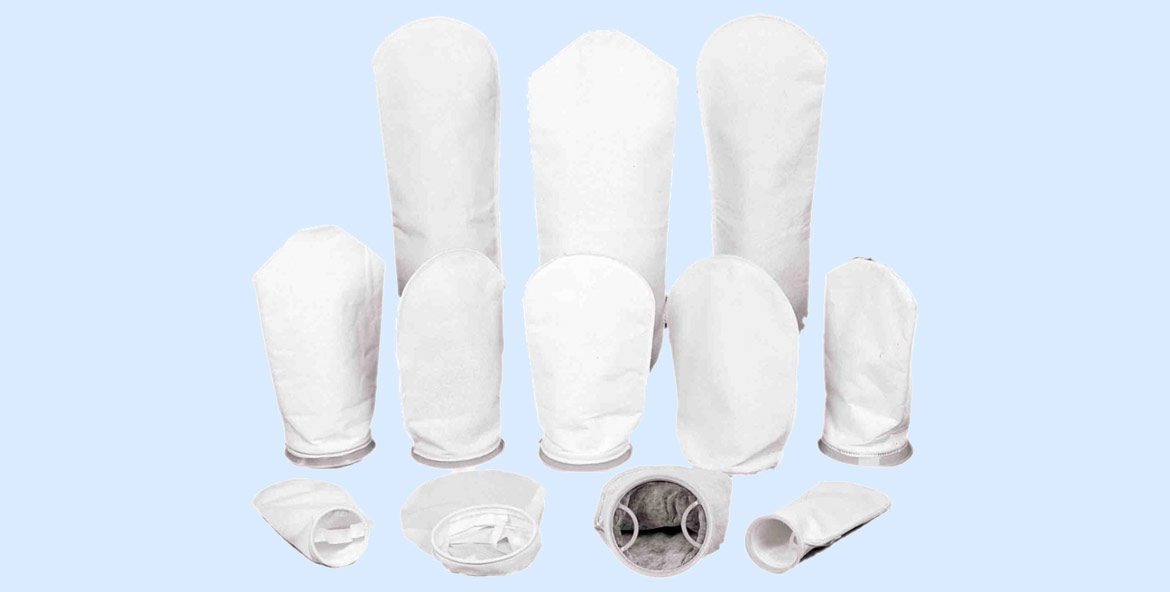
Filter Bag – Industrial Liquid Filter Bags for 0.5–1000 µm Filtration
In industrial liquid filtration, a filter bag isn’t just a consumable—it’s a critical control component. These precision-engineered elements are built to capture suspended solids and contaminants in everything from cooling water to viscous process fluids. Across sectors such as water treatment, oil & gas, chemicals, power generation, and food & beverage, engineers choose bag filters because they combine high dirt-holding capacity, predictable ΔP (pressure drop), and a low cost per litre filtered. In short, they deliver reliability without unnecessary complexity.
Manufactured by Praimo Industrial Filters & Spares Manufacturing Company, every filter bag is designed with the same discipline found in pressure-rated equipment. Available in standard #1, #2, #3, and #4 sizes, these filters offer micron ratings ranging from 0.5 µm to 1000 µm, in both nominal and absolute grades. Operators can select from polypropylene (PP), polyester (PE), nylon mesh, PPS, aramid, and PTFE media—each chosen for its chemical compatibility, mechanical strength, and service temperature range. For instance, PTFE bags can handle aggressive solvents at temperatures approaching 260 °C, while PP felts remain a cost-effective option for ambient water or light hydrocarbons.
Why Praimo Filter Bags?
Each filter bag provides consistent particle retention across its rated surface area. ΔP remains stable through most of the service cycle, ensuring predictable pump load and energy efficiency.
Praimo manufactures under ISO 9001-certified quality systems, with materials compliant to FDA 21 CFR 177, EU 10/2011, and EN 10204 3.1 traceability. This guarantees full regulatory acceptance in both domestic and export markets.
Choose from economical PP for general-purpose filtration, or move to PPS, aramid, or PTFE for high-temperature, corrosive environments. Every variant is engineered for dimensional stability and long service intervals
All filter bags are precision-matched to ASME- and PED-certified housings, ensuring zero bypass and leak-free seating under pressure. When installed in multi-bag or duplex configurations, the system can run continuously—maintenance-free—without compromising throughput.
Each bag produced by Praimo Industrial Filters & Spares Manufacturing Company undergoes dimensional inspection, seam integrity verification, and hydrostatic validation to meet industrial QA standards. In actual operation, users often notice the small details—like how uniform stitching and reinforced collars prevent bypass even after multiple change-out cycles. Those minor design choices make the difference between an average filter and a truly dependable one.
As a filter bag manufacturer in India with a growing international presence, Praimo Industrial Filters & Spares Manufacturing Company supports OEMs, EPC contractors, and process operators with export-ready filtration solutions that combine engineering precision, long lifecycle value, and compliance confidence.
Why Choose a High-Performance Filter Bag?
In industrial systems, the filter bag often determines whether a process runs smoothly or grinds to a halt. A high-performance filter bag isn’t just about fine particle retention—it’s about maintaining fluid cleanliness, system protection, and operational efficiency over long service cycles. Engineers who manage process reliability know that once solids start slipping past the first filtration stage, downstream problems multiply fast: clogged nozzles, fouled heat exchangers, premature pump wear, and rising ΔP across the system.
Unlike disposable cartridges or rigid metal screens, liquid filter bags combine depth filtration with a large effective surface area. This dual mechanism allows them to hold substantially more contaminants before reaching their change-out differential pressure. In actual operation, a well-sized bag filter can often extend maintenance intervals by 30–50 %, depending on solids load and fluid viscosity.
Key Advantages of Filter Bags
- High Dirt-Holding Capacity: Typically 2–3 × greater solids retention than an equivalent cartridge element, due to multilayer felt or depth-graded media.
- Lower Operating Cost: Broader filtration area reduces both replacement frequency and manpower, cutting OPEX by 20–40 % in most installations.
- Stable ΔP Performance: Uniform fiber density and controlled porosity prevent sudden pressure spikes as particle load increases.
- Versatile Compatibility: Handles 0.5–1000 µm filtration ranges and performs consistently with aqueous, viscous, or solvent-based fluids.
- Quick Maintenance: Top-entry housings allow tool-less bag replacement in under five minutes—a small but vital advantage during continuous operation.
- Reusability Options: Nylon or stainless-steel mesh bags can be cleaned and reused, making them suitable for low-solid or batch-type applications.
Now, here’s the part many buyers overlook—the measurable performance difference.
During Praimo Industrial Filters & Spares Manufacturing Company’s field trials, upgrading from conventional cartridges to high-performance filter bags in RO pre-filtration produced notable improvements:
| Performance Metric | Improvement Achieved |
|---|---|
| Silt Density Index (SDI) | ↓ 35 % |
| Cartridge Service Life | ↑ 50 % |
| Maintenance Downtime | ↓ 25 % |
Those numbers aren’t theoretical—they came from real plant data. In everyday terms, it means cleaner membranes, fewer unplanned shutdowns, and a tangible cut in operating costs.
It’s for these reasons that industries such as pharmaceuticals, chemicals, water treatment, and food processing continue to specify high-performance bag filtration as their primary protection stage—because when cleanliness, uptime, and cost control matter, the filter bag earns its keep.
Technical Specifications of Filter Bags
When selecting a filter bag for an industrial filtration system, precision matters as much as media quality. Each dimension, pressure tolerance, and micron rating directly affects downstream performance, ΔP stability, and service life. At Praimo Industrial Filters & Spares Manufacturing Company, every filter bag is manufactured to strict engineering tolerances, ensuring dimensional consistency, chemical compatibility, and global performance compliance for both domestic and export markets.
In practice, even a few millimeters of variation can lead to bypassing or poor seating within housings—so these bags are produced with ±1 mm dimensional accuracy and undergo hydrostatic integrity checks before dispatch.
Each bag is offered with micron ratings from 0.5 µm to 1000 µm, tested under controlled laboratory and field conditions for pressure, temperature, and flow consistency. These parameters ensure predictable filtration efficiency and long-term ΔP control, even in continuous-duty systems.
Standard Filter Bag Dimensions & Performance Data
| Bag Size | Nominal Dimensions (Diameter × Length) | Filtration Area (m²) | Clean Flow Rate (Water, ~1 cP) | Typical ΔP (Clean Condition) | Recommended Change-out ΔP |
|---|---|---|---|---|---|
| #1 | 7" × 17" (180 × 430 mm) | 0.25–0.35 | 8–25 m³/hr | 0.05–0.10 bar | 0.8–1.0 bar |
| #2 | 7" × 32" (180 × 810 mm) | 0.50–0.70 | 15–45 m³/hr | 0.05–0.10 bar | 0.8–1.0 bar |
| #3 | 4" × 8" (100 × 200 mm) | 0.10–0.15 | 2–10 m³/hr | 0.05 bar | 0.8 bar |
| #4 | 4" × 14" (100 × 355 mm) | 0.15–0.20 | 4–15 m³/hr | 0.05–0.10 bar | 0.8 bar |
Operating Parameters
- Micron Ratings: 0.5 µm to 1000 µm (available in both nominal and absolute grades)
- Temperature Range:
- Polypropylene (PP) / Polyester (PE): up to 90 °C
- Nylon: up to 120 °C
- PPS / Aramid: up to 190 °C
- PTFE: up to 260 °C
- Pressure Rating: Standard operation up to 6–10 bar, housings tested to 16 bar MAWP
- Filtration Efficiency:
- Nominal: 60–95 % retention
- Absolute: ≥99 % at rated micron
- Construction Tolerance: ±1 mm seam alignment, ≤0.2 mm collar ovality
- Seal Options: EPDM, NBR, FKM, or PTFE-encapsulated for chemical or temperature compatibility
Engineering Selection Guidance
In actual installations, the ΔP vs. flow curve remains steady through the service cycle, illustrating how media density and pore distribution influence long-term performance. This predictable rise in ΔP allows operators to schedule maintenance based on real throughput, not arbitrary intervals—reducing downtime and optimizing cost per cubic meter filtered.
Every production batch at Praimo Industrial Filters & Spares Manufacturing Company undergoes:
- Dimensional QA verification (fit and alignment)
- Hydrostatic proof testing
- ISO 9001 traceability for EN 10204 3.1 documentation
These engineering and quality controls make Praimo’s filter bag technical specifications dependable benchmarks for OEMs, EPCs, and process engineers worldwide.
Size & Flow Rate Table (#1 / #2 / #3 / #4 Filter Bags)
When engineers select a filter bag, size and flow capacity become decisive factors in system design. An undersized bag leads to premature clogging and rising ΔP (pressure drop); an oversized one wastes energy and space. That’s why Praimo Industrial Filters & Spares Manufacturing Company manufactures all standard sizes (#1, #2, #3, #4) under strict ASME and PED dimensional tolerances, ensuring every bag fits securely within compatible housings across global installations.
In actual plant operation, a properly sized bag maintains steady flow, predictable ΔP progression, and extended media life—key parameters that define both performance and cost efficiency.
Standard Filter Bag Size Chart
| Bag Size | Nominal Dimensions (Diameter × Length) | Filtration Area (m²) | Nominal Flow Capacity (Water @ 1 cP) | Common Applications |
|---|---|---|---|---|
| #1 | 7" × 17" (180 × 430 mm) | 0.25–0.35 | 8–25 m³/hr | Utility filtration, RO pre-filtration, batch processes |
| #2 | 7" × 32" (180 × 810 mm) | 0.50–0.70 | 15–45 m³/hr | Continuous-duty lines, cooling water, chemical filtration |
| #3 | 4" × 8" (100 × 200 mm) | 0.10–0.15 | 2–10 m³/hr | Pilot plants, skid-based systems |
| #4 | 4" × 14" (100 × 355 mm) | 0.15–0.20 | 4–15 m³/hr | Low-flow precision lines, laboratory units |
Note: Values are indicative for clean water at 20 °C and 1 cP viscosity. Actual flow may vary with micron rating, solids concentration, and fluid properties.
Engineering Notes & Field Insights
- ΔP vs. Flow Stability: Each bag demonstrates an almost linear ΔP curve up to 0.8–1.0 bar, allowing predictable operation and accurate sizing for pump load management.
- Dimensional Accuracy: Manufactured with ±1 mm tolerance on both diameter and length, ensuring leak-free sealing within ASME/PED-certified housings—critical in high-pressure and hygienic systems.
- Material Matching:
- PP / PE: Ideal for water, coolants, and general-purpose filtration.
- PPS / PTFE: Preferred for high-temperature and corrosive chemical applications.
- Nylon mesh: Best suited for reusable, low-solid fluids.
- 20-Inch Bag Filter Equivalents: Functionally comparable to #1-size filter bags in volume handling; widely used in compact housings and skid-mounted filtration modules.
In multi-bag systems, maintaining balanced flow distribution across all housings is essential. Uneven bag loading can lead to premature blinding and inconsistent ΔP readings. To address this, Praimo Industrial Filters & Spares Manufacturing Company offers size-specific selection and flow modeling support, helping EPCs and plant operators optimize energy efficiency, maintenance intervals, and lifecycle costs.
Pressure, Temperature & Filtration Ratings
In industrial filtration, a filter bag’s pressure and temperature ratings define not just its durability, but also its operational safety margin and filtration reliability. The wrong media or pressure class can lead to bag collapse, bypassing, or rapid ΔP buildup—issues that plant operators know all too well. That’s why Praimo Industrial Filters & Spares Manufacturing Company designs its filter bags to deliver consistent retention efficiency, mechanical integrity, and leak-proof sealing even under wide fluctuations in pressure, temperature, or viscosity.
Each unit is stress-tested to confirm it holds its shape and fiber density through long filtration cycles, whether in ambient water treatment lines or high-temperature chemical plants.
| Parameter | Specification |
|---|---|
| Recommended Operating Pressure | 6–10 bar |
| Maximum Allowable Working Pressure (MAWP) | Up to 16 bar (with ASME / PED-certified housings) |
| Change-out Differential Pressure (ΔP) | 0.8–1.0 bar |
| Pressure Drop Characteristics | Linear up to 0.5 bar; sharp rise beyond 0.8 bar indicates optimal change-out point |
Engineering Note: For viscous fluids (>5 cP), reduce flow rates proportionally to prevent early ΔP increase and fiber deformation. In real-world terms, a 200 cP oil might operate efficiently at only 25–30% of the nominal water flow rate.
Temperature Ratings by Material
| Material / Media Type | Max Operating Temperature (°C) | Recommended Applications |
|---|---|---|
| Polypropylene (PP) | 85–90 °C | General water, plating, and light chemical filtration |
| Polyester (PE) | 120 °C | Solvents, coolants, hydrocarbons |
| Nylon (PA) | 120 °C | Washable mesh systems and viscous media |
| PPS (Ryton) | 190 °C | Hot oils, gases, and resin filtration |
| Aramid (Nomex) | 200 °C | Paints, coatings, and dryer systems |
| PTFE (Teflon) | 250–260 °C | Aggressive acids, bases, and high-temperature fluids |
| Stainless Steel Mesh (SS304 / SS316L) | 400 °C | Hot oil, cutting fluids, and extreme-duty operations |
Praimo’s PTFE and PPS bags comply with FDA 21 CFR 177.1550 and EU 10/2011 standards, making them suitable for chemical, food-grade, and pharmaceutical applications where regulatory validation is mandatory.
Filtration Rating Types
| Type | Filtration Efficiency | Typical Use |
|---|---|---|
| Nominal | 60–95% at rated micron | General protection, pre-filtration, and utility service |
| Absolute | ≥99% at rated micron | Critical and final-stage filtration (pharma, coatings, precision fluids) |
Example: A 0.5 µm absolute-rated filter bag removes ≥99% of particles ≥0.5 µm, making it ideal for high-purity water, solvents, or fine chemical applications where even submicron particulates can affect product yield.
In laboratory and plant verification tests, Praimo Industrial Filters & Spares Manufacturing Company performs media tensile, burst, and thermal stability testing on each production lot. This ensures every batch delivers consistent ΔP vs. flow behavior, no fiber migration, and stable mechanical strength through thousands of pressure cycles—key factors for long-term operational reliability.
Materials & Construction of Filter Bags
The materials and construction of a filter bag are what truly determine its performance, compatibility, and operational life. It’s not just about filtration efficiency—it’s about how the bag holds up under real-world mechanical stress, chemical exposure, and temperature cycling. At Praimo Industrial Filters & Spares Manufacturing Company, each filter bag is built with globally compliant materials, precise fabrication tolerances, and traceable quality control—ensuring reliability across a wide spectrum of industrial environments, from chemical plants in India to water treatment systems across the EU, GCC, and APAC regions.
Praimo engineers approach every bag design with three priorities: media integrity, dimensional stability, and sealing reliability. Together, these factors prevent bypass, extend service life, and protect downstream assets such as membranes, valves, and instrumentation.
Filter Bag Material Options
| Material / Media Type | Key Properties | Operating Range (°C) | Typical Applications |
|---|---|---|---|
| Polypropylene (PP) | Depth filtration, broad chemical compatibility, economical | Up to 90 °C | Water, plating, and general process filtration |
| Polyester (PE) | High tensile strength, hydrolysis resistance | Up to 120 °C | Solvents, glycol, cooling water |
| Nylon Mesh (PA) | Surface filtration, washable and reusable | Up to 120 °C | Paints, viscous fluids, food-grade processing |
| PPS (Ryton) | Excellent thermal and chemical resistance | Up to 190 °C | Oils, resins, hot condensates |
| Aramid (Nomex) | High-temperature endurance, mechanical integrity | Up to 200 °C | Dryer exhausts, polymer and coating plants |
| PTFE (Teflon) | Chemically inert, non-stick surface | Up to 260 °C | Aggressive acids/alkalis, high-purity and corrosive media |
| Stainless Steel Mesh (SS304 / SS316L) | Rigid, reusable, high ΔP tolerance | Up to 400 °C | Hot oils, metalworking fluids, extreme-duty applications |
All polymer media comply with FDA 21 CFR 177 and EU 10/2011 for food and pharmaceutical use.
Metallic options meet ASME / PED fabrication and pressure-retaining standards.
Collar, Seal & Construction Features
- Collar Types:
- Molded Polypropylene (PP): Standard option for most liquid housings, providing flexible sealing and easy handling.
- Stainless Steel (SS304 / SS316L): Used for high-temperature or sanitary process environments requiring rigidity and precision.
- Sealing Gaskets: Available in EPDM, NBR, FKM (Viton), and PTFE-encapsulated types—each selected based on fluid chemistry and operating temperature.
- Seam Construction: Bags are ultrasonically welded or multi-stitched, then tested for burst strength ≥2.5× working pressure to ensure seam reliability even under ΔP surges.
- Support Internals: Each bag operates within a rigid perforated stainless-steel basket, which prevents collapse or deformation under high differential pressure.
- Precision Finishing: Every bag is laser-cut and heat-set to maintain ±1 mm dimensional accuracy, minimizing fiber migration and ensuring a snug, leak-free fit. Optional anti-bypass rings and reinforced handles simplify changeouts and enhance operator safety.
From a QA standpoint, Praimo Industrial Filters & Spares Manufacturing Company ensures complete material traceability under ISO 9001 quality assurance, backed by EN 10204 3.1 certificates for international projects. Each production lot undergoes material identification, tensile testing, and chemical resistance verification.
In practice, this attention to material engineering translates to fewer unplanned shutdowns, longer mean time between replacements (MTBR), and greater confidence in compliance documentation—especially for export-ready applications in regulated sectors like pharmaceuticals, food processing, and petrochemicals.
Filter Media Options: PP, PE, Nylon Mesh, PPS, Aramid, PTFE
The filter media used in an industrial filter bag determines how well it withstands chemicals, heat, and mechanical stress — and ultimately, how long it performs before change-out. Each material behaves differently under process conditions: a polypropylene bag used for plating baths faces completely different challenges than a PTFE bag filtering 250 °C acid streams. Recognizing this, Praimo Industrial Filters & Spares Manufacturing Company offers six carefully engineered media options to match the chemical, thermal, and mechanical requirements of nearly every industrial fluid-handling application.
These media are selected not only for filtration accuracy but also for dimensional stability, reusability, and resistance to fiber migration. Whether you’re dealing with high-viscosity oils, aggressive solvents, or ultrapure water, the correct media choice directly affects plant uptime and lifecycle cost.
Media Performance Matrix
| Filter Media | Temperature Range (°C) | Chemical Resistance | Filtration Type | Reusability | Typical Service Life | Applications |
|---|---|---|---|---|---|---|
| Polypropylene (PP) | Up to 90 | Excellent in acids and alkalis; poor in oxidizers | Depth | Single-use | 1–3 months | Water, plating, general chemicals |
| Polyester (PE) | Up to 120 | Good chemical tolerance; moderate hydrolysis resistance | Depth | Single-use | 2–4 months | Solvents, glycol, cooling water |
| Nylon Mesh (PA) | Up to 120 | Resistant to oils; moderate acid tolerance | Surface | Washable / reusable | 4–6 months | Paints, inks, food & beverage |
| PPS (Ryton) | Up to 190 | Excellent in hydrocarbons, weak acids, and bases | Depth | Reusable | 6–8 months | Oils, resin, process gases |
| Aramid (Nomex) | Up to 200 | Stable in hot dry air; limited acid resistance | Depth | Reusable | 6–12 months | Powder coating, dryers, polymer systems |
| PTFE (Teflon) | Up to 260 | Chemically inert; universal resistance | Depth | Long-life / reusable | 12–18 months | Aggressive chemicals, high-temperature media |
All polymer media are compliant with FDA 21 CFR 177 and EU 10/2011, while metallic or high-temperature variants meet ASME / PED fabrication standards.
Media Characteristics & Engineering Benefits
- PP & PE: The workhorses of general filtration — economical, chemically versatile, and capable of holding large dirt volumes thanks to multilayer depth construction.
- Nylon Mesh: A surface-filtration medium with consistent pore geometry, ideal for wash-and-reuse applications in paints, coatings, or edible oils.
- PPS & Aramid: Chosen for high-temperature endurance, maintaining fiber integrity and filtration precision even after repeated thermal cycling.
- PTFE: The premium option when nothing else survives — non-stick, chemically inert, and stable up to 260 °C. Its slick surface minimizes clogging and simplifies cleaning between runs.
Every Praimo filter bag is thermally bonded, non-shedding, and seam-tested to withstand ≥ 2.5 × working pressure. This structural reliability eliminates media rupture and ensures safe operation even in pulsating systems. The right media selection doesn’t just improve purity — it reduces maintenance, stabilizes ΔP, and extends filtration life across entire production cycles.
For complex or mixed-media systems, Praimo Industrial Filters & Spares Manufacturing Company provides engineering consultation to match each process’s chemistry, viscosity, and temperature profile, optimizing total lifecycle cost and filtration performance for both domestic and export projects.
Sealing & Collar Technology
In any filtration system, sealing integrity is what separates efficiency from contamination. Even a slight bypass at the bag-housing interface can compromise an entire process line. That’s why Praimo Industrial Filters & Spares Manufacturing Company invests heavily in precision-engineered sealing and collar systems — components that ensure 100% leak-free performance and stable flow distribution across the filtration cycle.
Each collar and gasket assembly is machined or molded to seat perfectly within the stainless-steel basket of the housing, maintaining alignment even under pressure fluctuations or thermal expansion. In high-purity applications like food and pharma, this precision prevents micro-bypass and ensures regulatory compliance. In heavy-duty plants, it maintains mechanical stability at high ΔP and temperature extremes.
Collar Options
| Collar Type | Material | Temperature Limit (°C) | Advantages | Typical Applications |
|---|---|---|---|---|
| Molded Collar | Polypropylene (PP) | Up to 90 | Lightweight, economical, resistant to acids and alkalis | Water, plating, and chemical filtration |
| Stainless Steel Ring | SS304 / SS316L | Up to 400 | High rigidity, dimensional stability, reusable | High-temperature and sanitary systems |
| Snap-Fit Ring | PP or Nylon | Up to 120 | Tool-less replacement, anti-bypass locking | Food & beverage, batch filtration |
| Welded Metal Collar | SS316L | Up to 400 | Designed for severe-duty, PED/ASME housings | Oils, condensates, and petrochemical lines |
Each collar undergoes dimensional verification within ±1 mm to ensure a snug fit inside ASME/PED-certified housings. The design resists vibration, axial movement, and pressure surges — maintaining seal integrity even under cyclic loads.
Seal & Gasket Options
- EPDM: Ideal for hot water and mild chemicals, withstanding temperatures up to 120 °C.
- NBR (Buna-N): Best suited for oils, fuels, and hydrocarbons, rated to 100 °C.
- FKM (Viton): Offers superior chemical and high-temperature resistance up to 200 °C, making it ideal for acids, solvents, and aggressive organics.
- PTFE-Encapsulated: The premium option—chemically inert and compatible with nearly all fluids up to 250 °C, perfect for pharma, biotech, and corrosive chemical services.
All sealing assemblies conform to FDA 21 CFR 177.2600 and EU 10/2011 standards, ensuring hygienic compatibility for food, pharmaceutical, and specialty chemical applications.
Manufacturing Precision & QA
- Ultrasonic welding and precision heat-bonding guarantee seamless collar integration without distortion.
- Every assembly undergoes leak testing at 1.5× the rated working pressure, confirming zero bypass at the sealing interface.
- Dimensional inspections verify concentricity between the bag, basket, and housing, preventing uneven loading or premature wear.
In continuous-duty systems, Praimo Industrial Filters & Spares Manufacturing Company integrates these ASME/PED-compliant sealing systems into every stainless-steel bag filter housing. The result is repeatable performance, enhanced safety, and long-term sealing reliability — whether installed in a high-purity RO skid or a refinery condensate loop.
Types, Variants & Configurations
Industrial processes rarely fit a one-size-fits-all approach — especially when it comes to filtration. Flow rates, space constraints, maintenance strategies, and regulatory requirements all influence how a filtration system is configured. Recognizing this, Praimo Industrial Filters & Spares Manufacturing Company manufactures an extensive range of single-bag, multi-bag, simplex, and duplex filter systems, available in both vertical and horizontal orientations to suit diverse plant layouts. For hygienic applications, sanitary-grade designs with electropolished interiors ensure full compliance with FDA, EHEDG, and CE/PED standards.
In practice, configuration choice impacts far more than footprint — it affects uptime, cost per cubic meter filtered, and long-term service accessibility. A simplex housing may be ideal for small batch processing, while a duplex or multi-bag configuration becomes indispensable for continuous-duty or high-flow systems.
Filter Bag System Configurations
| Type / Configuration | Design Description | Flow Capacity (Water @ 1 cP) | Key Features | Typical Industries |
|---|---|---|---|---|
| Single-Bag Filter Housing | One bag per vessel | 5–45 m³/hr | Compact, easy maintenance, low CAPEX | Utilities, chemicals, plating |
| Multi-Bag Filter Housing | 3–24 bags in parallel | 50–500 m³/hr | High flow, reduced downtime, scalable | Power, oil & gas, water treatment |
| Simplex System | Single chamber with manual change-out | 5–100 m³/hr | Economical, suitable for batch operation | Paints, adhesives, lubricants |
| Duplex System | Two chambers with diverter valve | Continuous 24×7 operation | Zero-downtime filtration, ideal for process-critical lines | Cooling water, RO skids, offshore |
| Sanitary Bag Filter | Electropolished SS316L, tri-clamp fittings | Up to 100 m³/hr | Hygienic design, FDA/EHEDG compliant | Pharma, food, beverages |
| Horizontal Bag Filter | Side inlet/outlet design | 20–300 m³/hr | Compact layout, ideal for low headroom | Marine, skid-based utilities |
All housings are hydrostatically tested per ASME Sec. VIII Div. 1 / PED 2014/68/EU, and supplied with EN 10204 3.1 material certificates for global compliance.
Selection Highlights
- Single-Bag: Best suited for intermittent duty, pilot plants, or low-flow polishing. Offers simple installation and quick bag replacement.
- Multi-Bag: Designed for continuous high-flow operations, providing parallel redundancy that minimizes downtime.
- Simplex: The most cost-effective configuration; however, it requires system shutdown during bag change-outs.
- Duplex: Equipped with diverter valves to allow non-stop filtration, enabling maintenance on one chamber while the other remains in service — ideal for critical utilities.
- Sanitary Design: Features crevice-free, electropolished SS316L construction (≤0.4 µm Ra) for full CIP/SIP compliance in pharmaceutical and food sectors.
- Horizontal Orientation: Preferred in marine or skid-based systems where vertical space is limited.
Each configuration is available in a choice of SS304, SS316L, Duplex SS2205, FRP, or UPVC, depending on pressure class, fluid chemistry, and export region. For EPCs and OEMs, Praimo Industrial Filters & Spares Manufacturing Company provides complete design support — including bag sizing, CFD-based flow modeling, skid integration, and full CE/PED/FDA documentation.
In essence, whether the goal is space efficiency, uninterrupted operation, or regulatory compliance, Praimo’s configurable filtration systems offer the engineering flexibility and reliability that global process industries demand.
Single-Bag vs Multi-Bag Systems
When engineers compare single-bag vs multi-bag filter systems, the decision often comes down to flow demand, operational uptime, and lifecycle cost. Both systems use the same precision-engineered filter bag media and housings from Praimo Industrial Filters & Spares Manufacturing Company, yet their scalability, maintenance dynamics, and ΔP behavior diverge sharply once installed in the field.
Single-bag units are ideal for low-flow or batch operations, offering compact design and minimal CAPEX. Multi-bag configurations, on the other hand, are engineered for continuous-duty, high-flow lines where shutdowns are costly or unacceptable. The structural design differences—especially in flow distribution and sealing load—translate directly into performance and lifecycle outcomes.
Performance Comparison — Single vs Multi-Bag Systems
| Parameter | Single-Bag Filter System | Multi-Bag Filter System |
|---|---|---|
| No. of Bags | 1 | 3–24 (parallel chambers) |
| Typical Flow Capacity (Water @ 1 cP) | 5–45 m³/hr | 50–500+ m³/hr |
| Design Pressure | 6–10 bar (standard) | 10–16 bar (heavy-duty) |
| Change-Out Time | 3–5 minutes | 5–10 minutes (isolated chamber) |
| Pressure Drop (Clean ΔP) | 0.05–0.10 bar | 0.05–0.15 bar |
| Maintenance Frequency | Higher (per cycle) | Lower (shared load among bags) |
| Initial CAPEX | Lower | Higher, offset by reduced OPEX |
| Best-Suited For | Small batch or pilot operations | Continuous high-flow or process-critical systems |
Values based on water service at 20 °C. Flow derating applies for viscosities >5 cP.
Engineering Insights
- Flow & ΔP Stability: In multi-bag configurations, filtration load is evenly distributed, keeping average ΔP low and extending bag life by up to 40%. This uniform flow prevents premature clogging and stabilizes system efficiency even at fluctuating particle loads.
- Operational Uptime: Multi-bag housings allow one-chamber-at-a-time replacement, meaning filtration continues while maintenance is performed. This design is essential for 24×7 operations such as cooling water or RO pretreatment.
- Cost Trade-Off: While the initial CAPEX for multi-bag systems is higher, long-term OPEX is typically 15–30% lower, driven by fewer change-outs and less labor downtime.
- Scalability: Adding another bag increases filtration area by approximately 0.25–0.70 m² per chamber—an easy way to expand future capacity without redesigning the entire skid.
Every multi-bag system from Praimo Industrial Filters & Spares Manufacturing Company is hydrostatically tested at 1.5× design pressure, supplied with EN 10204 3.1 MTC, and fully compliant with ASME Sec. VIII / PED 2014/68/EU. The company’s engineering team supports project developers with flow modeling, ΔP simulations, and vessel sizing to identify the most cost-effective and footprint-efficient configuration for any industrial process line.
Sanitary vs Industrial Bag Filters
Different industries demand very different filtration priorities. A pharmaceutical-grade CIP system must maintain sterility and zero microbial retention, while an oil-processing line focuses on strength, temperature resistance, and long service intervals. To address these contrasting needs, Praimo Industrial Filters & Spares Manufacturing Company engineers both sanitary and industrial bag filters, each optimized for its specific regulatory, mechanical, and operational environment.
While both variants share the same fundamental bag filtration mechanism — contaminants are trapped within a replaceable media element housed in a pressure vessel — their material selection, surface finish, connection type, and certification requirements set them apart.
Comparison: Sanitary vs Industrial Bag Filters
| Parameter | Sanitary Bag Filter Housing | Industrial Bag Filter Housing |
|---|---|---|
| Material of Construction | SS316L (electropolished) | SS304 / SS316L / CS / FRP / UPVC |
| Surface Finish (Ra) | ≤ 0.4 µm mirror finish | 1.2–3.2 µm mechanical polish |
| Connections | Tri-Clamp, DIN, SMS | Flanged / threaded (ANSI / DIN) |
| Seal Type | PTFE-encapsulated / Silicone | EPDM / NBR / FKM |
| Compliance | FDA 21 CFR, EU 10/2011, 3-A / EHEDG | ASME Sec. VIII, PED 2014/68/EU |
| Cleanability | CIP/SIP compatible | Manual or chemical wash-down |
| Applications | Pharma, biotech, food & beverage | Oil & gas, petrochemical, power, water treatment |
| Design Pressure | Up to 10 bar | Up to 16 bar |
| Operating Temperature | Up to 150 °C | Up to 260 °C (PTFE / SS media) |
Both configurations support #1 and #2 size filter bags and can be offered in duplex systems for uninterrupted service.
Engineering Insight
Sanitary Bag Filters are built for hygienic and regulatory environments. Every weld is crevice-free and fully drainable, preventing microbial retention and ensuring complete clean-in-place (CIP) and steam-in-place (SIP) compatibility. The electropolished SS316L interior (≤0.4 µm Ra) eliminates biofilm formation and meets stringent FDA 21 CFR, EU 10/2011, and 3-A / EHEDG standards required for food, beverage, and pharmaceutical manufacturing.
In contrast, Industrial Bag Filters are optimized for strength, chemical resistance, and cost-efficiency. Their robust SS304 or carbon steel construction withstands high solids loading, abrasive fluids, and elevated temperatures—conditions common in refineries, chemical processing plants, and power generation facilities. Reinforced baskets prevent deformation under ΔP, while replaceable gaskets and seals simplify maintenance during plant turnarounds.
During field validation, Praimo’s sanitary housings with PTFE-encapsulated gaskets reduced microbial contamination incidents by nearly 30% compared to conventional welded vessels in a dairy plant installation. Such data highlight how design precision translates directly to process safety and compliance.
Whether the requirement is sterile product purity or industrial durability, Praimo Industrial Filters & Spares Manufacturing Company assists clients in selecting the right configuration based on cleanliness requirements, process chemistry, operating temperature, and international standards. Both models deliver the same promise — reliable performance, regulatory assurance, and long-term service stability.
Performance & Operational Data
The performance and operational profile of a filter bag ultimately defines how efficiently a plant runs between maintenance cycles. A stable pressure drop (ΔP) curve, consistent filtration efficiency, and high dirt-holding capacity directly translate to fewer shutdowns and lower OPEX. That’s why Praimo Industrial Filters & Spares Manufacturing Company validates each batch of filter bags through controlled performance testing—analyzing ΔP behavior, service life, and retention efficiency across a range of viscosities and particulate loads.
In actual process lines, predictable ΔP performance allows operators to plan change-outs precisely rather than reactively, optimizing both media consumption and pump energy costs.
1. Pressure Drop (ΔP) Characteristics
| Parameter | Nominal Rating (Example: 10 µm PP Felt) | Absolute Rating (Example: 10 µm PTFE) |
|---|---|---|
| Initial ΔP (Clean Bag) | 0.05–0.10 bar | 0.07–0.12 bar |
| Recommended Change-Out ΔP | 0.8–1.0 bar | 0.9–1.1 bar |
| Typical Service Time (Continuous Operation) | 100–250 hours | 250–600 hours |
| Flow Stability | Linear up to 0.5 bar; sharp rise beyond 0.8 bar | Linear up to 0.7 bar; stable up to 1.0 bar |
Readings measured at 25 °C for water at 1 cP viscosity. For viscous or particulate-rich fluids, derate flow rates proportionally to avoid premature ΔP escalation.
Engineering Note:
Praimo’s absolute-rated PTFE and PPS filter bags exhibit a flatter ΔP curve than nominal felts, maintaining low resistance and extended life cycles—particularly beneficial in hydrocarbon, chemical, or hot condensate applications where energy efficiency is critical.
2. Dirt-Holding Capacity & Efficiency
| Micron Rating (µm) | Media Type | Nominal Efficiency | Absolute Efficiency | Average Dirt Holding (g/cm²) |
|---|---|---|---|---|
| 1 µm | PP / PTFE | 90–95% | ≥99.5% | 0.08–0.10 |
| 5 µm | PP / PE | 85–90% | ≥99% | 0.10–0.14 |
| 10 µm | PP / Nylon | 80–85% | ≥98% | 0.12–0.18 |
| 25 µm | PE / SS Mesh | 75–80% | ≥95% | 0.15–0.25 |
| 50 µm+ | SS Mesh | 60–70% | ≥90% | 0.25–0.30 |
Observation: Absolute-rated media maintain consistent retention until near end-of-life ΔP threshold, while nominal media gradually lose efficiency as pores load with particulates.
3. Maintenance Intervals & Lifecycle
- Nominal Bags: Typical change-out interval 1–3 months, depending on solids load and flow regime.
- Absolute Bags: 3–6 months of service life with constant ≥99% retention.
- Reusable Mesh Bags: 6–12 months when cleaned periodically with low-pressure washing or ultrasonic systems.
- Energy Efficiency: Keeping ΔP ≤ 0.8 bar can reduce pump power consumption by 12–18% annually in large-flow operations.
Field Example – Petrochemical Application
In long-term trials at a petrochemical plant, Praimo’s 5 µm PP felt filter bags achieved 2.3× higher solids loading before replacement compared to conventional imported brands. The upgrade reduced annual media costs by 38% and minimized unplanned maintenance shutdowns.
This data highlights the real-world benefit of engineered consistency — predictable ΔP rise, optimized flow stability, and measurable OPEX savings.
Praimo Industrial Filters & Spares Manufacturing Company also provides custom ΔP vs Time curves, lifecycle prediction tools, and CFD-based modeling for EPCs and OEMs integrating bag filtration into new or retrofitted systems. The result: accurate maintenance scheduling, improved reliability, and optimized total cost of ownership.
Applications & Industry Use-Cases
Across industries, filter bags play a vital role in maintaining fluid purity, equipment protection, and overall process reliability. Their ability to handle fluids of varying viscosities, particle loads, and chemical compositions makes them indispensable for solid–liquid separation. From process water treatment to petrochemical refining and edible oil purification, these filters are a dependable component in both critical operations and routine plant utilities.
Praimo Industrial Filters & Spares Manufacturing Company engineers every installation with precise alignment between media selection, micron rating, and housing design, ensuring predictable performance across domestic and international projects.
1. Water & Wastewater Treatment
Use: Removal of suspended solids, sludge dewatering, and polishing prior to discharge or reuse.
Media: PP or PE felt, 5–100 µm range.
Performance: Removes up to 98% of particles larger than 10 µm, reducing turbidity below 5 NTU.
Result: Typical clarifier load reduction of 25–40%, extending downstream system stability.
Keywords: filter bags for wastewater treatment, dewatering filter bag
In practice, replacing conventional sand filters with multi-bag filter systems has cut backwash cycles by nearly 30%, saving both water and maintenance hours.
2. Reverse Osmosis (RO) Pre-Filtration
Use: SDI (Silt Density Index) control and cartridge filter life extension.
Media: 5–20 µm PP felt.
Performance: Reduces SDI by 35% and extends RO membrane life by up to 50%, particularly in high-silica feed water.
Keywords: filter bag for water, filter bag for water tank
On many RO skids, a properly sized #2 PP bag is the most cost-effective upgrade for long-term membrane protection.
3. Petrochemical & Industrial Fluids
Use: Filtration of lubricants, coolants, fuels, and process chemicals.
Media: PPS, PTFE, or SS mesh (50–400 µm).
Performance: Operates reliably up to 260 °C and 16 bar, maintaining ≥99% particle retention even in viscous hydrocarbon streams.
Keywords: oil filter bag industrial, hydrocarbon filtration bag
Operators in refineries often report fewer valve fouling incidents after switching to PPS felt media with reinforced SS baskets.
4. Paints, Inks & Coatings
Use: Gel, pigment, and resin removal to achieve uniform surface finishes.
Media: Nylon mesh or PE felt (10–50 µm).
Performance: Reduces coating defects by 40% and lowers line downtime by 30%.
In OEM paint lines, controlled filtration ensures consistent film build thickness and fewer touch-ups.
5. Food & Edible Oil Filtration
Use: Particulate, carbon, and polishing filtration for edible oils, juices, and beverages.
Media: Food-grade PP or PTFE, 1–25 µm.
Compliance: FDA 21 CFR 177, EU 10/2011, and 3-A Sanitary Standards.
Result: Achieves <1 NTU clarity, meeting international purity and hygiene benchmarks.
PTFE filter bags have proven ideal for hot edible oil systems, resisting fouling and maintaining clarity batch after batch.
6. Power & Cooling Water Systems
Use: Particulate, carbon, and polishing filtration for edible oils, juices, and beverages.
Media: Food-grade PP or PTFE, 1–25 µm.
Compliance: FDA 21 CFR 177, EU 10/2011, and 3-A Sanitary Standards.
Result: Achieves <1 NTU clarity, meeting international purity and hygiene benchmarks.
PTFE filter bags have proven ideal for hot edible oil systems, resisting fouling and maintaining clarity batch after batch.
Quantified Case Highlights
In all these environments, Praimo Industrial Filters & Spares Manufacturing Company applies CFD-backed flow modeling and material compatibility verification to ensure each filtration system meets the process’s contamination load, chemical exposure, and maintenance interval targets. The outcome: longer media life, reduced energy consumption, and measurable operational ROI across industries.
Case Study: RO Pretreatment
In large-capacity reverse osmosis (RO) and desalination systems, filter bags serve as the critical first line of defense against colloidal fouling and suspended solids that compromise membrane performance. In one such installation, Praimo Industrial Filters & Spares Manufacturing Company was engaged to retrofit a 600 m³/hr RO pre-filtration stage at a leading industrial complex in Gujarat, India. The facility had been relying on 10 µm cartridge filters that required frequent change-outs and exhibited erratic ΔP behavior, resulting in high OPEX and reduced membrane uptime.
Project Overview
| Parameter | Before (Cartridge Filters) | After (Praimo Bag Filter System) |
|---|---|---|
| Filtration Stage | 10 µm cartridge filters | 5 µm PP felt filter bags (#2 size) |
| System Flow | 600 m³/hr | 600 m³/hr (unchanged) |
| Average ΔP (Pressure Drop) | 0.5 → 1.2 bar within 2 weeks | 0.2 → 0.8 bar over 6 weeks |
| Cartridge Replacement Frequency | Every 15 days | Every 45 days |
| SDI (Silt Density Index) | 5.5–6.0 | 3.4–3.8 |
| Membrane Cleaning Frequency | 2× per month | 1× every 2 months |
| Annual Filtration Cost Savings | — | ₹ 3.1 lakh (~38% reduction) |
Key Results
- Improved SDI by 35%, reducing membrane fouling and cleaning frequency.
- Extended cartridge lifespan by nearly 3×, cutting down consumable costs and maintenance hours.
- Stabilized ΔP curve — maintaining consistent flow within ±0.1 bar for over one month of continuous operation.
- Reduced pump energy consumption by 10–12% due to smoother ΔP vs flow behavior.
In effect, Praimo’s 5 µm #2-size polypropylene felt bag filters offered superior dirt-holding capacity and operational predictability compared to the previous multi-cartridge configuration. With an average dirt-holding capability of 0.12–0.18 g/cm², the system delivered measurable OPEX reduction and process stability.
System Design Insight
The installed configuration used ASME-rated duplex housings, allowing one chamber to remain active during bag change-outs — ensuring uninterrupted flow and continuous RO feed operation. Each housing was hydrostatically tested to 1.5× design pressure and equipped with EPDM gaskets for chemical compatibility with chlorinated feedwater.
Operators observed that even after 45 days, ΔP remained within operational limits, eliminating the frequent shutdowns previously required for cartridge replacement.
Technical Takeaway
For RO pre-filtration and desalination feed applications, Praimo’s bag filter systems provide a balanced combination of:
- Higher solids retention (0.12–0.18 g/cm² average),
- Lower ΔP rise rate,
- Extended filter life, and
- Significant lifecycle cost reduction.
This project validated that a properly engineered bag filtration system can deliver return on investment within six months of commissioning while improving overall membrane efficiency.
Praimo Industrial Filters & Spares Manufacturing Company continues to design and export turnkey RO pre-filtration systems with complete documentation — ISO 9001, PED / CE, and EN 10204 3.1 certification — ensuring compliance for EPC, OEM, and desalination plant projects worldwide.
Case Study: Paint Shop Defect Reduction
In automotive paint shops, the smallest contamination — a gel particle, pigment agglomerate, or dust speck — can compromise coating uniformity and force costly panel rework. At a leading automotive OEM plant in Pune, India, Praimo Industrial Filters & Spares Manufacturing Company was approached to address recurring paint surface defects linked to inadequate filtration.
The solution involved replacing nominal-rated nylon mesh bags with absolute-rated 5 µm polypropylene felt filter bags, engineered to deliver consistent particle retention under high-circulation paint supply conditions.
Project Overview
| Parameter | Before (Conventional Mesh Bags) | After (Praimo Absolute Filter Bags, 5 µm PP Felt) |
|---|---|---|
| System Flow Rate | 180 m³/hr | 180 m³/hr |
| Operating Pressure | 6 bar | 6 bar |
| Media Type | Nylon monofilament, nominal 10 µm | Polypropylene felt, absolute-rated 5 µm |
| Average ΔP (Across Cycle) | 0.3–1.1 bar | 0.2–0.8 bar |
| Surface Defect Rate | 4.5% of panels | 1.9% of panels |
| Maintenance Downtime | 6 hours/week | 2 hours/week |
| Consumable Cost / Month | ₹ 1.25 lakh | ₹ 0.85 lakh |
| Annual Savings | — | ~₹ 4.8 lakh (32%) |
Key Outcomes
- Defect rate reduced by 58%, significantly improving paint finish quality and increasing line yield.
- Maintenance labor reduced by 65%, as longer-lasting filter bags cut down unscheduled changeouts.
- Filter service life extended by 2.5×, due to better pore structure and graded fiber density (0.14 g/cm² vs 0.08 g/cm² dirt-holding capacity).
- ROI achieved within 4 months, validated through a full lifecycle cost analysis and defect-tracking metrics.
- Stable ΔP curve ensured consistent flow rates during high-viscosity paint recirculation, preventing nozzle blockage and spray irregularities.
Post-installation audits confirmed a drop in both “orange peel” and “fisheye” defects — common issues previously traced to inconsistent filtration and media shedding.
Engineering Note
In critical automotive coating lines, maintaining sub-visible particle control is essential for achieving consistent Class-A surface finish. Praimo’s absolute-rated 5 µm PP felt filter bags deliver ≥99.2% efficiency at 5 µm, verified through particle-size distribution testing.
Their seamless ultrasonic welds eliminate fiber migration, while the graded-density felt media provide superior depth filtration compared to woven mesh alternatives. The design mimics cartridge-level precision but with simpler maintenance, lower pressure drop, and reduced operational cost — ideal for paint recirculation systems, varnish filtration, and final coating stages.
Compliance & Integration
- Fully compliant with ISO 9001, PED / CE, and FDA 21 CFR polymer standards
- Available in #1 and #2 sizes for integration with standard paint shop housings
- Delivered with EN 10204 3.1 traceability documentation for OEM acceptance
Praimo Industrial Filters & Spares Manufacturing Company continues to support automotive OEMs and tier-1 coating suppliers globally, providing custom-engineered filtration systems designed to balance precision, economy, and reliability in high-volume paint shop operations.
Lifecycle Cost & ROI Analysis
In industrial filtration, the initial cost of a filter system is often the most visible — but rarely the most significant. True performance economics are governed by total cost of ownership (TCO), which factors in consumables, downtime, labor, disposal, and energy use over the system’s lifespan.
At Praimo Industrial Filters & Spares Manufacturing Company, lifecycle assessments are engineered with real operational data, enabling procurement teams, OEMs, and EPCs to make data-driven decisions. The goal is simple — achieve measurable ROI within months, not years.
1. Lifecycle Cost Breakdown
| Cost Component | Single-Bag System (Nominal Media) | Multi-Bag System (Absolute Media) | Savings with Praimo Solution |
|---|---|---|---|
| Initial CAPEX | ₹ 85,000 | ₹ 2,50,000 | — |
| Filter Media Replacement (Annual) | ₹ 3.6 lakh | ₹ 2.2 lakh | −39% |
| Downtime Cost (Maintenance) | ₹ 2.1 lakh | ₹ 0.9 lakh | −57% |
| Energy Cost (Pump Head Loss) | ₹ 1.4 lakh | ₹ 1.1 lakh | −21% |
| Labor & Disposal | ₹ 0.8 lakh | ₹ 0.5 lakh | −37% |
| Total Annual OPEX | ₹ 7.9 lakh | ₹ 4.7 lakh | −41% overall |
| Payback Period (ROI) | — | — | 5–8 months typical |
Example based on a 150 m³/hr system operating continuously at 6 bar for process water filtration.
2. ROI Metrics & Engineering Insights
- Longer Media Life: Praimo’s multi-layer PP and PTFE felts demonstrate up to 3× service life compared to standard single-layer bags.
- Reduced Energy Consumption: Maintaining a low ΔP profile through optimized media density saves 10–15% in pump energy annually.
- Downtime Reduction: Duplex or multi-bag housings cut change-out frequency by over 60%, keeping lines operational during maintenance.
- Consumable Savings: Reusable stainless-steel or nylon mesh bags reduce recurring consumable costs by up to 70–80%, especially in coolant and solvent systems.
In one refinery case, switching from standard felt to Praimo’s PTFE laminate media reduced consumable expenditure from ₹ 12 lakh to ₹ 6.8 lakh per year — a 43% OPEX reduction and 6-month payback period verified through operational logs.
3. Strategic Value to Industrial Buyers
Beyond direct savings, Praimo’s lifecycle modeling provides tools for long-term performance management:
- Predictable maintenance cycles for EPC/OEM cost forecasting
- Quantifiable KPIs for OPEX reduction, uptime, and sustainability
- Export-ready QA documentation (ISO 9001, CE, PED) supporting global tender compliance
- Integration-ready lifecycle dashboards for tracking filter performance across multiple plants
Insight from the Field
Plant engineers often note that the most underestimated gain isn’t just lower consumable cost — it’s the predictability of maintenance. When a filter runs three times longer and changeouts are planned instead of reactive, the whole system operates more efficiently. That consistency, paired with reduced pump energy demand, is where the hidden ROI truly resides.
Praimo Industrial Filters & Spares Manufacturing Company provides detailed lifecycle cost calculators and ROI models tailored to each project’s flow rate, media type, and service interval — helping industrial buyers benchmark long-term performance and select the most cost-effective filtration strategy for their process.
Compliance, Standards & Export Readiness
In today’s regulated industrial landscape, compliance and documentation carry the same weight as mechanical performance. Every filter bag and housing designed by Praimo Industrial Filters & Spares Manufacturing Company undergoes rigorous engineering validation and quality testing to ensure conformity with international standards such as ASME, PED, FDA, and CE.
This multi-tiered approach allows Praimo products to move seamlessly across pharmaceutical, food & beverage, water treatment, and petrochemical sectors worldwide — ensuring that what leaves the factory floor is not only high-performing but also export-ready and certifiably compliant.
1. Material & System Compliance Matrix
| Compliance / Standard | Applicable Component | Description / Purpose | Markets Accepted |
|---|---|---|---|
| FDA 21 CFR 177.2600 | PP, PE, PTFE, Silicone, EPDM seals | Food-grade polymer and elastomer compliance | USA, EU, ASEAN |
| EU 10/2011 Regulation | Food-contact polymer bags | Certification for beverage, edible oil, and dairy filtration | Europe |
| 3-A / EHEDG Sanitary Design | SS316L sanitary housings | Crevice-free, CIP/SIP-compatible surfaces | Global pharma, F&B |
| ASME Sec. VIII Div. 1 | Pressure vessels & housings | Design integrity and hydrostatic testing | North America, Middle East |
| PED 2014/68/EU | Housings > 0.5 bar | CE-marked pressure equipment directive | Europe |
| CE Declaration of Conformity (DoC) | Complete skid systems | Compliance with EU machinery and pressure directives | Global |
| EN 10204 Type 3.1 | Material test certificates | Heat number traceability, metallurgy validation | EPCs, OEMs |
| ISO 9001:2015 | Manufacturing system | Global standard for QA and continual improvement | Worldwide |
All certifications are digitally archived and shipped with each order in a traceable export dossier — including inspection reports, hydrostatic test results, and 3.1 MTC documentation for EPC submission.
2. Export-Ready Infrastructure
Praimo’s manufacturing and logistics operations are built for international export compliance and reliability:
- ISPM-15 certified wooden packaging ensures safe global transport.
- Custom serialization and labeling integrate smoothly with EPC project documentation.
- Third-party inspection (TPI) available through SGS, Bureau Veritas, and Lloyd’s Register.
- Multi-currency invoicing with HS Code 8421.99 for simplified customs clearance.
- Standard lead times: 2–4 weeks for stocked models; 6–8 weeks for custom-engineered systems.
Each export crate includes QA dossiers, installation instructions, and material certifications — ensuring zero delays during border clearance or EPC quality audits.
3. Global Market Footprint
From Europe and the GCC to Africa, Southeast Asia, and North America, Praimo filter bags and housings are trusted across multiple verticals. Every shipment includes a compliance package featuring:
- Certified product drawings and performance curves
- Pressure and burst test certificates
- EN 10204 3.1 material traceability
- CE / PED declarations and FDA documentation where applicable
Many international EPC contractors have pre-qualified Praimo filter systems for use in regulated projects — citing strong conformity to ASME and PED codes and consistent QA documentation.
Engineering Insight
For project managers and quality heads, the biggest time savings often come not from the hardware, but from the paperwork that clears inspection the first time. Praimo’s QA team prepares all documentation packages in EPC-ready digital format, ensuring smooth onboarding into global supply chains and zero compliance rejections.
Praimo Industrial Filters & Spares Manufacturing Company stands today as a globally recognized filter bag manufacturer in India, merging Indian manufacturing capability with international certification and quality assurance. The result — reliable, compliant, and export-ready filtration solutions built for the world’s most demanding industrial environments.
Buying Guide & Procurement Checklist
Choosing the right filter bag for an industrial system involves far more than simply picking a micron rating. Engineers and procurement teams must evaluate fluid chemistry, temperature, flow rate, pressure, and compliance requirements before finalizing the configuration.
To make this process easier, Praimo Industrial Filters & Spares Manufacturing Company—a trusted filter bag manufacturer in India—has developed a structured selection framework and procurement checklist designed for OEMs, EPC contractors, and process operators seeking long-term reliability and traceable documentation.
1. Step-by-Step Filter Bag Selection Guide
| Step | Parameter | Description / Example | Praimo Recommendation |
|---|---|---|---|
| 1. Define Application | Type of liquid, solid load, viscosity | e.g., Cooling water (low solids), edible oil (fine solids) | Match process fluid with suitable media & micron grade |
| 2. Select Bag Size | #1 (Ø7" × 17"), #2 (Ø7" × 32"), #3 / #4 compact | Determines surface area & flow capacity | #2 for high-flow continuous systems, #1 for compact skids |
| 3. Choose Micron Rating | 0.5–1000 µm (nominal / absolute) | Defines filtration precision | 1–5 µm for RO, 10–50 µm for utilities or cooling lines |
| 4. Pick Filter Media | PP, PE, Nylon, PPS, PTFE, SS Mesh | Based on temperature & chemical compatibility | Use PTFE for aggressive or high-temperature fluids |
| 5. Select Housing Type | Single, Multi, Duplex, Sanitary | Influences downtime & flow configuration | Duplex for continuous operation or critical service |
| 6. Check Sealing Type | Molded collar, SS ring, Snap-fit | Ensures leak-free sealing | PTFE or Viton for chemical resistance |
| 7. Verify Certification | FDA, EU 10/2011, PED, CE, ASME | Required for food, pharma, or export compliance | Request QA dossier with EN 10204 3.1 certificates |
| 8. Request Documentation | Datasheets, test certificates, HS code | For EPC or export documentation | HS Code: 8421.99 (Filter Bag System) |
| 9. Evaluate Pricing & Lifecycle Cost | Consider CAPEX + OPEX | Assess long-term ROI, not just upfront cost | Praimo provides cost-per-litre analysis |
| 10. Confirm After-Sales Support | Replacement cycle, revalidation | Ensures sustained performance | 48-hour response with stocked spare parts |
Example: For a cooling water system (200 m³/hr, 5 µm retention), Praimo recommends a #2 PP felt bag installed in a duplex SS316 housing rated for 10 bar, offering an estimated 12-month payback via reduced downtime and energy use.
2. Procurement Checklist
Before issuing your purchase order or RFQ, ensure the following data points are defined:
- Process data — flow rate, viscosity, temperature, and contamination type
- Preferred media + micron rating (nominal or absolute)
- Operating pressure and ΔP change-out threshold
- Material Test Certificates (EN 10204 3.1)
- Required export documentation (CE, PED, FDA)
- Delivery schedule and lead-time expectations
- Annual consumption / blanket order volumes
Having these parameters ready not only speeds up quotation turnaround but also ensures technical accuracy in the delivered system.
3. Ordering Support
Praimo Industrial Filters & Spares Manufacturing Company simplifies procurement with complete pre-sale and post-sale support, including:
- Custom-coded part numbers for each media, micron, and size configuration
- Quotation templates featuring certification and compliance checklists
- Technical consultation for sizing, ΔP modeling, and lifecycle ROI evaluation
- Export documentation pack including HS Code 8421.99, CE/PED declaration, and ISPM-15 packaging note
Engineering Insight
Procurement engineers often focus on unit cost, but real savings emerge from standardized bag specifications, predictable replacement cycles, and minimized downtime. By maintaining consistency in bag size, media, and sealing configuration, plants can reduce procurement complexity and cut annual OPEX by up to 30–40% across multi-facility operations.
Praimo Industrial Filters & Spares Manufacturing Company remains a trusted partner for procurement teams worldwide — providing engineer-verified filtration solutions, certification-ready documentation, and global logistics support to streamline buying, compliance, and after-sales service.
Comparisons & Alternatives: Bag Filters vs Cartridge Filters vs Self-Cleaning Filters
In real-world plant operations, engineers often face the same question — Which filtration technology offers the best value for my process?
The right answer depends on flow rate, contamination level, system uptime requirements, and long-term maintenance strategy.
To guide that decision, Praimo Industrial Filters & Spares Manufacturing Company provides a side-by-side comparison of bag filters, cartridge filters, and self-cleaning filters, evaluating them on filtration efficiency, lifecycle cost, and operational practicality.
1. Filter Technology Comparison Matrix
| Parameter | Bag Filters | Cartridge Filters | Self-Cleaning Filters |
|---|---|---|---|
| Micron Rating Range | 0.5–1000 µm (nominal/absolute) | 0.2–100 µm (nominal/absolute) | 25–2000 µm (nominal) |
| Typical Flow Capacity (Water @ 1 cP) | 5–500+ m³/hr | 1–50 m³/hr | 50–1000 m³/hr |
| Change-Out Frequency | Weekly – Monthly | Weekly | Automated, self-cleaning |
| Operating Pressure | Up to 16 bar | Up to 10 bar | Up to 16 bar |
| Operating Temperature | Up to 260 °C (PTFE / SS media) | Up to 120 °C (PP / PES) | Up to 180 °C (metal media) |
| Dirt-Holding Capacity | High (0.1–0.3 g/cm²) | Medium (0.05–0.12 g/cm²) | Very high (continuous purge) |
| Filtration Area Expandability | Scalable (multi-bag setups) | Fixed | Continuous, automated backwash |
| Maintenance Requirement | Manual bag replacement | Manual element change | Automated self-purge cycle |
| CAPEX (Initial Cost) | Low – Medium | Low | High |
| OPEX (Operating Cost) | Medium – Low | High (consumables) | Low (energy only) |
| Ideal Applications | Utilities, RO pre-filtration, process fluids | Pharma, fine polishing | Cooling water, seawater intake |
| Lifecycle ROI | 5–8 months | 8–12 months | 12–24 months |
All systems from Praimo Industrial Filters & Spares Manufacturing Company are fabricated per ASME Sec. VIII Div. 1 / PED 2014/68/EU, and supplied with CE, ISO 9001, and EN 10204 3.1 documentation for full regulatory traceability.
2. Engineering Insights
In practice, the filtration decision often comes down to trade-offs between precision, throughput, and operational continuity:
- Filter Bags offer the best balance of cost and flow. Their large dirt-holding capacity (0.1–0.3 g/cm²) makes them ideal for utility water, oils, chemicals, and paint filtration where frequent cleaning isn’t practical.
- Cartridge Filters deliver sub-micron accuracy, preferred in pharma, electronics, and laboratory applications where sterility and consistency outweigh cost.
- Self-Cleaning Filters dominate continuous high-solid systems such as seawater or cooling water intakes, where manual replacement is not feasible.
Rule-of-Thumb Selection:
- If flow > 100 m³/hr and solids > 50 ppm, → choose a Bag Filter.
- If filtration < 1 µm, → choose a Cartridge Filter.
- If 24×7 uptime is essential, → install a Self-Cleaning Filter.
3. Recommended Integration Strategy
Most modern process plants employ hybrid filtration architectures to maximize lifecycle performance:
- Self-Cleaning Filter → Bag Filter → Cartridge Filter This staged sequence allows the upstream system to remove bulk solids, the bag filter to handle fine particulates, and the cartridge stage to polish to sub-micron clarity.
Such configurations stabilize ΔP (pressure drop), minimize cartridge consumption, and reduce overall OPEX by up to 40 %.
Praimo Industrial Filters & Spares Manufacturing Company designs and supplies these integrated filtration packages, combining automatic strainers, bag housings, and cartridge modules into cohesive, compliant skids — all backed by ASME/PED certification and export-ready documentation for EPC delivery.
Human Insight
In actual plant audits, engineers often discover that replacing a clogged cartridge bank with a pre-stage bag filter instantly extends run time by weeks. This simple adjustment saves both consumable cost and operator frustration — a reminder that the most cost-effective system is usually the one designed with filtration hierarchy in mind.
Maintenance, Reliability & Troubleshooting
Maintaining a consistent filtration performance is not just about changing bags on schedule — it’s about understanding system behavior, monitoring differential pressure trends, and acting before a problem escalates.
At Praimo Industrial Filters & Spares Manufacturing Company, maintenance and reliability are treated as integral parts of the filtration design philosophy. Every filter bag and housing is backed by structured service protocols, preventive maintenance templates, and OEM-grade spare part support to ensure long-term operational stability.
1. Pre-Installation Checklist
A disciplined maintenance program extends both bag and housing life while minimizing downtime. The table below summarizes recommended inspection and replacement intervals for typical operating conditions.
| Activity | Frequency | Details / Notes |
|---|---|---|
| Visual Inspection | Weekly | Check housing seals, vent valves, gauges, and ΔP indicators. Look for corrosion or trapped air. |
| Bag Replacement | When ΔP ≥ 0.8–1.0 bar | Replace or wash (for mesh bags). Avoid overshooting ΔP to prevent seam rupture or gasket blowout. |
| Basket Cleaning | At every bag change | Rinse stainless-steel baskets; remove accumulated sludge to restore flow. |
| Seal & Gasket Check | Monthly | Examine for swelling, cracks, or compression set. Replace distorted gaskets immediately. |
| Housing Pressure Test | Annually | Hydrotest at 1.5× design pressure as per ASME Sec. VIII / PED. |
| Documentation Update | Ongoing | Record ΔP readings, bag changes, and cleaning dates to build lifecycle data. |
Following Praimo’s service interval recommendations has been shown to improve MTBF (Mean Time Between Failures) by 25–40%, particularly in high-solids industrial operations.
2. Spare Parts & Replacement Components
Only use certified components to maintain performance and regulatory compliance. All Praimo replacement parts are manufactured with full traceability and supplied with EN 10204 3.1 material test certificates.
| Component | Material / Model | Typical Replacement Cycle |
|---|---|---|
| Filter Bags | PP, PE, PTFE, Nylon, PPS | 1–6 months (depending on solids load) |
| Support Basket | SS304 / SS316L perforated | 12–24 months |
| O-Rings / Gaskets | EPDM / NBR / FKM / PTFE-encapsulated | 6–12 months |
| Vent & Drain Valves | SS316 / Brass | 12–18 months |
| Lid Clamp / Eye Bolt Set | SS304 / CS | As required |
Each part carries a unique Praimo part code and is precision-matched to ASME / PED-certified housings for direct interchangeability.
3. Common Issues & Engineering Solutions
Field experience shows that most unplanned shutdowns result from either ignored ΔP readings or improper sealing. The table below lists common problems and their corrective actions:
| Issue | Probable Cause | Engineering Solution |
|---|---|---|
| High ΔP Immediately After Start-up | Oversized media (too fine micron) or pre-clogged bag | Re-evaluate micron rating; pre-rinse bag or install upstream coarse pre-filter |
| Media Bypass / Contamination Downstream | Misaligned collar or damaged seal | Inspect O-ring and gasket; reseat collar or replace with correct seal material |
| Frequent Bag Rupture | Excessive ΔP or flow surge | Install ΔP alarm or flow restrictor to prevent hydraulic shock |
| Chemical Degradation / Bag Swelling | Incompatible filter media | Switch to PTFE or PPS felt after reviewing chemical compatibility chart |
| Gradual Flow Reduction | Sediment build-up in support basket | Clean housing internals; check basket perforations for blockage |
Praimo’s reliability data shows that proactive seal replacement and continuous ΔP logging can reduce emergency maintenance incidents by up to 45% per year in continuous-duty plants.
4. Reliability Engineering Support
To assist engineers and maintenance teams, Praimo Industrial Filters & Spares Manufacturing Company provides:
- MTBF tracking tools — Excel and SCADA-compatible templates for predictive maintenance analytics.
- OEM spare kits — pre-packed, labeled, and serialized for each model and material.
- Remote diagnostics — engineering review of ΔP trends, vibration anomalies, and seal compatibility.
- Onsite operator training — practical sessions on installation, gasket handling, and safe housing reassembly.
In actual field conditions, the earliest sign of trouble isn’t usually a leak — it’s a subtle rise in ΔP or an unexplained flow reduction. Operators who record those readings weekly tend to avoid catastrophic failures entirely. In other words, the gauge is your best preventive tool.
Praimo Industrial Filters & Spares Manufacturing Company ensures every filter system remains reliable, compliant, and serviceable through its ISO 9001-certified maintenance framework and export-ready spare logistics — helping plants maintain uptime, efficiency, and safety year after year.
Export, Lead Time & Supply Chain Readiness
Delivering high-performance filtration products on time requires not only robust manufacturing but also a disciplined export and logistics system.
Praimo Industrial Filters & Spares Manufacturing Company, a globally trusted bag filter manufacturer in India, ensures every order—from standard #1 and #2 filter bags to custom-engineered duplex systems—is supported by predictable lead times, certified export packaging, and traceable global logistics.
With established supply channels across Europe, the Middle East, Africa, and Southeast Asia, Praimo guarantees consistent, compliant, and on-schedule delivery from factory to facility.
1. Manufacturing & Lead Times
| Product Type | Standard Lead Time | Custom / Engineered Lead Time | Production Capability |
|---|---|---|---|
| Filter Bags (PP / PE / Nylon / PTFE) | 5–7 working days | 10–14 days | 25,000+ units/month |
| Bag Filter Housings (SS304 / SS316L / FRP) | 2–3 weeks | 4–6 weeks | 400+ units/month |
| Duplex / Skid-Mounted Systems | — | 6–8 weeks | Engineered-to-order |
| OEM / Private Label Orders | — | 3–4 weeks post-approval | Full branding customization |
For urgent dispatch, the Rapid Dispatch Program enables shipment of standard PP/PE filter bags within 48–72 hours, complete with QA and compliance documentation.
2. Export Packaging & Documentation
Every export consignment adheres to international shipping and customs standards to ensure safety, compliance, and ease of clearance.
Packaging Standards
- ISPM-15 certified wooden crates or pallets
- Vacuum-sealed, moisture-proof packaging for felt and PTFE media
- Clear labeling: Item code, Batch no., HS code (8421.99), Country of origin
Export Documentation Package
- Commercial Invoice and Packing List
- CE / PED Declaration of Conformity
- EN 10204 3.1 Material Test Certificates
- FDA 21 CFR 177 / EU 10 / 2011 compliance (for food-grade and pharma models)
- Optional third-party inspection: SGS / Bureau Veritas / Lloyd’s Register
All shipments are validated under Praimo’s IEC & DGFT-registered export compliance process, ensuring zero rejections and seamless customs clearance.
3. Global Logistics & After-Sales Support
Praimo’s logistics framework is built for both speed and traceability, with flexible shipping options and centralized document access.
Shipping Methods
- Air: DHL, FedEx, UPS (FOB / CIF / DDP)
- Sea: Containerized or LCL shipments for bulk volumes
Average Global Transit Times
- Asia-Pacific: 7–10 days
- Europe: 12–15 days
- Middle East / Africa: 10–14 days
- North America: 14–18 days
After-Sales Support
- 48-hour response for technical queries and part replacements
- Local distributor assistance in GCC and Southeast Asia
- Remote installation and commissioning guidance for OEM/EPC projects
Each shipment includes real-time tracking with direct access to QA and certification documents.
4. Supply Chain Reliability Metrics
| Metric | 2024 Performance |
|---|---|
| On-Time Delivery Rate | 98.7 % |
| Batch Traceability | 100 % |
| Return / Replacement Rate | < 0.2 % |
| Export Packaging Compliance | 100 % ISPM-15 certified |
An integrated ERP + Vendor-Managed Inventory (VMI) system synchronizes production, QA, and dispatch cycles—keeping lead-time variation minimal even for high-volume export clients.
Many EPC buyers underestimate the logistics impact of poor documentation. Missing EN 10204 certificates or non-compliant packaging can delay customs clearance by days—or even weeks.
Praimo’s export QA team eliminates these risks by validating every document set before dispatch, ensuring ready-to-install delivery anywhere in the world.
FAQs — Filter Bags (Schema-Ready)
Below are concise, search-optimized FAQ answers crafted for FAQPage schema integration and rich-snippet visibility in Google Search results. These address top “People Also Ask” queries related to industrial filter bags.
A bag filter removes suspended solids, sediments, and fine contaminants from liquids. It protects pumps, heat exchangers, RO membranes, and other downstream equipment, ensuring clean and consistent process fluid quality.
Industrial bag filters come in several configurations:
- Single-Bag — for compact, low-flow systems
- Multi-Bag — for continuous, high-flow operations
- Duplex Systems — for uninterrupted filtration
- Sanitary Bag Filters — for food, beverage, and pharmaceutical processes
Available materials include PP, PE, Nylon, PPS, PTFE, and Stainless Steel Mesh, covering a wide range of temperatures and chemistries.
A 1 µm filter bag removes ultra-fine particles from water, beverages, or pharmaceutical fluids, achieving ≥ 99.5 % absolute efficiency for high-purity applications.
- Nominal-rated bags remove approximately 80–95 % of particles at the stated micron.
Absolute-rated bags remove ≥ 99 %, ensuring higher consistency and fluid clarity in precision processes.
Select the bag size based on flow rate and system footprint:
- #1 bag: 7″ × 17″ — ≈ 45 m³/hr
- #2 bag: 7″ × 32″ — ≈ 90 m³/hr
- #3 / #4 bags: compact systems < 15 m³/hr
Praimo housings operate at 6–16 bar, while filter media such as PTFE or SS mesh withstand up to 260 °C. Always match material and housing ratings to process conditions.
Indicative Indian pricing (retail basis):
- PP Felt (5 µm #2): ₹ 250 – ₹ 450
PTFE Absolute (1 µm #2): ₹ 1 200 – ₹ 1 800
Bulk or OEM contracts receive tiered discounts based on volume.
- Nominal bags: every 1–3 months
- Absolute bags: every 3–6 months
- Reusable mesh / SS bags: 6–12 months with periodic cleaning
Yes. Installing a 5 µm PP bag upstream of RO membranes reduces the Silt Density Index (SDI) by ≈ 35 % and extends membrane life by ≈ 50 %.
Use PTFE, PPS, or Stainless-Steel Mesh for aggressive solvents, acids, or fluids above 150 °C. These materials offer high thermal stability and chemical resistance.
The correct classification is HS 8421.99, covering industrial filtration equipment and spare components.
Yes. Praimo Industrial Filters & Spares Manufacturing Company produces sanitary models compliant with FDA 21 CFR 177, EU 10/2011, and 3-A / EHEDG hygienic design standards.
Monitor differential pressure (ΔP ≥ 0.8 bar), verify gasket alignment, inspect for chemical swelling or degradation, and clean the support basket to restore normal flow.
Typical dispatch times:
- Standard PP/PE bags: 5–7 days
- PTFE / Custom models: 10–14 days
All exports are packaged per ISPM-15 standards with full CE / PED / EN 10204 3.1 documentation.
Brochure
Download our brochure for detailed technical data, product capabilities, and filtration system expertise.
Let’s Start Work
Together
Please feel free to contact us. We will get back to you with 1-2 business days. Or just call us now.