


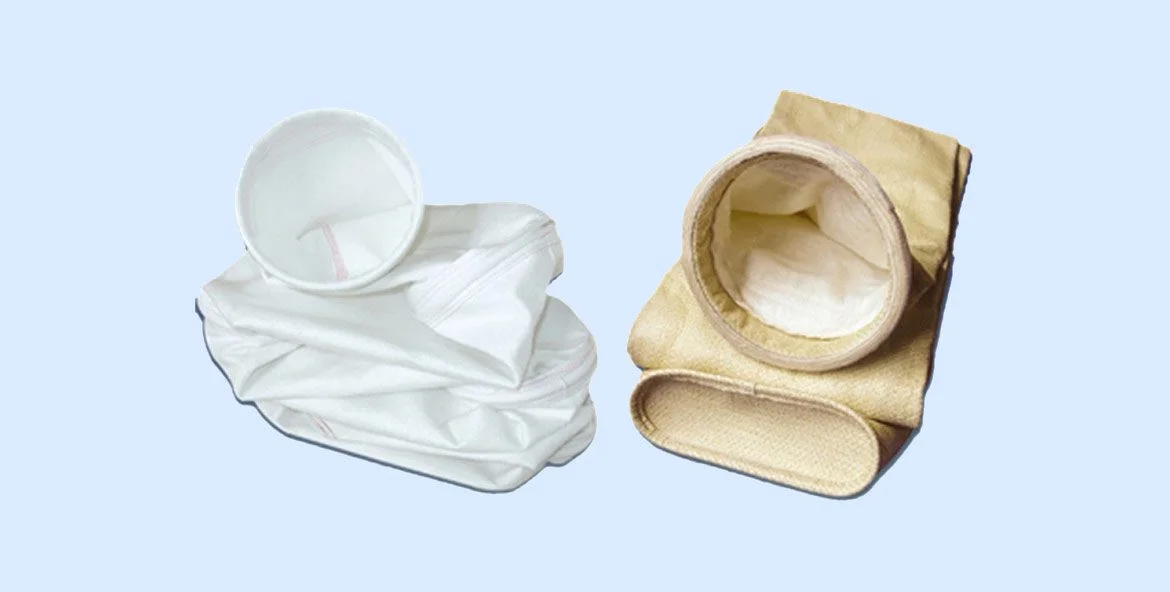
Dust Collection Filter Bag Manufacturer in India — ePTFE, PPS, PTFE, Polyester (Praimo Industrial Filters & Spares Manufacturing Company)
Dust Collection Filter Bag — Specifications, Sizes & Performance (ΔP, A/C, Emissions)
In every baghouse installation, the dust collection filter bag does far more than trap dust — it defines how efficiently the entire system breathes. In practice, a filter’s true value shows not only in how fine a particle it captures, but in how steadily it maintains pressure drop and airflow over months of continuous duty. At Praimo Industrial Filters & Spares Manufacturing Company, each filter bag dust collector is engineered, tested, and certified to deliver consistent differential pressure (ΔP), stable air-to-cloth (A/C) ratio, and verified low-emission performance — even in the toughest industrial environments.
The company’s design approach blends rigorous dimensional control with media science. Bags are optimized for cleanability, tensile strength, and compatibility with most standard cage configurations. Operators typically notice that when A/C ratios stay within design range (1.5–3.0 m/min), baghouses run smoother, fans draw less power, and compressed air consumption drops — a quiet but measurable advantage in OPEX.
Technical Specifications — Engineering Overview
| Parameter | Specification / Range | Notes / Standards |
|---|---|---|
| Filter Media Options | Polyester (PE), Polypropylene (PP), Aramid (Nomex®), PPS (Ryton®), P84®, PTFE, Fiberglass | Media selection based on temperature, chemistry, and dust characteristics |
| Nominal Filtration Ratings | 1 µm, 3 µm, 5 µm, 10 µm, 25 µm, 50 µm, 100 µm | Custom micron ratings available; efficiency > 99.9 % for fine particulates |
| Standard Diameters (OD) | 120 mm, 130 mm, 150 mm, 160 mm, 180 mm | Tolerance ± 1.5 mm; compatible with most baghouse cages |
| Lengths (L) | 2 m to 8 m | Tolerance ± 5 mm; custom length configurations available |
| Air-to-Cloth (A/C) Ratio | 1.5 – 3.0 m/min (5 – 10 ft/min) | Pulse-jet operation; 0.8 – 1.5 m/min for reverse-air or shaker types |
| Differential Pressure (ΔP) | 900 – 1,600 Pa (7 – 13 in w.g.) | Stable operating window; measured post-cleaning cycle |
| Emissions (with ePTFE membrane) | < 10 mg/Nm³ (typically 1 – 5 mg/Nm³) | Compliant with EN 13284-1, US EPA Method 5 |
| Temperature Range | 90 °C to 260 °C (depending on media) | PP: 90 °C • PE: 135 °C • PPS: 190 °C • P84/PTFE: 240 °C+ |
| Cage Compatibility | 10–12 vertical wires, 3–6 rings, Venturi fitted | SS304/316L or galvanized steel cages |
| Pressure Pulse Cleaning | 5–7 bar(g) compressed air | Pulse duration 60–120 ms per valve |
ΔP vs A/C Performance Comparison (PE vs ePTFE Media)
| A/C Ratio (m/min) | PE Felt (ΔP) | PE + ePTFE (ΔP) | Emission (mg/Nm³) |
|---|---|---|---|
| 1.5 | 900 – 1,100 Pa | 800 – 950 Pa | 5 – 8 |
| 2.0 | 1,100 – 1,400 Pa | 900 – 1,200 Pa | 3 – 6 |
| 2.5 | 1,300 – 1,600 Pa | 1,000 – 1,300 Pa | < 5 |
Insight: In real operation, ePTFE membrane-laminated bags hold ΔP roughly 10–15 % lower at the same A/C ratio. That’s not an abstract gain — it often means 8–12 % fan energy savings and a 30–70 % longer service life, depending on dust type and humidity. Many plant engineers now consider ePTFE the “default” choice for high-duty or continuous-process baghouses.
Engineering Notes
- Tolerance & QA: Every Praimo bag undergoes hydrostatic leak testing and dimensional verification before dispatch. Variance is tightly controlled to within ±1.5 mm OD and ±5 mm length.
- Compatibility: Designed to fit all standard pulse-jet, reverse-air, and mechanical shaker housings without retrofitting.
- Compliance: Meets EN 13284-1 for emissions, ISO 9094 for permeability, and ATEX antistatic requirements on request.
In short, the dust collection filter bags from Praimo Industrial Filters & Spares Manufacturing Company combine laboratory-verified performance with shop-floor reliability. The firm provides technical datasheets, ΔP vs A/C performance curves, and emissions verification reports for every model — giving engineers the data confidence they need before specification or retrofit.
Materials & Media Types For Dust Collector Filter Bag — Polyester, PPS (Ryton®), Aramid, P84®, PTFE, Fiberglass
Choosing the right dust collector filter bag material determines how well a system performs over time — not just in terms of filtration efficiency, but in how it withstands heat, moisture, and the chemistry of the gas stream. In real-world baghouse operations, material choice often defines whether bags last two years or six months. At Praimo Industrial Filters & Spares Manufacturing Company, every media is engineered for performance stability under continuous pulse-jet stress, corrosive atmospheres, and temperature extremes.
Operators who’ve switched from generic polyester to specialized media (like PPS or PTFE) often report fewer shutdowns and lower ΔP drift — proof that the right fabric can pay for itself in energy and maintenance savings.
Filter Media Selection Matrix
| Filter Media | Continuous Temp (°C) | Chemical Resistance | Moisture / Hydrolysis Resistance | Best Suited For | Notes / Standard Finishes |
|---|---|---|---|---|---|
| Polyester (PE) | 135 °C (peak 150 °C) | Good acid resistance, moderate alkali | Moderate (avoid > 80 °C + humidity) | Cement, metals, foundry | Singed, calendared, ePTFE laminated |
| Polypropylene (PP) | 90 °C (peak 100 °C) | Excellent alkali, poor oxidant resistance | Excellent | Food, pharma utilities, water dusts | Glazed, anti-static optional |
| Acrylic | 120 °C (peak 130 °C) | Excellent acid resistance | Fair | Fertilizer, chemical, textile plants | Acid-resistant finish |
| Aramid (Nomex®) | 200 °C (peak 220 °C) | Fair acid, good alkali | Excellent | Asphalt, dryers, boilers | Singed, anti-oxidant treated |
| PPS (Ryton®) | 190 °C (peak 200 °C) | Excellent acids & alkalis | Excellent | Coal, biomass, sulfur processes | Anti-oxidant & membrane-laminated |
| P84® (Polyimide) | 240 °C (peak 260 °C) | Very good across spectrum | Excellent | Incinerators, kilns, thermal oxidizers | Fine-fiber microfiber surface |
| PTFE (Teflon®) | 240 °C (peak 260 °C) | Universal resistance | Excellent | Aggressive chemicals, pharma, sticky dusts | ePTFE membrane standard |
| Fiberglass (Woven) | 240–260 °C (peak 280 °C) | Good acids, fair alkalis | Moderate | Kilns, metal smelters, high-temp gas | PTFE membrane / silicone finish |
Technical Insights
- Felt Dust Collector Bags (PE, PPS, Aramid): Ideal for pulse-jet systems where depth loading and dust-holding capacity matter most.
- PTFE Membrane Filter Bags: Deliver emissions consistently below 5 mg/Nm³, with smoother ΔP curves and easier cleaning—especially in sticky or humid airflows.
- PPS Ryton Filter Bags: The go-to choice for acidic or sulfur-laden flue gas; retains mechanical strength even at 180 °C in environments with 6–8 % SO₂.
- Fiberglass + PTFE Laminate: A workhorse in extreme heat zones (240–260 °C) such as cement kilns or smelters, where polymer media would otherwise deform or embrittle.
Engineering Selection Guidance
- For acidic or high-moisture gases, select PPS or PTFE.
- For high-temperature, non-oxidizing service, use P84® or Fiberglass.
- For ambient or low-temperature dust, PE or PP remains the most cost-effective option.
- Always keep the gas temperature at least 20–30 °C above the acid dew point to avoid hydrolysis damage, especially in polyester or acrylic felts.
In the field, a small material mismatch—say, polyester in an acidic flue—can halve bag life or double ΔP within weeks. This is why Praimo Industrial Filters & Spares Manufacturing Company provides customized filter cloth and fabric configurations, including singed, glazed, oleophobic, and antistatic finishes, and ePTFE laminations tailored for long-term emission compliance and predictable maintenance cycles.
ePTFE Membrane vs Standard Felt — Emissions & Energy Comparison
In modern industrial dust collection, the shift from standard felt filter bags to ePTFE membrane filter bags represents more than a material upgrade — it’s a step-change in performance, reliability, and compliance. Plants across cement, steel, and biomass sectors now rely on ePTFE membranes to meet stringent emission norms while cutting down operational costs. At Praimo Industrial Filters & Spares Manufacturing Company, this technology is fine-tuned for durability and precision, maintaining consistent < 5–10 mg/Nm³ emissions, stable ΔP, and up to 70 % longer service life in real installations.
One of the first things operators notice after upgrading is smoother airflow. The fan doesn’t strain as hard, pulse cycles reduce automatically, and dust cake buildup becomes minimal — the system simply “breathes” better.
Performance Comparison — ePTFE vs Standard Felt
| Parameter | Standard Felt (Polyester / PPS) | ePTFE Membrane-Laminated Felt | Improvement (%) |
|---|---|---|---|
| Filtration Efficiency | 98.5 – 99 % (depth capture) | > 99.97 % (surface capture) | + 0.5 – 1 % |
| Emissions (mg/Nm³) | 10 – 25 mg/Nm³ typical | < 5 mg/Nm³ consistent | ↓ 50 – 80 % |
| ΔP (steady-state) | 1,300 – 1,800 Pa | 900 – 1,300 Pa | ↓ 20 – 30 % |
| Fan Power Consumption | Baseline (100 %) | 88 – 92 % | ↓ 8 – 12 % |
| Pulse Cleaning Frequency | 100 % | 60 – 70 % | ↓ 30 – 40 % |
| Bag Life (Months) | 18 – 24 | 30 – 36 | ↑ 30 – 70 % |
Insight: The ePTFE membrane forms a uniform micro-porous surface that captures particulates on the face of the fabric instead of embedding them in its depth. This single change stabilizes ΔP, prevents re-entrainment, and extends bag life dramatically. Over time, plants see quieter fans, cleaner exhausts, and measurable drops in energy bills.
Engineering Explanation
- Surface Filtration Mechanism: The ePTFE layer features a precisely controlled pore size (< 2 µm). Rather than relying on a thick dust cake, it allows airflow to remain steady even as dust loading increases — the surface itself becomes the filtration interface.
- Depth Loading Avoidance: Conventional felt bags trap fines deep within fibers, which gradually raises ΔP and shortens bag life. The ePTFE barrier rejects this penetration, keeping the felt substrate clean and flexible.
- Energy Savings: As a rule of thumb, every 100 Pa reduction in ΔP saves 1–2 % in fan energy. When ΔP drops 300–500 Pa, total plant energy savings reach 8–12 %.
- Maintenance Efficiency: Fewer pulse cycles mean less wear on diaphragms and solenoids, reduced compressed-air consumption, and longer mean-time-between-cleanings.
Case Insight
A 240,000 m³/h cement mill replaced its conventional PE felt bags with PE + ePTFE membrane bags. Within three months of commissioning, emissions fell from 18 → < 8 mg/Nm³, ΔP stabilized at ≈ 1,100 Pa (down from 1,700 Pa), and fan power dropped by ≈ 11 %. The upgrade paid for itself in under 13 months, even before accounting for reduced change-out costs.
In short, Praimo Industrial Filters & Spares Manufacturing Company offers a proven lineup of ePTFE, PTFE, and P84® membrane-integrated filter bags designed for consistent emission compliance, reduced energy demand, and predictable lifecycle performance — the kind of upgrade engineers can measure in both milligrams and megawatts.
How Baghouse Filter Bags Work (Pulse-Jet, Reverse-Air, Shaker)
In most heavy-duty plants, baghouse dust collection systems remain the most dependable and energy-efficient method of controlling airborne particulate emissions. They combine simple mechanical separation with continuous self-cleaning capability, giving operators stable airflow and predictable emissions even in abrasive, high-temperature environments. Each configuration—pulse-jet, reverse-air, or mechanical shaker—relies on the same basic idea: let clean air pass through the filter media while dust builds up, then remove that dust before it blinds the surface.
At Praimo Industrial Filters & Spares Manufacturing Company, every filter bag and cleaning assembly is engineered to maintain steady air-to-cloth (A/C) ratios, low differential pressure (ΔP), and consistent filtration performance under variable plant loads. In practice, well-tuned baghouses keep ΔP in the 900–1,600 Pa range for years with minimal operator intervention.
Working Principle of Baghouse Filter Bags
Filtration Phase
- Dust-laden air first enters the baghouse plenum or hopper inlet.
- Larger particles settle out by inertia and gravity, while fine dust adheres to the outer surface of the filter bags (for pulse-jet and reverse-air types) or the inner surface (for shaker systems).
- Over time, this dustcake acts as a secondary filtration layer, improving capture efficiency for sub-micron particles.
Cleaning Phase
To maintain constant airflow, accumulated dust must be removed without halting operation. The way this is done defines the baghouse type.
| Baghouse Type | Cleaning Mechanism | A/C Ratio (m/min) | Key Advantages |
|---|---|---|---|
| Pulse-Jet Filter Bag | Short bursts of compressed air (5–7 bar) through the venturi create a shockwave that dislodges dust from the outside-to-inside surface. | 1.5 – 3.0 | Compact, continuous duty, ideal for high-load or high-temperature service. |
| Reverse-Air Baghouse | Gentle reverse airflow collapses the bags inward to release dust; typically uses a rotating manifold or sectioned chamber. | 0.8 – 1.6 | Low mechanical stress, extended bag life, suitable for large-volume flow systems. |
| Mechanical Shaker Baghouse | A motorized shaking rack physically agitates the bags to shed the dustcake. | 0.8 – 1.2 | Simple, low-cost, and operates without compressed air. |
Pulse-Jet Advantage: Because of its continuous online cleaning, the pulse-jet baghouse achieves the highest filtration capacity per unit area. That compact footprint and reliability make it the preferred configuration for cement mills, power stations, chemical, and fertilizer plants worldwide.
Engineering Insights
- A/C Optimization: Keeping the A/C ratio within design range ensures stable ΔP (900–1,600 Pa) and extends bag life. Undersized systems raise ΔP prematurely, while oversizing wastes fan power.
- Cleaning Efficiency: A properly timed pulse restores roughly 95 % of original airflow within milliseconds, maintaining productivity without shutdowns.
- System Integration: The real performance of any filter bag depends on pulse valve timing, header pressure, and cage-Venturi geometry—details often overlooked in retrofits but critical for longevity.
In short, a well-designed baghouse is more than just a set of filter bags. It’s a synchronized system of airflow, cleaning energy, and control logic. Praimo Industrial Filters & Spares Manufacturing Company supplies not only the bags themselves but also pulse valves, timer boards, and reverse-air retrofit assemblies, helping operators fine-tune cleaning cycles, minimize downtime, and maintain compliance across the full lifecycle of the filtration system.
Core Benefits — Lower ΔP, <10 mg/Nm³ Emissions, Longer Bag Life
In today’s process industries, dust collection filter bags have evolved far beyond their role as replaceable consumables. They now serve as precision-engineered components that directly affect energy consumption, production uptime, and emission compliance. At Praimo Industrial Filters & Spares Manufacturing Company, each filter bag is designed not just to filter, but to optimize the entire airflow system—delivering reliable pressure stability, cleaner exhaust, and longer operational life even in high-load or abrasive conditions.
When operators retrofit older baghouses with advanced media such as ePTFE membranes, PPS (Ryton®), or PTFE, the improvement is immediate: smoother ΔP curves, less frequent pulsing, and noticeably lower fan amperage.
Key Performance Benefits
| Parameter | Praimo ePTFE / PPS / PTFE Bags | Operational Impact |
|---|---|---|
| Differential Pressure (ΔP) | 900 – 1,600 Pa (7 – 13 in w.g.) | Stable operation, reduced fan load |
| Emission Level | < 10 mg/Nm³ (typically 1 – 5 mg/Nm³) | Meets global standards – EN 13284-1 / EPA Method 5 |
| Bag Life Expectancy | 18 – 36 months (standard); +30–70 % with ePTFE membrane | Lower downtime and replacement cost |
| Energy Savings | 8 – 15 % via reduced ΔP and optimized fan demand | Decreased OPEX for multi-bag systems |
| Pulse Cleaning Frequency | Down by 30 – 40 % | Lower compressed-air consumption and valve wear |
| Maintenance Interval | 12 – 18 months (valves / sensors) | Predictable maintenance planning |
Operational Advantages
- Consistent Emission Control: The surface filtration mechanism of ePTFE membranes prevents depth loading, keeping outlet dust below 5 mg/Nm³ throughout the lifecycle.
- Reduced Energy Demand: Optimized A/C ratios and smoother flow paths lower fan horsepower requirements, saving kilowatts every operating hour.
- Extended Service Life: Reinforced seams, abrasion-resistant stitching, and membrane lamination protect against fiber fatigue and cage wear.
- Compliance Ready: Every bag design is verified against EN 13284-1 and ISO 9094 standards, with ATEX and FDA-grade media options available for regulated sectors like food, pharma, and chemicals.
Quantified ROI Example
A 120,000 m³/h clinker cooler baghouse retrofitted with Praimo ePTFE filter bags saw differential pressure drop from 1,700 → 1,050 Pa, cutting fan energy consumption by 12 % and extending bag life from 22 → 34 months. The result: a total lifecycle cost reduction of about 18 %, verified through Praimo’s in-house performance audit.
Each project delivered by Praimo Industrial Filters & Spares Manufacturing Company includes on-demand pulse controller integration and an ROI validation module—so clients can quantify real energy and maintenance savings, not just measure emission reductions.
Applications & Industries — Cement, Biomass, Metals, Food, Pharma, Chemicals
Every process industry has its own dust challenge — fine clinker dust in cement kilns, sticky biomass ash in boilers, metal fumes in foundries, or sugar fines in food plants. The wrong media can mean early bag failure, high ΔP, or inconsistent emissions. That’s why Praimo Industrial Filters & Spares Manufacturing Company engineers each industrial dust collector filter bag with process-specific parameters in mind: temperature, chemistry, humidity, and cleaning mechanism. The goal is always the same — steady ΔP, <10 mg/Nm³ emissions, and long-term operating stability.
Whether the environment demands high-temperature PPS for clinker coolers or antistatic PP felt for food-grade dust collection, Praimo’s range covers the full spectrum of industrial conditions.
Industry-Specific Applications & Recommended Media
| Industry / Process | Typical Dust Type | Operating Temperature (°C) | Recommended Filter Media | Key Performance Benefits |
|---|---|---|---|---|
| Cement & Lime Plants | Clinker dust, kiln exhaust, cooler fines | 150 – 200 | PPS (Ryton®), Aramid (Nomex®) | High thermal endurance, low ΔP, <10 mg/Nm³ emissions |
| Biomass & Power Boilers | Fly ash, unburned carbon, SO₂-laden gases | 160 – 200 | PPS, PTFE Membrane | Handles acidic flue gases, hydrolysis-resistant, +30% bag life |
| Metals & Foundries | Metal oxides, slag dust, fume particulates | 180 – 240 | P84®, PTFE, Fiberglass | Withstands high-temp duty, minimal blinding, stable ΔP |
| Food & Beverage | Flour, sugar, starch, grain fines | 60 – 90 | Antistatic PE / PP (FDA Approved) | ATEX-compliant, hygienic, <5 mg/Nm³ emissions |
| Pharmaceuticals | Fine powders, excipients, tablet dust | 60 – 100 | PTFE, Antistatic PP | Ultra-clean air, reusable, non-shedding media |
| Chemical & Fertilizer Plants | Acidic mist, phosphates, urea dust | 100 – 180 | Acrylic, PPS, PTFE | High acid/alkali resistance, low corrosion risk |
| Woodworking & MDF / Sawdust Extraction | Sawdust, resin fines, fibrous dust | 50 – 80 | PE, Antistatic Felt | Safe in combustible zones, washable, durable for high airflow |
Example in Operation:
In one cement mill retrofit, PPS membrane filter bags achieved outlet emissions below 8 mg/Nm³ at 190 °C, while maintaining a steady ΔP of 1,200 Pa. The result was a 35 % increase in bag life and measurable reductions in fan energy consumption.
Global and Domestic Market Applications
- India: Predominant use of PPS and Aramid filter bags in cement, steel, and thermal power sectors for high-load particulate environments.
- GCC & Southeast Asia: Preference for PTFE membrane filters in biomass, desalination, and petrochemical plants—ideal for high humidity and chloride-laden gas streams.
- Europe & North America: Adoption of FDA/EU-compliant PP or PTFE filter bags in food, beverage, and pharma facilities demanding hygienic and washable filtration.
Engineering Advantages
- Media precisely matched to dust composition, moisture content, and acid dew point for maximum stability.
- ATEX-certified antistatic fabrics available for combustible dust zones (up to St-class 1).
- Custom-built geometries — snap-band, ring-top, pleated, or extended-length — designed to fit OEM baghouse housings without modification.
In every project, Praimo Industrial Filters & Spares Manufacturing Company delivers not just a filter bag but a complete engineered solution — combining application study, emission modeling, and lifecycle analysis. The result is reliable compliance, lower operational costs, and sustained performance across cement, biomass, metals, food, pharma, and chemical industries worldwide.
Compliance & Standards — Emissions, ATEX, QA Documentation
Every dust collector filter bag supplied by Praimo Industrial Filters & Spares Manufacturing Company is not only designed for performance but also built to comply with stringent international emission, safety, and quality assurance standards. Industrial filtration systems often fall under highly regulated environments—especially in power, cement, and chemical plants—where documentation, certification, and traceability are as critical as filtration efficiency itself.
Praimo’s QA framework ensures that each filter bag undergoes precise inspection, third-party validation, and conformity testing against recognized benchmarks such as EN 13284-1, US EPA Method 5, ISO 9094, and ATEX Directive 2014/34/EU. The result: reliable emission performance, mechanical integrity, and documented compliance ready for both domestic and export EPC audits.
Emissions Compliance Standards
| Standard / Protocol | Scope | Typical Performance with ePTFE / PTFE Bags |
|---|---|---|
| EN 13284-1 | Determination of dust concentration in stationary source emissions (EU) | < 10 mg/Nm³, typically 1 – 5 mg/Nm³ |
| US EPA Method 5 | Isokinetic sampling of particulate matter from exhaust stacks | Verified via third-party stack monitoring reports |
| ISO 9094 / ISO 12103 | Air permeability and particulate capture testing | Confirms uniform porosity and controlled flow rate |
| CE / PED SEP | Safety requirements for pressurized housings and manifolds | Applied to pulse headers, manifolds, and housings |
| EN 779 / ISO 16890 (HVAC crossover) | Particulate air filter efficiency classification | Reference basis for media filtration and ΔP testing |
Compliance Insight:
In actual field audits, Praimo’s ePTFE-laminated filter bags consistently achieve outlet dust levels below 5 mg/Nm³, surpassing EU Industrial Emission Directive (IED) and CPCB Class II norms commonly required in cement, biomass, and metal industries.
ATEX & Safety Certification
| Directive / Zone | Requirement | Praimo Compliance Provision |
|---|---|---|
| ATEX 2014/34/EU | Safe use of equipment in explosive atmospheres (Zone 20 / 21) | Antistatic filter bags using stainless steel or carbon-fiber conductive yarns |
| IECEx Equivalent | Harmonized global explosive atmosphere certification | Applied for exports to GCC and SEA regions |
| NFPA 652 / 654 | Industrial combustible dust management | Incorporated into baghouse system design and isolation |
| Surface Resistivity | ≤ 1 × 10⁸ Ω for conductive media | Verified by continuity and grounding resistance tests |
These antistatic and ATEX-certified bags provide additional safety margins for facilities handling fine organic or metallic dusts, preventing electrostatic ignition during pulse cleaning.
Quality Assurance & Documentation
- EN 10204 Type 3.1 MTC: Traceability for cages, venturis, and metallic components ensuring full mechanical conformity.
- Material Certificates: Issued for filter media per FDA 21 CFR, EU 10/2011, RoHS, and REACH standards.
- Factory QA Testing: Includes seam strength ≥ 1,000 N/5 cm, dimensional tolerance (±1.5 mm), permeability (Frazier method), and hydrostatic leakage verification.
- HSN Code (India): 8421.39.90 — Dust collector filter bags for air and gas purification systems.
Documentation Package for EPC & Export Projects
Every export-ready shipment includes a full compliance dossier:
- EN 13284-1 emission validation data or reference test certificate.
- EN 10204 3.1 material certificates for metallic assemblies.
- QA inspection reports (dimensional, tensile, and permeability results).
- ISPM-15 certified packaging documents for global shipping compliance.
With this level of traceability and engineering discipline, Praimo Industrial Filters & Spares Manufacturing Company provides clients, EPCs, and OEMs with complete documentation transparency—from design validation to final dispatch—ensuring zero ambiguity during audits, regulatory checks, or system commissioning.
Alternatives Matrix — Pleated Bags, Cartridges, ESP (When to Choose What)
Choosing the right dust collection technology isn’t simply a matter of replacing one filter with another — it’s a strategic engineering choice that determines plant uptime, energy usage, and total lifecycle cost. While conventional dust collector filter bags dominate large-scale process industries, newer options like pleated filter bags, cartridge collectors, and electrostatic precipitators (ESPs) each have their place when space, dust type, or regulatory targets demand alternative designs.
At Praimo Industrial Filters & Spares Manufacturing Company, the focus is on aligning technology with process conditions — temperature, particulate size, gas composition, and maintenance priorities — to ensure best-fit filtration efficiency and lowest long-term OPEX. The result is a data-driven selection that balances reliability with compliance and operational economics.
Filtration Technology Comparison Matrix
| Technology Type | Best Suited For | Temperature Range (°C) | Dust Type / PSD | Emission Level (mg/Nm³) | Maintenance & Cost Insight |
|---|---|---|---|---|---|
| Conventional Felt Bags | Large-volume gas flows with high dust loading (cement, steel, power plants) | 90 – 260 | Medium to fine (< 10 µm) | < 10 mg/Nm³ (with ePTFE membrane) | Lowest CAPEX; replace bags every 24–36 months |
| Pleated Filter Bags | Retrofits where headroom is limited or compact baghouses are used | 60 – 180 | Fine dust, dry particulate | 5 – 10 mg/Nm³ | 1.5–2.5× more filtration area; 15–25 % lower ΔP; moderate CAPEX |
| Cartridge Filters (Canisters) | Fine, dry, non-abrasive dust (pharma, food, paint booths) | 20 – 80 | Submicron (< 1 µm) | < 1 – 5 mg/Nm³ | Compact footprint, high precision, low temperature tolerance |
| Electrostatic Precipitators (ESP) | Very high gas flow and low-resistivity dust (power boilers) | 150 – 350 | Fine, conductive dust | 10 – 20 mg/Nm³ | High CAPEX but low OPEX; performance sensitive to gas conditions |
Engineering Note:
Pleated bag retrofits often double the available filtration area (up to +200 %) within the same housing footprint. In cement and food dust systems, this translates to 15–25 % lower ΔP, reduced fan load, and shorter cleaning cycles—making them a cost-effective upgrade when space is limited.
When to Choose Each Technology
- Conventional Filter Bags: Ideal for high-temperature, chemically aggressive, or abrasive dust applications such as kilns, foundries, and fluidized bed dryers.
- Pleated Filter Bags: Best suited for retrofit projects with restricted headroom or where maintenance access is limited.
- Cartridge Filters: Used for precision air filtration in low-temperature environments requiring sub-micron particulate control (< 1 mg/Nm³).
- Electrostatic Precipitators (ESP): Effective for large boiler exhaust or bulk gas cleaning, where particle conductivity supports electrostatic separation.
Performance & ROI Considerations
- Baghouses (Felt or ePTFE Membrane): Offer the lowest CAPEX, longest field record, and easiest maintenance in heavy-duty process plants.
- Pleated Bag Retrofits: Deliver measurable OPEX savings within 12–18 months, primarily through reduced ΔP and energy consumption.
- Cartridge / ESP Systems: Higher upfront investment, justified only for niche applications requiring ultra-low emissions or stringent cleanliness.
In real-world optimization programs, Praimo Industrial Filters & Spares Manufacturing Company conducts retrofit engineering audits, evaluating ΔP trends, energy costs, and space constraints. Whether converting to pleated bags, integrating cartridge modules, or pairing with ESP systems, Praimo ensures the chosen technology offers a balanced combination of efficiency, footprint optimization, and lifecycle cost control.
Performance Curves — ΔP vs A/C, Cleanability, Dirt Holding
In a baghouse dust collection system, the true measure of performance lies in its pressure drop (ΔP) behavior, cleanability, and dirt-holding capacity over time. A stable ΔP ensures consistent airflow, reduced energy consumption, and predictable bag life. At Praimo Industrial Filters & Spares Manufacturing Company, performance curves are generated through controlled testing of PE felt and ePTFE membrane filter bags to validate field performance across a range of air-to-cloth (A/C) ratios.
ΔP vs A/C Performance Curve Comparison
| A/C Ratio (m/min) | Polyester Felt (ΔP) | PE + ePTFE Membrane (ΔP) | ΔP Reduction (%) |
|---|---|---|---|
| 1.5 | 900 – 1,100 Pa | 800 – 950 Pa | 10 – 15 % |
| 2.0 | 1,100 – 1,400 Pa | 900 – 1,200 Pa | 15 – 20 % |
| 2.5 | 1,300 – 1,600 Pa | 1,000 – 1,300 Pa | 20 – 25 % |
| 3.0 | 1,500 – 1,900 Pa | 1,150 – 1,450 Pa | 25 – 30 % |
Observation: ePTFE membranes maintain lower and more stable ΔP due to their surface filtration mechanism—dust forms a thin cake on the membrane rather than embedding within the fiber matrix. This minimizes resistance buildup and extends filter cleaning intervals by up to 40%.
Cleanability & Dirt-Holding Capacity
| Media Type | Cleaning Efficiency (%) | Pulse Interval (sec) | Dirt Holding (kg/m²) | Residual ΔP after Cleaning (Pa) |
|---|---|---|---|---|
| PE Felt | 85 – 90 | 30 – 45 | 6 – 9 | 1,300 – 1,600 |
| PE + ePTFE | 95 – 98 | 60 – 90 | 4 – 6 | 900 – 1,200 |
- Cleaning Efficiency: ePTFE membranes release dust more effectively, allowing longer intervals between pulse sequences and lower compressed air use.
- Dirt Holding: Depth-loading in conventional felt leads to faster blinding; membrane media restricts dust to the surface, enabling consistent ΔP and cleaner airflow.
Engineering Insight
- A 100 Pa reduction in ΔP can reduce fan energy consumption by 1–2%, resulting in measurable operational savings on large-scale systems.
- Consistent ΔP profiles improve bag life, reduce stress on pulse valves, and extend system uptime.
- Proper A/C selection (1.5–2.5 m/min for pulse-jet) is critical for achieving the balance between flow rate, emission control, and ΔP stability.
Praimo Industrial Filters & Spares Manufacturing Company provides validated performance charts and ΔP vs A/C curve PDFs for every major filter media variant, helping engineers optimize baghouse sizing and energy efficiency.
Case Studies — Cement Mill, Biomass Boiler, ATEX Food Dust
In industrial filtration, there’s no stronger proof of performance than real-world operation. Across a wide range of installations—from cement kilns to biomass boilers and ATEX-regulated food plants—Praimo Industrial Filters & Spares Manufacturing Company has engineered and deployed industrial dust collector filter bags that deliver measurable gains in emission reduction, ΔP stability, and service life. Each project demonstrates how tailored media selection, proper A/C design, and membrane technology can dramatically lower OPEX while ensuring full regulatory compliance.
Case Study 1 — Cement Mill Retrofit (India)
| Parameter | Before Retrofit (Standard PE Felt) | After Retrofit (PE + ePTFE Membrane) | Improvement |
|---|---|---|---|
| Gas Flow Rate | 240,000 m³/h | 240,000 m³/h | — |
| Average ΔP | 1,700 Pa | 1,100 Pa | ↓ 35 % |
| Emissions (mg/Nm³) | 18 – 25 | < 8 | ↓ 60 % |
| Bag Life | 22 months | 34 months | + 55 % |
| Energy Savings | — | 11 % reduction in fan power | — |
| ROI Period | — | < 13 months | — |
Result:
The Praimo ePTFE membrane retrofit stabilized differential pressure, reduced fan energy by 11 %, and achieved consistent sub-10 mg/Nm³ emissions. Operators also noted fewer pulsing cycles and cleaner hoppers, confirming better dust release in high-temperature clinker zones.
Case Study 2 — Biomass Boiler Filtration (Europe)
| Parameter | Before (Standard PPS Felt) | After (PPS + ePTFE Membrane) | Improvement |
|---|---|---|---|
| Flue Gas Temp. | 180 °C | 180 °C | — |
| Gas Composition | SO₂ + Alkalis | SO₂ + Alkalis | — |
| Average ΔP | 1,600 Pa | 1,200 Pa | ↓ 25 % |
| Emissions (mg/Nm³) | 20 | < 12 | ↓ 40 % |
| Bag Life | 24 months | 28 months | + 17 % |
Result:
The addition of an ePTFE membrane on PPS felt improved resistance to hydrolysis and chemical degradation under acidic, SO₂-laden gas streams. Operators reported cleaner pulsing, stable ΔP, and a service-life gain of roughly 17 %, even in fluctuating boiler loads.
Case Study 3 — ATEX Food Dust Application (Middle East)
| Parameter | Conventional Bags | Praimo Antistatic PE + ePTFE | Improvement |
|---|---|---|---|
| Flow Rate | 28,000 m³/h | 28,000 m³/h | — |
| Dust Type | Flour / Starch | Flour / Starch | — |
| Static Control | None | Antistatic (≤ 10⁸ Ω) | ATEX-compliant |
| Emissions (mg/Nm³) | 9 – 10 | < 3 | ↓ 65 % |
| Bag Life | 20 months | 30 months | + 50 % |
| Explosion Safety | Non-rated | Zone 21 certified | — |
Summary of ROI Across Installations
| Industry | ΔP Reduction | Emission Drop (mg/Nm³) | Life Extension | ROI |
|---|---|---|---|---|
| Cement | 35 % | ↓ 60 % | + 55 % | 13 months |
| Biomass | 25 % | ↓ 40 % | + 17 % | 16 months |
| Food (ATEX) | 30 % | ↓ 65 % | + 50 % | 14 months |
Insight:
Across these case studies, one pattern stands out—consistent ΔP reduction, improved fan energy efficiency, and verified emission compliance (EN 13284-1). These gains are not theoretical; they are measured results from field data validated through operator logs and performance audits.
Praimo Industrial Filters & Spares Manufacturing Company continues to support EPCs, OEMs, and end users with case-based feasibility studies and technical consultations, ensuring that each filtration system achieves the optimal balance of efficiency, safety, and return on investment.
Lifecycle Cost & ROI — Energy, Compressed Air, Maintenance
When evaluating a dust collector baghouse, the real financial picture extends well beyond the initial capital cost of bags and cages. In a typical 3–5 year operating window, energy, compressed air, and maintenance expenses dominate—representing nearly 80–90 % of total lifecycle cost. This is where engineering choices make a measurable difference.
By switching to membrane-laminated filter bags (ePTFE, PTFE, PPS) and integrating on-demand pulse cleaning, plants can stabilize ΔP, extend bag life, and cut both fan and compressor loads. At Praimo Industrial Filters & Spares Manufacturing Company, lifecycle optimization isn’t a side note—it’s built into every design recommendation, ensuring clients capture energy and maintenance savings that directly translate into ROI.
Lifecycle Cost Breakdown — Typical 120,000 m³/h Baghouse System
| Cost Component | Conventional Bags (%) | ePTFE Membrane Bags (%) | Savings Mechanism |
|---|---|---|---|
| Filter Bags & Cages | 45 – 60 | 50 – 55 | Longer lifespan (30–70 % extension) reduces replacement frequency |
| Fan Energy (ΔP-driven) | 25 – 35 | 20 – 28 | Lower ΔP (900–1,300 Pa) reduces fan load by 8–12 % |
| Compressed Air (Pulse Cleaning) | 5 – 12 | 3 – 7 | Reduced pulse frequency (~30–40 %) saves air and power |
| Maintenance & Downtime | 10 – 20 | 5 – 10 | Fewer replacements, less valve wear, faster change-outs |
| Total OPEX | 100 % | 80 – 90 % | 10–20 % total lifecycle cost reduction |
Observation: In continuous-duty plants, every 100 Pa drop in ΔP saves approximately 1–2 % in fan energy, which for a medium-sized system can translate into ₹3–6 lakh per year in direct savings.
Return on Investment (ROI) Example
| Parameter | Conventional Felt Bags | Praimo ePTFE Membrane Bags |
|---|---|---|
| Average ΔP | 1,600 Pa | 1,100 Pa |
| Fan Power (kW) | 120 | 105 |
| Annual Energy Cost (₹) | 14.5 Lakh | 12.5 Lakh |
| Compressed Air Cost (₹) | 2.5 Lakh | 1.5 Lakh |
| Total Annual Savings (₹) | — | ~3 Lakh per system |
| Payback Period | — | ≈ 12–15 months |
Result: Plants adopting Praimo’s ePTFE membrane bags combined with on-demand pulse controllers consistently achieve payback in under 1.5 years, while also extending bag life by 30–70 %. The dual benefit of lower ΔP and reduced air consumption compounds over time, producing sustained OPEX reduction and faster ROI cycles.
Engineering Insights
- Lower ΔP, Lower Carbon: Optimized airflow and reduced fan load directly minimize energy draw, lowering both operating cost and plant carbon footprint.
- Reduced Mechanical Wear: Fewer pulse cycles translate to less strain on pulse valves, solenoids, and diaphragms—cutting unplanned maintenance.
- Stable Operating ΔP: Smooth, predictable ΔP ensures consistent fan motor performance, less vibration, and longer service intervals for blowers and motors.
In practice, Praimo Industrial Filters & Spares Manufacturing Company supports clients with end-to-end cost modeling tools—allowing engineers to simulate savings for multiple configurations before procurement. This data-driven approach transforms filtration from a consumable expense into a predictable, ROI-backed system upgrade.
Engineering Selection — A/C Ratio, Gas Chemistry, Dew Point, Can Velocity
Accurate engineering selection forms the backbone of every bag filter dedusting system. While the choice of filter media determines filtration behavior, other design parameters such as the air-to-cloth (A/C) ratio, gas chemistry, dew point margin, and can velocity govern long-term performance, stability, and energy efficiency. Even minor deviations in these parameters can significantly affect ΔP, emission levels, and bag life.
At Praimo Industrial Filters & Spares Manufacturing Company, every baghouse system design and selection study includes these engineering guardrails to ensure the system remains efficient, compliant, and durable under continuous industrial operation.
Air-to-Cloth (A/C) Ratio Guidelines
| System Type | Recommended A/C Ratio (m/min) | Typical ΔP Range (Pa) | Remarks |
|---|---|---|---|
| Pulse-Jet Baghouse | 1.5 – 3.0 | 900 – 1,600 | Compact footprint, continuous cleaning, high dust loading capability |
| Reverse-Air Baghouse | 0.8 – 1.5 | 800 – 1,200 | Lower stress on bags, longer life, ideal for large air volumes |
| Mechanical Shaker | 0.6 – 1.2 | 700 – 1,000 | Simple construction, low energy demand, intermittent duty systems |
Engineering Tip: Reducing the A/C ratio by 10 % typically lowers ΔP by 15 % and extends bag life by 20–25 %. Always confirm available fan capacity when resizing or retrofitting to avoid underperformance.
Gas Chemistry & Media Compatibility
| Gas Composition | Critical Consideration | Recommended Media |
|---|---|---|
| SO₂, NOx, Acidic Vapors | Risk of acid hydrolysis | PPS (Ryton®), PTFE, P84® |
| High Moisture / Condensation | Dew point approach issues | PTFE / PPS with ePTFE membrane |
| Alkali / Ammonia Vapors | Chemical swelling or softening | Acrylic / PPS |
| Organic Vapors / Fumes | Agglomeration and odor absorption | PTFE or Aramid (Nomex®) |
Guideline: Maintain gas temperature 25–30 °C above the acid dew point to prevent hydrolysis or media degradation in polyester and aramid fabrics.
Can Velocity & Flow Distribution
| Parameter | Recommended Range | Impact |
|---|---|---|
| Can Velocity (m/s) | 0.8 – 1.2 | Higher velocity increases re-entrainment and ΔP |
| Plenum Design | Even gas distribution | Prevents local overloading and uneven wear |
| Inlet Baffles / Diffusers | At gas entry | Protects first-row bags from direct abrasion |
| Velocity Uniformity Tolerance | ±15 % | Critical for balanced airflow and long bag life |
Observation: Poor plenum balance or excessive inlet velocity are the most common causes of early bag wear, re-entrainment, and sustained high ΔP in retrofit applications.
Media & Surface Finish Engineering
- Standard Finishes: Singed, glazed, antistatic, oleophobic, and ePTFE-laminated.
- Membrane Choice: Use ePTFE membranes for fine, sticky, or hygroscopic dusts; use standard felts for coarse, dry particulates.
- Seam Strength: All bags use double-stitched or ultrasonically welded seams tested to ≥ 1,000 N/5 cm tensile strength to prevent bypass under pulse cleaning pressure.
Selection Flowchart (Recommended Engineering Steps)
- Identify gas flow rate (m³/h) and dust loading (g/Nm³).
- Determine gas temperature and dew point margin.
- Assess dust characteristics (abrasiveness, particle size, moisture).
- Select compatible filter media for the chemical and humidity profile.
- Define the A/C ratio based on system type and duty cycle.
- Validate ΔP range against the fan performance curve.
- Confirm can velocity and housing geometry for uniform flow distribution.
Praimo Industrial Filters & Spares Manufacturing Company provides complete filter sizing worksheets, CFD-based airflow optimization, and media selection consulting, helping engineers design reliable and emission-compliant dust collection systems that meet EN 13284-1, ISO 9094, and ATEX standards.
Product Configurations — Snap-Band, Ring Top, Disc Bottom, Reinforcements
In any dust collector or baghouse system, the mechanical interface between the filter bag and its supporting cage plays a critical role in ensuring leak-free performance and long operational life. Even when the media is perfectly selected, improper top or bottom configuration can lead to premature wear, bypass leakage, or unstable ΔP. To eliminate these risks, Praimo Industrial Filters & Spares Manufacturing Company designs and manufactures dust collector filter bags in multiple top and bottom configurations—optimized for pulse-jet, reverse-air, and mechanical shaker systems used in various industries.
Top-End Configurations
| Type | Description | Typical Application | Features & Advantages |
|---|---|---|---|
| Snap-Band Top | Stainless steel or galvanized band with precision groove for leak-free seating | Pulse-jet housings | Quick installation, self-sealing, tolerance ±1 mm |
| Ring Top / Raw Top | Sewn or rolled edge with embedded support ring | Reverse-air or shaker systems | Economical design, ideal for retrofit baghouses |
| Cord / Beaded Collar | Heavy cord integrated into the upper seam | Custom or OEM housings | Tight sealing, prevents dust bypass |
| Flange / Header Plate Top | Rigid flange (SS / PP) bonded or stitched to top | Cartridge or hybrid systems | High-pressure sealing, durable interface for special housings |
Engineering Note: Snap-band tops remain the preferred choice for pulse-jet baghouses because they ensure precise, self-locking installation and minimal maintenance downtime. Every Praimo filter bag undergoes dimensional QC to ±1 mm along the circumference to guarantee uniform cage fit and secure sealing.
Bottom-End Configurations
| Type | Description | Material Options | Notes |
|---|---|---|---|
| Disc Bottom | Sewn circular base reinforced with wear patch | Felt / PTFE / PPS | Standard for vertical cage systems |
| Hemmed / Overlocked Bottom | Fold-over seam stitched for basic sealing | PE / PP | Used in low-pressure shaker applications |
| Raw Bottom with Snap Ring | Open-end design for quick-release fitting | PE / Aramid | Common in side-load or compact housings |
| Reinforced / Wear-Patch Bottom | Additional layer at cage contact points | All media types | Extends bag life in high abrasion zones |
Reinforcements & Construction Details
- Stitching Threads: High-temperature aramid or PTFE sewing threads rated up to 260 °C, with double-needle lock-stitch seams tested for ≥ 1,000 N/5 cm tensile strength.
- Wear Patches: Strategically placed at impact or contact points to prevent chafing and extend bag lifespan.
- Gaskets & Seals: Silicone, EPDM, or PTFE-encapsulated gaskets ensure air-tight, leak-proof performance in pulse-jet housings.
- Dimensional Precision: All key parameters verified — length ±5 mm, circumference ±1.5 mm, ensuring perfect cage compatibility.
- Traceability: Each bag is batch-coded with media type, lot number, and QA reference as per ISO 9001 documentation standards.
Integration with Cages & Venturis
Every Praimo filter bag design is validated in combination with its matching cage and venturi to confirm proper fit, airflow balance, and cleaning efficiency. The correct alignment of venturi cone and cage wires minimizes turbulence and prevents localized ΔP spikes—directly improving bag life and overall system stability.
Praimo Industrial Filters & Spares Manufacturing Company supplies complete assemblies, including filter bags, cages, venturis, and sealing gaskets, ensuring seamless mechanical integration and optimized baghouse performance for both domestic and export installations.
Antistatic & ATEX-Ready Filter Bags — Safety for Combustible Dust
Combustible dust explosions remain a major industrial hazard in food, pharmaceutical, woodworking, and powder-handling environments. Even a small static discharge can ignite an airborne dust cloud when its concentration surpasses the lower explosion limit (LEL). To mitigate these ignition risks, Praimo Industrial Filters & Spares Manufacturing Company manufactures antistatic dust collector filter bags engineered to meet the stringent requirements of ATEX 2014/34/EU and IECEx standards. Designed for Zone 20/21 classified atmospheres, these specialized filter bags dissipate static electricity safely—ensuring reliable and spark-free filtration in explosive environments.
Why Antistatic Filter Bags Are Required
- Dust Types at Risk: Flour, sugar, starch, wood dust, resin, polymer, toner, aluminum, coal, and metallic powders.
- Risk Mechanism: During continuous filtration, air movement through non-conductive fabrics can generate static voltages up to 50–100 kV. Without grounding, accumulated charges may release as sparks, igniting suspended dust clouds.
- ATEX Compliance Objective: Limit surface resistivity ≤ 1×10⁸ Ω and maintain a verified grounding path from filter media through the cage and housing to the earth connection.
Construction & Safety Design Options
| Configuration Type | Conductive Path Method | Surface Resistivity | Recommended Applications |
|---|---|---|---|
| Stainless Steel Grid Fibers | Fine stainless filaments interwoven into the base felt | ≤ 1×10⁸ Ω | Food, chemical, and pharma ATEX zones |
| Carbon-Fiber Blended Yarn | Carbon filaments dispersed during needling | ≤ 1×10⁸ Ω | Flour mills, grain silos, biomass dust collection |
| Conductive Base Scrim (SS Mesh) | Full conductive layer integrated across the backing | ≤ 1×10⁷ Ω | Dry, high-static airflows or abrasive applications |
| Grounded Snap-Band Design | Metal snap-band connected to cage grounding lug | — | Pulse-jet housings in explosive or flammable areas |
Engineering Note: Every Praimo conductive filter bag undergoes continuity testing to confirm grounding from the conductive media to the cage and earth point. In multi-module systems, grounding is validated per module to ensure consistent discharge safety throughout the installation.
System-Level Explosion Mitigation Practices
- Grounding & Bonding: All metallic components—cages, hoppers, and manifolds—must be bonded to a common equipotential grounding network.
- Explosion Venting / Isolation: Install EN 14491 or NFPA 68 compliant vents and isolation valves to control pressure surges during ignition events.
- Airflow Velocity Control: Maintain can velocity below 1.2 m/s in high dust-loading areas to prevent electrostatic accumulation.
- Inspection & Testing: Conduct electrical resistance and continuity tests every 6–12 months as part of periodic ATEX safety audits.
ATEX Marking & Compliance Documentation
| Directive / Zone | Bag Marking Example | Certification Support |
|---|---|---|
| ATEX 2014/34/EU | Ex II 1D / 2D | Product-level declaration of conformity |
| IECEx Equivalent | Ex tD A21 IP65 T200°C | Accepted for GCC, SEA, and other export markets |
| Test Methods | EN 1149-3 / EN 60079 | Third-party testing and certification on request |
Praimo Industrial Filters & Spares Manufacturing Company partners with certified explosion protection experts to provide turnkey ATEX-compliant filtration systems, integrating antistatic filter bags, explosion vents, grounding kits, and safety interlocks. Each installation is designed for maximum operational reliability, personnel safety, and full regulatory compliance under ATEX, IECEx, and NFPA frameworks.
High-Temperature Solutions — Aramid, PPS (Ryton®), P84®, PTFE, Fiberglass
In high-temperature industrial environments such as cement kilns, biomass boilers, carbon black units, or metal foundries, filtration systems face extreme thermal and chemical stresses. Under these demanding conditions, maintaining mechanical integrity, oxidation resistance, and stable ΔP is critical.
Praimo Industrial Filters & Spares Manufacturing Company designs and manufactures high-temperature filter bags using advanced polymer and inorganic fibers—including Aramid (Nomex®), PPS (Ryton®), P84®, PTFE, and Fiberglass—each selected for its unique balance of temperature endurance, oxidation stability, and chemical resistance.
High-Temperature Filter Media Comparison
| Filter Media | Continuous Temp (°C) | Peak Temp (°C) | Oxidation Resistance | Chemical Resistance | Typical Applications |
|---|---|---|---|---|---|
| Aramid (Nomex®) | 200 | 220 | Moderate (avoid >8% O₂) | Fair acid, good alkali | Asphalt plants, dryers, boilers |
| PPS (Ryton®) | 190 | 200 | Excellent | Excellent acid & alkali | Coal-fired, biomass, and chemical flue gases |
| P84® (Polyimide) | 240 | 260 | Very good | Excellent across wide pH range | Incinerators, glass furnaces, carbon kilns |
| PTFE (Teflon®) | 240 | 260+ | Superior / Inert | Universal chemical resistance | Chemical, pharma, hazardous waste plants |
| Fiberglass (Woven) | 240 | 280 | Good | Fair alkali, moderate acid | Metal smelters, clinker coolers, rotary kilns |
Observation: Both PTFE and P84® retain over 90 % of their tensile strength even after 1,000 hours at 240 °C, while Aramid fibers experience a 25–30 % strength reduction due to oxidative aging. PPS (Ryton®) remains the most cost-effective and chemically stable choice for sulfur-bearing or acidic flue gases below 200 °C.
Engineering Notes
- Thermal Expansion: PTFE and Fiberglass exhibit <1 % shrinkage, ensuring dimensional stability under continuous heat cycling.
- Surface Treatments: PTFE membrane lamination, graphite, or silicone coatings enhance surface smoothness, minimize dust adhesion, and lower ΔP fluctuations.
- Oxidation Control: Keep oxygen concentration below 10 % for long-term operation of PPS or Aramid fibers—excessive O₂ accelerates degradation and brittleness.
- Startup Protocol: Always preheat inlet air ≥ dew point + 30 °C before introducing flue gas; this prevents acid dew corrosion and media hydrolysis during startup.
Performance Example
A biomass boiler installation operating at 185 °C flue gas temperature replaced standard Aramid felt with PPS + ePTFE membrane bags. Results showed:
- Emissions reduced from 18 → <8 mg/Nm³
- ΔP stabilized around 1,200 Pa (steady-state)
- Filter life extended from 24 → 36 months
This retrofit not only improved emission compliance but also achieved a significant OPEX reduction due to fewer bag changeouts and lower fan power demand.
Praimo Industrial Filters & Spares Manufacturing Company supplies complete high-temperature filtration systems—including filter bags, cages, and housings—rated for up to 280 °C continuous service. Each unit can be delivered with EN 10204 3.1 certification, ensuring traceable quality, export compliance, and long-term reliability for global EPC and OEM projects.
ATEX Marking & Compliance Documentation
| Directive / Zone | Bag Marking Example | Certification Support |
|---|---|---|
| ATEX 2014/34/EU | Ex II 1D / 2D | Product-level declaration of conformity |
| IECEx Equivalent | Ex tD A21 IP65 T200°C | Accepted for GCC, SEA, and other export markets |
| Test Methods | EN 1149-3 / EN 60079 | Third-party testing and certification on request |
Praimo Industrial Filters & Spares Manufacturing Company partners with certified explosion protection experts to provide turnkey ATEX-compliant filtration systems, integrating antistatic filter bags, explosion vents, grounding kits, and safety interlocks. Each installation is designed for maximum operational reliability, personnel safety, and full regulatory compliance under ATEX, IECEx, and NFPA frameworks.
Hygroscopic / Sticky Dusts — Oleophobic Finishes & ePTFE Advantage
In filtration systems where dust contains oil vapors, resins, moisture, or hygroscopic compounds (such as sugar, salts, or cement fines), standard felt filter bags frequently experience blinding—a gradual clogging of the fabric that permanently increases differential pressure (ΔP). Once this happens, fan energy rises, cleaning intervals shorten, and bag life drops significantly. To combat this, Praimo Industrial Filters & Spares Manufacturing Company offers oleophobic and hydrophobic finishes, combined with ePTFE membrane-laminated filter bags, specifically engineered to repel moisture, resist dust adhesion, and maintain stable ΔP even under high-humidity or condensation-prone conditions.
How Moisture Causes Blinding
| Condition | Effect on Conventional Felt | Engineering Impact |
|---|---|---|
| High Humidity / Condensation | Dust becomes tacky and embeds into fiber matrix | ΔP increases sharply, airflow drops |
| Oil Mist / Resin Vapors | Surface clogging and irregular cleaning | Higher compressed air consumption |
| Hygroscopic Dust (sugar, salts, cement fines) | Agglomeration, crust formation on fibers | Shorter bag life, reduced cleaning efficiency |
| Condensation at Dew Point | Particles micro-weld to fibers | Irreversible blinding and emission spikes |
Observation: Even short exposure to dew-point conditions during startup or shutdown can cause a 20–30 % permanent loss in air permeability in untreated polyester or aramid felts.
Oleophobic & ePTFE Membrane Solution
| Media Type | Surface Treatment | Moisture / Oil Resistance | Cleaning Efficiency (%) | Residual ΔP (Pa) |
|---|---|---|---|---|
| Standard PE Felt | None | Moderate | 85 – 90 | 1,400 – 1,600 |
| Oleophobic Treated PE Felt | PTFE or fluorocarbon coating | High | 90 – 94 | 1,200 – 1,400 |
| PE + ePTFE Membrane | Micro-porous PTFE laminate | Excellent | 95 – 98 | 900 – 1,200 |
Technical Insight:
The ePTFE surface layer acts as a micro-porous barrier (pore size < 2 µm) that prevents fine, sticky particles from penetrating the felt base. Dust instead forms a thin, uniform layer on the membrane surface—easily removed during short pulse cycles. When combined with oleophobic treatment, the fabric repels both moisture and oil aerosols, maintaining a steady ΔP (900–1,200 Pa) even at elevated relative humidity levels (up to 85 %).
Maintenance & Operational Benefits
- Extended Pulse Intervals: Up to 40 % reduction in compressed air consumption.
- Stable Pressure Drop: Maintains ΔP between 900–1,300 Pa under variable humidity.
- Longer Bag Life: Achieves 30–50 % longer service intervals compared to untreated felts.
- High Cleanability: Residual dust release efficiency ≥ 95 % per pulse cycle.
Field Example:
At a fertilizer plant operating through the monsoon season, Praimo’s oleophobic ePTFE filter bags maintained ΔP consistently below 1,200 Pa, while conventional polyester felt bags exceeded 1,800 Pa within two months, leading to premature replacement and increased air demand.
Praimo Industrial Filters & Spares Manufacturing Company provides humidity-control guidelines, maintenance optimization programs, and ePTFE membrane upgrades for plants handling sticky or moisture-sensitive dusts, helping operators sustain low-resistance, emission-compliant filtration performance year-round.
Procurement Guide — Specifications to Share for Fast, Accurate Quotes
Accurate technical data is essential for quick and precise quotation cycles—especially in engineered filtration systems where even small dimensional deviations can affect sealing integrity or ΔP performance. When requesting dust collector filter bag prices or replacements, buyers should provide clear process and dimensional details to enable fast evaluation and manufacturing readiness. At Praimo Industrial Filters & Spares Manufacturing Company, each RFQ is reviewed by an engineering team that validates media compatibility, mechanical fit, and performance equivalence—ensuring the final product meets both OEM and retrofit requirements with zero tolerance mismatch.
Essential Specification Checklist for RFQs
| Condition | Effect on Conventional Felt | Engineering Impact |
|---|---|---|
| High Humidity / Condensation | Dust becomes tacky and embeds into fiber matrix | ΔP increases sharply, airflow drops |
| Oil Mist / Resin Vapors | Surface clogging and irregular cleaning | Higher compressed air consumption |
| Hygroscopic Dust (sugar, salts, cement fines) | Agglomeration, crust formation on fibers | Shorter bag life, reduced cleaning efficiency |
| Condensation at Dew Point | Particles micro-weld to fibers | Irreversible blinding and emission spikes |
Optional Information for Quicker Turnaround
- Operating Pressure: Typically 5–7 bar(g) compressed air for pulse-jet systems.
- Dust Loading: mg/Nm³ or g/Nm³ values assist in predicting bag change intervals.
- System Model / OEM Reference: Matching to existing housing shortens design verification.
- Replacement Frequency Target: Helps in selecting materials that balance cost and longevity.
- Attachments: Include photos or drawings (top & bottom views) to eliminate retrofit mismatches.
Procurement Efficiency Gains
- Quotation Turnaround: < 24 hours for standard SKUs.
- Custom Engineering Support: CFD-based flow verification for specialized systems.
- Documentation Package: Ready-to-submit QA dossier for EPC and export validation.
Praimo Industrial Filters & Spares Manufacturing Company maintains a streamlined procurement workflow—from specification review through certified fabrication and export documentation. Each project benefits from traceable QA records, dimensional verification, and compliance-ready packaging, enabling buyers to receive accurate, installation-ready filter bags within tight procurement timelines.
Export Readiness — Documentation, Packaging, Compliance
As a globally trusted dust collector filter bag manufacturer in India, Praimo Industrial Filters & Spares Manufacturing Company ensures that every export consignment meets stringent international standards for quality assurance, documentation, and logistics compliance. Each shipment is meticulously engineered, inspected, and packaged according to the destination country’s regulatory framework, guaranteeing seamless customs clearance, EPC approval, and on-time project execution across global markets.
1. Export Documentation Package
| Document Type | Description / Scope | Applicable Standard |
|---|---|---|
| EN 10204 Type 3.1 MTC | Material test certificates for metallic cages, venturis, and hardware | Confirms chemical and mechanical conformity |
| Certificate of Origin (COO) | Issued by the Chamber of Commerce | Country-specific trade documentation |
| Inspection Reports | Dimensional, permeability, and hydrostatic test records | As per ISO 9001 QA system |
| ATEX Declaration of Conformity | For antistatic or conductive media used in Zone 20/21 areas | ATEX 2014/34/EU compliance |
| Packing List & Invoice Set | Export-ready shipment documentation with full part traceability | Includes HS Code 8421.39.90 |
| Performance Validation Sheets | EN 13284-1 or US EPA Method 5 emission verification data | Required for EPC technical submittals |
Engineering Note: Every documentation set is digitally archived under a unique lot number. This traceability ensures post-installation verification, third-party audits, and OEM record-keeping without delays.
2. Export Packaging & Handling
| Packaging Type | Description | Compliance Standard |
|---|---|---|
| ISPM-15 Heat-Treated Pallets | Wooden crates or pallets certified for international shipments | FAO/IPPC ISPM-15 |
| Vacuum-Sealed Poly Bags | Moisture and contamination barrier during long sea transits | Recommended for PTFE and PPS media |
| Shockproof Palletization | Multi-layer corrugated wrap with anti-static liners | Suitable for air or sea cargo |
| Labeling | Product code, lot number, destination country, and handling icons | ISO 780:2015 labeling compliance |
Before dispatch, every crate is verified for mechanical integrity, desiccant sufficiency, and optimized pallet loading to minimize freight cost and transit damage.
3. Global Compliance & Certifications
- CE / PED (SEP Category): For pressure-rated housings and metallic ancillaries integrated with filter bags.
- ATEX & IECEx: For conductive and antistatic filter bags installed in explosive dust zones (Zone 20/21).
- FDA / EU 10/2011: For food-grade PP and PTFE media used in regulated industries such as food, beverage, and pharma.
- RoHS & REACH: Optional certifications available for environmentally regulated projects and export compliance.
4. Export Logistics Capabilities
- Shipping Modes: FOB / CIF / DAP via sea, air, or multimodal routes.
- Lead Time: 1–2 weeks for standard SKUs, 3–4 weeks for customized or large EPC projects.
- Global Destinations: Europe (EU), GCC, Africa, Southeast Asia, and Latin America.
- Inspection Agencies: Coordination available with SGS, Lloyd’s Register, TÜV, and Bureau Veritas for independent pre-shipment inspection.
Praimo Industrial Filters & Spares Manufacturing Company combines engineering-grade documentation, ISPM-15 certified packaging, and compliance-ready materials to ensure every international shipment is fully traceable, audit-ready, and installation-certified. Whether for OEM supply chains or EPC turnkey projects, Praimo delivers reliable export filtration solutions—on time, globally compliant, and performance verified.
Installation & Commissioning — Leak Testing, ΔP Set-Up, Pulse Tuning
Successful commissioning determines how long a dust collector will operate at its designed performance. Even a small seal leak, ΔP mis-setting, or mistimed pulse cycle can raise emissions, waste compressed air, and shorten bag life. That’s why Praimo Industrial Filters & Spares Manufacturing Company provides detailed installation and commissioning protocols, ensuring each dust collector filter bag achieves its intended filtration efficiency, ΔP stability, and service life from the very first run.
1. Pre-Installation Checklist
| Step | Action | Purpose / Tolerance |
|---|---|---|
| Inspect Cages & Venturis | Check wire spacing, weld integrity, and venturi alignment | Prevent abrasion and flow restriction |
| Clean Plenum & Housings | Remove weld slag, burrs, and debris before bag insertion | Avoid pinholes and early ΔP rise |
| Verify Bag Dimensions | Confirm OD ± 1.5 mm and length ± 5 mm | Ensure leak-free fit and even tension |
| Gasket & Seal Check | Inspect snap-band or O-ring integrity | Prevent bypass leakage |
| Grounding Continuity (ATEX) | Measure resistance ≤ 1×10⁸ Ω | Ensure safe static-discharge path |
Practical Tip: Always install filter bags wearing clean cotton or nitrile gloves. Finger oils can seal pores and cause temporary ΔP spikes during the first few pulse cycles.
2. Leak Testing & Start-Up Validation
| Test Type | Method | Acceptance Criteria |
|---|---|---|
| Offline Leak Test (Chalk / UV Powder) | Apply tracer powder on clean side and run fan 5–10 min | No visible streaks on plenum or bag surface |
| Online ΔP Baseline Test | Record ΔP at design A/C ratio | 900–1,200 Pa for new bags |
| Flow Uniformity Check | Pitot traverse at inlet manifold | ± 15 % variation max |
| Emission Spot Check | Portable opacity or gravimetric test | < 10 mg/Nm³ (≤ 5 mg/Nm³ for membrane bags) |
Engineering Insight: A uniform ΔP across compartments confirms even airflow and proper cage alignment—any deviation > 15 % suggests plenum imbalance or restricted venturi flow.
3. Pulse-Jet Tuning & Set-Point Recommendations
| Parameter | Typical Setting | Effect / Note |
|---|---|---|
| Header Pressure | 5 – 7 bar (g) | Sufficient to flex full bag length |
| Pulse Duration | 60 – 120 ms | Avoid over-cleaning and fatigue |
| Pulse Interval (On-Demand) | Trigger at ΔP = 1,400 Pa; stop at 1,000 Pa | Maintains stable ΔP window |
| Sequential Timing | 0.2 – 0.5 s between rows | Prevents pressure-wave overlap |
| Cooling & Venting | Purge clean air 15 min after shutdown | Prevents dew-point condensation |
Observation: Correct pulse tuning alone can cut compressed-air use by 30–40 % and extend bag service life by up to 25 %—a measurable OPEX advantage in continuous-duty systems.
4. Commissioning Acceptance Checklist
- Confirm ΔP trend stability over the first 24 hours of continuous operation.
- Verify pulse-valve sequencing, PLC logic, and solenoid response.
- Test hopper discharge valves to prevent back-flow or dust bridging.
- Record baseline ΔP, emission, and cleaning-frequency data for QA documentation.
Praimo Industrial Filters & Spares Manufacturing Company provides on-site installation supervision, leak detection, ΔP optimization, and pulse-controller calibration, ensuring every dust collection system starts up cleanly, runs efficiently, and complies with EN 13284-1 emission and ATEX safety standards.
Maintenance & Troubleshooting — Hydrolysis, Abrasion, Emission Spikes
Sustained filtration performance depends less on the initial bag quality and more on consistent preventive maintenance. Regular inspections, cleaning-cycle tuning, and quick fault identification ensure stable differential pressure (ΔP), controlled emissions, and extended filter life. Praimo Industrial Filters & Spares Manufacturing Company provides comprehensive maintenance programs and troubleshooting diagnostics to help operators address issues like hydrolysis, abrasion, and emission spikes—the most frequent causes of unscheduled downtime in industrial baghouse systems.
1. Preventive Maintenance Schedule
| Frequency | Inspection / Action | Purpose |
|---|---|---|
| Daily | Monitor ΔP, header pressure, and pulse intervals | Detect early signs of blinding, leaks, or air-line restriction |
| Weekly | Check hopper evacuation and gauge calibration | Prevent material buildup and false ΔP readings |
| Monthly | Inspect pulse valves, solenoids, and diaphragms | Maintain consistent cleaning pressure |
| Quarterly | Visual inspection through access ports | Identify worn or detached filter bags early |
| Semi-Annual | Perform leak test and emissions validation | Confirm bag integrity and compliance |
| Annual | Replace worn gaskets, inspect cages and venturis | Prevent abrasion, fatigue, and bypass leakage |
Recommendation: Maintain ΔP between 900–1,600 Pa. A sharp increase or irregular pulse pattern often signals media blinding, pulse-valve malfunction, or condensation-related clogging.
2. Common Failure Modes & Remedies
| Symptom / Issue | Probable Cause | Corrective Action |
|---|---|---|
| High ΔP / Poor Cleaning | Moisture or sticky dust blinding | Use oleophobic or ePTFE media; verify dew point margin |
| Low ΔP / High Emissions | Torn bag, gasket leak, or loose snap-band | Replace damaged bags and reseat seals |
| Localized Emission Spikes | Faulty pulse jet or solenoid | Test pulse controller and replace defective valves |
| Rapid Bag Wear / Abrasion | Broken cage welds, high can velocity | Replace cage; verify velocity < 1.2 m/s; add inlet baffle |
| Hydrolysis / Bag Hardening | Condensation or acidic vapor attack | Maintain ≥ 25–30 °C above acid dew point; use PPS/PTFE media |
| Static Build-up / Flash Events | Non-conductive media in explosive zones | Switch to antistatic bags (resistivity < 1×10⁸ Ω) |
| Frequent Pulse Triggering | Blocked pressure tubing or wrong ΔP setpoints | Clean sensor lines; recalibrate controller |
Insight: Over-cleaning often causes more damage than dust loading. Plants switching to on-demand pulsing report 20–25 % longer bag life and ~10 % savings in compressed-air energy within the first operational cycle.
3. Bag Replacement & Spares Strategy
- Replace filter bags when ΔP remains > 1,800 Pa after cleaning or outlet emissions exceed design limits.
- Always inspect cages for corrosion, burrs, or broken welds before reinstallation.
- During major shutdowns, replace gaskets, venturis, pulse diaphragms, and solenoid seals to restore system balance.
- Maintain a 10–15 % stock of spare filter bags and seals for immediate replacements—especially in continuous-duty plants.
Praimo Industrial Filters & Spares Manufacturing Company supports plant maintenance teams through diagnostic audits, OEM spare kits, and hands-on training programs. Each service is designed to improve system uptime, reduce OPEX, and maintain EN 13284-1 / EPA Method 5 compliance throughout the filter lifecycle.
Spares & Accessories — Cages, Venturis, Pulse Valves, ΔP Sensors
For reliable dust collector performance, every baghouse requires more than just filter bags — it needs the right supporting hardware and control components. Each element in the assembly—filter cages, venturis, pulse valves, solenoids, and ΔP sensors—contributes directly to airflow uniformity, cleaning efficiency, and long-term durability.
Praimo Industrial Filters & Spares Manufacturing Company, a leading dust collector filter bag supplier and replacement parts manufacturer, provides a full line of precision-engineered spares compatible with major OEMs and baghouse models worldwide.
Essential Spares & Accessories Matrix
| Component | Specification / Material | Function | Replacement Interval | Praimo Supply Options |
|---|---|---|---|---|
| Filter Cage | Mild Steel, SS304, SS316L, Epoxy-Coated, Galvanized | Supports filter bag and defines airflow path | 24–36 months | Custom cages with 10–12 vertical wires, 3–6 rings; OEM matched |
| Venturi | SS304 / SS316L / Aluminum / FRP | Distributes pulse air evenly through the bag | With every cage replacement | Optimized for 5–7 bar(g) pulse air |
| Pulse Valves | 1"–2" diaphragm type, nitrile/Viton seals | Generates compressed-air pulse for cleaning | 12–18 months (service) | Supplied with manifolds and solenoid kits |
| Solenoid Coil & Timer Board | 230 V AC / 24 V DC | Controls pulse timing and sequence | 12 months | Sequential or on-demand control configurations |
| ΔP Sensors / Transmitters | 0–2,500 Pa differential range | Monitors baghouse pressure drop | Calibrate every 6 months | Analog or Modbus RTU output for PLC systems |
| Gaskets & Seals | EPDM, Silicone, PTFE | Prevent leakage at tube sheet or plenum joints | Every major shutdown | Custom die-cut gaskets per housing model |
| Header & Air Manifold | Carbon Steel / SS316 | Stores and distributes compressed air | Inspect annually | Available with end caps, drains, and mounting hardware |
Maintenance Tip: Replace cages and gaskets simultaneously during shutdowns to prevent misalignment and minimize abrasion at snap-band sealing points.
Compatibility & Integration Highlights
- Universal Fitment: All cages and venturis from Praimo Industrial Filters & Spares Manufacturing Company are manufactured within OEM tolerances (±1 mm) for pulse-jet, reverse-air, and compact systems.
- Pulse Valve Assemblies: Each valve assembly is pre-tested for flow uniformity, response time, and air quality (ISO 8573-1) compliance.
- Instrumentation Integration: ΔP sensors integrate seamlessly with on-demand pulse controllers or SCADA/PLC automation systems, ensuring efficient cleaning cycles triggered by real-time ΔP feedback.
Procurement & Replacement Guidelines
| Component Category | Recommended Replacement Interval | Typical Stock Policy |
|---|---|---|
| Filter Bags & Cages | 24–36 months | Maintain 10 % spares |
| Pulse Valves / Coils | 12–18 months | Maintain 20 % spares |
| Sensors / Transmitters | 12 months (calibration) | Keep one spare per module |
| Gaskets / Seals | Every major shutdown | Replace entirely |
Engineering Note: After maintenance, recalibrate ΔP sensors and verify pulse-triggering thresholds (1,000–1,400 Pa) to maintain consistent cleaning performance and prevent energy waste.
Praimo Industrial Filters & Spares Manufacturing Company supplies a comprehensive spares catalogue—from filter bags, cages, and venturis to pulse valves, solenoids, and sensors—each backed by ISO 9001 QA certification and export-ready documentation (EN 10204 3.1). These high-precision accessories ensure longer uptime, reduced OPEX, and reliable compliance for every baghouse installation.
Quality Assurance — Media Tests, Seam Strength, Permeability, Snap-Band Fit
At Praimo Industrial Filters & Spares Manufacturing Company, quality is engineered into every dust collector filter bag — from the raw fiber stage to the final dimensional check before dispatch. Each unit passes through a multi-layer quality assurance (QA) process covering raw material validation, in-process inspection, and final verification against ISO 9001, EN 13284-1, and EN 10204 3.1 documentation standards. The result is total consistency, reliability, and traceability across all domestic and export supplies.
1. Incoming Material Inspection
| Parameter | Test / Method | Typical Standard / Result |
|---|---|---|
| Media GSM / Thickness | Gravimetric (cut & weigh) | ± 5 % of specified value |
| Fiber Composition Verification | FTIR / Chemical Spot Test | 100 % match with fiber grade (PE, PPS, PTFE, etc.) |
| Air Permeability (Frazier / Gurley) | ASTM D737 | 80–250 L/dm²/min (clean media) |
| Surface Treatment Check | Visual / Contact Angle | Confirms oleophobic, antistatic, or ePTFE finish |
| Conductivity (ATEX Media) | EN 1149-3 | Surface resistivity ≤ 1×10⁸ Ω |
Note: Every incoming roll of filter fabric is lot-coded and traceable, with control swatches archived for long-term QA reference — a practice often overlooked by generic suppliers but strictly enforced by Praimo.
2. In-Process Quality Checks
| Inspection Area | Test / Verification | Acceptance Criteria |
|---|---|---|
| Seam Strength Test | ASTM D1683 | ≥ 1,000 N / 5 cm (double lock-stitch or ultrasonic) |
| Dimensional Accuracy | Vernier & Template | Length ± 5 mm, OD ± 1.5 mm |
| Snap-Band Fit Test | Gauge & Seating Test | Uniform fit, zero leakage at 5–7 bar(g) pulse |
| Thread Quality / Stitch Density | Visual & Tensile Pull | 4–5 stitches/cm using PTFE or Aramid thread |
| Cage Compatibility Test | Assembly Trial | Smooth insertion/removal, no wrinkling or slack |
| Leak Proof Test (Spot / UV) | Pressurized Air + Chalk | 0 visible streaks or leaks |
Engineering Insight:
Two parameters dominate baghouse reliability — seam integrity and snap-band tension. A weak seam can open under repeated pulses, while poor snap-band compression causes localized bypass and emission spikes.
3. Final Product Testing & Certification
| Test | Methodology | Result Range |
|---|---|---|
| Permeability Test (Media Level) | Frazier / Gurley | 100–200 L/dm²/min (per GSM & media) |
| Leakage Test (Assembled Bag) | Chalk / Powder Test | 0 leaks per 100 bags |
| Dimensional Consistency Audit | 10 % Random Sampling | < ± 2 % overall deviation |
| Documentation Review | QA Checklist & Sign-off | 100 % traceable record |
| MTC & Compliance Issuance | EN 10204 Type 3.1 | Issued with every export batch |
Every lot is validated against its design specification sheet before packaging. Any deviation triggers re-inspection or rework—ensuring every filter bag shipped by Praimo matches its certified parameters.
4. QA Traceability & Documentation
- Each production batch carries a unique QA lot number tied to raw material certificates and inspection data.
- All records are digitally archived for a minimum of five years, including test charts and dimensional audits.
- Sample retention: One bag per batch stored for future benchmarking or client audit.
- Third-party verification (SGS, TÜV, Bureau Veritas) available for EPC or export orders on request.
Through this disciplined approach, Praimo Industrial Filters & Spares Manufacturing Company ensures that every dust collector filter bag leaving its facility meets certified performance, dimensional precision, and long-term durability—backed by complete documentation and audit traceability.
Competitor Comparison — Praimo vs Generic Imports (Specs, Emissions, Warranty)
In industrial filtration, the distinction between a certified manufacturer and a generic import supplier determines system reliability, emission control, and lifecycle cost.
Praimo Industrial Filters & Spares Manufacturing Company leads through traceable QA practices, tested filter media, and guaranteed performance certification, while low-cost imports often lack documented material integrity, consistent ΔP performance, and post-sales engineering support.
1. Side-by-Side Technical Comparison
| Parameter | Praimo Industrial Filters & Spares Manufacturing Company | Generic Imported Bags |
|---|---|---|
| Manufacturing Origin | Fully in-house (India) under ISO 9001 QA | Outsourced / unknown OEMs |
| Media Traceability | Verified GSM & FTIR composition tests | Often mixed or unverified fibers |
| Air Permeability (Frazier Test) | 100–200 L/dm²/min ± 5 % | 60–250 L/dm²/min (uncontrolled) |
| Filtration Efficiency (Emissions) | ≤ 10 mg/Nm³, optional ≤ 5 mg/Nm³ (membrane bags) | Typically 20–50 mg/Nm³ |
| ΔP Stability (Pa) | 900–1,400 Pa steady operation | 1,600–2,200 Pa within 6 months |
| Seam Strength | ≥ 1,000 N / 5 cm (ASTM D1683) | Often < 700 N / 5 cm |
| Snap-Band Fit Tolerance | ± 1.5 mm OD, leak-tested | Loose fits, bypass leakage |
| ATEX / Antistatic Media | Certified EN 1149-3 ≤ 1×10⁸ Ω | Rarely available or tested |
| Documentation | EN 10204 3.1 MTC, ISO QA Pack, Emission Validation | Limited or none |
| Warranty / Service Life | 18–36 months (media-specific) | 6–12 months average |
| Technical Support | Engineering consultation, installation audits | None post-dispatch |
| Export Readiness | ISPM-15 packaging, CE/PED-ready | Non-compliant or unlabeled |
Observation:
Praimo’s ePTFE and PPS filter bags maintain consistent ΔP (< 1,400 Pa) and emissions ≤ 10 mg/Nm³ even after 24 months of service, whereas low-cost imports often degrade within 6–9 months due to seam failure, poor stitching, or non-certified blends.
2. Performance & Lifecycle Cost Advantage
| Metric | Praimo (Engineered) | Generic Imports | Improvement (%) |
|---|---|---|---|
| Bag Life (Months) | 30 (average) | 12 | +150 % |
| ΔP Stability (Pa) | 1,200 ±150 | 1,800 ±250 | +33 % |
| Compressed Air Use | 100 % baseline | 130–140 % | −25–30 % |
| Emission Level (mg/Nm³) | 8 | 25 | −68 % |
| Lifecycle Cost per Bag | ₹1.00 (normalized) | ₹1.60 | −38 % |
Conclusion:
Though Praimo’s units may carry a slightly higher upfront cost, the total cost of ownership (TCO) is significantly lower. Plants report savings in energy, maintenance, and downtime, along with prolonged bag service life and consistent compliance.
3. Service & Support Differentiators
- Pre-Sales Engineering: Comprehensive evaluation of media compatibility, A/C ratio, and dew point for correct material selection.
- Post-Sales Assistance: On-site support for commissioning, leak testing, and emission validation.
- Warranty Coverage: 18–36 months depending on process gas chemistry and temperature class.
- Spares Continuity: Guaranteed cage, venturi, and valve compatibility for 10 years minimum.
Summary
| Category | Praimo Advantage |
|---|---|
| Reliability | ISO-validated materials and assembly |
| Compliance | EN / ISO / ATEX certified media |
| Performance | Stable ΔP, low emissions, longer lifespan |
| Support | Full lifecycle engineering and service |
| Economics | 30–40 % lower OPEX through extended service intervals |
Pricing & Lead Times — Standard SKUs & Custom Fabrication
Pricing for dust collector filter bags depends on material grade, dimensional tolerance, surface treatment, and required documentation.
Praimo Industrial Filters & Spares Manufacturing Company maintains a transparent, technically validated pricing model, ensuring every quotation aligns with the customer’s process parameters—gas chemistry, A/C ratio, and emission targets—before costing approval. Each inquiry is reviewed by a filtration engineer to ensure performance consistency and lifecycle value.
1. Key Cost Drivers for Dust Collector Filter Bags
| Cost Factor | Typical Range / Description | Impact on Pricing |
|---|---|---|
| Filter Media Type | PE / PPS / Aramid / P84® / PTFE / Fiberglass | ±20–40 % variation; PTFE and P84® command higher prices for high-temp duty |
| Bag Dimensions (Length / OD) | Ø125–160 mm × 2–10 m length | Cost increases proportionally with fabric area |
| Surface Treatment / Finish | Singed, Glazed, Graphite, Oleophobic, PTFE Membrane | Adds 10–25 % based on coating complexity |
| Operating Conditions | High temperature (>200 °C) or corrosive gas streams | Requires PPS/PTFE media and high-temp threads |
| Documentation & Certification | EN 10204 3.1, ATEX, FDA, CE/PED | Adds 5–8 % for QA verification and inspection |
| Packaging & Export Readiness | ISPM-15 crates, vacuum poly-sealing | Slight cost addition, essential for export integrity |
Example:
A standard PE felt bag (Ø160 × 3000 mm) with a singed finish is typically priced at ₹750–₹950 per unit, whereas a PPS + PTFE membrane filter bag rated for 180 °C continuous service may cost ₹1,800–₹2,400, depending on configuration and batch volume.
2. Standard Lead Times
| Category | Lead Time (Working Days) | Remarks |
|---|---|---|
| Standard SKUs (PE, PPS, 1–5 µm) | 7–10 days | Ready stock for domestic supply |
| Customized Length / Diameter Bags | 10–15 days | Made per drawing or OEM code |
| High-Temperature / Specialty Media (Aramid, P84®, PTFE) | 15–21 days | Includes lamination and curing process |
| Export Orders (with QA Docs) | 21–28 days | Includes EN 10204 3.1, ISPM-15 packaging, and inspection |
| Emergency / Fast-Track Supply | 3–5 days | For stocked media and standard cage fitment |
Note:
All timelines include complete QA inspection and certified packaging. OEM and EPC projects are scheduled in planned production batches to align with plant shutdown or commissioning dates.
3. Procurement Optimization Tips
- Standardize media types across multiple bag sizes to lower MOQ and reduce cost per unit.
- Opt for ePTFE membranes where lifecycle ROI is critical — despite a higher upfront cost, they reduce replacements by 30–50 %.
- Pre-declare certification needs (ATEX, FDA, CE) during inquiry to prevent revalidation or inspection delays.
- Attach existing bag samples or drawings with RFQ to eliminate rework and ensure dimensional accuracy.
Domestic & Export Projects — References & Certifications
With installations spanning India and over 20 international markets, Praimo Industrial Filters & Spares Manufacturing Company has established itself as a globally recognized manufacturer of dust collector filter bags and complete baghouse filtration systems.
Our filtration solutions serve diverse industries—cement, steel, biomass, power, chemicals, food, and pharmaceuticals—while maintaining full compliance with EN 13284-1, ATEX, CE/PED, and ISO 9001 standards for both domestic and export projects.
1. Global Project Footprint
| Region / Country | Industry Application | Media Type Supplied | Compliance / Certification |
|---|---|---|---|
| India (Pan-India) | Cement, Steel, Power, Pharma | PE, PPS, Aramid, PTFE | ISO 9001, CPCB, EN 13284-1 |
| Malaysia | Palm oil biomass boilers, food processing | PPS + ePTFE membrane | ATEX Zone 22, CE DoC |
| UAE & Saudi Arabia | Petrochemical & Desalination | PTFE / P84® | EN 10204 3.1 MTC, PED, SEP |
| Kenya & South Africa | Cement & Mining | Aramid / Fiberglass | ISO 9001, SGS Inspection |
| Germany & Poland | Biomass & Incineration | P84® / PTFE Membrane | EN 13284-1 (< 5 mg/Nm³ emissions) |
| Vietnam & Thailand | Wood & Paper Dust Collection | Antistatic Polyester | ATEX 2014/34/EU |
| USA (OEM Supply) | Food & Beverage Packaging | FDA-grade PP / PTFE | FDA 21 CFR, EU 10/2011 |
| Oman & Qatar | Power & Fertilizer Plants | PPS / PTFE | EN 10204 3.1 Certified |
| Bangladesh & Nepal | Textile & Cement | Polyester Felt | CE / ISPM-15 Export Packaging |
Observation:
Across all projects, Praimo filter bags consistently achieve emission levels below 10 mg/Nm³ and stable ΔP operation, outperforming local environmental norms and ensuring long-term compliance reliability.
2. Certifications & Compliance Achievements
| Certification / Standard | Scope / Applicability |
|---|---|
| ISO 9001:2015 | Quality management for manufacturing & QA |
| EN 10204 Type 3.1 MTC | Material traceability for cages & venturis |
| EN 13284-1 / EPA Method 5 | Stack emission performance validation |
| ATEX 2014/34/EU | Antistatic and conductive media safety |
| CE / PED (SEP Category) | Pressure housings & ancillary components |
| FDA 21 CFR / EU 10/2011 | Food-contact compliance for PP/PTFE |
| ISPM-15 | Certified export-grade wooden packaging |
| SGS / TÜV / BV Inspection | Third-party QA validation for export projects |
Traceability:
All certificates are digitally archived and cross-linked to QA batch numbers, forming part of every export documentation pack for EPC, OEM, and audit compliance.
3. Regional Highlights
- Southeast Asia: PPS + ePTFE membranes for biomass and palm-oil boilers delivering 25 % lower energy consumption.
- Middle East: PTFE high-temperature filtration for refineries and desalination plants under CE / PED SEP declarations.
- Africa: Durable Aramid & Fiberglass bags for clinker and mining operations — proven against heavy abrasion.
- Europe: Long-term partnerships with EPC contractors for WtE / incineration plants, ensuring verified compliance with EN 13284-1.
Visual Reference (Suggested for Page Design)
A regional map graphic with pins showing Praimo’s major installations — color-coded by industry type (cement, power, food, pharma) — accompanied by certification logos (ISO 9001, ATEX, CE, EN 13284-1) to reinforce global credibility.
FAQs — Schema-Ready (Expandable)
Below are the most searched and People Also Ask (PAA) questions about dust collector filter bags, optimized for FAQ schema integration. Each answer is concise, technically accurate, and written to support both informational and transactional search intent — ideal for engineers, buyers, and plant operators.
The best filter bag depends on your application.
- For general industrial dust, Polyester (PE) felt provides the best cost-to-performance ratio.
For high-temperature or chemically aggressive gases, PPS (Ryton®) or PTFE membrane-laminated filter bags deliver ≤ 10 mg/Nm³ emissions and longer service life (24–36 months).
See: Technical Datasheet
A filter bag is a flexible felt or woven fabric element used in baghouses, while a canister filter is a rigid, pleated cartridge used in cartridge collectors.
- Bags handle higher dust loads and temperatures.
Cartridges offer higher filtration area in compact housings but are best for lighter, dry dust.
Compare: Bag vs Cartridge Collector Guide
In pulse-jet systems, clean only when ΔP ≈ 1,400 Pa and stop when it falls to ≈ 1,000 Pa.
Over-cleaning increases wear and compressed-air use. On-demand pulsing typically reduces air consumption by 25–30 % and extends bag life by 20–25 %.
Explore: Maintenance Program
Micron Rating | Typical Application |
5 µm | Coarse dust — cement, grain, woodworking |
3 µm | Medium dust — metal, paint, mineral |
1 µm | Fine or hazardous dust — pharma, carbon black
|
Use absolute-rated membranes when target emissions are < 10 mg/Nm³.
View: Filter Bag Selection Chart
Media | Continuous Temp (°C) | Typical Use |
PPS (Ryton®) | 190 | Acidic flue gases, coal, biomass |
P84® (Polyimide) | 240 | Incinerators, fine particulate |
PTFE | 260 + | Chemical, high-corrosion duty |
Fiberglass | 280 peak | Metal & clinker kilns |
Each balances thermal stability, chemical resistance, and emission control.
See: High-Temperature Filter Media
Yes. For explosive dusts such as flour, sugar, coal, aluminum, or starch, use antistatic filter bags with stainless-steel or carbon fibers.
They must have surface resistivity ≤ 1 × 10⁸ Ω, compliant with ATEX 2014/34/EU.
Check: ATEX Compliance Guide
Maintain an Air-to-Cloth (A/C) ratio of 1.0–2.5 m/min, depending on dust loading.
Operational ΔP should be 900–1,600 Pa. Oversized A/C ratios or poor flow balance increase energy use and cause early blinding.
Download: Baghouse Sizing Worksheet
ePTFE membrane-laminated filter bags consistently achieve < 5–10 mg/Nm³ emissions, even under variable loads.
The smooth surface minimizes depth loading, stabilizes ΔP, and extends bag life by 30–70 %.
Read: Emissions Performance Case Studies
The HSN code 8421.39.90 covers “Filtering or purifying machinery and apparatus for gases.”
This code applies to domestic GST and international export invoicing.
See: Export Documentation Guide
Prices vary by media, length, and finish:
- Polyester bags: ₹ 750 – ₹ 950 each
- PPS / PTFE bags: ₹ 1,800 – ₹ 2,400 each
Lead Times:
- Standard SKUs: 7–10 days
- Custom / Export (EN 10204 3.1 docs): 3–4 weeks
Download Center — Datasheet, Curves, Compliance Certificates
To support engineers, EPC contractors, and procurement professionals, Praimo Industrial Filters & Spares Manufacturing Company maintains a dedicated Download Center featuring all essential technical, performance, and compliance documentation for dust collector filter bags. Each document is verified and periodically updated to reflect the latest media specifications, certifications, and quality standards applicable to both domestic and export projects.
1. Technical Datasheets & Specifications (PDF)
| Document Name | Description | File Type | Download Link |
|---|---|---|---|
| Dust Collector Filter Bag Datasheet | Full technical specs with dimensions, micron ratings (1 / 3 / 5 µm), ΔP performance curves, and bag configurations. | Download | |
| Filter Media Comparison Chart | Temperature, chemical compatibility, and permeability data for PE, PPS, P84®, PTFE, Aramid, and Fiberglass. | Download | |
| ePTFE Membrane Efficiency Report | Emission test results showing ≤ 5 mg/Nm³ verified per EN 13284-1 / EPA Method 5. | Download | |
| Baghouse Performance Curves | ΔP vs. A/C charts for different media and humidity conditions. | Download | |
| Bag-to-Cage Fitment Drawings | Dimensional drawings (Ø125–Ø160 mm) with snap-band and venturi fit references. | Download |
Note: All datasheets include dimensional tolerances (±1.5 mm OD / ±5 mm length), seam strength data, and cage compatibility charts for standardized fitment assurance.
2. Quality & Compliance Certificates (PDF)
| Certificate Type | Standard / Reference | Availability |
|---|---|---|
| EN 10204 Type 3.1 MTC | Material traceability for metallic components | ✓ Available on request |
| ISO 9001:2015 Certificate | Manufacturing & QA process certification | ✓ Download |
| EN 13284-1 / EPA Method 5 | Verified emissions ≤ 10 mg/Nm³ | |
| ATEX Declaration of Conformity | Antistatic and conductive media compliance | |
| FDA / EU 10/2011 Compliance | Food-grade PTFE and PP media | |
| ISPM-15 Certificate | Export packaging compliance |
Each certificate is batch-linked to its respective lot number and stored within Praimo’s QA Documentation Pack, ensuring complete traceability and audit readiness for EPC and OEM project submissions.
3. Engineering Resources
| Resource | Purpose | Format |
|---|---|---|
| Baghouse Sizing Worksheet | Calculate A/C ratio, ΔP, and media area for new or retrofit systems. | Excel / PDF |
| Maintenance & Troubleshooting Guide | Diagnostic reference for bag blinding, abrasion, and emission spikes. | |
| Procurement Specification Checklist | Template for RFQs — includes gas temperature, PSD, and emission target inputs. | |
| Emissions Compliance Matrix | Cross-reference of EN, EPA, and ATEX standards for global applications. |
Call to Action — Request Technical Consultation / Download Datasheet / Get a Quote
Partner with a trusted dust collector filter bags manufacturer in India that combines engineering precision, certified quality, and export-ready compliance.
Praimo Industrial Filters & Spares Manufacturing Company provides end-to-end filtration support — from application study and sizing to QA documentation, packaging, and global delivery.
Whether you are upgrading existing baghouses or specifying new systems, our engineering team ensures every solution is technically validated and performance-optimized for your process conditions.
1. Request a Technical Consultation
Discuss your system parameters directly with Praimo’s filtration specialists for application-specific sizing and media selection.
Provide the following data for accurate engineering support:
- Process Data: Airflow (m³/h), ΔP range, and gas temperature.
- Dust Properties: Particle size distribution, stickiness, and load.
- System Details: Baghouse type (pulse-jet, reverse-air, or shaker) and cage configuration.
- Compliance Goals: Emission limits (mg/Nm³), ATEX classification, FDA or CE requirements.
You’ll receive a tailored recommendation with material selection, ΔP optimization, and estimated lifecycle performance — supported by technical drawings and flow models.
2. Download Datasheet & Compliance Documents
Access comprehensive technical data and certificates for all filter bag configurations:
- Material compatibility charts for PE, PPS, P84®, PTFE, Aramid, and Fiberglass.
- ΔP vs. A/C performance curves validated through lab and field testing.
- Seam strength and permeability test results per ASTM and ISO methods.
- Compliance documents including EN 10204 3.1, ISO 9001, ATEX, and FDA certifications.
All datasheets are export-ready and formatted for EPC submission, ensuring smooth documentation approval during technical review stages.
3. Get a Quote / Upload Specification Sheet
For fast and accurate pricing, submit your specifications or upload an existing drawing/sample reference.
| RFQ Checklist | Details to Provide |
|---|---|
| Bag Dimensions | Diameter (mm), Length (mm), and Cage type |
| Media / Finish | PE, PPS, PTFE, P84®, Aramid, Glazed / Membrane |
| Operating Conditions | Gas temperature, ΔP target, humidity level |
| Quantity / Delivery | Number of bags and expected lead time |
| Documentation | Certificates required — EN 10204, ATEX, CE, or FDA |
Quotes are reviewed by Praimo’s engineering and QA teams to verify technical compatibility and compliance before pricing confirmation.
Why Partner with Praimo Industrial Filters & Spares Manufacturing Company?
- In-house engineering and ISO-certified production for full traceability.
- EN 13284-1 verified emissions ≤ 10 mg/Nm³, proven across industrial sectors.
- Export-ready manufacturing, including ISPM-15 packaging and EN 10204 3.1 MTC documentation.
- Fast turnaround: 7–10 days for standard SKUs; 3–4 weeks for certified export projects.
- Global support: Serving EPC contractors, OEMs, and plant maintenance teams across 20+ countries.
Brochure
Download our brochure for detailed technical data, product capabilities, and filtration system expertise.
Let’s Start Work
Together
Please feel free to contact us. We will get back to you with 1-2 business days. Or just call us now.