


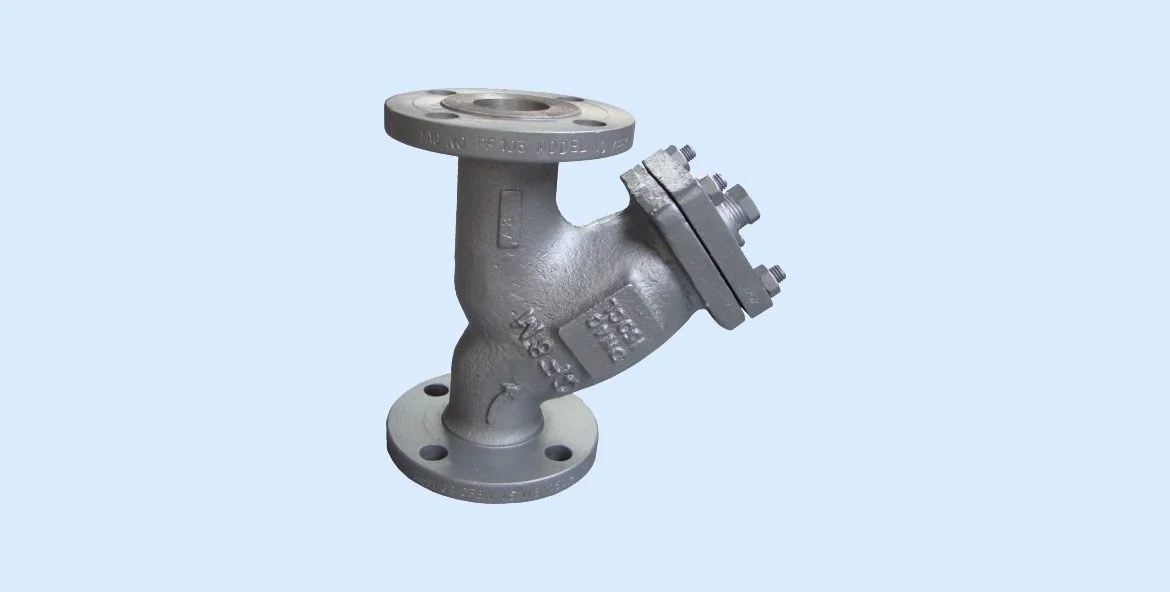
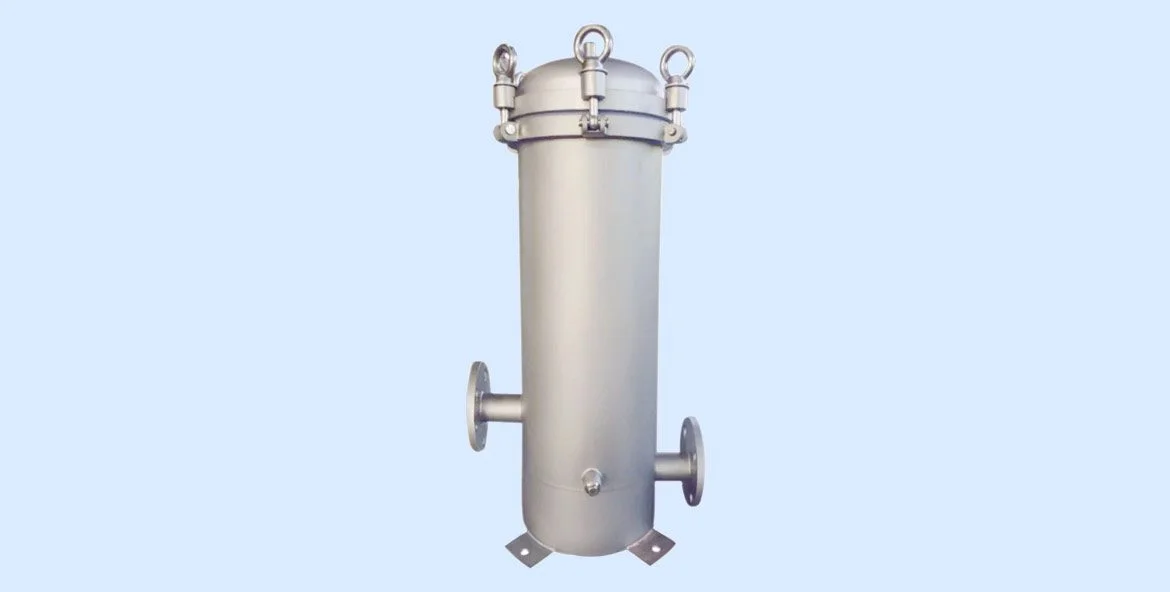
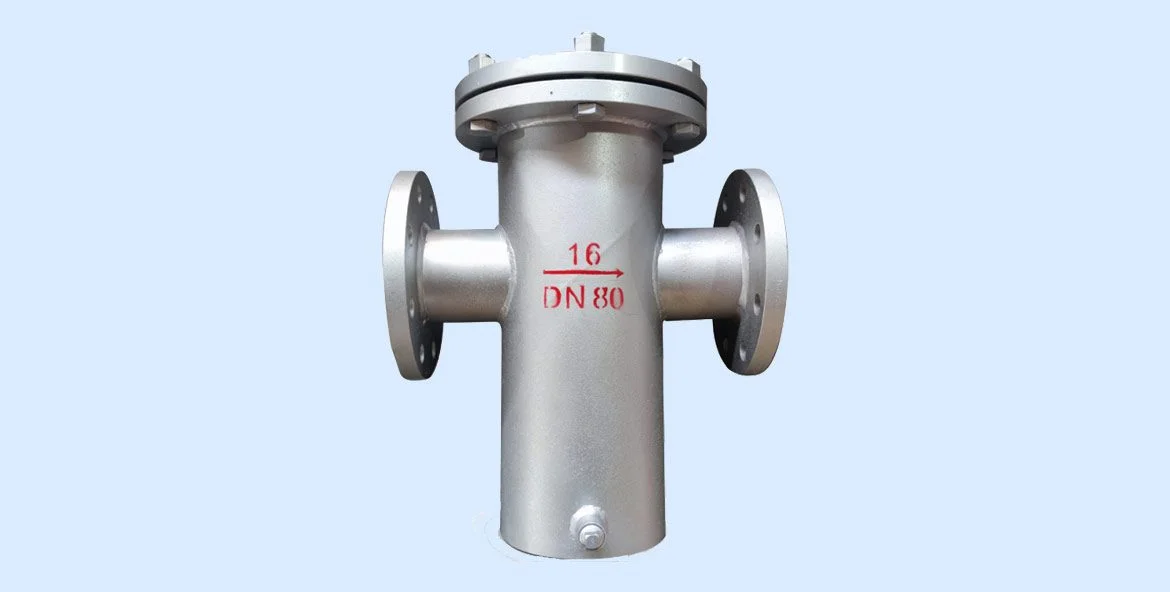
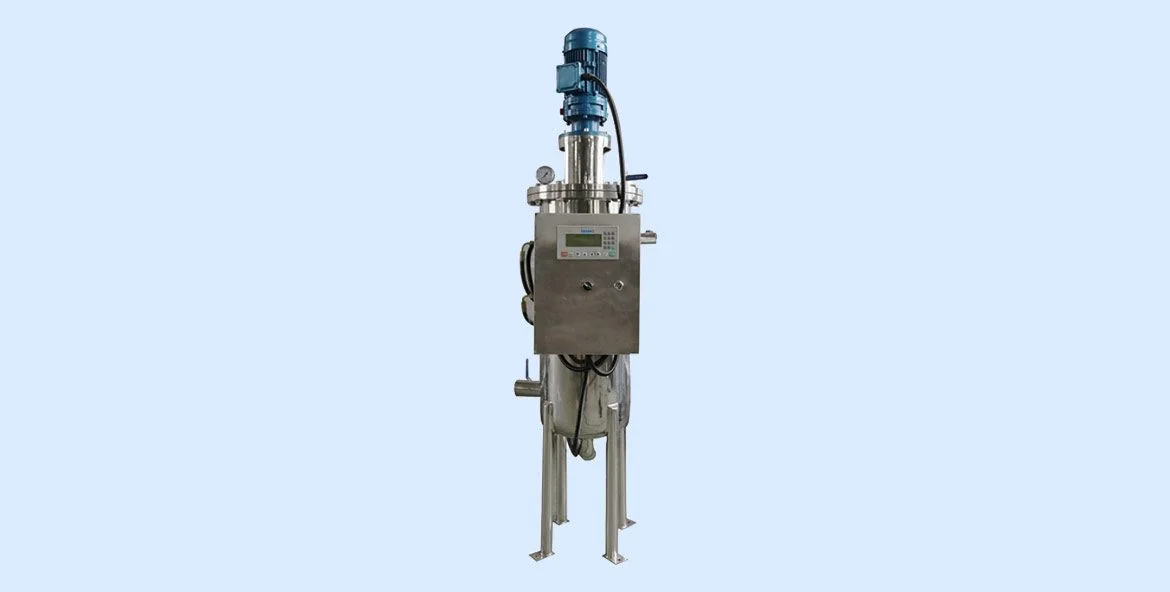
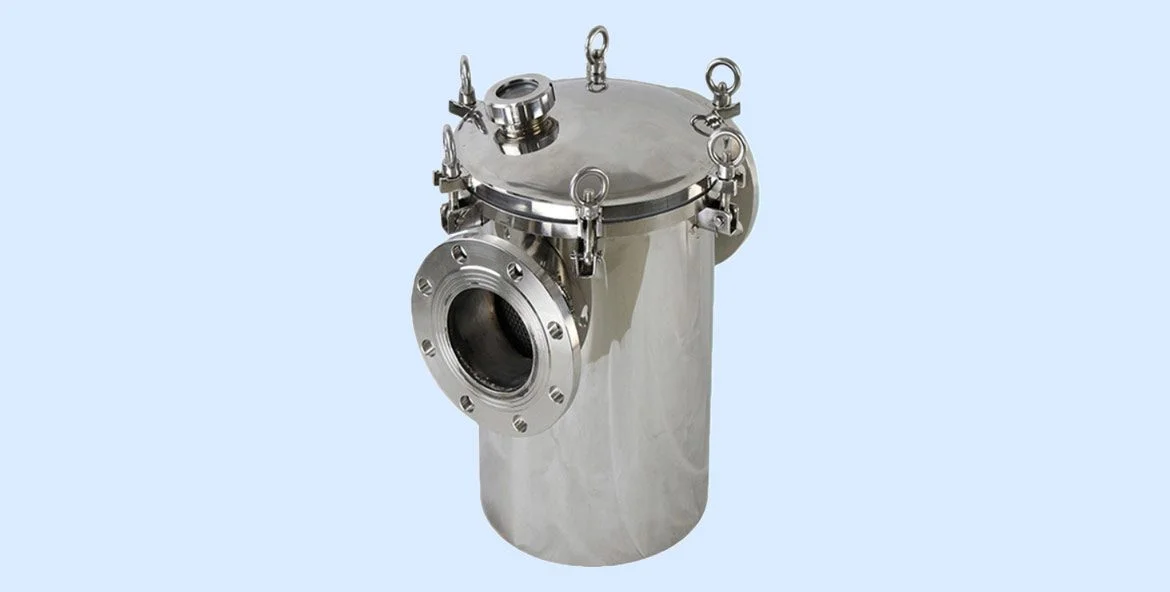
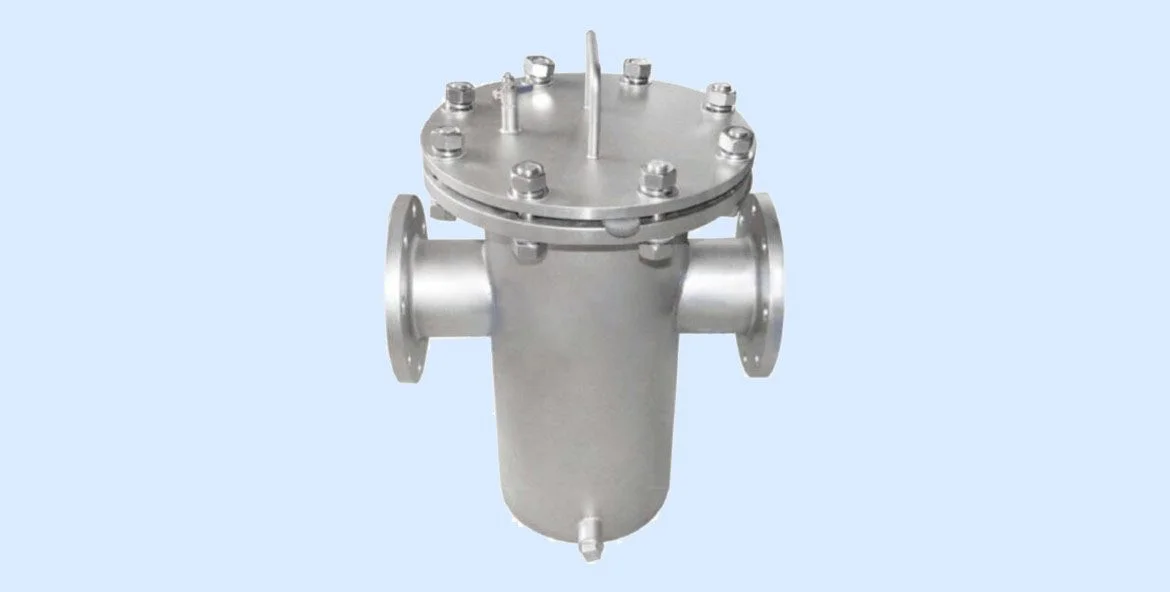
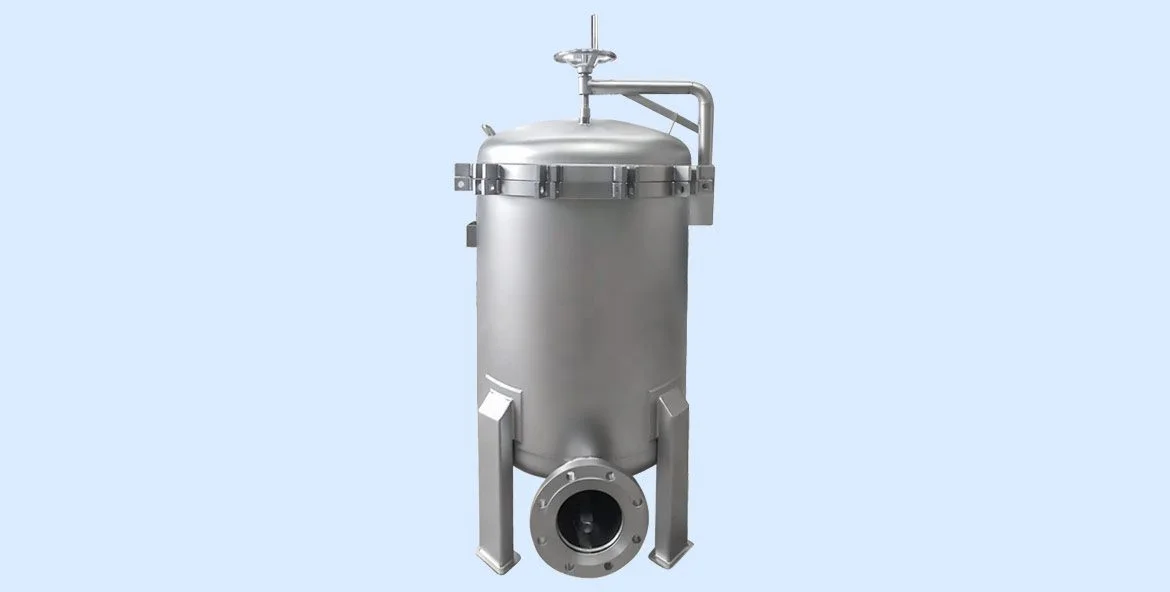
Introduction to Basket Filter Housing
In most industrial liquid filtration systems, the basket filter housing quietly does some of the heaviest lifting. It stands as the first line of defense against coarse and medium contaminants that would otherwise clog, erode, or disable downstream equipment. Typically, these housings intercept particles ranging from 25 µm up to 5 mm, capturing everything from rust flakes to scale, sand, and process debris before it reaches sensitive components.
The operating principle is refreshingly straightforward — and that’s part of why basket filters are so trusted in the field. Liquid enters the housing, flows through a perforated or mesh-lined basket, solids are retained inside, and clean fluid exits downstream. The baskets themselves are removable, cleanable, and reusable, which makes them particularly attractive for plants looking to reduce consumable spend. Over years of operation, this single design choice often leads to significant OPEX savings.
In actual installations, operators often place basket filter strainers upstream of pumps, heat exchangers, valves, or fine filtration units (such as cartridge or membrane systems). By doing so, they reduce fouling, minimize abrasive wear, and extend the lifespan of more expensive equipment. This is why basket filters are standard fixtures across Oil & Gas, Petrochemicals, Power, Water & Wastewater, Pharmaceuticals, Food & Beverage, Steel, and Chemical industries.
From a performance standpoint, these housings are built to handle real industrial conditions. Standard pressure ratings range between 10 and 25 bar, and temperature limits reach up to 200 °C, depending on material and gasket selection. Flow capacity spans from low-flow polishing to high-throughput mainline service, making them suitable for both domestic (India) and export applications.
Praimo Industrial Filters & Spares Manufacturing Company manufactures these basket filter housings in SS316L, Duplex 2205, carbon steel with internal epoxy coatings, and specialty alloys. Every unit is fabricated to ASME Section VIII, PED, and CE standards, with EN 10204 3.1 MTCs provided as part of the QA package. Backed by in-house engineering, fabrication, and quality control teams, Praimo’s housings are designed to meet global project specifications and perform reliably over long service lifecycles for EPCs, OEMs, and end users alike.
How Basket Filter Housings Work
In most industrial process lines, the basket filter housing functions on a simple yet remarkably reliable mechanical filtration principle. That’s precisely why engineers trust it as a first-stage barrier against debris, scale, and suspended solids. When unfiltered liquid enters through the inlet nozzle, it flows toward the perforated or mesh-lined basket seated inside the housing. Here’s where the actual filtration happens: as the liquid passes through the basket, particles ranging from roughly 25 µm up to 5 mm are trapped, and clean fluid exits through the outlet, ready for downstream equipment — pumps, heat exchangers, valves, or finer polishing filters.
Unlike disposable cartridge elements that need frequent replacement, basket filter strainers are designed to be cleaned and reused, making them a low-OPEX option for continuous-duty plants. Over time, as contaminants collect, the differential pressure (ΔP) across the basket slowly rises. Once ΔP reaches 0.7 – 1.0 bar, it’s the operator’s cue: isolate the housing, depressurize, and remove the basket for cleaning. Depending on the service medium, this may involve manual washing, ultrasonic cleaning, or steam/alkali CIP — each method suited to different fouling characteristics.
Now, here’s where practical design details make a difference. Praimo Industrial Filters & Spares Manufacturing Company engineers its housings with real-world operability in mind. Smooth basket seating prevents bypass; precision-machined flanges ensure leak-free connections; and quick-opening covers reduce maintenance downtime. For plants that can’t afford interruptions — think refineries, water treatment facilities, or chemical processing lines — optional duplex basket filter configurations are available. These consist of two housings in parallel, connected via a diverter valve. Operators can switch flow to the clean side while the fouled basket is serviced, enabling true uninterrupted operation.
It’s a simple principle, but when paired with Praimo’s engineering-grade construction, ASME / PED / CE compliance, and durable materials, it delivers long-term reliability in both domestic (India) and export markets. The result is a filtration system that’s easy to understand, easy to maintain, and difficult to replace in critical service.
Basket Filter Housing – Core Technical Specifications
When it comes to industrial liquid filtration, getting the specifications right is everything. A well-sized basket filter housing not only ensures low pressure drops but also extends basket life and protects downstream equipment reliably. Praimo Industrial Filters & Spares Manufacturing Company engineers its housings to meet a wide spectrum of industrial performance demands, combining precise fabrication with globally recognized design standards.
In practice, these housings function as robust pressure vessels, each containing a perforated or mesh-lined basket that’s tailored to the application. Properly matching line size, flow rate, pressure class, and micron rating is what enables operators to maintain predictable performance — whether in utility water filtration or critical process duty.
Basket Filter Specification – Design Standards & Ratings
Every Praimo basket filter housing is designed and built in accordance with ASME Section VIII, PED/CE, and relevant ISO pressure vessel standards. Before dispatch, each unit is hydrostatically tested at 1.3× MAWP, and if required, can undergo NDT, third-party inspection, and full material traceability to EN 10204 3.1.
Material options are selected based on service conditions:
- SS316L for general industrial and hygienic applications
- Duplex 2205 for aggressive water and seawater service
- Carbon steel with internal coatings for cost-effective large-line duty
- Specialized alloys for corrosive or high-temperature fluids
This design approach ensures the housings are equally suitable for domestic (India) projects and export applications, spanning Oil & Gas, Water Treatment, Power, Chemical, and Pharmaceutical industries.
Stainless Steel Basket Filter – Typical Technical Parameters
| Line Size (Nominal) | Rated Flow (Water @ 20 °C) | Design Pressure | Temperature Range | Filtration Rating |
|---|---|---|---|---|
| 1" (DN25) | 3 – 6 m³/hr | 10 – 25 bar(g) | −10 °C – 120 °C (up to 200 °C with PTFE/FKM) | 25 µm – 5 mm |
| 2" (DN50) | 10 – 20 m³/hr | 10 – 25 bar(g) | −10 °C – 120 °C (up to 200 °C with PTFE/FKM) | 25 µm – 5 mm |
| 4" (DN100) | 35 – 55 m³/hr | 10 – 25 bar(g) | −10 °C – 120 °C (up to 200 °C with PTFE/FKM) | 25 µm – 5 mm |
| 6" (DN150) | 55 – 110 m³/hr | 10 – 25 bar(g) | −10 °C – 120 °C (up to 200 °C with PTFE/FKM) | 25 µm – 5 mm |
| 8" (DN200) | 110 – 180 m³/hr | 10 – 25 bar(g) | −10 °C – 120 °C (up to 200 °C with PTFE/FKM) | 25 µm – 5 mm |
| 12" (DN300) | 260 – 360 m³/hr | 10 – 25 bar(g) | −10 °C – 120 °C (up to 200 °C with PTFE/FKM) | 25 µm – 5 mm |
Note: These values are indicative. Final sizing depends on fluid properties, viscosity, mesh selection, and target differential pressure.
Performance Notes – Basket Filter Housing
- Free filtration area is typically ≥ 3–4× the pipe cross-section to keep clean ∆P low.
- Typical clean pressure drops for water are in the 03 – 0.1 bar range, depending on mesh rating and flow rate.
- For high-viscosity fluids, Praimo provides custom basket sizing to maintain acceptable differential pressure levels.
- Temperature limits extend up to 200 °C with PTFE or FKM gaskets, making the housings suitable for hot water, oils, and chemical service.
By integrating stringent engineering standards, certified materials, and global compliance frameworks, Praimo Industrial Filters & Spares Manufacturing Company delivers basket filter housings that perform consistently, whether in standard utility filtration or critical process environments.
Basket Filter Sizes – Dimensions, Flow Rates & Performance Curves
Correct basket filter sizing is one of those engineering details that often gets overlooked—until a unit starts clogging prematurely or running at a higher differential pressure than expected. The truth is, sizing plays a decisive role in determining hydraulic stability, maintenance intervals, and overall lifecycle performance of the filtration system.
Sizing isn’t just about matching the nominal line diameter. It involves a mix of parameters: basket free filtration area, perforation or mesh rating, fluid viscosity, and solids loading. Praimo Industrial Filters & Spares Manufacturing Company uses a data-driven selection method to match each basket filter housing to its process application, whether that’s utility water, hydrocarbons, chemical streams, or specialized process fluids.
Mesh Basket Filter – Standard Dimensional Ranges
| Line Size (Nominal) | Vessel Diameter × Height (approx.) | Basket Diameter × Depth | Screen Area | Recommended Flow (Water @ 20 °C) |
|---|---|---|---|---|
| 1" (DN25) | 114–168 mm × 400–550 mm | 90–120 mm × 200–300 mm | 0.025–0.05 m² | 3–6 m³/hr |
| 2" (DN50) | 219–273 mm × 550–750 mm | 160–200 mm × 350–450 mm | 0.10–0.16 m² | 10–20 m³/hr |
| 4" (DN100) | 324–406 mm × 800–1000 mm | 250–300 mm × 500–650 mm | 0.28–0.45 m² | 35–55 m³/hr |
| 6" (DN150) | 406–508 mm × 950–1200 mm | 300–380 mm × 650–750 mm | 0.45–0.75 m² | 55–110 m³/hr |
| 8" (DN200) | 508–610 mm × 1100–1400 mm | 380–450 mm × 700–900 mm | 0.75–1.10 m² | 110–180 m³/hr |
| 12" (DN300) | 762–914 mm × 1500–1900 mm | 520–600 mm × 1000–1200 mm | 1.60–2.20 m² | 260–360 m³/hr |
Note: Dimensions are indicative and may vary depending on pressure rating, cover type, nozzle orientation, or custom engineering.
The key design principle here is maintaining a basket free area that’s 3–4× greater than the pipe cross-section. This ratio helps keep the clean differential pressure low and significantly extends dirt-holding capacity, which translates into longer cleaning intervals and more stable operation between shutdowns.
Perforated Strainer Baskets – Flow vs ∆P Performance
Pressure drop (∆P) across a basket filter depends on three main factors: mesh size, flow velocity, and fluid viscosity. For clean water at 20 °C, typical clean ∆P values are:
| Line Size | Flow (m³/hr) | 1000 µm Mesh | 500 µm Mesh | 250 µm Mesh |
|---|---|---|---|---|
| 2" (DN50) | 10 | 0.03 bar | 0.05 bar | 0.08 bar |
| 4" (DN100) | 40 | 0.05 bar | 0.08 bar | 0.13 bar |
| 6" (DN150) | 90 | 0.06 bar | 0.10 bar | 0.16 bar |
| 8" (DN200) | 150 | 0.07 bar | 0.12 bar | 0.19 bar |
For fluids with viscosities around 10 cP, the pressure drop typically increases by 2–3× compared to water. This effect is often underestimated during selection—especially in chemical or oil service—leading to systems that run at higher than expected ∆P from day one.
Praimo Industrial Filters & Spares Manufacturing Company provides custom flow vs ∆P sizing curves for every housing model. These curves ensure the selected mesh and line size meet the target operating pressure drop, avoiding undersizing issues that can cause premature clogging, excessive differential pressure, or short maintenance cycles.
By combining dimensional engineering with performance curve data, Praimo’s basket filter housings deliver predictable hydraulic behavior across a broad range of industrial applications. It’s a level of precision that pays dividends over time—especially in continuous-duty systems where stability and low OPEX matter.
Materials of Construction – Stainless Steel Filter Basket & Polypropylene Basket Strainer Options
Material selection is one of the most critical engineering decisions in designing a basket filter housing. The right combination of shell, basket, mesh liner, gaskets, and fasteners determines how well the unit withstands chemical exposure, mechanical stress, and long-term corrosion in service. In practice, it’s often the difference between a housing that lasts decades — and one that fails prematurely due to overlooked compatibility issues.
Praimo Industrial Filters & Spares Manufacturing Company offers a comprehensive materials portfolio tailored to diverse process environments, from potable water to aggressive chemical service. All housings are fabricated using certified materials with EN 10204 3.1 MTCs, and manufactured under ASME Section VIII, PED, and CE compliance, ensuring suitability for both domestic (India) and export markets.
Stainless Steel Mesh Filter Baskets – Core Components
| Component | Material Options | Key Features / When to Use |
|---|---|---|
| Pressure Shell & Cover | SS304, SS316L, Duplex 2205, Carbon Steel (Epoxy-lined), 904L | SS316L for general process & water; Duplex/904L for seawater & chlorides; CS for utility duties |
| Basket Body (Perforated) | SS304, SS316L, Duplex 2205 | High mechanical strength and corrosion resistance; Duplex ideal for offshore or high-chloride service |
| Mesh Liner (Optional) | SS316L woven wire (25 µm–2 mm), Monel 400, Hastelloy | Mesh defines micron rating; Monel/Hastelloy used for strong acids & alkalis |
| Gaskets / O-rings | EPDM, NBR, FKM (Viton), PTFE, Silicone | Selected based on fluid chemistry & temperature; PTFE for aggressive chemicals; EPDM for CIP & steam |
| Fasteners | SS316, B7/2H (CS) | Match shell metallurgy & pressure class |
| Coatings (CS) | Epoxy phenolic, glass-flake epoxy | Corrosion barrier for utility and water service |
Engineering Insight: For fluids with viscosities around 10 cP, pressure drop can increase by 2–3× compared to water. In such cases, material rigidity and mesh strength become even more critical — fine meshes in weaker alloys may deform, leading to bypass or cleaning issues.
Polypropylene Basket Strainer & Special Materials
Not every application requires stainless steel. In low-pressure or corrosive chemical service, polypropylene basket strainers and UPVC/FRP housings offer cost-effective corrosion resistance without over-specifying metallic construction. These are often selected for mild acids, alkalis, cooling water, and non-flammable liquids, where budget and corrosion resistance are both considerations.
For more demanding applications, Praimo Industrial Filters & Spares Manufacturing Company also provides PVDF, PTFE-lined steel, and exotic alloys such as Monel and Hastelloy, ensuring complete coverage across the chemical spectrum.
Material Compatibility Matrix
| Fluid Type | Recommended Shell | Basket & Mesh | Seals / Gaskets |
|---|---|---|---|
| Raw / Utility Water | SS316L or CS + Epoxy | SS316L | EPDM / NBR |
| Sea Water / Brine | Duplex 2205 or 904L | Duplex 2205 | FKM / PTFE |
| Hydrocarbons / Oils | CS (coated) or SS316L | SS316L | FKM |
| Mild Acids / Alkalis | SS316L | SS316L or Hastelloy | PTFE |
| Aggressive Chemicals | PTFE-lined Steel / PVDF | Monel / Hastelloy | PTFE |
| Food / Pharma | SS316L (Electropolished) | SS316L Mesh | EPDM / Silicone (FDA) |
Material selection isn’t arbitrary — it’s based on chemical compatibility charts, temperature–pressure envelopes, and fluid properties. Praimo’s engineering team works closely with specifiers and procurement engineers to optimize lifecycle cost, avoid corrosion failures, and meet project compliance requirements from the outset.
Technical Performance & Filtration Efficiency – Basket Screen Filter & Mesh Filter Basket Data
The technical performance of a basket filter housing isn’t just a function of mesh size — it’s a careful balance between pressure drop behavior, dirt-holding capacity, and filtration efficiency under real operating conditions. Understanding these parameters is what allows engineers to size correctly, avoid premature clogging, and plan maintenance intervals intelligently.
Praimo Industrial Filters & Spares Manufacturing Company designs its basket screen filters using engineering-based sizing methodologies, ensuring each unit delivers the required flow rates with controlled differential pressures while achieving the intended particle retention performance. This is what separates a well-engineered system from a “good enough” one that struggles in service.
Pressure Drop Across Basket Strainer Screens
Clean differential pressure (∆P) depends on mesh rating, line size, and flow velocity. The table below shows typical clean ∆P values for water at 20 °C across standard basket strainer screen configurations:
| Line Size | Flow (m³/hr) | 1000 µm Mesh | 500 µm Mesh | 250 µm Mesh |
|---|---|---|---|---|
| 2" (DN50) | 10 | 0.03 bar | 0.05 bar | 0.08 bar |
| 4" (DN100) | 40 | 0.05 bar | 0.08 bar | 0.13 bar |
| 6" (DN150) | 90 | 0.06 bar | 0.10 bar | 0.16 bar |
| 8" (DN200) | 150 | 0.07 bar | 0.12 bar | 0.19 bar |
For fluids with viscosities around 10 cP, clean ∆P values typically increase by 2–3× compared to water — a critical sizing factor often underestimated in oil and chemical services.
To eliminate guesswork, Praimo Industrial Filters & Spares Manufacturing Company provides custom flow vs ∆P sizing curves for each housing model. This allows specifiers to pair the micron basket and mesh filter basket combinations precisely, ensuring hydraulic performance remains stable under actual process conditions.
Dirt-Holding Capacity & Maintenance Intervals
The dirt-holding capacity of a basket strainer depends on basket volume, mesh fineness, and solids loading. Typical ranges are:
- Small housings (1"–2"): 2–5 L of solids
- Medium housings (4"–6"): 8–15 L
- Large housings (8"–12"): 20–25 L+
Maintenance is usually triggered when ∆P reaches 0.7–1.0 bar, which indicates the basket has reached its solids-holding threshold. At this point, operators isolate and clean the basket. In duplex configurations, flow can simply be switched to the clean housing, keeping the line in service — a common practice in RO pretreatment, cooling water circuits, and refineries.
Field Note: Undersized baskets often hit their ∆P limit too quickly, leading to unplanned stoppages. Oversizing slightly to increase free area usually pays back quickly in reduced maintenance frequency.
Filtration Efficiency of Basket Strainer Screens
While basket strainers are primarily coarse to medium filtration devices, they can achieve surprisingly high retention efficiencies when sized properly and operated at controlled velocities.
| Mesh / Perforation | Nominal Retention | Efficiency for ≥ Particle Size |
|---|---|---|
| 3–5 mm Perforated | Large debris, scale | 90–95 % |
| 1000 µm Mesh | Coarse particles, rust flakes | 90–98 % |
| 500 µm Mesh | Mid-size particulates | 92–99 % |
| 250 µm Mesh | Fine silt, sand, larger fines | 95–99 % |
These efficiency levels are achieved by maintaining low face velocities through proper sizing, and by using high-quality SS316L or Duplex mesh baskets that resist deformation under differential pressure. Cheaper meshes often distort, allowing bypass or reducing retention consistency over time.
By combining precise hydraulic design, high-performance basket screen filters, and verified sizing data, Praimo Industrial Filters & Spares Manufacturing Company enables engineers to achieve predictable filtration performance, reduce downstream cartridge consumption, and minimize unplanned downtime — both in domestic installations and export projects.
Regulatory & Compliance Standards — Basket Filter Housing Manufacturers & Specification
In the world of capital projects and export tenders, regulatory compliance can be just as critical as flow capacity or pressure drop curves. No EPC wants to chase incomplete documentation during FAT, and no QA/QC inspector wants surprises at site acceptance. That’s why Praimo Industrial Filters & Spares Manufacturing Company, as one of the experienced basket filter housing manufacturers, builds every unit to internationally recognized codes — and backs it with a complete Manufacturer’s Data Record (MDR).
The MDR typically includes detailed design calculations, EN 10204 3.1 material certificates, WPS/PQR/WPQ, hydrotest reports, NDT records, nameplate drawings, and statutory conformity declarations. In practice, this means every basket filter specification leaving Praimo’s shop floor is aligned with EPC, OEM, and end-user requirements across multiple regulatory regions.
Compliance Matrix — Standard vs Region vs Applicability
| Standard / Directive | Region / Market | Applicability to Basket Filter Housings | Typical Evidence / Deliverables |
|---|---|---|---|
| ASME Section VIII, Div. 1 | Global (widely accepted) | Pressure vessel design & fabrication | U-stamp (if required), design calculations, hydrotest @ 1.3× MAWP, nameplate |
| PED 2014/68/EU (CE) | European Union | Pressure equipment categorization by fluid group, volume, PS | CE mark, EU DoC, Module (A2/B/C/D), Notified Body file |
| ISO 9001 QMS | Global | Quality management system for manufacturing | ISO 9001 certificate, audit traceability |
| NACE MR0175 / ISO 15156 | Oil & Gas (sour service) | Materials for H₂S environments | Material compliance statement, heat numbers, 3.1 MTC |
| FDA / EC 1935/2004 | Food & Beverage | Elastomers & wetted materials for food contact | FDA/EC seal conformity (EPDM/Silicone), surface finish records |
| 3-A / EHEDG | Sanitary / Pharma | Hygienic design & cleanability | Hygienic design declaration, Ra reports, weld maps, passivation |
| IBR (India) | India (steam service) | Boilers / steam lines where applicable | IBR approvals, inspection records |
| ATEX (2014/34/EU) | EU (hazardous areas) | Marking where electricals/instruments in Ex zones | ATEX declaration (if instrumented assembly) |
Documentation & Certification Deliverables
Praimo Industrial Filters & Spares Manufacturing Company provides a comprehensive documentation package that typically includes:
- EN 10204 3.1 certificates for all pressure-retaining and wetted components
- Full material traceability, from raw stock through fabrication to final inspection
- Hydrostatic test certificates, and NDT records (VT/PT/RT) in accordance with approved ITPs
- CE/PED compliance files for EU shipments, including Module selection and Notified Body involvement where applicable
- Surface roughness reports, passivation/electropolishing records, and FDA/EC elastomer compliance for food & pharma projects
- NACE-compliant material declarations for sour service (e.g., Duplex 2205 / 904L + compatible seals)
One often overlooked benefit of embedding compliance early in the basket filter specification is how much it shortens technical bid clarifications, accelerates engineering approvals, and minimizes site acceptance risks — especially on multi-region EPC projects where multiple codes overlap.
Case Studies & Real-World Performance — Basket Filter Strainer Applications
The true value of a basket filter strainer isn’t just on paper — it’s in the operational results it delivers day after day in tough industrial environments. Across water treatment, chemical processing, and critical equipment protection, Praimo Industrial Filters & Spares Manufacturing Company has deployed engineered basket filter housings that achieved measurable performance improvements in the field. Below are three representative examples that illustrate the impact in real numbers, not marketing claims.
1. RO Pretreatment – Extending Cartridge Life
Pre-filtration for Reverse Osmosis (RO) system in a municipal water treatment plant
Duplex 4" SS316L with 500 µm mesh
45 m³/hr
| Parameter | Before Installation | After Praimo Basket Strainer |
|---|---|---|
| Cartridge life | 7–10 days | 22–30 days |
| Average ΔP at RO inlet | 0.9 bar | 0.4 bar |
| Maintenance frequency | Weekly | Monthly |
| ROI | — | Recovered in < 4 months through reduced cartridge usage |
By integrating a duplex basket strainer upstream of the RO system, the plant cut cartridge usage by a factor of three, reduced fouling rates significantly, and improved uptime. This is a textbook example of using coarse filtration to protect fine membranes — a simple change with a fast payback.
2. Cooling Water Filtration – Reducing Pump Strainer Fouling
Cooling water intake filtration for a chemical plant
Twin 8" vertical, perforated 2 mm basket
160 m³/hr
| Parameter | Before | After Praimo Basket Filter |
|---|---|---|
| Manual pump strainer cleaning | Every 2–3 days | Every 2–3 weeks |
| Pump energy usage | Baseline | 8 % reduction due to lower ΔP |
| Unplanned shutdowns | 3 / month | 0–1 / month |
The high-capacity twin basket strainer sharply reduced manual intervention frequency and kept the intake system running cleaner for longer. The 8 % energy savings came directly from lowering suction side differential pressure — a small hydraulic improvement that paid back through reduced operating costs and fewer disruptions.
3. Lube Oil Skid Filtration – Protecting Critical Equipment
Lube oil circulation skid for gas turbines
Simplex 2" SS316L with 250 µm mesh
32 cSt @ 40 °C
| Parameter | Before | After Praimo Strainer |
|---|---|---|
| Bearing contamination failures | 2 incidents / year | 0 incidents |
| Downstream fine filter change | Every 3 weeks | Every 9–10 weeks |
| Oil pressure stability | Frequent fluctuations | Stable across load cycles |
Adding a properly sized micron basket strainer upstream stabilized oil pressure, reduced fine filter loading, and eliminated bearing failures during a 12-month monitoring period. In critical equipment like turbines, this level of reliability is non-negotiable.
Why These Results Matter
These are not isolated wins — they reflect a consistent pattern seen when basket filter housings are properly sized, installed, and maintained. Whether the goal is extending filtration cycles, reducing energy consumption, or cutting maintenance frequency, Praimo Industrial Filters & Spares Manufacturing Company provides engineered solutions backed by hard performance data. These results also reinforce why many EPCs and OEMs position basket strainers as the first line of defense in their process filtration train.
Comparison: Basket Filter vs Cartridge Filter vs Automatic Self-Cleaning Filter
Choosing between basket filters, cartridge filters, and automatic self-cleaning filters is more than a catalog exercise — it’s a strategic engineering decision that shapes the total cost of ownership, maintenance planning, and system reliability. Each of these technologies can handle similar process fluids, but they excel in different niches depending on particle size range, filtration objective, and operational philosophy.
Praimo Industrial Filters & Spares Manufacturing Company doesn’t treat these technologies as competing alternatives. Instead, they are often integrated in staged filtration trains — basket filters take the first hit (coarse solids), cartridges or self-cleaning filters handle the finer polishing. This sequencing balances CAPEX and OPEX while reducing unplanned shutdowns.
Basket Filter vs Cartridge Filter vs Automatic Self-Cleaning Filter — Decision Matrix
| Parameter | Basket Filter Housing | Cartridge Filter Housing | Automatic Self-Cleaning Filter |
|---|---|---|---|
| Filtration Range | 25 µm – 5 mm (coarse to medium) | 0.2 µm – 100 µm (fine) | 50 µm – 2 mm (medium) |
| Operating Principle | Perforated / mesh basket, manual cleaning | Disposable cartridges, depth/surface filtration | Screen with motorized backwash |
| Automation | Manual / duplex changeover | Manual cartridge change | Fully automatic backwash |
| CAPEX | Low to Medium | Low to Medium | High |
| OPEX | Low (cleanable baskets) | High (frequent cartridge replacement) | Very low (self-cleaning) |
| Maintenance | Basket removal & cleaning; duplex allows no shutdown | Cartridge replacement, frequent downtime | Minimal manual intervention |
| Ideal Use | First-stage coarse filtration, pump protection | Fine polishing, RO pre-filtration | Continuous systems, high flow, minimal labor |
| Typical Applications | Utilities, cooling water, RO pre-treatment, oils | Pharma, food, ultrapure water | Power, process water, critical continuous duty |
| Footprint | Compact (vertical), moderate (horizontal) | Compact | Larger (requires clearance for actuators) |
Engineering Perspective
From an engineering standpoint, basket filters offer the best cost-to-capacity ratio for coarse to medium filtration. They are especially effective in pump protection and first-stage filtration roles. Duplex or twin configurations allow one housing to stay online while the other is cleaned, making them ideal for continuous processes that can’t tolerate shutdowns.
Cartridge filters, by contrast, provide high-efficiency fine filtration, sometimes down to sub-micron levels. The trade-off is higher operational expenditure because cartridges are consumables that need regular changeout. This is why they’re typically placed downstream of basket filters — their job is polishing, not bulk solids removal.
Automatic self-cleaning filters sit at the other end of the spectrum. Their higher upfront cost is justified in high-flow or critical installations where manual maintenance is difficult or expensive. With motorized backwash mechanisms and minimal operator intervention, they often deliver the lowest lifecycle cost when downtime carries a heavy price tag.
Practical Implementation — Staged Filtration Approach
In many large industrial facilities, Praimo Industrial Filters & Spares Manufacturing Company deploys a layered filtration strategy to maximize efficiency:
Basket filter housing intercepts large particulates, rust, or scale, sharply reducing fouling of downstream units.
Cartridge filter housing provides fine filtration (often ≤5 µm), protecting RO membranes, heat exchangers, or sensitive process equipment.
Automatic self-cleaning filter is used in high-flow loops or remote installations where manpower is limited, ensuring continuous operation with little intervention.
This staged method allows engineers to optimize both CAPEX and OPEX, ensuring each filtration technology operates in its ideal efficiency zone. The result is stable system hydraulics, extended filter life, and fewer unplanned shutdowns — a configuration particularly valued by EPCs, OEMs, and process engineers managing large plants.
Key Benefits & Advantages of Basket Filter Strainer Systems
When selecting industrial filtration equipment, decision-makers rarely focus on single-parameter performance alone. What matters over the long run is the total lifecycle value — how efficiently the unit operates, how often it needs attention, and how well it protects downstream assets. That’s exactly where basket filter strainer systems excel.
Praimo Industrial Filters & Spares Manufacturing Company has supplied thousands of such systems across sectors ranging from water treatment and chemicals to power, pharma, and oil & gas, and the feedback from operators is remarkably consistent: low cost of ownership, high reliability, and robust performance.
Major Advantages at a Glance
Low Operational Expenditure (OPEX)
Unlike disposable filtration media, basket elements are fully cleanable and reusable, significantly reducing consumable costs over their operational life. In high-flow or solids-rich applications, this cost differential becomes substantial — sometimes paying back the housing within a single maintenance cycle.
Simple, Robust Design
Basket filter strainer systems rely on basic mechanical construction with minimal moving parts. This simplicity translates directly into high uptime in aggressive service environments. Cleaning typically involves depressurizing, removing the basket, and washing or CIP — no special tooling, no complex changeouts.
High Flow Handling Capacity
Standard designs are available up to 24 inches and above, allowing individual housings to handle hundreds of cubic meters per hour without resorting to multiple parallel units or complicated manifolds. This makes them particularly valuable for utility water intakes, cooling loops, and large process lines.
Low Pressure Drop
Generous basket surface areas — typically 3–4× the cross-sectional area of the pipe — keep clean differential pressures low, often in the 0.03–0.1 bar range for water. This reduction in ∆P lowers pump energy consumption, improves NPSH margins, and provides effective pump protection over extended operating periods.
Versatile Mesh & Perforation Options
Depending on the service fluid, baskets can be fitted with perforated plates or fine meshes ranging from 25 µm up to 5 mm, giving engineers flexibility to address everything from coarse scale removal to mid-range polishing before cartridges.
Material Flexibility for Diverse Media
Praimo’s basket filter housings are available in SS316L, Duplex 2205, carbon steel with internal coatings, polypropylene, and even exotic alloys on request. This allows tailoring for everything from seawater and aggressive chemicals to food-grade or sanitary applications.
Compatibility with Global Standards
Each housing is built in compliance with ASME, PED/CE, NACE, FDA, and EHEDG requirements, with full EN 10204 3.1 material traceability. Whether destined for domestic (India) use or export markets, the documentation and design standards align with EPC and OEM expectations worldwide.
Expandable & Configurable
Praimo manufactures simplex, duplex, twin, and multi-basket configurations, giving specifiers the flexibility to match process criticality, footprint constraints, or automation goals. Duplex and twin systems, for example, allow continuous filtration without shutdown — a major operational advantage in critical service.
Strategic Value in System Design
Beyond the technical bullet points, basket filters offer something often overlooked: strategic placement value. By positioning them at the upstream end of the filtration train, engineers can shield expensive downstream elements — cartridges, membranes, polishing units — from bulk solids. This extends changeout intervals, stabilizes differential pressures, and boosts overall system ROI.
In practice, this simple design choice can stretch downstream cartridge life by 3× or more, while simultaneously lowering energy costs and maintenance frequency.
Lifecycle Cost & ROI Analysis — Basket Filter Housing Price Considerations
It’s common for procurement teams to look at initial purchase price when comparing filtration technologies. But in industrial filtration, CapEx tells only half the story. The real economic value emerges over months and years of operation — through lower consumable spend, reduced maintenance frequency, and minimized downtime.
A well-designed basket filter housing, particularly in high-flow or high-contaminant applications, often outperforms cheaper alternatives in total cost of ownership (TCO). This is where Praimo Industrial Filters & Spares Manufacturing Company focuses its engineering approach: delivering filtration systems that not only perform but also pay for themselves quickly.
CapEx vs OpEx — Simplex vs Duplex Basket Filters
| Parameter | Simplex Basket Filter | Duplex Basket Filter |
|---|---|---|
| Initial CapEx | Low | Moderate |
| Maintenance Downtime | Requires line isolation and cleaning offline | No flow interruption; one basket cleaned while the other operates |
| Consumables | None (cleanable baskets) | None (cleanable baskets) |
| Labor Cost | Periodic manual cleaning | Reduced manual intervention; longer intervals between full shutdowns |
| Operational Uptime | Lower for critical lines | High — suitable for continuous duty |
| Typical Payback Period | 6–12 months through reduced cartridge costs | 4–8 months through reduced cartridge costs + avoided downtime |
Duplex systems carry a higher upfront cost, but the payback is often faster in continuous-duty lines because they eliminate process interruptions. For plants in power generation, petrochemicals, or RO pre-treatment, avoiding just a few hours of downtime can offset the price difference entirely.
Lifecycle Cost Curve — Illustrative Example
Consider a 4″ RO pretreatment line operating at 40 m³/hr over five years.
- CapEx: Basket filters typically have similar or slightly lower purchase cost than cartridge systems.
- OpEx: Cartridge filters require regular replacement (often every 2–4 weeks), whereas baskets are reusable, needing only periodic cleaning.
- Downtime: Cartridge changeouts usually mean full line shutdown, while duplex basket systems allow live maintenance.
- Energy Costs: Basket filters maintain low differential pressure over longer intervals, resulting in measurable pump energy savings.
| Cost Element | Cartridge System | Duplex Basket Filter System |
|---|---|---|
| Annual cartridge replacement cost | ₹3.2 – 4.0 lakh | — (reusable baskets) |
| CapEx (4" housing) | ₹2.0 – 3.0 lakh | ₹2.5 – 3.5 lakh |
| Downtime costs (shutdowns, labor) | Recurring | Minimal / avoided |
| Payback Period | — | < 5 months through reduced consumables + uptime gains |
Strategic ROI Insight
Even when the basket filter housing price is marginally higher than a basic cartridge setup, the TCO curve bends in favor of basket filters within the first 1–2 years. In larger flow rates or critical continuous processes, duplex configurations often become cost-neutral within a single operational quarter.
In other words, the right basket filter selection is not just an engineering decision — it’s a strategic financial one. By aligning CapEx and OpEx with uptime requirements, plants achieve both technical reliability and rapid ROI.
Buying & Procurement Considerations — Basket Filter Housing Manufacturers & Specification Checklist
For procurement teams, OEM buyers, and EPC contractors, selecting a basket filter housing is rarely as simple as matching a line size to a catalog page. Real-world projects demand fit-for-purpose engineering, regulatory compliance, and long-term lifecycle value, not just lowest upfront cost.
As one of the trusted basket filter housing manufacturers, Praimo Industrial Filters & Spares Manufacturing Company supports buyers throughout the procurement cycle with detailed technical datasheets, customizable configurations, and project-compliant documentation tailored to both domestic (India) and export markets.
In practice, a structured RFQ specification upfront is the single biggest factor in avoiding delays, costly change orders, and suboptimal sizing later on.
Key Parameters to Specify in RFQs
| Parameter | Description | Typical Options / Guidance |
|---|---|---|
| Line Size & Flow Rate | Determines basket diameter, shell size, and flow performance | 1" to 24" (DN25–DN600), up to 400+ m³/hr |
| Design Pressure & Temperature | Defines vessel thickness, flanges, and gasket selection | 10–25 bar; up to 200 °C depending on gasket/seal selection |
| Mesh / Perforation Rating | Sets filtration level and clean pressure drop | 25 µm to 5 mm; SS316L mesh or perforated plate |
| Material of Construction | Must match process fluid chemistry | SS304, SS316L, Duplex 2205, 904L, CS epoxy-lined, PP, PVDF |
| Configuration Type | Impacts uptime and maintenance strategy | Simplex, Duplex, Twin / Multi-basket |
| Orientation | Determines footprint and accessibility | Vertical (standard) or Horizontal (low headroom) |
| Closure Type | Affects maintenance speed and safety | Bolted, yoke clamp, quick-opening, davit-assisted |
| Nozzle Connections | Ensures compatibility with plant piping | Flanged (ANSI/DIN), threaded, hygienic tri-clamp |
| Compliance & Documentation | Required for QA/QC and export | ASME, PED/CE, NACE, FDA, 3-A/EHEDG, EN 10204 3.1 |
| Accessories / Instrumentation | Enhances operability and monitoring | Differential pressure gauges, vents/drains, changeover valves |
Basket Filter Housing Types & Sourcing Tips
- Simplex units are cost-effective for non-critical or batch processes, but they do require planned shutdowns for cleaning.
- Duplex systems are ideal for continuous-duty lines, critical pump suctions, or RO pretreatment, where uninterrupted operation is essential.
- Twin or multi-basket housings handle very high flows (e.g., seawater intake or cooling water loops) with minimal pressure drop.
- Quick-opening closures significantly cut service time in high-solids applications, reducing labor costs and downtime.
- For 4" lines, standard market models such as Hayward basket filter housing 4 inch can serve as references—but customization for pressure class, material upgrades, or PED/CE compliance is often necessary for export projects.
Practical Procurement Insight
Well-prepared RFQs that include all technical parameters, standards, and documentation requirements upfront tend to move through the procurement pipeline faster and cleaner. Vendors can quote accurately, engineering teams avoid clarification cycles, and project timelines stay intact.
Praimo Industrial Filters & Spares Manufacturing Company supports this process by providing editable datasheet templates, specification forms, and compliance matrices, enabling procurement teams to standardize filtration equipment selection across multiple projects and sites.
This structured approach turns filtration procurement from a reactive activity into a strategic, engineering-led process—reducing total lifecycle cost and avoiding expensive mismatches in the field.
Export Readiness & Global Standards — Basket Filter Manufacturers for International Projects
For EPC contractors, OEMs, and international buyers, the question isn’t just “Can this housing filter the fluid?” — it’s “Will this supplier meet every compliance, documentation, and logistics requirement without holding up the project?”
In multi-region industrial projects, export readiness becomes a decisive factor. Delays caused by missing PED documents, improper packaging, or non-compliant materials can have ripple effects across procurement schedules and commissioning timelines.
As a globally oriented basket filter housing manufacturer, Praimo Industrial Filters & Spares Manufacturing Company has built a reputation for delivering fully compliant, export-ready filtration systems to projects across the Middle East, Europe, Africa, Southeast Asia, and North America. Each unit is engineered, fabricated, inspected, documented, and packaged to meet the international codes and QA/QC expectations that major EPCs and end users require.
Global Compliance & Certification Capability
| Requirement | Region / Application | Praimo’s Compliance Capability |
|---|---|---|
| CE / PED (2014/68/EU) | European Union | Pressure equipment classification, CE marking, notified body involvement, EU Declaration of Conformity |
| ASME Section VIII Div. 1 | Global | Design calculations, hydrostatic testing @ 1.3× MAWP, U-stamp readiness |
| NACE MR0175 / ISO 15156 | Oil & Gas (sour service) | Material selection and certification for H₂S environments |
| FDA / EC 1935/2004 | Food & Beverage | Elastomer and material compliance for food-contact applications |
| 3-A / EHEDG | Pharmaceutical / Hygienic | Hygienic design compliance, Ra certificates, passivation / electropolishing |
| ISO 9001 | Global | Certified QMS covering design, fabrication, and inspection |
| IBR | India | Certification for pressure vessels in steam service |
| ISPM-15 | Export Packaging | Heat-treated, stamped wooden crates for international shipping compliance |
Export Packaging & Documentation Excellence
Each basket filter housing is export-packed using ISPM-15 heat-treated wooden crates, fitted with moisture barriers and impact-safe internal bracing to handle rough overseas transit. The documentation package is structured to meet both EPC and regulatory expectations, typically including:
- EN 10204 3.1 Material Test Certificates (MTCs)
- Hydrostatic test certificates
- WPS / PQR / WPQ sets
- NDT reports (VT/PT/RT as per ITP)
- CE / PED compliance files (as applicable)
- Export invoices and packing lists aligned with INCOTERMS
This documentation is not an afterthought — it’s prepared in parallel with manufacturing, ensuring clean handovers to inspection agencies and freight forwarders without last-minute firefighting.
Global Project Footprint
Praimo Industrial Filters & Spares Manufacturing Company has successfully supplied engineered basket filter systems for diverse international applications, including:
desalination plants and petrochemical utilities
OEM skid packages and process water treatment systems
power generation cooling water systems
RO pretreatment and chemical facilities
OEM process equipment integration and packaged systems
This geographic diversity underscores Praimo’s ability to align manufacturing, quality assurance, and export logistics with different regulatory environments, ensuring smooth project integration and minimal approval delays.
Strategic Advantage for International Buyers
For global procurement teams, selecting a basket filter manufacturer that already works within ASME, PED, NACE, and FDA/3-A frameworks means fewer compliance surprises, faster document reviews, and easier FAT/SAT processes. It also signals a mature quality culture, something increasingly demanded by international EPCs and OEMs.
In short, Praimo’s export readiness isn’t just about meeting checklists — it’s about removing friction from the global supply chain so that filtration systems arrive compliant, certified, and ready for installation.
Installation, Operation & Maintenance — Basket Filter Working & Specification Guide
Getting a basket filter housing installed correctly and maintained systematically can make the difference between smooth operation and chronic pressure-drop headaches. Even the best-engineered system will underperform if it’s installed backwards, vented poorly, or cleaned irregularly. In actual operation, small setup oversights often cause the biggest flow disruptions.
Praimo Industrial Filters & Spares Manufacturing Company provides detailed IOM manuals, site startup assistance, and operator training for all basket filter housing types—ensuring that maintenance teams and engineers can manage the unit confidently over its full lifecycle.
1. Installation — Positioning & Piping Best Practices
- Install the basket filter housing on a horizontal line with adequate straight pipe runs upstream (≈5D) and downstream (≈3D) to stabilize flow and minimize turbulence.
- Always align the flow direction with the arrow on the housing; reversed flow can deform baskets and cause internal bypass.
- For vertical configurations, orient the inlet at the side and outlet at the bottom to ensure proper drainage and venting.
- Use isolation valves upstream and downstream so that the housing can be serviced without draining the entire line.
- Fit drain and vent valves to allow safe depressurization and air purging during maintenance.
2. Operation — Startup & Differential Pressure Monitoring
- Before startup, open the vent valve to expel trapped air—this prevents cavitation and avoids false ∆P readings.
- Slowly open the inlet valve to fill the housing, then open the outlet once air is fully purged.
- Record the initial clean differential pressure (∆P) using a gauge or transmitter. For clean water, typical ∆P ranges from 03–0.1 bar, depending on basket mesh.
- Periodically monitor ∆P—this is the most reliable indicator of basket loading.
- For viscous fluids (~10 cP), expect ∆P to increase by 2–3× compared to water, which should be factored into the sizing and maintenance schedule.
3. Maintenance — Basket Cleaning & Inspection Protocol
- Initiate basket cleaning when ∆P reaches 7–1.0 bar, indicating the basket’s dirt-holding limit.
- Isolate the housing using the upstream/downstream valves, depressurize via vent and drain, and open the cover carefully.
- Remove the basket and clean it by water rinsing, chemical washing, or ultrasonic/steam cleaning for fine meshes.
- Inspect for mesh damage, perforation tears, or gasket wear—replace any worn components.
- Reinstall the basket ensuring proper seating of the sealing ring to prevent bypass, then close the cover securely, vent air, and return to service.
4. Duplex & Twin Basket Strainer Operation
For duplex basket filter housings, use the diverter valve to switch flow to the clean basket before servicing the dirty side. This avoids shutdowns entirely, which is critical in RO pretreatment, pump suction, or continuous process lines. Twin and multi-basket designs follow similar logic—operators clean one basket while others stay online.
5. Recommended Basket Maintenance Intervals
| Service Condition | Typical Basket Cleaning Frequency |
|---|---|
| Utility water (low solids) | 2–4 weeks |
| Cooling water (moderate solids) | 1–2 weeks |
| RO pretreatment | 2–3 weeks |
| Oils / viscous fluids | Weekly or based on ΔP trend |
| High-solids process lines | 2–7 days (often with quick-opening covers or duplex) |
By following these installation, operation, and maintenance practices, engineers can maintain stable flow, extend basket cleaning intervals, and ensure the housing continues to meet its original technical specification over years of service.
Troubleshooting & Best Practices — Mesh Basket Filter & Perforated Strainer Baskets
Even when a mesh basket filter or perforated strainer basket is properly sized and installed, real-world operations can still present challenges. Fouling, leaks, and mechanical wear are not uncommon—especially in continuous-duty systems handling high solids or viscous fluids. In practice, a well-defined troubleshooting and maintenance strategy can make the difference between a minor service intervention and an unplanned shutdown.
Praimo Industrial Filters & Spares Manufacturing Company provides structured troubleshooting guidelines for all basket filter housing types. These field-tested recommendations help plant teams respond quickly, minimize downtime, and preserve filtration performance over extended service intervals.
Common Issues & Recommended Solutions
| Issue | Possible Causes | Recommended Actions |
|---|---|---|
| Frequent clogging or high ΔP |
|
|
| Gasket leaks during operation |
|
|
| Bypass of unfiltered liquid |
|
|
| Mesh damage / deformation |
|
|
| Difficulty opening cover |
|
|
| Short cleaning intervals |
|
|
Best Practices for Reliable Mesh Basket Filter Operation
- Monitor differential pressure (∆P) regularly using installed gauges or transmitters. Trending data allows proactive cleaning before pressure spikes occur.
- Always vent the housing completely before opening to ensure operator safety.
- Clean baskets with non-abrasive methods—abrasive brushes often damage fine meshes and shorten service life.
- Maintain spare baskets for critical lines, enabling quick swap-outs without extended downtime.
- For viscous or fouling fluids, select perforated strainer baskets with coarser ratings or reinforced mesh to resist deformation under load.
- Use gaskets and seals compatible with process fluid and temperature—incorrect materials often cause leaks, swelling, or premature wear.
By integrating these best practices into regular maintenance, operators can extend cleaning intervals, prevent unplanned shutdowns, and maximize the lifecycle value of their basket filtration systems.
Troubleshooting & Best Practices — Mesh Basket Filter & Perforated Strainer Baskets
Even when a mesh basket filter or perforated strainer basket is properly sized and installed, real-world operations can still present challenges. Fouling, leaks, and mechanical wear are not uncommon—especially in continuous-duty systems handling high solids or viscous fluids. In practice, a well-defined troubleshooting and maintenance strategy can make the difference between a minor service intervention and an unplanned shutdown.
Praimo Industrial Filters & Spares Manufacturing Company provides structured troubleshooting guidelines for all basket filter housing types. These field-tested recommendations help plant teams respond quickly, minimize downtime, and preserve filtration performance over extended service intervals.
Common Issues & Recommended Solutions
| Issue | Possible Causes | Recommended Actions |
|---|---|---|
| Frequent clogging or high ΔP |
|
|
| Gasket leaks during operation |
|
|
| Bypass of unfiltered liquid |
|
|
| Mesh damage / deformation |
|
|
| Difficulty opening cover |
|
|
| Short cleaning intervals |
|
|
Best Practices for Reliable Mesh Basket Filter Operation
- Monitor differential pressure (∆P) regularly using installed gauges or transmitters. Trending data allows proactive cleaning before pressure spikes occur.
- Always vent the housing completely before opening to ensure operator safety.
- Clean baskets with non-abrasive methods—abrasive brushes often damage fine meshes and shorten service life.
- Maintain spare baskets for critical lines, enabling quick swap-outs without extended downtime.
- For viscous or fouling fluids, select perforated strainer baskets with coarser ratings or reinforced mesh to resist deformation under load.
- Use gaskets and seals compatible with process fluid and temperature—incorrect materials often cause leaks, swelling, or premature wear.
By integrating these best practices into regular maintenance, operators can extend cleaning intervals, prevent unplanned shutdowns, and maximize the lifecycle value of their basket filtration systems.
Frequently Asked Questions — Basket Filter, Basket Strainer & Housing
Below is a structured FAQ block based on People Also Ask (PAA) queries, procurement questions, and common engineering clarifications. Each FAQ is concise, keyword-rich, and formatted for FAQ schema integration — supporting both informational and commercial search intents.
A basket filter is a mechanical filtration device that uses a perforated or mesh-lined basket to intercept and trap contaminants between 25 µm and 5 mm. It is installed in a pipeline to protect pumps, valves, heat exchangers, and downstream filtration units from rust, scale, or debris. Baskets are removable, cleanable, and reusable, offering low operational expenditure compared to disposable media.
A filter housing is a pressure vessel designed to hold the filtration element (basket, cartridge, or bag). It channels fluid through the element, ensures leak-tight sealing, and withstands line pressure and temperature. Basket filter housings are commonly fabricated in SS316L, Duplex 2205, carbon steel with epoxy lining, or polypropylene, depending on media and service conditions.
- Yes. A basket strainer functions as a filter by mechanically intercepting suspended solids. The distinction usually lies in micron rating and duty: strainers are used for coarse ranges (≥ 25 µm), while cartridge filters handle finer particulate removal. Both play complementary roles in staged filtration.
Key components typically include:
- Pressure shell (ASME/PED-rated housing)
- Inlet and outlet nozzles
- Basket element (perforated or mesh-lined)
- Gaskets or sealing rings
- Closure system (bolted, yoke clamp, or quick-open)
- Drain and vent connections
These components work together to ensure controlled flow, proper sealing, and safe maintenance access.
Selection depends on line size, flow rate, pressure, temperature, fluid characteristics, solids load, mesh rating, material of construction, orientation, and applicable regulatory codes. Partnering with experienced basket filter housing manufacturers like Praimo Industrial Filters & Spares Manufacturing Company ensures the housing is technically correct, standards-compliant, and fully documented for domestic and export applications.
Common options include SS304, SS316L, Duplex 2205, 904L, carbon steel with internal coatings, polypropylene, and PVDF.
- Stainless steels offer broad corrosion resistance.
- Duplex/904L handle seawater and aggressive chlorides.
- Polypropylene and PVDF provide cost-effective solutions for mild chemical or low-pressure service.
A simplex basket filter has a single housing that must be isolated for cleaning.
A duplex basket filter features two housings and a diverter valve, enabling one basket to operate while the other is cleaned—ideal for continuous service in RO pretreatment, cooling water, or critical pump suction applications.
Yes. Basket filters can handle temperatures up to ~200 °C when constructed in SS316L or Duplex steel and sealed with PTFE or FKM gaskets. For specific chemical services, polypropylene basket strainers, PVDF, or PTFE-lined steel housings can be selected depending on compatibility and design pressure.
Typical basket cleaning intervals depend on mesh rating and solids load:
- Utility water: 2–4 weeks
- Cooling water: 1–2 weeks
- RO pretreatment: 2–3 weeks
- Oils / viscous fluids: weekly or per ∆P trends
Baskets are usually cleaned and reused. Replacement is only required when mesh damage or wear occurs. For critical lines, duplex configurations allow cleaning without stopping flow.
Yes. Praimo Industrial Filters & Spares Manufacturing Company is a globally oriented basket filter manufacturer with export readiness for EU, MENA, APAC, Africa, and North America. All housings can be CE/PED marked, supplied with EN 10204 3.1 certificates, and packed to ISPM-15 standards, complete with comprehensive QA/QC documentation to meet EPC and OEM project requirements.
Conclusion — Basket Filter Housing Manufacturer You Can Rely On
When choosing a basket filter housing manufacturer, procurement teams, EPC contractors, and plant engineers must evaluate more than just flow rates or micron ratings. Factors like engineering integrity, regulatory compliance, and long-term cost efficiency often determine the real success of a filtration system.
Praimo Industrial Filters & Spares Manufacturing Company combines deep fabrication expertise, robust QA/QC systems, and global export readiness to deliver reliable filtration solutions for demanding industrial applications across water, chemicals, oil & gas, power, and process industries.
Why Choose Praimo Basket Filter Housings
- Engineered construction compliant with ASME, PED, NACE, FDA, and 3-A/EHEDG
- Low OPEX, thanks to cleanable baskets, reduced consumable usage, and longer service intervals
- Configurable designs — simplex, duplex, vertical, horizontal, quick-opening covers — to suit different operating environments
- Export-ready documentation including CE marking, EN 10204 3.1 certification, and ISPM-15 export packaging for seamless international project integration
- Proven performance in RO pretreatment, cooling water systems, chemical processing, lube oil skids, and other critical industrial applications
By integrating basket filters at the first stage, downstream bag filters and cartridge filters enjoy longer service life, lower pressure drops, and reduced maintenance frequency. This staged filtration approach improves overall system ROI, reliability, and energy performance.
Brochure
Download our brochure for detailed technical data, product capabilities, and filtration system expertise.
Let’s Start Work
Together
Please feel free to contact us. We will get back to you with 1-2 business days. Or just call us now.