


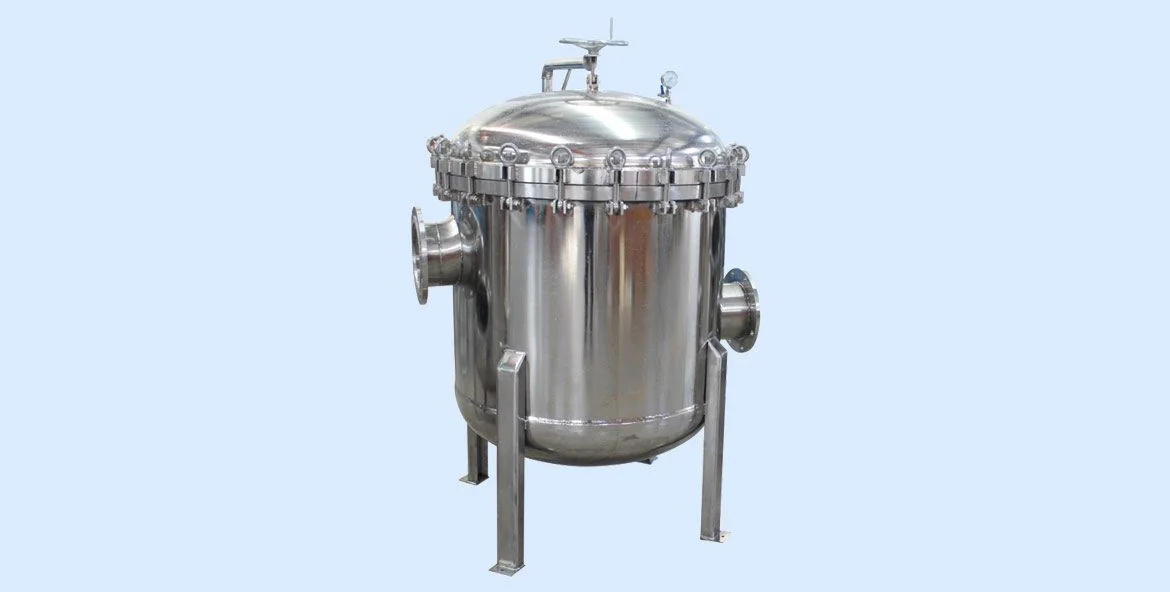
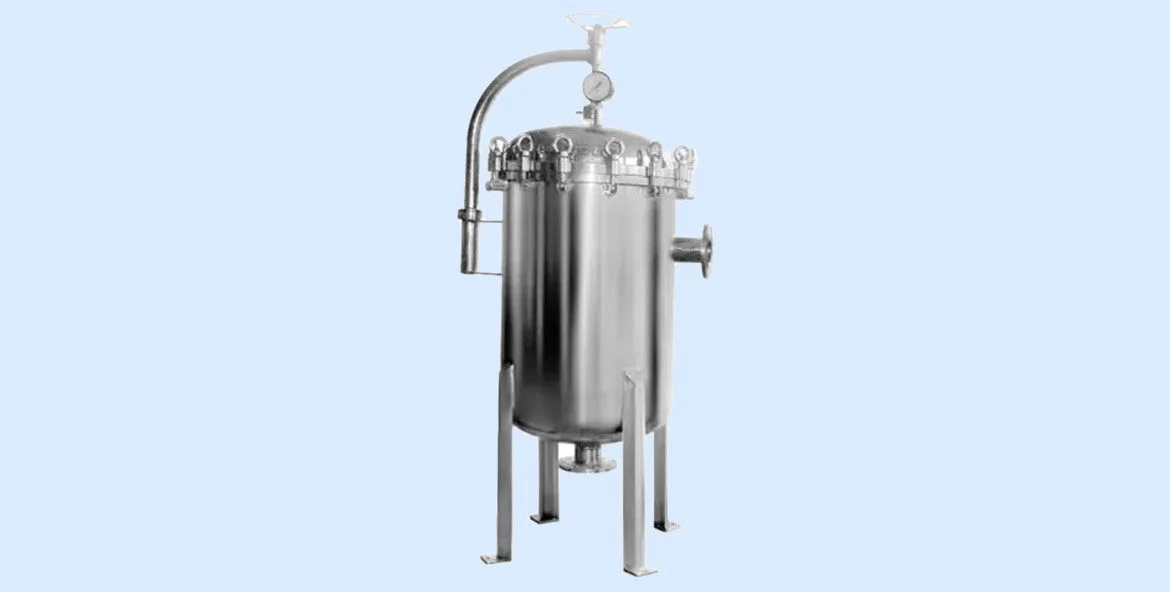
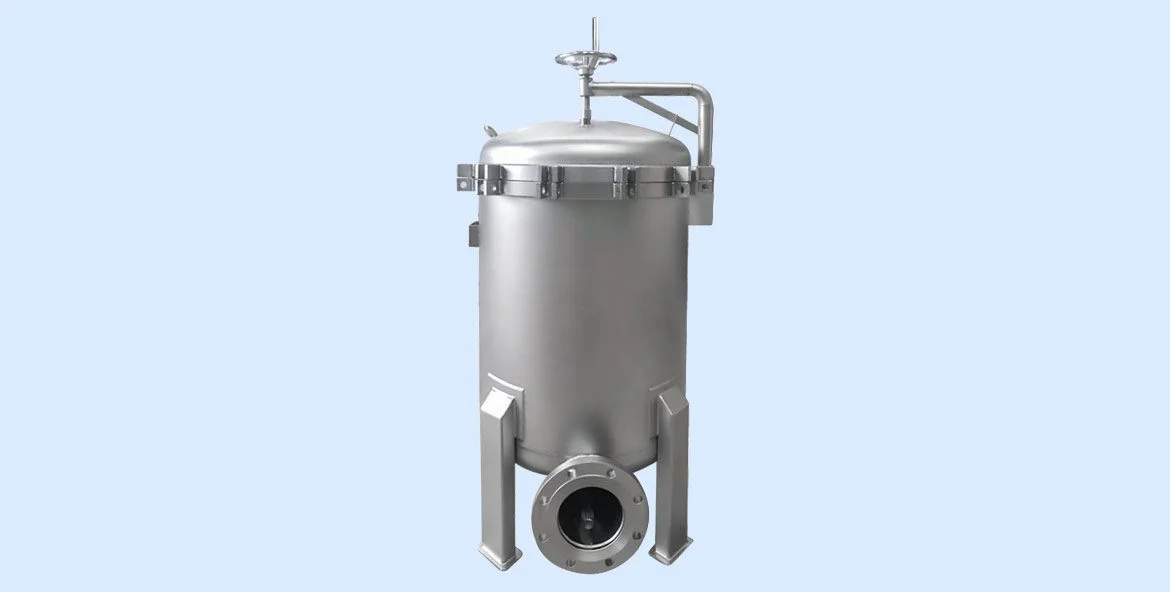
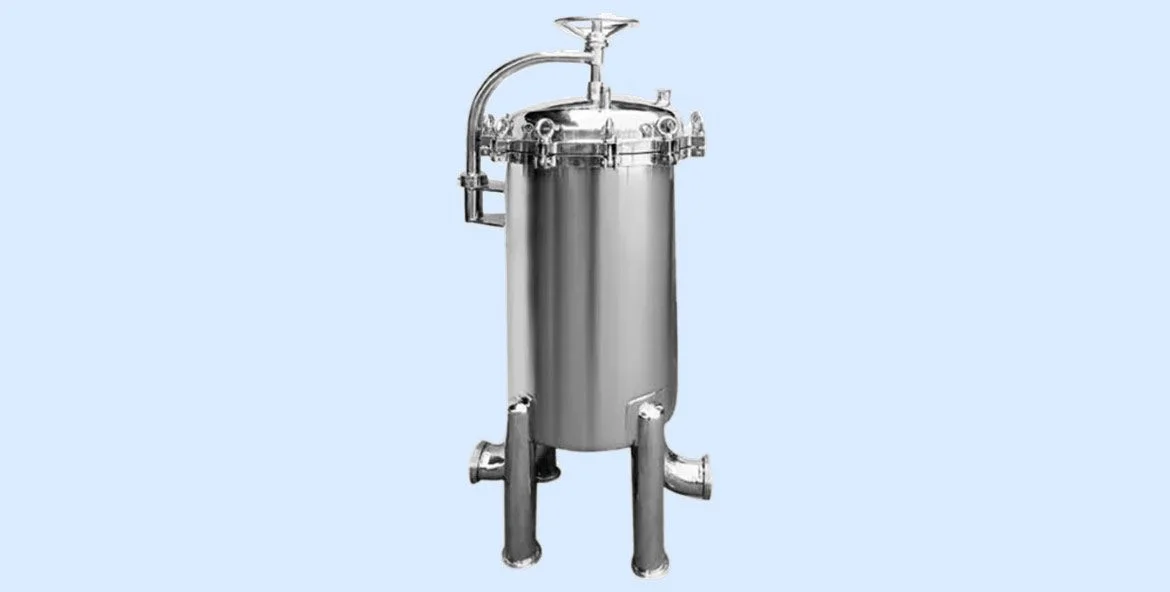
Introduction to Bag Filter Housing
In most modern liquid filtration setups, the bag filter housing serves as the backbone of the system. It provides a robust, leak-free pressure enclosure where filter bags trap suspended solids, gels, and particulate contaminants from process streams. You’ll find these housings across a wide range of industries — water treatment, chemical processing, pharma, food & beverage, and oil & gas — wherever reliable liquid-solid separation is essential.
Unlike disposable inline filters, a well-designed housing offers high flow handling capacity, cost efficiency, and quick media change-outs — traits that make it a practical choice for both utility filtration and critical process duties.
A typical unit is built as a pressure vessel, equipped with precision-machined bag seats and reliable sealing mechanisms to eliminate bypass, even under fluctuating flow or pressure conditions. Depending on plant requirements, engineers can select from single-bag, multi-bag, or duplex configurations. These formats cover a wide flow spectrum — from compact polishing units operating around 3 m³/hr, all the way to 400 + m³/hr multi-bag systems designed for continuous duty in large-scale industrial operations.
Material selection is just as varied. SS304 and SS316L stainless steel are common for their strength and corrosion resistance, while carbon steel housings are often chosen for hydrocarbon or general utility service. For corrosive or seawater duties, FRP and UPVC housings offer excellent resistance at lower cost. The result is a modular product line that can be adapted to different chemistries, temperatures, and regulatory environments.
- Consistent filtration performance with low, predictable pressure loss
- Scalable designs that fit single-line or multi-line systems
- Quick bag change-outs, minimizing downtime and labor
- Compliance with ASME, PED, and CE standards, supporting both India and export markets
Praimo Industrial Filters, a trusted bag filter housing manufacturer, delivers both standard and custom-engineered solutions tailored to demanding process conditions. For end-to-end setups, these housings can be paired with Cartridge Filter Housings and Basket Strainers to create multi-stage filtration trains.
Technical Specifications & Operating Envelope
Selecting the right bag filter housing isn’t just about matching pipe size. Engineers must evaluate a precise set of technical parameters to ensure the housing aligns with flow conditions, pressure ratings, temperature limits, and filtration requirements. In most industrial installations, Size 1 and Size 2 bag filter housings are the workhorses. Of these, #2 bag filter housing formats are the de facto standard for medium to high flow rates, offering the best balance between capacity and footprint.
Housings are available in stainless steel, FRP, and engineered plastics, allowing material compatibility to be tuned to fluid chemistry and environmental exposure. In corrosive or seawater applications, FRP and UPVC provide longevity at lower cost, while stainless steel (especially SS316L) remains the go-to choice for critical process streams.
From a design perspective, most industrial units comply with ASME Section VIII Div. 1 for pressure vessels, ensuring safe operation under rated pressure and temperature. For projects in Europe or other regulated export markets, PED/CE certification can be specified. This dual compliance approach supports both domestic and international deployments without design modification.
Typical Operating Ranges
| Parameter | Size 1 Housing | Size 2 Housing | Multi-Bag Housing |
|---|---|---|---|
| Bag Size | Ø178 × L430 mm | Ø178 × L810 mm | 2–18 × Size 2 |
| Flow Range | 3 – 12 m³/hr | 6 – 24 m³/hr | 12 – 400+ m³/hr |
| Design Pressure | 6 / 10 / 16 bar | 6 / 10 / 16 bar | 10 / 16 bar |
| Design Temperature | −10 °C to 120 °C (elastomer); up to 180 °C (PTFE) | Same | Same |
| Micron Ratings | 1 – 1000 µm (nominal/absolute) | Same | Same |
| Connection Sizes | 1½″ – 3″ | 2″ – 4″ | 3″ – 10″ |
| Materials | SS304 / SS316(L), CS, UPVC, FRP | Same | Same |
Flow–Pressure Characteristics
One overlooked detail during system sizing is the quadratic nature of the pressure–flow curve. In simple terms, ΔP ≈ K·Q² — which means that pressure drop increases sharply once nominal flow is exceeded. For example, running a Size 2 housing well above its rated flow may appear feasible initially, but operators often observe rapid bag blinding, unstable ΔP, and increased media consumption.
Praimo provides detailed sizing charts and performance curves for different bag grades and micron ratings to help engineers avoid these pitfalls. By aligning the housing size with the actual duty point, facilities can maintain predictable ΔP, maximize bag life, and reduce unplanned maintenance.
Materials & Construction Options
The performance and service life of a bag filter housing depend significantly on the choice of materials for the shell, basket, sealing components, and filter media. Different industries handle varied fluid chemistries, temperatures, and pressures, making proper material selection essential for corrosion resistance, mechanical integrity, and regulatory compliance. Praimo manufactures housings in a wide range of materials including stainless steel, carbon steel, and engineering plastics such as PVC, UPVC, and FRP, to serve both domestic and export markets.
Stainless steel remains the most widely used material, particularly SS304 and SS316L, due to their combination of strength, weldability, and corrosion resistance. SS316L is preferred for chloride-bearing waters, aggressive chemicals, and hygienic applications, while SS304 is suitable for general industrial use. Carbon steel offers a cost-effective solution for hydrocarbon or low-corrosion fluids, typically with internal coatings. PVC/UPVC and FRP housings are ideal where corrosion resistance is critical, such as seawater intake, brine filtration, or aggressive chemical streams.
| Component | Standard Material Options | Key Properties | Typical Applications |
|---|---|---|---|
| Housing Shell & Lid | SS304, SS316/316L, Carbon Steel (painted), PVC/UPVC, FRP | Corrosion resistance, structural strength | Water treatment, chemicals, oil & gas, marine |
| Basket (Support) | SS304, SS316 perforated + mesh liner | High strength, fine retention | General industrial, sanitary |
| Seals / Gaskets | EPDM, NBR, Viton®, PTFE, PTFE-envelope | Chemical & temperature resistance | Food, pharma, solvents, hydrocarbons |
| Filter Media | Needle-felt PP/PE, Monofilament mesh, PTFE, Stainless steel mesh | 1–1000 µm nominal/absolute, reusable options | Water, chemicals, solvents, edible oils |
Material selection guidelines:
SS316L, duplex SS, or FRP/PVC with PTFE/Viton® seals.
SS316L with PTFE seals for chemical compatibility.
SS316L, Ra ≤0.8 µm finishes, EPDM/PTFE seals, Tri-Clamp ends.
Carbon steel or SS with NBR/Viton® seals.
All metallic housings can be supplied with pickled and passivated or electropolished finishes. Sanitary versions follow 3-A/EHEDG design principles for cleanability. Praimo ensures material traceability and can provide EN 10204 3.1 MTC, making the housings suitable for regulated industries and international projects.
Bag Filter Housing Types, Sizes & Configurations
One of the strengths of bag filter housing systems lies in their flexibility. They’re available in multiple types and configurations, giving engineers and procurement teams the freedom to match flow rates, maintenance strategies, and regulatory requirements to the exact needs of their plant. Each configuration has its own niche, and the right choice often depends as much on process continuity as it does on filtration objectives.
The most common variants fall into five broad categories: single-bag, multi-bag, duplex, sanitary, and plastic/FRP housings. While they share core design principles, their performance envelopes and operational roles can differ significantly.
Single-Bag Housings
Compact and cost-effective, single-bag housings are often the entry point for polishing applications, batch processes, or small flow lines. Size 1 units typically handle 3–12 m³/hr, while Size 2 housings extend this to 6–24 m³/hr, depending on micron rating and fluid viscosity. Operators often prefer single-bag setups for their simplicity—minimal footprint, straightforward maintenance, and quick change-outs.
Multi-Bag Housings
When the process calls for higher throughput, multi-bag housings are the logical step up. By combining multiple Size 2 bags in a single vessel, these systems can scale flow rates to 400+ m³/hr while keeping face velocities low, which improves dirt-loading capacity and reduces pressure drop. They’re widely used in municipal water treatment, RO pre-filtration, chemical processing, and high-volume industrial utilities where downtime is costly.
Duplex Bag Filter Housings
For continuous operations, duplex configurations shine. These systems feature two parallel housings linked by a diverter valve assembly, enabling operators to isolate one housing for maintenance while the other remains online. It’s a classic solution in cooling water circuits, paint lines, and offshore water injection—anywhere flow cannot be interrupted without production impact.
Sanitary Bag Filter Housings
In pharmaceutical, food, and beverage applications, hygiene and cleanability are paramount. Sanitary housings, typically built in SS316L with Tri-Clamp connections and electropolished finishes (Ra ≤ 0.8 μm), are designed for CIP/SIP service. Their internal geometry is optimized for drainability and clean welds, meeting the stringent requirements of 3-A and EHEDG hygienic design principles.
PVC/FRP Housings
Finally, PVC and FRP housings offer lightweight, corrosion-resistant solutions for aggressive fluids, seawater intake, or brine filtration, where metallic housings may degrade prematurely. These are particularly valuable in marine, chemical, and desalination environments where long service life with minimal corrosion is critical.
Configuration Overview
| Configuration | Typical Flow Range | Design Pressure | Ideal Applications | Key Features |
|---|---|---|---|---|
| Single-Bag (Size 1/2) | 3 – 24 m³/hr | 6 / 10 / 16 bar | Polishing, small lines | Compact, cost-effective |
| Multi-Bag | 12 – 400+ m³/hr | 10 / 16 bar | RO pre-filtration, high-volume systems | Scalable, efficient |
| Duplex | As per size | Same as single/multi | Continuous processes | No downtime |
| Sanitary | Size 1 or 2 | 6 / 10 bar | Food, pharma, biotech | CIP/SIP-ready |
| PVC / FRP | Size 1 or 2 equiv. | 6 – 10 bar | Seawater, aggressive chemicals | Lightweight, corrosion-resistant |
Praimo fabricates each configuration in compliance with ASME and PED guidelines, ensuring structural integrity and regulatory alignment. For staged filtration setups, duplex bag filter housings can be seamlessly integrated with Cartridge Filter Housings or Basket Strainers to build multi-stage systems that handle both coarse and fine particulates efficiently.
Performance Curves & Filtration Ratings
Understanding the performance behavior of a bag filter housing isn’t just an academic exercise — it’s what determines whether a system runs smoothly for weeks or clogs up after a few days. Proper sizing depends on accurately predicting pressure drops, dirt-holding capacities, micron efficiencies, and how these factors interact under real operating conditions.
In most installations, the clean pressure drop (ΔP) across a housing is the first and clearest indicator of performance. It’s influenced by three main variables: flow rate, fluid viscosity, and the selected bag media. For Size 2 housings, ΔP follows a roughly quadratic relationship (ΔP ≈ K·Q²). What this means in practice: doubling the flow rate doesn’t just double the pressure drop — it can quadruple it.
For example, using water at 25 °C with a 10 µm felt bag, the clean pressure drop typically falls in the 0.10–0.20 bar range at nominal flows (around 12–18 m³/hr). Push the same system much beyond that, and ΔP starts climbing rapidly, often leading to premature bag blinding or, worse, bypass if sealing isn’t perfect. Engineers often underestimate how fast this curve steepens.
Praimo supports sizing with flow–ΔP curves and CSV datasets, enabling designers to model performance precisely across different micron ratings and viscosities. These datasets are especially useful when working with non-Newtonian or high-viscosity fluids, where standard water curves don’t apply.
Typical Dirt-Holding Capacities
| Bag Media | Micron Rating | Dirt-Holding Capacity (per bag) | Efficiency |
|---|---|---|---|
| Needle-Felt PP / PE | 10 – 100 µm (nominal) | 0.5 – 2.5 kg | 60 – 95 % nominal |
| Absolute / Pleated | 1 – 50 µm (absolute) | 1.5 – 4.0 kg | ≥ 99 % (β(10) ≥ 100) |
| Stainless Steel Mesh | 25 – 1000 µm | Reusable | Coarse filtration |
Nominal vs. Absolute Ratings
This distinction matters.
- Nominal ratings provide general efficiency bands (e.g., 60–95 %) and are often chosen for polishing or pre-filtration, where absolute removal isn't critical.
- Absolute ratings, on the other hand, are defined by β-ratios (e.g., β(10) ≥ 100), meaning ≥ 99 % of particles at the rated size are captured. These are typically used for
- critical protection, such as pre-membrane filtration or final liquid polishing.
Key Performance Insights
Operators who’ve run these systems for years tend to follow a few rules of thumb:
- Keep face velocity low — it's the simplest way to control ΔP and extend bag life.
- Match the micron rating to the actual contamination profile. Over-filtering doesn't make the product cleaner; it just drives up operating costs.
- For viscous fluids (e.g., 10 cP), multiply the water-based ΔP by roughly 10× at equivalent flow. High-viscosity applications behave very differently, and ignoring this is a common sizing mistake.
Regulatory Standards & Certifications
Compliance with recognized engineering standards isn’t optional for industrial filtration systems — it’s the foundation for safety, reliability, and international acceptance. A properly designed bag filter housing must satisfy regulatory frameworks that govern pressure vessel integrity, hygienic construction, and material traceability, ensuring stable operation under varied pressure and temperature conditions.
Praimo designs and fabricates housings to meet both Indian and global codes, making them equally suitable for domestic installations and export projects. This dual compliance approach eliminates the need for redesign when systems are deployed across different regulatory jurisdictions — a detail EPC contractors value during multi-region rollouts.
Pressure Vessel Standards
The ASME Section VIII Div.1 code remains the most widely applied standard for pressure vessel design and construction. Housings built to this code undergo rigorous hydrostatic testing, weld inspection, and dimensional verification before dispatch. These procedures confirm pressure integrity and structural soundness, which is especially critical when operating at 10–16 bar or handling aggressive fluids.
For European export markets, Praimo manufactures housings in accordance with the Pressure Equipment Directive (PED) 2014/68/EU, with CE marking provided for Category I–III vessels depending on pressure and volume. This ensures smooth acceptance during EU project audits and simplifies documentation for notified bodies.
Hygienic & Food-Grade Standards
Applications in food, beverage, and pharmaceutical industries have an additional layer of compliance. Sanitary bag filter housings follow 3-A Sanitary Standards and EHEDG guidelines, which specify:
- Hygienic geometries that prevent residue buildup
- Ra ≤ 0.8 µm internal surface finishes
- Cleanable welds and fully drainable designs
- Tri-Clamp or hygienic end connections to support CIP/SIP operations
In parallel, FDA 21 CFR compliance covers elastomers and wetted components to guarantee food-contact safety. This combination makes these housings suitable for hygienic processes without further modification.
Quality Management & Documentation
| Standard / Certification | Scope | Typical Application | Market |
|---|---|---|---|
| ASME Sec. VIII Div. 1 | Pressure vessel design & testing | Industrial process filtration | India / Global |
| PED 2014/68/EU (CE) | Pressure equipment compliance for EU | Export projects | Europe / Global |
| 3-A / EHEDG | Hygienic design & surface finish | Food, beverage, pharma | Global |
| FDA 21 CFR | Food contact elastomers & components | Food & pharmaceutical | India / Export |
| ISO 9001 | Quality management systems | Manufacturing process | Global |
Every Praimo bag filter housing is shipped with a comprehensive documentation package, typically including:
- Hydrotest reports
- Material Test Certificates (EN 10204 3.1)
- CE/PED compliance declarations (where applicable)
- Welding and inspection records for regulated markets
Regulatory readiness dramatically simplifies procurement for EPC contractors and OEMs. More importantly, it ensures that equipment passes inspection — whether it’s a pharma validation audit in India or a PED Category III vessel review in Europe — without surprises.
Applications & Industries Served
Bag filter housings have become a mainstay across diverse industrial sectors, thanks to their ability to combine robust particulate removal with cost-effective operation. Unlike more specialized filtration systems that focus on narrow applications, these housings comfortably handle a wide spectrum of flow rates, micron ratings, and fluid chemistries, which makes them equally suited for critical process filtration and high-volume utility services.
In most installations, stainless steel housings dominate — particularly in oil & gas, power, food & beverage, and pharmaceutical sectors — where high pressure, temperature, or hygiene requirements apply. Meanwhile, PVC and FRP housings serve as practical solutions in corrosive environments or cost-sensitive utility applications such as seawater intake, brine streams, or chemical pre-treatment.
Typical Industrial Applications
| Industry | Application | Flow Range | Micron Rating | Housing Type |
|---|---|---|---|---|
| Water & Wastewater | Pre-filtration, tank water, RO protection | 6 – 120 m³/hr | 5 – 50 µm | Size 2, Multi-bag |
| Oil & Gas / Petrochem | Produced water, cooling circuits, solvent filtration | 12 – 400+ m³/hr | 10 – 100 µm | Duplex SS316L |
| Pharmaceutical | CIP water, intermediate liquids | 3 – 24 m³/hr | 1 – 25 µm (absolute) | Sanitary SS316L |
| Food & Beverage | Edible oil polishing, beverage clarification | 8 – 45 m³/hr | 5 – 25 µm | Sanitary Size 1/2 |
| Paints & Inks | Gel removal, final polishing | 12 – 24 m³/hr | 10 – 25 µm | Duplex SS316L |
| Chemical Processing | Corrosive liquids, acids, brine | 6 – 100 m³/hr | 1 – 100 µm | FRP / PVC |
Real-World Performance Examples
These numbers come alive when we look at actual installations:
- Municipal RO Pre-Filtration (India) A multi-bag system (6 × Size 2) running at 120 m³/hr with 5–10 µm absolute bags reduced SDI15 to ≤3–4, extending membrane life by 18–25 % and improving system uptime.
- Steel Plant Cooling Water (MENA) Duplex Size 2 housings at 2 × 18 m³/hr using 50 µm nominal bags minimized exchanger fouling. Change-out intervals increased to 10–14 days, cutting maintenance frequency almost in half.
- Edible Oil Polishing (EU Export) Sanitary Size 1 units at 8 m³/hr with 10–25 µm bags achieved >85 % haze reduction, maintaining stable pressure differentials over multiple production cycles.
Sector-Specific Engineering
The same core housing design behaves very differently depending on industry demands. For example, a Size 2 stainless steel duplex unit used in a refinery cooling loop must withstand continuous operation at 16 bar, whereas a PVC unit in a coastal desalination plant focuses more on corrosion resistance than pressure performance.
Praimo engineers each housing configuration for sector-specific performance, integrating the right materials, sealing systems, and certifications to match operating realities.
For more targeted technical information, explore:
- Oil & Gas Applications
- Food & Beverage Filtration
- Pharmaceutical Filtration
- Water Treatment Solutions
Case Studies & Performance Benchmarks
While datasheets and pressure curves can tell part of the story, the true value of a well-engineered bag filter housing system emerges in the field. Across industries and regions, single, multi-bag, and duplex configurations have consistently delivered measurable improvements in filtration efficiency, equipment protection, and overall plant uptime. Below are three anonymized real-world installations from India, the EU, and the MENA region that illustrate these performance gains in hard numbers.
Case Study A: Power Plant Cooling Water – India
Challenge: In a large thermal power plant, heat exchangers were suffering from rapid fouling due to suspended solids in the cooling water. Operators were forced to carry out manual cleaning every few weeks, leading to increased downtime and reduced pump efficiency.
Solution: Praimo supplied Duplex Size 2 bag filter housings (2 × 18 m³/hr) equipped with 10 µm nominal felt bags. The duplex configuration allowed operators to alternate between housings without shutting down the cooling circuit — a key factor in uninterrupted plant operation.
Results:
- Heat exchanger cleaning frequency dropped by 40%
- Pump energy consumption decreased by 6%
- Media consumption fell from ₹1.1 lakh to ₹0.8 lakh over six months (≈27% reduction)
- Bag change-out intervals extended to 10–14 days
One overlooked detail here is that the flow sizing was adjusted to keep ΔP within 0.6–0.8 bar — this alone prevented premature bag blinding and contributed to the extended run time.
Case Study B: Paint Manufacturing – EU Export
Challenge: A paint manufacturer exporting to the automotive sector faced gel contamination in solvent streams, which led to coating defects and high rework rates. Traditional mesh screens were insufficient for fine particulate control.
Solution: Praimo deployed Sanitary SS316L housings fitted with absolute 10 µm pleated bags, operating at 12 m³/hr. These were installed immediately upstream of the coating line, ensuring stable filtration prior to application.
Results:
- Surface defect rates reduced by 18%
- Rework dropped by 22%
- ROI was achieved in under nine months, despite slightly higher media costs
Operators later noted that bag change-outs aligned well with batch schedules — this was not a design requirement but turned out to be a useful operational sync.
Case Study C: Edible Oil Refinery – MENA
Challenge: In a refinery producing edible oils, high haze and fine particulates were prematurely clogging downstream polishing cartridges, shortening their service life.
Solution: The plant installed multi-bag housings (3 × Size 2) operating at 45 m³/hr with 25 µm PP felt bags. These acted as a robust pre-filtration stage.
Results:
- Haze units reduced by 70%
- Downstream cartridge life extended by 30%
- Unplanned downtime cut by 8 hours per month
As a rule of thumb, for edible oil clarification, pre-filtration between 10–25 µm provides the best balance between haze control and media longevity — this installation confirmed that operationally.
KPI Benchmark Summary
| KPI Metric | Before Installation | After Bag Filter Housing | Improvement |
|---|---|---|---|
| HX Cleaning Frequency | Every 4 weeks | Every 7 weeks | 40% less |
| Defect Rate (Paint) | 12% | 9.8% | −18% |
| Cartridge Life | 100% baseline | 130% | +30% |
| Downtime (per month) | 24 hrs | 16 hrs | −33% |
| Media Cost | ₹1.1 Lakh / 6 mo. | ₹0.8 Lakh / 6 mo. | −27% |
Engineering Insights
These case studies highlight a recurring pattern: correct housing selection, proper configuration (especially duplex or multi-bag), and smart media pairing yield both performance and economic advantages.
- Duplex systems excel in continuous processes — the power plant example shows this clearly.
- Sanitary pleated bags outperform mesh screens for gel control in solvent applications.
- Pre-filtration in edible oil processes drastically extends downstream media life.
Such results are hard to achieve with a one-size-fits-all approach, which is why Praimo emphasizes engineering-led customization rather than catalog-based selection.
Advantages of Bag Filter Housings
Among industrial liquid filtration options, bag filter housings strike one of the best balances between technical performance, operational simplicity, and cost-effectiveness. Their versatility makes them equally suited for polishing duties in batch processes and as robust workhorses in large-scale continuous systems. When compared to cartridge arrays or automatic self-cleaning filters, they consistently deliver higher flow rates per unit cost, with less maintenance overhead and broader micron rating flexibility — a combination that’s hard to beat in real-world plant conditions.
Key Technical & Economic Benefits
High Flow Handling Multi-bag housings can handle throughputs of 400 m³/hr and beyond, making them ideal for municipal water treatment, cooling circuits, or high-volume chemical processing. The flow-to-CAPEX ratio is particularly strong when compared to cartridge systems requiring multiple parallel housings.
Low Capital Cost For coarse to medium filtration ranges (typically 5–100 µm), bag systems generally require lower initial investment than either cartridge housings or self-cleaning units. This is especially noticeable in high-flow applications where cartridge count — and therefore housing count — escalates rapidly.
Easy Maintenance & Rapid Change-Outs In most installations, a trained operator can replace a filter bag in minutes. Duplex systems make this even smoother by allowing one housing to continue filtering while the other is serviced. This characteristic directly translates into reduced downtime and labor cost.
Flexible Micron Selection Bag filter housings accommodate micron ratings from 1 µm up to 1000 µm, in both nominal and absolute grades. This wide spectrum allows engineers to tailor systems for pre-filtration, intermediate polishing, or critical protection upstream of membranes and sensitive equipment.
Material Versatility Housing materials include SS304, SS316L, PVC, FRP, and carbon steel, covering everything from clean water and high-pressure steam to aggressive chemicals and seawater service.
- Stainless steel housings excel in high-pressure, high-temperature, or sanitary environments.
- PVC/FRP housings provide a lightweight, corrosion-resistant, and cost-effective option for saline or chemically aggressive fluids.
Energy Efficiency Because clean pressure drops typically sit between 0.10–0.20 bar, bag filter systems demand less pumping energy compared to fine cartridge systems operating at similar flows. Over time, this contributes to meaningful OPEX savings.
Scalable System Design Single, multi-bag, and duplex configurations allow engineers to scale filtration systems to match both batch and continuous processing demands. As processes evolve, adding more bags or switching to duplex operation often requires minimal piping changes.
Comparison Snapshot: SS vs PVC Bag Filter Housings
| Feature | SS304 / 316L | PVC / FRP |
|---|---|---|
| Temperature & Pressure | High | Moderate |
| Corrosion Resistance | Excellent (especially 316L) | Excellent (non-metallic) |
| Cost | Higher CAPEX | Lower CAPEX |
| Typical Use | Industrial, hygienic, high-temp | Seawater, corrosive chemicals |
Engineering Perspective
The reasons for the popularity of bag filter housings aren’t theoretical — they’re grounded in day-to-day plant realities. Operators appreciate the fast change-outs, procurement teams value the lower upfront cost, and maintenance engineers like the simplicity of gasketed lids and swing-bolt closures. Moreover, the ability to combine bag filter housings with Cartridge Filter Housings or Basket Strainers gives system designers the flexibility to build multi-stage filtration trains without overcomplicating layouts.
For example, a basket strainer can serve as the coarse pre-filter, while a bag housing handles medium-range solids, and cartridges finish the job at sub-micron levels. This layered approach improves overall system longevity while optimizing cost at each filtration stage.
Comparisons with Alternative Filtration Systems
Choosing the right filtration technology isn’t just about the particle size you need to remove — it’s a trade-off between capital cost, operating expenditure, filtration efficiency, and maintenance philosophy. Bag filter housings excel in medium-range micron filtration (typically 1–1000 µm) and in high-flow scenarios where cost and maintenance speed matter. But they don’t exist in a vacuum. Understanding how they stack up against cartridge filters, self-cleaning systems, and basket strainers is essential for making sound design decisions in industrial plants.
Bag Filter vs. Cartridge Filter Housings
| Parameter | Bag Filter Housing | Cartridge Filter Housing |
|---|---|---|
| Typical Micron Range | 1 – 1000 µm (nominal/absolute) | 0.2 – 100 µm (nominal/absolute) |
| Filtration Efficiency | Up to 99 % (absolute bags) | Up to 99.98 % (validated β-ratio) |
| Flow Capacity | High (up to 400+ m³/hr with multi-bag) | Moderate (parallel cartridges needed) |
| CAPEX | Lower for medium filtration | Higher for large flows |
| OPEX | Lower for coarse media | Lower for fine filtration |
| Change-Out | Fast (minutes) | Longer; more components |
| Best Use | Pre-filtration, utility, medium micron | Critical sub-micron, sterile service |
Key Insight: In most plants, bag systems are the cost-effective choice for medium filtration at high flow rates, while cartridges come into their own for sub-micron or final sterile filtration, such as in pharmaceutical water systems or ultrapure applications. It’s common to see the two technologies used sequentially: bags for bulk solids removal, cartridges for polishing.
- Explore Cartridge Filter Housings for high-purity or sterile duties.
Bag Filter vs. Self-Cleaning Filters
| Parameter | Bag Filter Housing | Self-Cleaning Filter |
|---|---|---|
| Micron Range | 1 – 1000 µm | Typically ≥ 50–100 µm |
| Disposables | Yes (bags) | No (automatic screen) |
| Maintenance | Manual bag change | Automatic cleaning cycles |
| CAPEX | Lower | Higher |
| OPEX | Higher (bag consumption) | Lower (no media) |
| Best Use | Variable solids, fine filtration | High solids, coarse filtration, continuous duty |
Key Insight: When dealing with variable or finer solids (< 50 µm), bag filter housings usually outperform self-cleaning screen systems, both in efficiency and cost. However, for coarse, high-solids, continuous services (e.g., intake water with heavy silt), self-cleaning filters drastically cut down manual intervention and media cost.
- See Self-Cleaning Filters for continuous coarse filtration applications.
Bag Filter vs. Basket Strainers
| Parameter | Bag Filter Housing | Basket Strainer |
|---|---|---|
| Micron Range | 1 – 1000 µm | Typically 100 – 3000 µm |
| Filtration Type | Depth / Surface (media) | Coarse mechanical |
| Maintenance | Bag replacement | Basket cleaning |
| CAPEX | Moderate | Low |
| OPEX | Media cost | Labor for cleaning |
| Best Use | Fine to medium polishing | Pump protection, coarse debris removal |
Key Insight: Basket strainers work best upstream, catching large particulates and protecting pumps or valves. Bag housings follow downstream, tightening the filtration window and reducing fine contamination before membranes, exchangers, or process equipment. Many EPC systems are designed with a strainer → bag → cartridge train, balancing coarse removal, polishing, and final filtration.
Export Readiness & Global Standards
For international projects, it’s not enough for filtration equipment to perform technically — it must meet global codes, documentation standards, and logistical requirements. EPC contractors and OEMs working across Europe, the Middle East, Africa, and Southeast Asia demand products that arrive not only built to spec but also pre-certified, traceable, and packaged for export.
Praimo’s bag filter housings are designed and manufactured with exactly this in mind. Every unit is engineered to comply with internationally recognized design codes, and the associated documentation packages mirror the expectations of major EPC procurement teams, eliminating the usual back-and-forth during technical submittals.
All housings can be supplied with EN/ASTM dual material certifications, ensuring smooth acceptance under both European and international procurement systems. For EU-bound projects, PED 2014/68/EU compliance with CE marking is available across Category I–III vessels, depending on pressure and volume. Meanwhile, ASME Section VIII Div.1 is the standard design basis for industrial housings, providing reliable pressure integrity across diverse operating envelopes — a necessity for high-spec oil & gas, power, and chemical installations.
To support export logistics, every housing undergoes hydrotesting and dimensional inspection before dispatch and is accompanied by a comprehensive QA package typically including:
- Material Test Certificates (EN 10204 3.1)
- Hydrostatic Test Reports
- Welding Procedure Specifications (WPS) and Welder Qualification Records (WPQ)
- Dimensional Inspection Reports
- CE/PED Compliance Declarations, where applicable
Packaging adheres to ISPM-15 export crating standards, using seaworthy wooden cases to protect against mechanical shock and moisture during transit. This attention to detail ensures that housings arrive audit-ready, with all regulatory and QA documents in place.
| Export Compliance Element | Availability |
|---|---|
| EN / ASTM Dual Certification | ✔ |
| CE / PED Certification (EU) | ✔ |
| ASME Section VIII Div. 1 | ✔ |
| MTCs, Hydrotests, QA Docs | ✔ |
| ISPM-15 Export Packaging | ✔ |
With a proven record of supplying to international EPCs and OEMs, Praimo Industrial Filters stands as a trusted CE/PED certified bag filter housing manufacturer. This export readiness doesn’t just tick boxes — it reduces lead times, minimizes project risk, and allows industrial buyers to deploy units globally with confidence.
Lifecycle Cost & ROI Analysis
When evaluating filtration solutions, technical performance is only half the equation. The other half — often overlooked during initial procurement — lies in the operational expenditure (OPEX) and long-term return on investment (ROI). Choosing the right bag filter housing configuration can make a significant difference in media consumption, maintenance labor, and process uptime.
While the initial bag filter housing price influences CAPEX decisions, real savings typically emerge over months of operation through bag life optimization, fewer change-outs, and minimized production interruptions. One area where this becomes especially evident is in simplex vs duplex system selection, particularly for continuous processes such as cooling water, paint circulation loops, or RO pre-filtration.
Typical Lifecycle Cost Breakdown
(Size 2 Housing, 18 m³/hr, Water, 25 µm Nominal)
| Cost Element | Simplex System | Duplex System |
|---|---|---|
| Initial CAPEX | ₹100,000 | ₹115,000 (+15%) |
| Bags / Month | 20 | 20 |
| Bag Cost / Unit | ₹500 | ₹500 |
| Annual Bag Cost | ₹120,000 | ₹120,000 |
| Downtime / Change-Out | 30 min/change | 0 min (no shutdown) |
| Annual Downtime Hours | 60 hrs | 0 hrs |
| Estimated Downtime Cost | ₹3,000/hr → ₹180,000/year | ₹0 |
| Payback Period | — | ~6–9 months |
Real-World Impact of Configuration Choices
In continuous-duty environments, duplex housings eliminate the need to stop the process for bag change-outs. Operators can simply divert flow to the standby housing, swap the bag, and return to normal operation — all without downtime. Although duplex systems require around 10–15% higher CAPEX, they routinely achieve payback within the first year, driven by reduced labor and avoided production losses.
Key ROI Factors to Consider:
Choosing the correct micron rating and sizing the housing properly prevents premature blinding, thereby extending bag life and lowering media spend.
Setting differential pressure alarms or change points around 7–1.0 bar ensures bags are changed at the optimal time, not too early or too late.
This is often the single largest ROI driver, especially in high-value production environments where every hour of interruption carries a cost.
Multi-bag configurations can reduce the total number of bags needed per flow rate, which lowers both consumable costs and operator workload.
Engineering Insight
In many plants, filtration is treated as a “utility” rather than a strategic system. But when you run the numbers, the cost of unplanned change-outs or frequent shutdowns can far exceed the upfront equipment cost. Duplex or multi-bag systems make economic sense not just for massive flows, but also for any application where uptime matters — from paint shops with strict takt times to municipal RO skids running around the clock.
Praimo works closely with clients to model these lifecycle scenarios, using real solids loading data and process conditions to find the most cost-effective configuration for each installation.
Installation, Maintenance & Troubleshooting
Getting the installation and maintenance right is just as important as selecting the correct housing. Even the best-designed bag filter housing can underperform—or fail prematurely—if installed incorrectly or maintained infrequently. Consistent monitoring of differential pressure (ΔP), timely inspection of sealing components, and adherence to service schedules help sustain filtration efficiency and avoid unplanned shutdowns.
Installation Best Practices
In most installations, bag filter housings are mounted vertically, positioned level on a stable foundation. This ensures even sealing and proper flow distribution through the bag. Adequate clearance above the vessel is essential—operators should be able to remove the lid and swap bags without obstruction.
To facilitate safe servicing, inlet and outlet isolation valves, along with vent/bleed ports, should be included in the piping layout. These allow pressure to be relieved before opening the housing, reducing the risk of fluid spray or pressure release incidents.
For duplex systems, extra attention must be paid to diverter valve orientation and sealing. A common oversight is misalignment, which can cause partial bypass during changeover. Proper commissioning checks typically catch this, but operators should verify periodically.
Finally, installing differential pressure gauges or transmitters across the inlet and outlet gives real-time visibility into filter loading. As a rule of thumb, monitoring ΔP is the single most reliable indicator of performance and bag life.
Maintenance Intervals
A structured maintenance plan prevents small issues from escalating into costly failures. The table below summarizes typical inspection and replacement intervals:
| Component | Recommended Inspection / Replacement |
|---|---|
| Filter Bags | Change at ΔP of 0.7–1.0 bar or as per process schedule |
| Seals & Gaskets | Inspect every change-out; replace every 6–12 months or if swelling, flattening, or cracking is observed |
| Baskets | Inspect quarterly for roundness tolerance (≤0.3 mm at seat) and weld integrity |
| Housing Shell | Annual internal inspection for corrosion, pitting, or coating degradation |
One overlooked detail is basket roundness—if the support basket is slightly oval, even by a fraction of a millimeter, the bag may not seat properly, leading to bypass. Periodic checks prevent such subtle but costly issues.
Common Issues & Troubleshooting
Despite proper sizing and material selection, occasional operational problems can occur. Below is a structured troubleshooting guide:
| Issue | Likely Cause | Corrective Action |
|---|---|---|
| Bypass / Contamination Downstream | Damaged or misaligned seal, improper bag seating | Reseat bag, inspect O-ring or compression ring, replace gasket |
| High Initial ΔP | Incorrect micron selection, bag not fully opened, viscous fluid | Verify bag rating, pre-wet or pre-open bags, adjust flow |
| Short Bag Life | Excess solids loading, wrong change-out ΔP | Re-evaluate pre-filtration strategy, adjust ΔP set point |
| Corrosion / Leakage | Material incompatibility or insufficient maintenance | Review fluid chemistry vs materials, improve inspection frequency, replace incompatible components |
In practice, a gradual increase in ΔP is normal, indicating that the bag is loading as expected. A sudden spike, however, usually points to media blinding, fluid upset, or an incorrectly selected micron rating. Setting automated ΔP alarms in the 0.8–1.0 bar range provides an effective safeguard against media rupture and downstream contamination.
Engineering Insight
Many operators underestimate the role of seals and gaskets. Over time, elastomers can flatten, swell, or harden—especially under high temperature or chemical exposure. Replacing these proactively every 6–12 months costs little but prevents significant bypass incidents. Similarly, not pre-wetting bags when filtering viscous fluids is a common error that causes high initial ΔP and premature blinding. A simple pre-fill step often resolves this.
Long-Term Maintainability
To support field maintenance, Praimo supplies OEM-quality spare parts, including seal kits, swing-bolt assemblies, perforated baskets, and vent valves. This ensures long service life and simplifies ongoing upkeep for both standard and custom-engineered housings.
For step-by-step service instructions and visual guides, visit the Technical Resources section or contact the Praimo engineering team.
Buying Guide & Procurement Checklist
Selecting the right bag filter housing isn’t just about picking a size off a chart. Engineering teams and procurement specialists must evaluate flow dynamics, filtration objectives, fluid characteristics, and regulatory constraints to make a technically sound, cost-efficient choice. The following structured guide simplifies this process for both industrial and sanitary applications, ensuring the final selection aligns with operational requirements and long-term OPEX goals.
Step-by-Step Sizing Guide
1. Determine Flow Rate and Line Size
Start by establishing both nominal and peak flow rates for the system. This forms the foundation for selecting housing size and configuration.
As a rule of thumb, target a face velocity of 0.15–0.30 m/s through the effective bag area. Staying within this range minimizes pressure drop, prevents premature bag blinding, and extends media life.
2. Select Micron Rating and Bag Type
Filtration goals dictate bag selection:
- Pre-filtration or utility service: Nominal felt bags typically suffice.
- Polishing or critical protection: Choose absolute-rated or pleated bags for higher efficiency.
One overlooked detail is over-specifying the micron rating. Selecting unnecessarily fine media can drive up ΔP and OPEX without improving actual process outcomes.
3. Adjust for Fluid Viscosity
Viscosity plays a decisive role in pressure drop. For fluids above 1 cP, apply correction factors to avoid undersizing.
For example, with 10 cP fluids, multiply the water-based ΔP by approximately 10× at the same flow. Engineers often underestimate this adjustment, leading to unexpected pressure spikes and shortened bag life.
4. Choose Material & Construction
Material compatibility determines both service life and safety. Typical selections include:
- SS304 / SS316L → Industrial and hygienic duties, high strength, cleanability.
- PVC / FRP → Corrosive liquids, seawater, brine filtration, or cost-sensitive installations. For food, beverage, and pharma, consider electropolished SS316L with Ra ≤ 0.8
- µm finishes and Tri-Clamp connections to meet sanitary standards.
5. Define Pressure & Temperature Ratings
Standard pressure ratings include 6, 10, and 16 bar, with operating temperatures of –10 °C to 120 °C using elastomer seals.
When equipped with PTFE envelope gaskets, housings can operate at up to 180 °C, depending on construction material. It’s wise to factor in peak conditions rather than nominal alone to avoid future limitations.
6. Decide Configuration
Different configurations serve different operational priorities:
Ideal for small flows, batch systems, or point-of-use filtration.
Scales economically for high-volume systems (e.g., RO pre-filtration).
Ensures uninterrupted operation by allowing change-outs without shutdown.
7. Verify Standards & Documentation
For regulated industries or export projects, certifications and documentation are non-negotiable. Check for:
- ASME Section VIII Div. 1 for pressure vessel integrity.
- PED 2014/68/EU + CE for EU compliance.
- FDA 21 CFR for food contact safety.
- 3-A / EHEDG for hygienic design in sanitary service.
This upfront verification prevents costly submittal delays later in the procurement cycle.
Procurement Specification Checklist
Use the following table to standardize technical submittals and RFQs, ensuring alignment between design requirements and vendor offerings:
| Specification Parameter | Details to Define |
|---|---|
| Flow Rate (Nominal / Peak) | ________ m³/hr |
| Micron Rating & Media | ________ µm (Nominal / Absolute) |
| Fluid Type & Viscosity | ________ |
| Housing Material | SS304 / SS316L / CS / PVC / FRP |
| Pressure / Temperature | ________ bar / ________ °C |
| Inlet / Outlet Size & Type | ________ |
| Configuration | Single / Multi / Duplex |
| Standards Required | ASME / PED / CE / FDA / 3-A |
| Documentation Pack | MTC, Hydrotest, QA Docs, CE/PED |
| Accessories | DP Gauge, Vent/Drain, Valves |
Engineering Insight
A recurring mistake during procurement is omitting viscosity data or actual peak flows, forcing vendors to make assumptions that lead to either oversized or undersized units. Another frequent oversight is not specifying documentation packages upfront, which complicates compliance during FAT or export clearance. Defining these parameters early streamlines manufacturing, testing, and approval.
FAQs on Bag Filter Housings
A bag house filter is used to remove suspended solids and contaminants from liquids in a wide range of industrial processes. By capturing particulate matter before it reaches downstream systems, it protects heat exchangers, pumps, membranes, and critical equipment. Common applications include water treatment, chemical processing, and pre-filtration before RO or cartridge systems, where stable, clean fluid quality is essential.
Bag filters are designed for liquid–solid separation across industries such as food & beverage, pharmaceuticals, oil & gas, chemical processing, and wastewater treatment. Depending on the selected bag media, they can effectively remove particles between 1 µm and 1000 µm, making them suitable for both coarse utility filtration and fine polishing duties.
- A filter housing is a pressure-retaining vessel that holds filter media such as bags or cartridges. Its job is to ensure proper flow distribution, tight sealing, and safe operation under varying pressure and temperature conditions. In most installations, the housing design is what determines system integrity and maintenance ease, not just the media itself.
In cement plants, bag filters play a crucial role in removing dust and fine particulate matter from cooling water, fuel oil, or other process fluids. This step helps prevent fouling of heat exchangers, minimize pump wear, and extend the life of downstream filtration units, which are often more sensitive and costly to replace.
Selection depends on several factors: flow rate, micron rating, fluid viscosity, material compatibility, pressure/temperature ratings, and any applicable regulatory or export standards. Consider whether a single, multi-bag, or duplex configuration suits the operational continuity required. For a structured method, refer to the Buying Guide & Procurement Checklist for step-by-step sizing and specification support.
Yes. Standard housings are typically rated for –10 °C to 120 °C with elastomer seals. When fitted with PTFE envelope gaskets, the operating temperature can extend up to 150–180 °C, depending on the housing material and design. This flexibility makes them suitable for both ambient and elevated-temperature services across industries.
Common types include:
- Single-bag housings — compact, ideal for lower flow or batch systems.
- Multi-bag housings — scalable for high flow rates, commonly used in RO pre-filtration.
- Duplex housings — enable uninterrupted operation during change-outs.
- Sanitary housings — built to 3-A/EHEDG standards for food and pharma.
- PVC/FRP housings — suited for corrosive fluids and seawater applications.
Each serves different process, hygiene, and corrosion-resistance needs.
Bag filter housings may comply with ASME Section VIII Div.1, PED 2014/68/EU (CE), FDA 21 CFR, and 3-A/EHEDG standards.
- ASME ensures mechanical integrity for pressure vessels.
- PED/CE is required for EU markets.
- FDA 21 CFR governs food-contact materials.
- 3-A/EHEDG covers hygienic design for sanitary use.
These certifications make the housings suitable for India and global export markets.
- Single-bag housings handle 3–24 m³/hr, are compact, and cost-effective—best for polishing or smaller lines.
- Multi-bag housings combine multiple bags in one vessel, handling up to 400+ m³/hr, making them ideal for large-scale or continuous-duty filtration.
Engineers often favor multi-bag setups where flow scalability and lower face velocity are critical for long media life.
Yes. Praimo Industrial Filters manufactures CE/PED-certified bag filter housings, supplied with EN/ASTM dual material certifications, full QA documentation (MTC, hydrotest reports), and ISPM-15 export packaging. This makes them fully compliant and ready for global shipment, including EU, MENA, and Southeast Asian projects.
Conclusion & Call-to-Action
In industrial liquid filtration, bag filter housings have earned their place as one of the most versatile, cost-effective, and technically reliable solutions available today. Whether it’s a standard Size 2 unit handling utility water or a multi-bag or duplex configuration supporting high-flow, continuous-duty operations, their adaptability is what keeps them relevant across diverse industries. From water and wastewater treatment to oil & gas, food & beverage, pharmaceutical production, and chemical processing, these systems deliver consistent performance at a competitive lifecycle cost.
Praimo Industrial Filters has established itself as a trusted bag filter housing manufacturer, bringing engineering depth and regulatory compliance together. Every unit is designed and fabricated to meet demanding global standards, offering:
- Engineering-grade construction in SS304, SS316L, carbon steel, PVC, and FRP for both domestic and export
- Full ASME, PED/CE, FDA, and 3-A/EHEDG compliance, ensuring seamless acceptance during audits and certifications.
- Proven operational benchmarks, backed by real-world case studies across India, the EU, and MENA
- Comprehensive QA documentation, hydrotest reports, and ISPM-15 export packaging, ready for international logistics.
Whether your requirement is a compact single-bag unit for polishing, a high-throughput multi-bag skid for RO pre-filtration, or a duplex system for zero-downtime operation, Praimo’s engineering team can assist with technical selection, cost modeling, and custom design to align with your process objectives.
Take the Next Step Toward Cleaner, More Efficient Filtration
- Request a Quote → Get precise pricing and lead times for your application.
- Download Datasheet → Access detailed technical drawings and specifications.
- Book a Technical Consultation → Speak directly with our filtration specialists.
For reliable, compliant, and export-ready filtration systems, Praimo Industrial Filters is your partner in precision-engineered bag filter housings.
Brochure
Download our brochure for detailed technical data, product capabilities, and filtration system expertise.
Let’s Start Work
Together
Please feel free to contact us. We will get back to you with 1-2 business days. Or just call us now.