


Water Treatment Applications – Industrial Filtration Solutions by Praimo Industrial Filters & Spares Manufacturing Company (Manufacturer in India)
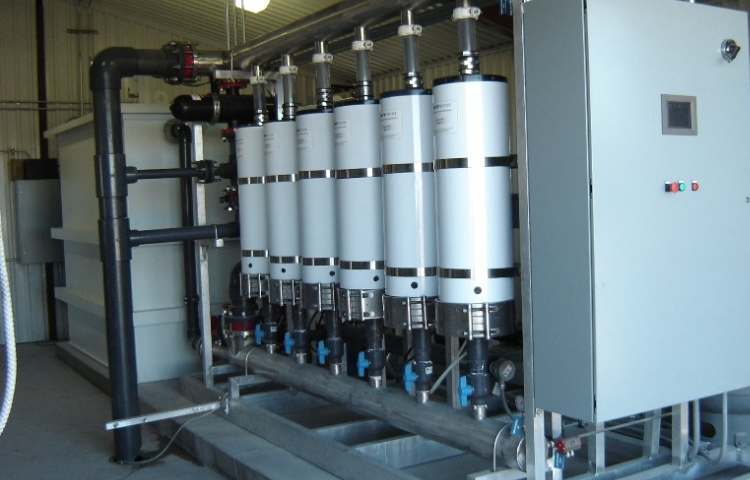
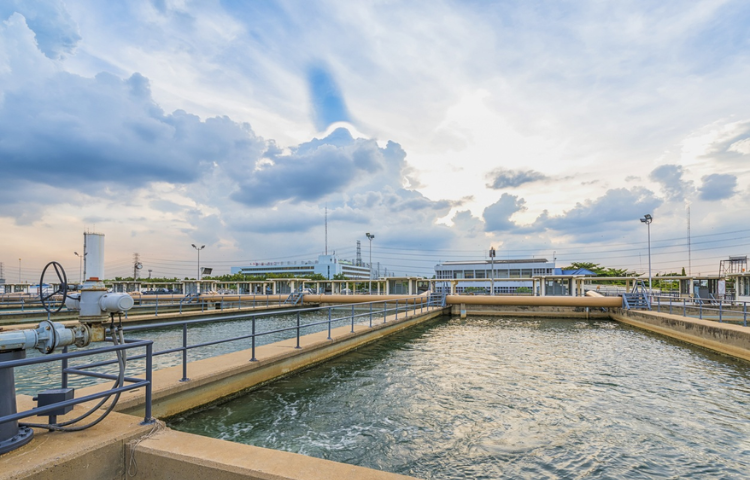
Praimo Industrial Filters & Spares Manufacturing Company designs and builds stage-wise, high-reliability filtration systems for industrial water treatment—from raw-water intake and clarification to RO/UF pretreatment, cooling-tower side-stream control, boiler-feed polishing, and ETP/STP tertiary reuse. On this page, you’ll see how each treatment step maps to proven hardware—basket and Y strainers, bag and cartridge filter housings, duplex/self-cleaning filters, and corrosion-resistant FRP/UPVC options—so your team can lower turbidity and SDI, protect membranes, and reduce whole-life cost without guesswork.
Water Treatment Filtration Overview for Industry (Applications, Processes, Standards)
Industrial water treatment typically progresses from intake screening → clarification → media/microfiltration → UF/RO → final polishing. Across those stages, the filtration job is simple to state but hard to execute: hold SDI below the membrane supplier’s threshold, suppress turbidity and biofouling, and keep differential pressure (ΔP) manageable at design flow. Praimo Industrial Filters & Spares Manufacturing Company engineers pressure vessels and elements per ASME/PED principles, with hygienic options for F&B/pharma utilities and documented QC so your audits pass without friction.
Typical Water Treatment Trains (Raw → Clarification → Filtration → UF/RO → Polishing)
- Coarse debris is stopped early by intake screens. Next, basket strainers or Y strainers remove millimeter-to-hundreds-of-micron particles that threaten pumps and spray nozzles. Downstream, bag filters and cartridge filters step the micron ladder in sensible increments—e.g., 100 → 20 → 5 → 1 µm—before UF/RO. Where reuse or boiler quality is required, an absolute 0.2–1.0 µm polish can stabilize final specs
Compliance & Standards (ISO, Contact Materials, PED/ASME)
- Where water touches product contact areas (beverage, dairy, pharma utilities), SS316L housings with pickled-passivated or electropolished finishes support cleanability and documentation. Pressure equipment follows PED/ASME logic with hydrostatic testing ≥1.5× design pressure, material traceability, and WPS/PQR on file.
Performance KPIs (SDI/Turbidity, Differential Pressure, Micron, Flow)
- The right filtration stack is defined by solids load, target SDI (often <3–5 for RO), acceptable ΔP at change-out, viscosity/temperature, and dirt-holding capacity. Get those five right and you’ll see fewer chemical cleans, longer membrane life, and calmer operations.
A common lever for rising SDI is not “more chemistry” but micron ladder discipline and available surface area. If SDI drifts, first check the step-down sequence and cartridge loading rates before altering antiscalant programs.
RO/UF Pretreatment Filtration – Cartridge & Bag Filter Housings for Water Treatment
RO and UF demand stable, low-fouling feedwater. Praimo Industrial Filters & Spares Manufacturing Company supplies single and multi-cartridge housings (10″/20″/30″/40″), high-flow cartridge filter housings for large trains, and bag filter housings for economical capture of variable or heavy loads. In practice, plants succeed with a ladder such as 20 µm → 5 µm nominal → 1 µm absolute, tuned for inlet variability and membrane tolerance.
Cartridge Filter Housing for Water Treatment (10–0.2 µm, nominal/absolute)
Choose SS316L for strength and hygiene, with clamp or swing-bolt closures and crevice-free internals for fast change-outs. Where chloride stress, saline air, or brackish water would punish stainless, FRP and UPVC housings offer long, low-maintenance service. Element choices span pleated PP/PES/PTFE for high area and low ΔP, melt-blown for broad distributions, wound for viscosity swings, and resin-bonded designs where deformable gels are your real enemy.
- Use contextual anchors to help users navigate or spec: see our Cartridge Filter Housing lineup, high-throughput High Flow Cartridge Filters Housing, and material-specific UPVC/FRP Filter Housings.
Bag Filter Housing for Water Treatment (high load, easy change-out)
For turbid intakes or processes with fluctuating solids, single and multi-bag housings shine. Felt bags maximize dirt holding; mesh bags act as robust pre-stages; oil-adsorbing bags protect membranes when trace hydrocarbons creep into the system. When CAPEX and OPEX must both behave, bag stages often deliver the most kilograms captured per currency unit.
High Flow Cartridge Filters Housing for Desalination & Large RO
High-area, large-diameter cartridges condense bigger plants into fewer vessels, cutting skid footprint, valve count, and maintenance touches while maintaining flux at acceptable ΔP. They’re a natural fit for seawater RO and municipal-scale reuse.
Do not rush to absolute filtration too early in the train. Keep nominal stages doing the heavy lifting, then reserve absolute (≤1 µm) for the final polish. You’ll stabilize SDI and avoid starving pumps with premature ΔP.
Intake & Pre-Screening – Basket Strainers & Y Strainers for Water Intake Protection
Intake lines are unforgiving: vegetation, weld scale, rust nodules, pea gravel—if it can travel, it will. Basket strainers (simplex or duplex) with perforated and/or mesh baskets intercept the lot and protect downstream pumps, nozzles, and seals. Compact lines often prefer Y type strainers, which deliver reliable, inline protection with small footprints.
Simplex & Duplex Basket Strainers for Continuous Operation
Simplex strainers suit batch operations or utilities with maintenance windows. Duplex basket strainers add a change-over assembly so one chamber runs while the other is cleaned—perfect for RO feeds, 24/7 utilities, and lines where stoppages are costly. Explore our Basket Strainers and Duplex Filter Housing / Basket Strainer options.
Magnetic & Fabricated Strainers for Pump/Nozzle Protection
Add magnetic inserts when ferrous fines are present. For large diameters (DN25–DN600+), fabricated housings are built to spec—face-to-face, nozzle orientation, and basket geometry match your P&ID.
Install DP gauges across strainers and set a cleaning trigger (often 0.3–0.5 bar). You’ll prevent basket collapse, avoid surprise NPSH-related cavitation, and keep upstream pumps honest.
Automatic Self-Cleaning Filters for Cooling Towers & Side-Stream Filtration
Cooling towers concentrate solids: wind-blown dust, corrosion products, bio-slough. Left alone, ΔT rises, chemistry overworks, and fouling becomes the boss. A 5–10% side-stream equipped with self-cleaning filtration quietly removes the load so your main loop runs cleaner, colder, and cheaper.
Auto Backwash Type Self Cleaning Filter Housing
- Programmable backwash cycles regenerate the screen without interrupting service. Ideal where solids are abrasive, loads fluctuate, or operators need hands-off reliability.
Scraper & Disc-Type Self Cleaning Filters for High Solids
- Sticky or fibrous solids respond better to scraper and disc mechanisms that physically break the cake while preserving throughput. Integrate purge timing with blowdown controls to minimize water loss.
- Process Observation: If basin turbidity climbs again within days of manual cleanups, the tower has a
continuous fines problem, not a housekeeping problem. A self-cleaning side-stream loop solves the physics, not just the optics.
Process Water Quality Control – Filter Cartridges & Filter Bags (1–100 µm)
Rinsing, washing, bottling, mixing—every utility step wants predictable particulate control. Praimo Industrial Filters & Spares Manufacturing Company supplies the filter cartridges and filter bags that keep lines consistent day after day.
Pleated, Melt-Blown, Wound & Resin-Bonded Cartridges
- Pleated elements deliver high surface area at low ΔP for long, stable runs. Melt-blown cartridges cost-effectively capture wide particle distributions. Wound designs tolerate thermal swings and viscosity without channeling. Resin-bonded cartridges resist media deformation and excel against gels and deformables.
Felt/Mesh Oil-Adsorbing Filter Bags for Emulsions & Fats
- Where tramp oils or emulsions sneak through, oil-adsorbing filter bags can be the simplest way to protect RO and prevent sheen in reuse loops. Pair felt for capacity with mesh for polish. Browse Filter Cartridges and Filter Bags.
Material Compatibility – Stainless Steel, FRP, UPVC & Sanitary Filter Housings
No housing material is “best” in every case. The right choice balances hygiene, corrosion resistance, pressure/temperature, and total cost of ownership.
SS316L with Elevated Finish for Hygiene & Corrosion Resistance
- For food, beverage, and pharma utilities, SS316L with pickled-passivated or electropolished internals improves cleanability and discourages biofilm. Clamp closures and sanitary ferrules speed maintenance and validation.
FRP & UPVC Filter Housings for Brackish/Seawater & Corrosives
- When chloride levels or corrosives threaten stainless, FRP and UPVC housings run for years with minimal attention. They’re natural fits for coastal plants, brackish intakes, and chemical utilities.
Sanitary & Hygienic Filter Housing for F&B/Pharma Water
- Drainable designs, validated elastomers, and document packs help satisfy global audits while maintaining productivity. For a quick materials review, compare our UPVC/FRP Filter Housings with stainless Cartridge Filter Housing and Bag Filter Housing.
Above ~200 ppm chlorides, FRP/UPVC often beat stainless on life-cycle cost unless you step into duplex grades—factor both capex and corrosion-driven downtime, not just purchase price.
System Engineering – Sizing, Micron Selection & ΔP Calculations for Water Treatment
Filtration isn’t only about the micron number on a spec sheet. It’s about face velocity, available area, viscosity, temperature, expected solids, change-out philosophy, and whether uptime is truly non-negotiable. Praimo Industrial Filters & Spares Manufacturing Company models these trade-offs so your system performs on day one and still behaves on day 1,000.
Micron Rating by Stage (50–100 µm → 5–20 µm → 1–5 µm → 0.2–1 µm)
Start coarse, then step down. Each stage should “catch what the next one hates.” That prevents overloading and avoids using a fine polish element as an expensive dirt basket.
Flow, Viscosity, Temperature & Dirt-Holding Calculations
At the same flow, warmer water might reduce ΔP because viscosity drops—unless suspended fats soften and smear. Good engineering counts elements and lengths so initial clean ΔP stays generous and there’s headroom for loading without starving pumps.
Duplex vs. Single: Uptime, Maintenance, Footprint
Duplex housings allow hot-swaps without downtime; single housings are compact and economical when batch windows exist. Choose based on your real operations rhythm, not idealized schedules.
As a quick sizing proxy, aim for <0.2 bar clean ΔP per housing at design flow. You’ll gain a stable operating window and predictable change-out timing rather than running from alarm to alarm.
Link to specifications where it helps buyers act: Duplex Filter Housing and Cartridge Filter Housing.
Case Studies – Cooling Tower, RO Plant, and ETP/STP Tertiary Filtration
Cooling Tower Side-Stream (ΔT Stability & Biofouling Control)
- A 12,000 m³/h tower introduced 5% side-stream self-cleaning filters. Basin turbidity fell from ~18 NTU to 4–6 NTU, chiller approach temperatures stabilized, and estimated energy use dipped by several percent. Operators reported less frequent manual basin cleaning and more consistent chemistry.
Seawater RO Pretreatment (SDI Control & Membrane Life)
- A coastal RO plant moved from a single 5 µm nominal stage to 20 µm → 5 µm nominal → 1 µm absolute in SS316L electropolished housings. SDI15 stabilized below 3, clean-in-place events per quarter halved, and membrane life improved with no flux penalty.
Tertiary Polishing for Reuse (Turbidity <1 NTU)
- An industrial ETP added a bag + cartridge polish (100 µm felt → 5 µm melt-blown → 0.45 µm absolute). Reuse loop turbidity stayed below 1 NTU with predictable ΔP rise, allowing maintenance to plan change-outs rather than chase alarms.
Most “mystery fouling” cases end up as velocity and surface-area problems. When in doubt, distribute the load (more elements/longer lengths) and retest—chemistry works best when physics is under control.
For similar outcomes, review Self-Cleaning Filters, Cartridge Filter Housing, and Bag Filter Housing.
Maintenance & Spares – Filter Elements, Baskets & Replacement Cartridges
Stable plants plan spares like they plan power. Praimo Industrial Filters & Spares Manufacturing Company maintains an extensive program of replacement industrial water filter cartridges, filter bags, basket inserts, seals/gaskets, and DP instruments—all backed by cross-reference support so procurement doesn’t stall.
Change-Out Intervals, ΔP Thresholds & Inventory Planning
- Trend ΔP over time; when the slope steepens, you’re approaching the knee of the curve and a planned change-out beats an urgent one. Most utilities benefit from keeping 1–2 cycles of media per critical train on site.
Change-Out Intervals, ΔP Thresholds & Inventory Planning
- We map common global part numbers to drop-in equivalents that meet or exceed performance (absolute ratings, area, collapse resistance). That keeps quality steady and deliveries predictable.
Browse Filter Cartridges, Filter Bags, and Basket Strainers when building your spares list.
Why Praimo Industrial Filters & Spares Manufacturing Company – Manufacturer Credentials, Testing & Global Supply
As an OEM, Praimo Industrial Filters & Spares Manufacturing Company brings traceable materials, qualified welding, and hydrostatic testing to every coded vessel. Our engineers assist with contaminant analysis, pilot trials, and performance modeling so your investment is backed by data, not hope. With export-grade packaging and reliable lead times, we supply water-treatment plants in oil & gas, power, chemicals, F&B, and beyond.
Hydrostatic Testing, Welding Standards, QA/Traceability
Every vessel is tested at ≥1.5× design pressure. WPS/PQR documents and material certificates are available, and surface finishes are specified—pickled-passivated or electropolished—to match your hygiene and corrosion needs.
Make-to-Spec, Pilot Trials, Export Packaging & Lead Times
- From duplex change-over skids to compact high-flow RO headers, we build to your P&ID and space envelope, then ship in corrosion-protected crates ready for international transit.
- For adjacent needs, compare Duplex Filter Housing, High Flow Cartridge Filters Housing, and Cartridge Filter Housing.
FAQs – Water Treatment Filtration (Selection, Sizing, Materials, Lead Time)
A practical default is 20 µm → 5 µm nominal → 1 µm absolute. If SDI stays high, add area (more/longer elements) before tightening micron further.
When the solids load is high or variable. Bag filters capture kilograms economically; cartridges are better for fine, predictable polishing and absolute ratings.
For hygiene and high temperature, SS316L with electropolish is hard to beat. For chloride-rich or corrosive service, FRP/UPVC often deliver longer life with fewer surprises.
Use duplex housings on critical lines, define ΔP change-out triggers, and keep seals and pre-wetted elements ready for hot-swaps.
Yes. We supply drop-in replacements for cartridges, bags, and baskets—matching or improving area, absolute rating, and collapse strength.
Request a Quote – Engineer Your Water Treatment Filtration with Praimo Industrial Filters & Spares Manufacturing Company
Tell us your flow, temperature, solids profile, target SDI/turbidity, allowable ΔP, and material preferences. Praimo Industrial Filters & Spares Manufacturing Company will return a tailored specification, micron ladder, element count/lengths, and a clear proposal—so your RO/UF runs cleaner and longer, cooling towers hold ΔT, and reuse loops meet turbidity without drama.
- Email: [email protected]
- Web: www.praimo.com
- Phone: +91-8866882222