


Industrial Filtration Solutions Dyes & Intermediates
- Home
- Industrial Filtration Solutions Dyes & Intermediates
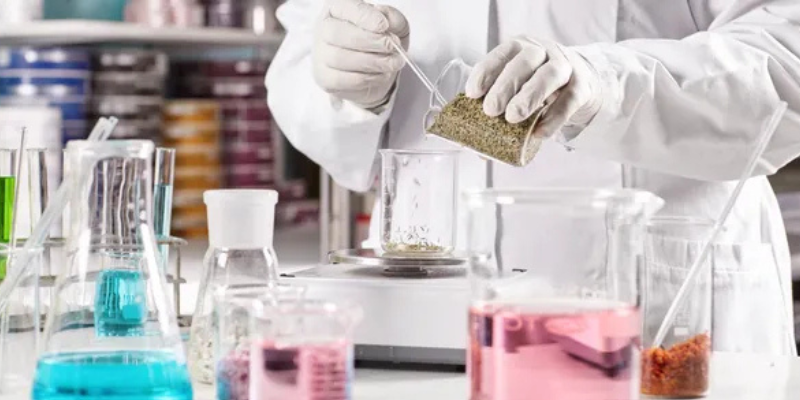
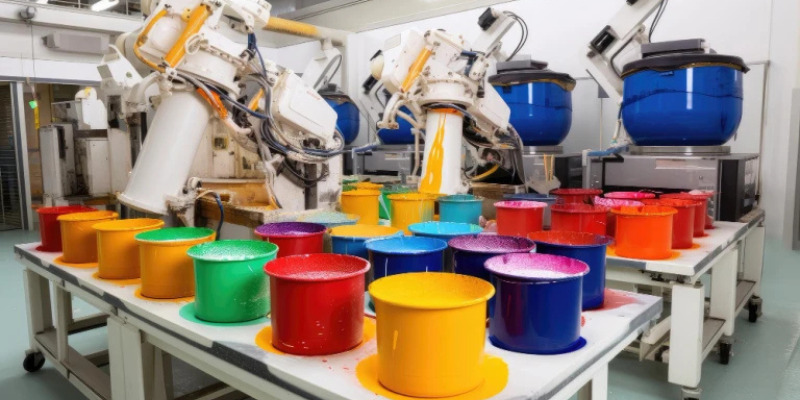
Dyes & Intermediates Filtration Solutions — Manufacturer in India | Praimo Industrial Filters & Spares Manufacturing Company
Dye, pigment, and chemical-intermediate plants ask a lot from filtration: slurries that change hour to hour, solvents that punish elastomers, and color specs that leave no margin for haze. Praimo Industrial Filters & Spares Manufacturing Company designs and manufactures application-specific filtration systems that keep batches consistent and lines moving—across charge prep, reaction, washing, carbon treatment, milling, color standardization, and final QA. From basket strainers that protect pumps to bag and cartridge filter housings that set the micron ladder, through duplex and automatic self-cleaning units that enable continuous duty, we size every stage to your flow, viscosity, and target ΔP, then build it in the right materials (SS316L, Duplex, PP, UPVC, FRP) for the chemistry you actually run.
Process Overview — Where Filtration Creates Stability
Unit operations most plants share
- Charge preparation & pre-reaction screening: catch rust flakes, packing debris, and undissolved salts with Y-type or basket strainers (200–100 µm).
- Post-reaction slurry conditioning: offload agglomerates early using bag filter housings (100–25 µm) before washing and neutralization.
- Decolorization / adsorbent removal: strip carbon fines with pleated cartridges (10–1 µm) so downstream mills aren’t overwhelmed.
- Milling / dispersion loops: keep mills safe and steady using duplex strainers plus staged bag filters (50–10 µm).
- Final color standardization & QA: lock clarity with absolute-rated pleated cartridges (5–0.5 µm) ahead of packing.
Engineering Insight: If two streams—aqueous and solvent—share manifolds, spec color-coded housings and dedicated elastomer sets. It prevents cross-contamination, simplifies audits, and speeds up line-clearance.
Compatibility bands you can trust
Dye chemistry spans acids, alkalis, ketones, esters, alcohols, and aromatics, often at 40–90 °C with viscosities from 1–600 cP. Praimo Industrial Filters & Spares Manufacturing Company pairs wetted parts and seals—SS316L/Duplex with EPDM, FKM, PTFE; or UPVC/FRP with chemical-matched seats—so housings last and elements don’t swell or shed.
What Makes Dyes Filtration Hard (and How to Solve It)
- Rheology swings: Slurries behave non-Newtonian; ΔP spikes as cake compacts. Stage the load (100→50→25 µm) so fine stages see less abuse
- Shear-sensitive pigments: Over-shearing creates fines that flood polish filters. Use strainers upstream and keep pump sizing conservative.
- Carbon fines after decolorization: A 10→5→1 µm cartridge train catches the small stuff that ruins shade.
- Solvent safety: Earthing/bonding and proper venting protect operators; flameproof instruments belong in classified zones.
Process Observation: Plants that log ΔP at each stage—not just the final polish—typically cut media spend by 15–30% and extend campaign lengths because they rebalance the load before breakthrough.
The Right Hardware for Dyes & Intermediates
Cartridge Filter Housing — Final Clarity & Color Control
- For predictable, repeatable clarity, Praimo single and multi-round cartridge housings deliver 10–0.5 µm retention in nominal or absolute grades. Standard features include clean drains, high-point vents, and quick-open lids (swing-bolt or davit arm). Skids can be supplied with sanitary vents, sampling ports, and CIP tie-ins.
Internal anchor to place in context: Cartridge Filter Housing
Bag Filter Housing — Bulk Removal Without Painful ΔP
- When solids are heavy or variable, No.1/No.2 bag filter housings (1–200 µm) do the heavy lifting. Multi-bag configurations minimize change-outs on batch days and keep washers and centrifuges protected.
Internal anchor: Bag Filter Housing
Duplex Filter / Duplex Strainer — Stay Online During Change-Over
- Continuous milling and transfer lines benefit from duplex change-over—no shutdowns, no bleeding trapped pressure across the wrong side. Praimo supplies plug-valve or butterfly arrangements with positive sealing.
Internal anchor: Duplex Filter / Duplex Strainer
Automatic Self-Cleaning Filters — When the Line Never Sleeps
- For steady-state fines or utility recirculation, automatic backwash/scraper/self-cleaning screen filters hold ΔP flat and slash manual handling. Wedge-wire screens survive abrasives and clean well.
Internal anchor: Automatic Self-Cleaning Filters
UPVC & FRP Housings — Corrosion-Smart Choices
- For acid/alkali service at low-to-moderate temperatures, UPVC and FRP housings provide life-cycle value without exotic metals. Use them for pre-polish or utilities; shift to SS316L/Duplex for hot solvents.
Internal anchors: UPVC Cartridge Filter Housing · UPVC Bag Filter Housing
Choosing Elements & Media (Micron, Material, Efficiency)
Bulk capture that sets up polishing
- Melt-blown PP and string-wound PP cartridges—economical workhorses for 100–10 µm.
- Oil-adsorbing filter bags to remove tramp oils that dull shade or disrupt dispersion stability.
Polishing for absolute clarity
- Pleated PP/PES/PTFE cartridges cover 10–0.5 µm. PES shines in aqueous service; PTFE handles aggressive solvents and hydrophobic venting; PP is versatile and cost-effective.
Cleanable stainless-steel options
- Sintered SS and pleated wire-mesh cartridges withstand temperature and CIP. Position them upstream to reduce disposable load and protect final stages.
Best Practice: Build a micron ladder instead of a single fine stage. A sequence like 100→50→25 µm (bags) followed by 10→5 µm (pleated) typically doubles or triples the life of the final polish while improving first-pass clarity.
Application Mapping — Put Each Tool Where It Works Best
Pre-reaction & utilities
- Y-type / basket strainers at 200–100 µm protect dosing nozzles and valves from debris.
- Automatic self-cleaning units on cooling and utility loops maintain steady ΔP over long campaigns.
Post-reaction slurry
- Bag filter housings at 100–25 µm remove agglomerates and smoothen flows entering washers and centrifuges.
- Duplex strainers in transfer lines keep the movement continuous during change-outs.
Adsorbent & carbon cleanup
- Pleated PP/PES at 10→5→1 µm clears fines without choking throughput.
- For premium shades, consider absolute 0.5–1.0 µm ahead of final QA.
Milling / dispersion loops
- Duplex strainers + staged bag filters maintain solids profile, cut mill wear, and prevent shock loads on polish filters.
- Choose automatic self-cleaning when solids levels are steady and abrasive
Final color standardization / QA
- Multi-round cartridge housings fitted with absolute-rated 5–0.5 µm elements stabilize shade and clarity before packaging.
Operational Insight: If final filters blind too fast, the solution is rarely “go finer.” Add one coarser pre-stage or increase filtration area upstream—the final stage will suddenly behave.
Materials, Codes & QA — Built to Run, Documented to Prove It
Praimo Industrial Filters & Spares Manufacturing Company fabricates to rigorous shop standards and provides the paperwork engineers expect:
- Materials : SS304/SS316L, Duplex, PP, UPVC, FRP with clear wetted-parts identification.
- Elastomers : EPDM, FKM, PTFE selected for solvent/temperature compatibility.
- Testing : Hydrostatic at 1.3–1.5× design pressure; air leak tests on request.
- Surface finish : Pickled & passivated; electropolish where low extractables matter.
- Documentation : GA drawings, QAP, MTCs, FAT records; IQ/OQ support available for regulated plants.
Related internal anchors to sprinkle contextually: Stainless Steel Filter Cartridges (Sintered / Wire Mesh) · Hygienic Filter Housing
Sizing & Selection — The Data We Use to Get It Right
To recommend the right sequence and housing sizes, our application engineers analyze:
- Flow (m³/hr) and duty cycle (batch vs continuous).
- Viscosity (cP) and solids %, plus PSD data if available.
- Temperature & chemistry, which drive material and gasket choices.
- ΔP philosophy: initial vs maximum (e.g., start 0.1–0.5 bar, limit 1.0–1.5 bar).
- Change-out strategy: disposable vs CIP/cleanable, single vs duplex, manual vs automatic.
Process Evaluation: For pigments above 150 cP, it’s usually smarter to add upstream area (extra bag count or high-area pleated prefilters) than to tighten the micron. Throughput gains often outweigh the marginal element cost.
Helpful internal anchors: Cartridge Filter Housing · Bag Filter Housing · Filter Carts & Skids
Case Snapshot: Intake to RO—A Practical Upgrade
Azo intermediate (solvent-borne): Duplex + 5 µm Absolute
Frequent stops and haze rework were killing output. Praimo added a duplex strainer ahead of a multi-round cartridge housing fitted with 5 µm absolute cartridges. Results: continuous milling, ~40% fewer change-outs, tighter delta-E at QA.
Pigment dispersion: 25→10 µm Bags + 5 µm Polish
Frequent stops and haze rework were killing output. Praimo added a duplex strainer ahead of a multi-round cartridge housing fitted with 5 µm absolute cartridges. Results: continuous milling, ~40% fewer change-outs, tighter delta-E at QA.
Relevant anchors to incorporate nearby: Duplex Filter · Bag Filter Housing · Pleated PP/PES/PTFE Cartridges
Maintenance & OPEX — Keep ΔP Predictable and Operators Safe
- Stage solids smartly: coarse → fine; read ΔP at each stage to plan change-outs.
- Use cleanable stainless-steel upstream to shield the expensive disposables.
- CIP vs disposable: Model the real cost (labor, solvent, downtime) before deciding. We’ll provide a lifecycle comparison.
- Seal kits on hand: Stock elastomers matched to your main solvent families to avoid unplanned leaks.
- Instrumentation: Even simple ΔP gauges pay back quickly in media life and uptime.
Process Optimization Note: Logging ΔP vs batch number allows predictive maintenance—shift from emergency swaps to scheduled change-outs with spare crews ready.
Compliance, Safety & EHS — Designed-In Protection
- Venting & relief: High-point vents and proper relief devices per design code.
- Earthing/bonding: Non-negotiable for solvent circuits to control static.
- Area classification: Flameproof instruments and junction boxes where required.
- Operator ergonomics: Quick-open lids, swing-bolts, and davit arms reduce strain and exposure during change-outs.
Contextual anchors to place where relevant: Hygienic Filter Housing · Automatic Self-Cleaning Filters
Why Praimo for Dyes & Intermediates — Engineering Authority, Reliable Supply
- Data-driven proposals: We size by flow–viscosity–solids–ΔP, then tune area, element count, and housing type to fit your process—not the catalog.
- Materials mastery: From SS316L/Duplex to UPVC/FRP, we match corrosion risk to lifecycle cost.
- Project readiness: Drawings, QAP, FAT, and onsite commissioning speed up approvals and start-up.
- After-sales confidence: India-based manufacturing with export-ready packaging and fast spares support.
Link in context as appropriate: Basket Strainers / Y-Type Strainers · Automatic Self-Cleaning Filters · UPVC / FRP Housings · Filter Carts & Skids · Demister Pads & Vane Separators
FAQ — Quick Answers for Plant Engineers
Start with 5 µm absolute, verify clarity and shade stability, then tighten to 1 µm absolute only if QA demands.
Anchor: Pleated PP/PES/PTFE Cartridges
Use bag filters (100–25 µm) for bulk removal first; then cartridges (10–1 µm) for polish.
Anchor: Bag Filter Housing · Cartridge Filter Housing
A 10→5→1 µm staged cartridge train catches fines without throttling throughput; check pump shear and carbon grade.
Anchor: Cartridge Filter Housing
Yes—for acid/alkali service at moderate temperatures. For hot solvent lines, specify SS316L/Duplex plus compatible elastomers.
Anchors: UPVC Cartridge Filter Housing · UPVC Bag Filter Housing
Call-to-Action — Get a Dyes & Intermediates Sizing Sheet from Praimo
If you’re ready to stabilize shade, extend media life, and lift throughput, share your flow (m³/hr), viscosity (cP), temperature, solids %, chemistry list, and target ΔP. The Praimo Industrial Filters & Spares Manufacturing Company engineering team will return a stage-by-stage micron ladder, housing/element selection, and a lifecycle-cost comparison (disposable vs cleanable vs self-cleaning) tailored to your plant.
Place these internal anchors naturally throughout the copy:
Cartridge Filter Housing · Bag Filter Housing · Duplex Filter / Duplex Strainer · Basket Strainers / Y-Type Strainers · Automatic Self-Cleaning Filters · Stainless Steel Filter Cartridges (Sintered / Wire Mesh) · Pleated PP/PES/PTFE Cartridges · Oil-Adsorbing Filter Bags · UPVC / FRP Housings · Filter Carts & Skids · Demister Pads & Vane Separators