


Ceramics Industry Filtration Solutions — Manufacturer in India (Ceramic Slurry, Glaze, Kiln, Spray Dryer)
Ceramics lines are unforgiving. Abrasive alumina and silica fines eat pumps and seals; pigments and binders sneak past screens and show up as surface defects; spray-dryer intake dust shortens media life; kiln exhaust brings heat, acids, and sticky condensables. Praimo Industrial Filters & Spares Manufacturing Company engineers end-to-end filtration for these realities—slurry and glaze polishing, spray-dryer air handling, kiln/thermal off-gas, process water, dust collection, and hydraulic/lube cleanliness—with systems sized to your flow, target micron, temperature window, and allowable ΔP. From cartridge and bag filter housings to basket/duplex strainers, automatic self-cleaning filters, panel/pocket/HEPA media, pleated dust collection filters and bags, demister pads, and portable oil filtration carts, we deliver documented, export-ready solutions that reduce downtime and stabilize quality.
Why Filtration Matters in Ceramics Manufacturing (Defects, Downtime, Yield)
Every ceramic plant fights the same mix: alumina/silica fines, zircon, glaze pigments, binders, clay slip, occasional tramp metal, and variable water quality. The cost of under-filtration shows up as nozzle wear, seal and bearing failure, cavitation, dryer fouling, and visible defects—pinholes, orange peel, color streaking. Good filtration is not just capture efficiency; it’s predictable ΔP, stable rheology, and media life that aligns with maintenance windows.
line flow (m³/h), viscosity and temperature, target micron (absolute vs nominal), compatible materials (SS316L, Duplex SS, UPVC/FRP), and elastomers (EPDM/FKM/PTFE). Define these early and your filtration train falls neatly into place.
Tightening the final polish from 10 µm to 5 µm absolute on glaze lines often halves nozzle changeouts in a quarter—our fastest payback case in ceramics.
Ceramic Slurry & Glaze Filtration (Inline, Batch, Recirculation)
Objective:
Protect pumps and application heads while keeping glaze color and rheology stable.
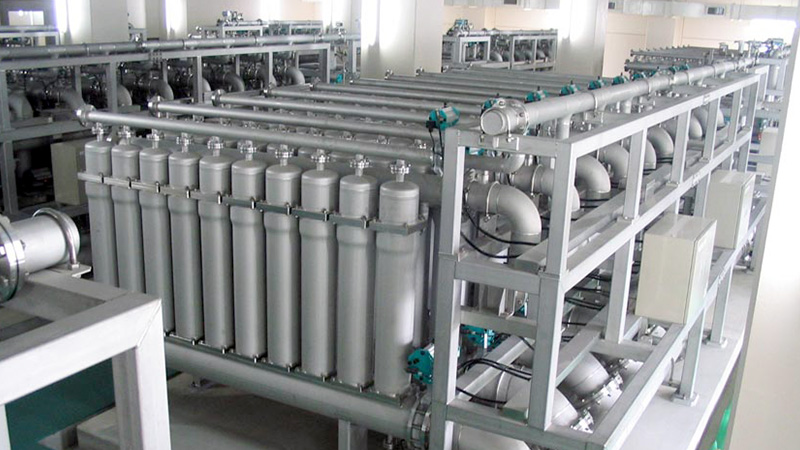
- Cartridge Filter Housings for the final polish (1–25 µm absolute) before application heads or spray guns. Multi-cartridge housings keep ΔP gentle at higher flows and make it easy to stage micron ratings. Explore: [Cartridge Filter Housing].
- Bag Filter Housings upstream for bulk load reduction (10–100 µm nominal) in recirculation or batch cleanup. Quick-open lids and sanitary clamp options accelerate color changeovers and CIP. Explore: [Bag Filter Housing].
- Basket/Inline Strainers ahead of pumps stop agglomerates and protect seals. Duplex versions allow basket swap without shutting the mill or recirculation loop. Magnetic inserts capture black specks that telegraph on white bodies. Explore: [Basket Strainers] · [Duplex Filter / Duplex Basket Strainer].
Process Observation:
Pair nominal bags for load shedding with absolute cartridges for finish quality. This two-stage approach slows ΔP drift and prevents premature blinding of polish media.
Spray Dryer & Air Handling Filtration (Pre, Fine, HEPA)
Powder quality depends on clean, stable intake air—especially when dryer duty cycles are long.
- Panel & Pocket Filters as pre-filters block coarse dust and fibers, extending life of fine stages.
- High-Efficiency/HEPA (H13–H14) where powder hygiene and uniform particle morphology are critical; correct gasketing and face velocity matter as much as the media.
- High-loft glass fiber or polyester media (gas-turbine style) handles harsh dust loads and keeps pressure drop predictable even in long campaigns.
Explore:
[Panel Filters] · [Pocket Filter] · [HEPA Filter] · [Highloft Glass Fiber Media] · [Highloft Polyester Media].
Many plants overspend on final filters but skip robust pre-filtration. A correctly sized G4–M5 wall commonly adds 30–50% life to the HEPA stage—best spend per kg of powder saved.
Kiln & Thermal Off-Gas Treatment (High Temperature, Condensables)
Kiln exhaust brings heat, chemical variability, and condensable vapors that can blind media if not managed.
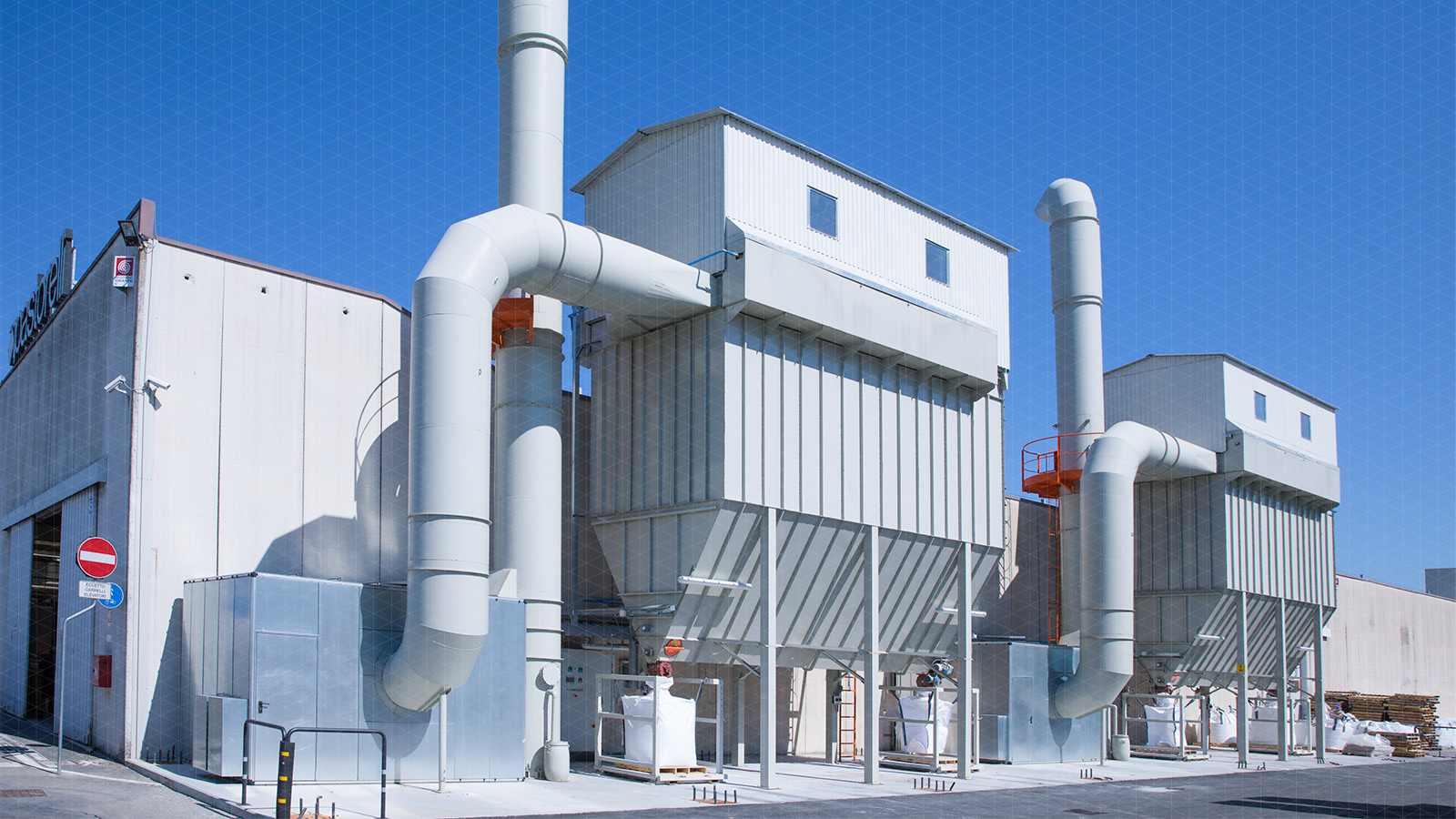
- High-temperature dust collection using aramid/PI/PTFE bags or pleated cartridges, sized for air-to-cloth ratios that reflect sticky dust behavior.
- Demister Pads & Vane Separators upstream of fans or absorbers to strip mists and protect downstream equipment.
- Spark/smolder control plus continuous ΔP monitoring to avoid step changes after restarts. Hopper design and discharge angles keep captured dust moving.
Explore:
[Pleated Dust Collection Cartridges] · [Dust Collection Bags] · [Demister Pads & Vane Separators].
If ΔP jumps after kiln restarts, check dew point vs metal temperature. A brief preheat or bypass prevents condensation that “glues” fines to the media.
Process Water & Utilities (Cooling, Wash, RO Pre-Filter)
Water-side stability reduces unplanned maintenance across the plant.
- Cartridge filters (5–50 µm) ahead of RO/UF protect membranes and control SDI.
- Bag filters on higher solids loops (wash, general recycle) to simplify changeouts.
- UPVC/FRP housings for corrosive water or outdoor locations; SS316L for high temperature or hygiene-adjacent zones.
Explore:
[Cartridge Filter Housing] · [Bag Filter Housing] · [UPVC Cartridge Filter Housing].
Rising SDI at steady turbidity usually signals colloids. Shifting to absolute 5 µm before RO stabilizes permeate without resorting to specialty membranes.
Materials Handling & Glaze Preparation (Strainers & Self-Cleaning)
Continuous milling and glaze prep benefit from filtration that does not demand constant attention.
- Automatic Self-Cleaning Filters (backwash, scraper, disc) maintain flow on viscous or high-load streams without frequent media changes.
- Duplex Strainers enable zero-downtime basket swaps during color changes or mill cleanups.
- Wear liners and hardened baskets resist abrasion; magnetic modules catch tramp iron from media mills.
Explore:
[Automatic Self-Cleaning Filters] · [Duplex Filter] · [Basket Strainers].
If the ΔP trace looks like a saw-tooth, trigger cleaning on load (pressure or flow delta), not on a fixed timer. You’ll cut water/air consumption and smooth throughput.
Dust Collection in Grinding, Milling & Conveying (OSHA/ATEX Focus)
Fine ceramic powders carry safety and reliability implications.
- Pleated cartridges or baghouse systems designed to meet capture velocity at hoods, with conservative air-to-cloth ratios and well-tuned pulse-jet plumbing.
- Explosion relief and spark mitigation where combustible dust risks exist; we provide vendor-neutral guidance for panel placement and ducting.
- ΔP trending turns reactive maintenance into scheduled changeouts, keeping grinders online.
[Pleated Dust Collection Cartridges] · [Dust Collection Woven & Non-Woven Bags] · [Panel Filters].
Hydraulic & Lube Oil Cleanliness for Presses & Kiln Drives
Servo valves, gear trains, and bearings demand ISO 4406 cleanliness targets to stay predictable.
- Pressure/Return/Suction elements selected to OEM βx(c) efficiency, with cross-references for common frames.
- Portable Oil Filter Carts for kidney-loop polishing and quick start-up flushing.
- Vacuum Oil Purifiers to pull free, emulsified, and dissolved water—plus varnish removal systems where oxidative byproducts cause drift.
Explore:
[Hydraulic Filter Elements] · [Portable Oil Filter Cart] · [Vacuum Oil Purifier] · [Varnish Removal Filtration Systems].
Field Experience:
Plants that add a short commissioning polish and quarterly kidney-looping report fewer servo jitter events and longer oil life—cheap insurance compared to unplanned downtime.
Recommended Packages by Segment (Fast Specification)
Tiles & Sanitaryware (High Throughput)
Pre-milling basket/duplex strainer → glaze bag filter (50–100 µm nominal) → cartridge polish (5–10 µm absolute) → spray-dryer panel/pocket + HEPA → plant water cartridge 5–20 µm → grinding dust collector.
[Duplex Filter] · [Bag Filter Housing] · [Cartridge Filter Housing] · [HEPA Filter] · [Dust Collection Filters].
Technical Ceramics / Alumina (Tight Tolerances)
Two-stage cartridge polish (1–5 µm absolute) → quick-open sanitary housing for color changes → intake HEPA → kiln high-temp PTFE bags → RO pre-filter absolute 5 µm.
[Hygienic Filter Housing] · [Cartridge Filter Housing] · [Dust Collection Bags].
Powder Handling & Conveying Lines
Self-cleaning filters on recirculation → magnetic pre-filters before nozzles → pleated cartridge dust collectors with ΔP monitoring.
[Automatic Self-Cleaning Filters] · [Magnetic Strainer Option] · [Pleated Dust Collection Cartridges].
Case Snapshots & Measured Outcomes (Real-World Gains)
Switching from a single 25 µm nominal bag to bag (50 µm) + 5 µm absolute cartridge cut nozzle wear events by ~40% over six months and reduced visible streaks.
Adding a G4/M5 pre-filter wall extended HEPA life ~30–50% and reduced dryer cleans.
Demister + PTFE high-temp bags stabilized ΔP through start/stop cycles and lowered fan cleaning frequency.
Quarterly kidney-looping with a portable cart improved ISO 4406 by two classes, reducing servo jitter.
You may also be interested in:
[Demister Pads & Vane Separators] · [Portable Oil Filter Cart] · [Cartridge Filter Housing].
Compliance, Materials & Documentation (QA/Traceability)
Praimo Industrial Filters & Spares Manufacturing Company builds for auditability and service life:
SS304/SS316L, Duplex SS, UPVC/FRP; elastomers EPDM/FKM/PTFE.
From pickled & passivated to electropolished for glaze/hygiene zones.
Hydrostatic testing (typically 1.5× design pressure), EN 10204 3.1 MTCs, and CE/PED notes where applicable.
Davit/quick-open lids, sanitary tri-clamp connections, jacketed housings for viscosity control, magnetic modules, and wear-resistant baskets.
Process Observation:
If media blinds ahead of schedule, review changeover sanitation. Residual binder is a common culprit; a hot-water or solvent step can reset baseline ΔP.
FAQs — Ceramics Filtration (Micron, ΔP, Media, Changeover)
Most plants run 5–10 µm absolute at the final stage, often with a 50–100 µm nominal bag pre-stage for load control.
Use bags where solids are heavy and frequent changes are acceptable; use absolute-rated cartridges where finish quality and ΔP stability are critical. Many lines do best with bag → cartridge in series.
Start at the hood—get capture velocity right—then choose conservative air-to-cloth and ensure pulse energy is adequate. Pleated cartridges are excellent where space is tight.
On viscous or high-load recirculation loops where bag changeouts are disruptive. Choose backwash for low solids, scraper for sticky fines, and disc when footprint is limited.
Related reading:
[Bag Filter Housing] · [Cartridge Filter Housing] · [Pleated Dust Collection Cartridges] · [Automatic Self-Cleaning Filters].
Call-to-Action — Request Sizing, Datasheets & RFQ
Choose a ceramics filtration manufacturer in India that couples engineering detail with practical plant experience. Praimo Industrial Filters & Spares Manufacturing Company will size your filtration train for flow, ΔP, and lifecycle cost—from glaze polishing to kiln exhaust and hydraulic cleanliness.
- Send your data: flow (m³/h), viscosity/temperature, target micron, allowable ΔP, duty cycle.
- Book a 15-minute engineering consult to review your P&ID.
- Request datasheets for cartridge/bag housings, duplex/basket strainers, self-cleaning filters, panel/pocket/HEPA media, dust collection, and demisters.
- Submit RFQ for standard or custom builds with documented materials, test certificates, and export-ready shipping.
Quick links:
[Cartridge Filter Housing] · [Bag Filter Housing] · [Duplex Filter / Duplex Basket Strainer] · [Basket Strainers] · [Automatic Self-Cleaning Filters] · [Panel/Pocket/HEPA Filters] · [Pleated Dust Collection Cartridges & Bags] · [Demister Pads & Vane Separators] · [Portable Oil Filter Cart] · [Vacuum Oil Purifier]