


Biotech Filtration Applications — GMP, Sterilizing-Grade Solutions | Praimo Industrial Filters & Spares Manufacturing Company
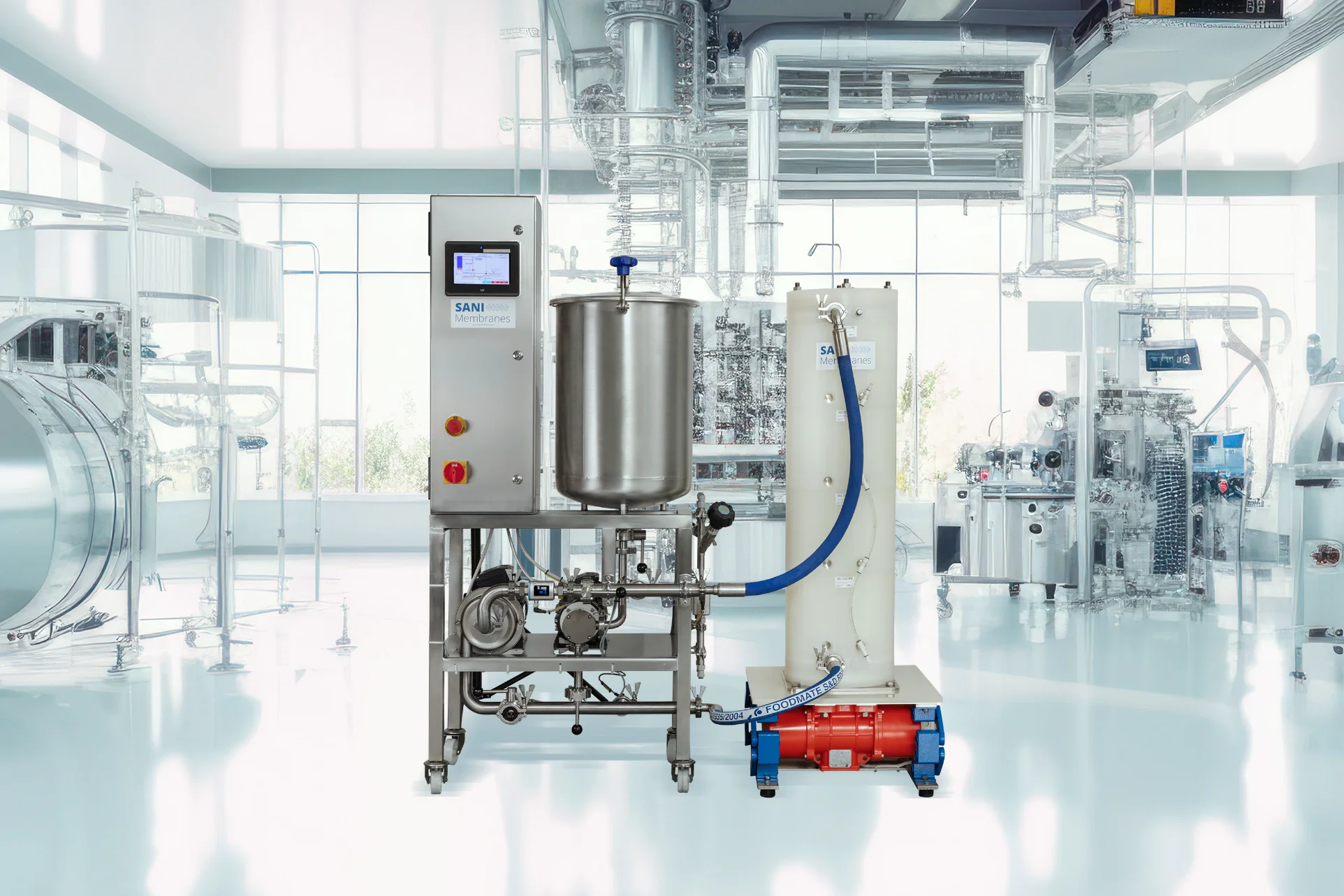
Biotech doesn’t forgive guesswork. Media must be clean, utilities must be stable, and every sterilizing-grade barrier has to perform the same way on batch one and batch one hundred. Praimo Industrial Filters & Spares Manufacturing Company engineers end-to-end systems—sanitary cartridge and bag filter housings, PES 0.2 µm sterilizing-grade elements, PTFE sterile vent & gas filters, CIP/SIP-ready hygienic hardware, and coalescing/utility skids—matched to your upstream, downstream, and fill–finish sequence. We size by flow vs ΔP, viscosity, bioburden target, and throughput per change-out, then back it with EN 10204 3.1 materials, FAT/SAT records, and integrity-test SOPs. Use this page as your quick, practical roadmap—and jump straight to product details when you’re ready.
Bioprocess Filtration Overview — Upstream, Downstream, Fill–Finish
Bioprocess lines group naturally into three work zones, each with distinct filtration risks and validation needs.
Upstream: Media Preparation & Bioreactor Protection (0.2 µm sterilizing-grade)
- Start with depth or wound prefiltration to manage particulates and colloids (e.g., 10 → 5 → 1 µm). Finish with 0.2 µm PES for absolute retention before media hits the bioreactor. Protect headspace with PTFE hydrophobic sterile vents sized for worst-case steam displacement and cool-down vacuum.
- Navigate to products: see Cartridge Filter Housing for SS316L sanitary housings with tri-clamp connections, and PTFE Filter Cartridge for SIP-capable sterile vents.
Downstream: Clarification, Polishing & Bioburden Control
- Harvest clarification often combines bag filters with pleated clarification (3–1 µm) to stabilize ΔP, followed by the final 0.2 µm sterilizing-grade step. Chromatography buffers and WFI distribution benefit from low-extractables membranes and high dirt-holding prefilters to keep turnaround predictable.
- Related detail: Filter Bags for bulk load capture and PES Filter Cartridge for sterilizing-grade liquid filtration.
Fill–Finish: Sterilizing-Grade Liquid & Sterile Air/N₂
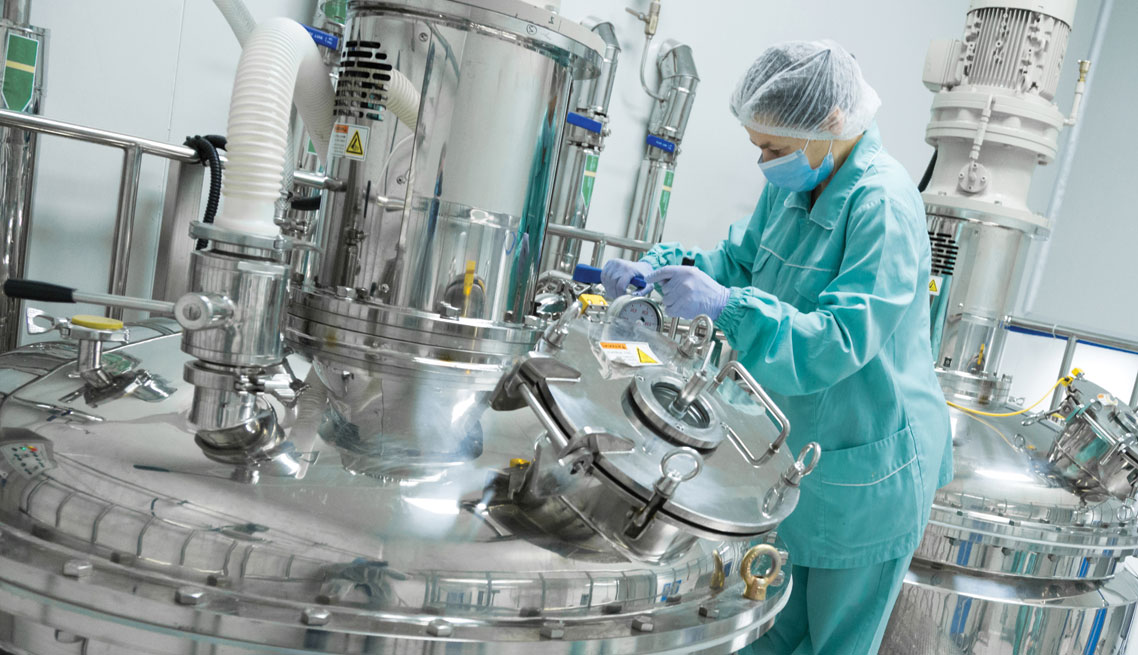
- Aseptic filling depends on validated PES 0.2 µm and sterile air/nitrogen polishing with PTFE. Hardware matters: electropolished SS316L housings, drainable vertical orientation, and reliable vent/bleed geometry make integrity tests repeatable in real-world conditions.
- See also: Hygienic Filter Housing and Compressed Air Filter for sterile utilities.
Engineering Insight:
Most “surprise” integrity-test failures post-SIP are not media defects—they’re wetting inconsistencies. A dedicated high-point vent and a drainable housing body usually fix the pattern permanently.
Sterilizing-Grade 0.2 µm Filters (PES/PTFE) — Validation, Integrity & Records
What “sterilizing-grade” means in practice
- For liquids, PES 0.2 µm elements must demonstrate B. diminuta retention per validation protocols (typical ≥7 LRV). For gas and tank vents, PTFE 0.2 µm provides hydrophobic sterility protection with robust aerosol retention and SIP compatibility.
Bubble-Point & Forward-Flow SOPs that pass audits
- Adopt written SOPs defining test fluid, temperature window, acceptance ranges, and serial-number traceability. Run pre-use and post-use checks for the PES barrier; document dry/wet parameters for PTFE vents where required.
Jump to components: PES Filter Cartridge, PTFE Filter Cartridge, and Cartridge Filter Housing with test ports and gauge isolation.
Best Practice:
Standardize integrity setpoints at 20 ± 2 °C and pre-wet PES with a consistent wetting agent. The two changes alone can cut false failures dramatically and save minutes on every batch release.
Sanitary Cartridge Filter Housing — Hygienic Design for CIP/SIP
SS316L, Electropolish Ra ≤ 0.8 µm, Tri-Clamp Simplicity
- Specify SS316L with electropolished internals (Ra ≤ 0.8 µm), crevice-free welds, and tri-clamp or clamp-ring closures. Choose elastomers rated for your CIP set (NaOH, peracetic, etc.) and sterilization profile (SIP/autoclave).
Drainability, Venting, and ΔP-Stable Flow Paths
- A vertical, fully drainable body with top vent and bottom drain improves wetting and speeds integrity checks. We size housings by allowable ΔP, viscosity, target flow, and fouling index, keeping face velocity in the sweet spot for predictable life.
Explore details: Cartridge Filter Housing, Hygienic Filter Housing, Stainless Steel Cartridge Filter Housing.
Process Observation:
In multi-round housings, outer cartridges often see higher loading due to inlet momentum. Rotating the lead position or adding a staged 3 → 1 µm prefilter frequently evens the dirt profile and extends set life.
Vent & Gas Filtration (PTFE Hydrophobic, 0.2 µm) — Vents, Air & Nitrogen
Tank/Bioreactor Sterile Vents & Gas Polishing
- Size PTFE 0.2 µm vents by peak volumetric flow during SIP and maximum cooling rate. Include condensate drains upstream to protect the membrane and maintain hydrophobicity. For sterile air/N₂ lines feeding aseptic spaces, add particulate polishing after coalescing.
SIP & Autoclave Compatibility, Cycle After Cycle
- We supply assemblies documented for SIP/autoclave cycles with suitable O-ring materials, thermal ratings, and clamp hardware that survives real schedules.
Connect to solutions: PTFE Filter Cartridge, Compressed Air Filter, and Hygienic Filter Housing.
Prefiltration & Clarification — Depth, Wound & Pleated That Carry the Load
Bioburden Reduction & Throughput Extension
- A graded prefilter train (e.g., 10 → 5 → 1 µm) handles bulk debris and stabilizes the final 0.2 µm step. We model cost per liter by combining cartridge life, ΔP rise, and changeout labor, then tune micron staging from pilot data.
Typical Train: 5 µm → 1 µm → 0.2 µm
- Keep it simple at the start, then refine based on ΔP profiles. For heavy harvest solids, add an upfront bag filter (50–25 µm) to protect depth media.
Product routes: Spun Filter Cartridges, Wound Filter Cartridges, PP Pleated Cartridge, Filter Bags.
Field Experience:
With compressible fouling (cell debris), graded-density depth media routinely lasts 1.5–2× longer than a same-micron pleat—because loading spreads through the media thickness rather than blinding the surface.
Buffer, WFI & Utilities — Hitting TOC/Conductivity and Sterility Notes
WFI Distribution & Points of Use
- Use low-extractables, high-purity elements for WFI loops, then protect points of use with PES 0.2 µm that can be integrity-tested in place. Housing internals should minimize dead legs; bottom drains and high-point vents make routine checks fast.
Compressed Air & Clean Steam in Biotech
- Run compressed air through coalescing stages followed by 0.2 µm particulate/sterile stages before contact points. For clean steam, consider stainless sintered filters or steam-rated elements to protect equipment and sterile barriers.
Navigate further:
Coalescer / Metering Skid Filtration Systems, Stainless Steel Filter Cartridges, Compressed Air Filter.
Bag Filters & Depth Media — Smart Use for Non-Critical Streams
Batch Media, CIP Return & Non-Sterile Utilities
Where sterilizing-grade isn’t required, bag filters and depth cartridges deliver fast changeouts and lower operating cost—ideal for CIP returns, bulk feeds, and utility side streams.
Single/Multi-Bag Housings for Turnaround Speed
Choose single or multi-bag housings (SS or polymeric) with differential-pressure ports and swing-bolt/clamp-ring lids to keep exposure time short and maintenance simple.
See components: Bag Filter Housing, Filter Bags.
Validation & Compliance — GMP, CE & EN 10204 3.1 Documentation
DQ/IQ/OQ/PQ, FAT/SAT & Material Traceability
- We provide DQ/IQ/OQ/PQ templates, FAT/SAT records, elastomer declarations, and EN 10204 3.1 material certificates. That means your QA team starts with a complete packet aligned to audit expectations.
Change Control, Lot Continuity, CoC/CoA
- Maintain reproducibility with controlled lot-to-lot continuity and formal CoC/CoA for elements. For housings and skids, we retain build records to streamline multi-site standardization and repeat orders.
Cartridge Filter Housing, Hygienic Filter Housing, PES Filter Cartridge.
If the same line shows random integrity failures month-to-month, check elastomer swaps and SIP ramp rates first. Small changes in gasket compound or heat-up slope can push wetting and diffusion values out of your historical band.
Sizing Tools — Flow vs ΔP, Viscosity, Throughput & Hold-Up Volume
Cartridge Count, Area & Scale-Up Rules
- We calculate cartridge count from target flow, allowable ΔP, viscosity at temperature, and a fouling factor. In scale-up, keep face velocity constant and validate with a short pilot to lock the changeout ΔP and batch timing.
Aseptic Connections, Hold-Up & Drainability
- Aseptic geometry—positioned vents, smooth tube sheets, fully drainable bottoms—governs wetting time and integrity repeatability. Lower hold-up volume also reduces WFI usage and speeds product changeover.
Cartridge Filter Housing, Duplex Filter Housing for uninterrupted duty on non-sterile loops, Basket Strainers for pump and valve protection.
Case Snapshots — What Changes When Details Are Right
Media Prep: Longer Runs, Flatter ΔP
- A two-stage prefilter (10 µm depth → 3 µm pleated) ahead of 0.2 µm PES extended batch life by ~60% and delivered a stable ΔP curve. Switching to an electropolished sanitary housing cut integrity-test time due to faster wetting.
PP Pleated Cartridge, PES Filter Cartridge, Hygienic Filter Housing.
Harvest Clarification: Fewer Changeouts, Quieter Ops
- Adding a 25–50 µm bag filter upstream of depth media reduced changeouts from 5 to 2 per batch. The sterilizing-grade step stayed within its ΔP window, improving schedule certainty.
Filter Bags, Bag Filter Housing.
Fill–Finish: Integrity Confidence at Release
- Standardized forward-flow setpoints and controlled test temp (20 ± 2 °C) eliminated investigation cycles. A compact, drainable SS316L housing kept post-SIP wetting consistent, moving release forward by hours each campaign.
Cartridge Filter Housing, PES Filter Cartridge.
Operational Insight:
When multiple skids share a utility header, a brief pressure sag can trip integrity tests. Stagger skid start-ups or add small header buffering—usually cheaper than upsizing every filter.
Frequently Used Components — Quick Navigation
Cartridge Filter Housing, Hygienic Filter Housing, PES Filter Cartridge
PTFE Filter Cartridge, Compressed Air Filter
Spun Filter Cartridges, Wound Filter Cartridges, PP Pleated Cartridge, Filter Bags
Basket Strainers, Duplex Filter Housing
Metering Skid Filtration Systems (coalescer/polishing)
HEPA Filter, Panel Filters, Pocket Filter
Call to Action — Request Biotech Filtration Consultation / Datasheets / RFQ
- Choose a biotech filtration manufacturer in India that blends engineering precision, validation discipline, and export-ready documentation. Partner with Praimo Industrial Filters & Spares Manufacturing Company to lock in predictable ΔP, compliant sterilizing-grade performance, and smooth audits—batch after batch.
Share: fluid & purpose (media/buffer/WFI/product/vent), flow & viscosity, target micron/sterility, temperature/CIP/SIP profile, and current pain points (ΔP rise, short life, integrity hiccups). We’ll return a right-sized train (prefilter → sterilizing-grade), SS316L sanitary housing selection, and validation notes.
Get dimensioned drawings, materials & elastomers, pressure/temperature ratings, and bubble-point/forward-flow SOPs you can drop into your QMS.
Receive clear pricing, lead times, and options for multi-site standardization, lot continuity, and spares kits.
Next steps in context:
Cartridge Filter Housing · PES Filter Cartridge · PTFE Filter Cartridge · Bag Filter Housing · Filter Bags · Compressed Air Filter · Hygienic Filter Housing · Metering Skid Filtration Systems